In today’s highly regulated and digitally driven landscape, organizations in biotech, pharma, and financial services face a unique challenge: how to scale visibility while maintaining strict compliance. Traditional marketing alone is no longer enough. Businesses are now turning to employee advocacy software, life science marketing strategies, and social amplification tools to build trust and expand their reach.
Platforms like marketbeam.io are at the center of this shift, helping companies transform employees into brand advocates while ensuring every piece of content meets compliance standards. This approach allows organizations to grow authentically without compromising regulatory requirements.
Why Employee Advocacy is Reshaping Digital Marketing
Employee advocacy has emerged as one of the most powerful growth strategies in modern marketing. Instead of relying solely on brand pages, companies are enabling employees to share curated, approved content across their personal networks. This creates a multiplier effect that significantly increases reach and engagement.
In industries like life sciences, where credibility is everything, this strategy becomes even more valuable. People trust individuals more than corporate messaging, and when employees share insights, it adds a layer of authenticity that traditional campaigns often lack.
At the same time, organizations must ensure compliance. This is where advanced employee advocacy platforms stand out. They provide structured workflows, pre-approved content libraries, and built-in compliance mechanisms that allow teams to scale safely and efficiently.
The Evolution of Life Sciences Marketing
The world of life science marketing has evolved rapidly over the past few years. Earlier, communication was heavily dependent on in-person interactions, medical conferences, and traditional advertising. Today, the focus has shifted toward digital marketing in the life sciences, where content plays a central role.
However, marketing in this space is not straightforward. Companies must communicate highly technical information while ensuring clarity and engagement. This has led to the rise of scientific content marketing, where complex ideas are simplified without losing their accuracy.
Successful organizations are now investing in content-driven strategies that educate, inform, and build trust over time. Instead of aggressive promotion, the emphasis is on creating value through knowledge sharing, which ultimately drives long-term engagement.
Social Amplification as a Growth Engine
Social amplification has become a key driver of modern marketing success. It allows companies to extend the reach of their content far beyond their owned channels by leveraging employees, partners, and networks.
Rather than manually managing every post, businesses are adopting tools that streamline publishing, scheduling, and performance tracking. These platforms also integrate compliance workflows, ensuring that every piece of content meets regulatory standards before it goes live.
This is particularly important in sectors like pharma and healthcare, where even a small mistake in communication can lead to serious consequences. By combining automation with governance, organizations can maintain both speed and accuracy in their marketing efforts.
Understanding MLR Compliance in Marketing
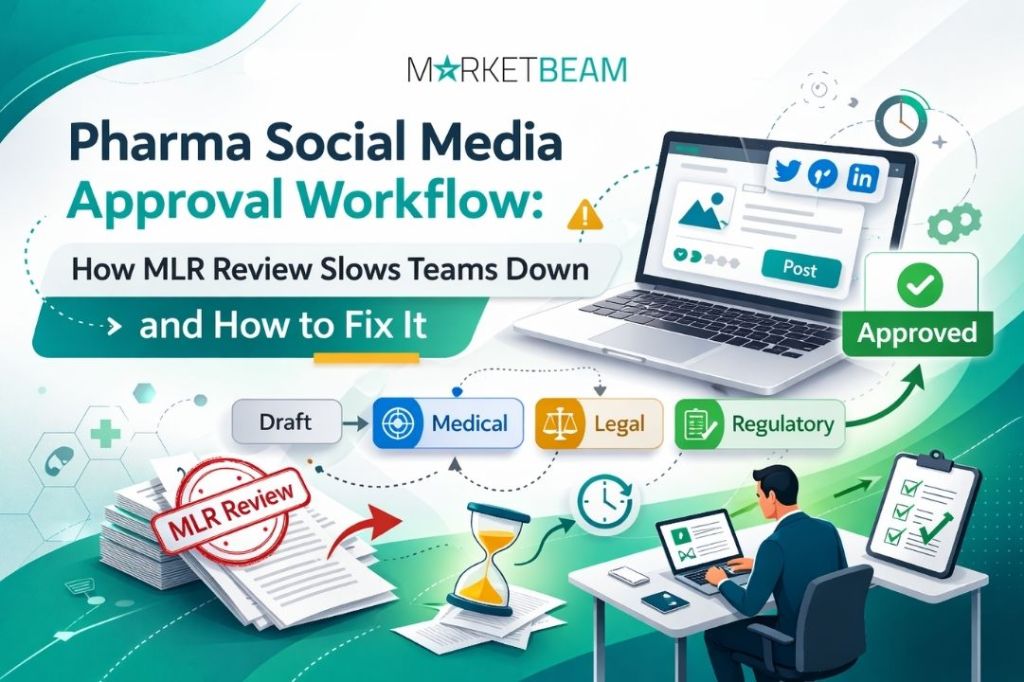
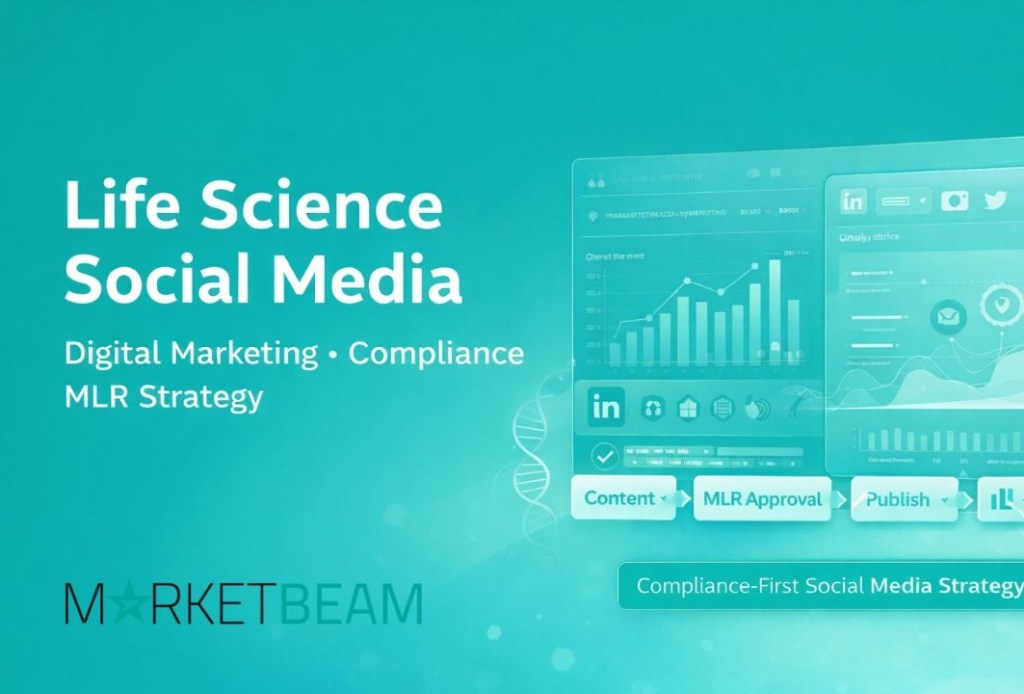
Compliance remains one of the most critical aspects of digital marketing in pharma. The MLR process—Medical, Legal, and Regulatory review—ensures that all marketing content is accurate, ethical, and aligned with industry guidelines.
Traditionally, MLR approvals have been time-consuming and complex, often slowing down marketing initiatives. However, modern platforms are transforming this process by introducing automated workflows, real-time tracking, and centralized content management.
This not only reduces delays but also improves transparency and accountability. Marketing teams can now collaborate more effectively while ensuring that every piece of content is fully compliant before publication.
Building an Effective Biotech Marketing Strategy
A strong biotech marketing strategy is built on education, trust, and consistency. Unlike other industries, biotech companies cannot rely solely on promotional messaging. They need to explain their innovations in a way that is both accessible and credible.
This requires a deep understanding of the audience, along with a commitment to creating high-quality content that addresses real-world challenges. Companies that succeed in this space focus on storytelling, thought leadership, and data-driven insights.
Over time, this approach helps establish authority and builds lasting relationships with stakeholders, including researchers, healthcare professionals, and decision-makers.
Employee Advocacy in Regulated Industries
In regulated industries, employee advocacy must be approached with caution and precision. While the benefits are significant, the risks associated with non-compliant communication cannot be ignored.
This is why modern advocacy platforms are designed specifically for such environments. They ensure that employees only share approved content and follow predefined guidelines. At the same time, they make participation simple and accessible, even for non-technical users.
By striking this balance, organizations can unlock the full potential of employee advocacy without exposing themselves to compliance risks.
Measuring Marketing Impact and ROI
Understanding the effectiveness of marketing efforts is essential for continuous improvement. In the context of life sciences marketing and employee advocacy, this means going beyond basic metrics and focusing on meaningful outcomes.
Organizations are increasingly using advanced analytics to track reach, engagement, and conversions. These insights help them understand what works, what doesn’t, and where to invest their resources.
Over time, this data-driven approach leads to more efficient campaigns, better decision-making, and higher returns on investment.
The Road Ahead for 2026 and Beyond
As we move forward, the integration of employee advocacy, content marketing, and social amplification will continue to redefine how organizations grow. The emphasis will be on creating authentic connections, maintaining compliance, and leveraging technology to scale effectively.
Companies that embrace this shift early will be better positioned to navigate the complexities of modern marketing. They will not only reach wider audiences but also build stronger, more trusted brands.
Conclusion
The future of marketing in regulated industries lies in the seamless integration of employee advocacy software, life science marketing, and social amplification strategies. These elements work together to create a system that is both scalable and compliant.
Organizations that adopt this approach can amplify their message, strengthen their brand, and drive sustainable growth. With platforms like MarketBeam enabling this transformation, the opportunity to lead in 2026 has never been greater.
FAQs
1. What is employee advocacy software?
Employee advocacy software helps organizations enable their employees to share approved content on social media, increasing reach and engagement while maintaining compliance.
2. Why is employee advocacy important for life sciences companies?
It builds trust, enhances credibility, and allows companies to communicate complex information more effectively through real human voices.
3. What is MLR compliance in pharma marketing?
MLR stands for Medical, Legal, and Regulatory review. It ensures that all marketing content complies with industry regulations before publication.
4. How does social amplification benefit marketing?
It expands content reach by leveraging multiple channels and individuals, resulting in higher visibility and engagement.
5. How can companies improve their biotech marketing strategy?
By focusing on educational content, building trust, using data-driven insights, and leveraging employee advocacy programs.