The landscape of life science marketing has changed dramatically over the past decade. Pharmaceutical companies, biotechnology startups, and medical device manufacturers are no longer relying solely on conferences, printed materials, or traditional outreach. Instead, they are embracing modern digital channels to communicate with researchers, healthcare professionals, and decision-makers across the globe.
Today, life science marketing is driven by data, digital platforms, and strategic content distribution. Companies in regulated industries are discovering that effective communication requires more than product promotion. It requires educational storytelling, scientific credibility, and strong digital engagement.
Organizations that successfully adopt digital marketing for life sciences are able to build trust with their audiences while explaining complex innovations in ways that are accessible and meaningful. This shift toward digital communication is transforming how scientific brands position themselves in competitive global markets.
Why Digital Marketing for Life Sciences Is Becoming Essential
For many years, marketing strategies in scientific industries were relatively limited. Outreach often depended on industry publications, medical conferences, or direct sales teams. While those channels remain valuable, the modern landscape requires a broader digital presence.
Digital marketing for life sciences allows companies to reach researchers, clinicians, and industry professionals at every stage of the decision-making journey. Through educational articles, webinars, and professional social media platforms, organizations can share insights that demonstrate expertise and leadership within their fields.
One of the biggest advantages of digital marketing for life sciences is the ability to communicate complex information more effectively. Scientific innovations often involve advanced research and technical concepts. Digital platforms provide the flexibility to present these ideas through visual content, long-form articles, and interactive learning resources.
As more scientific professionals turn to online sources for research and industry insights, life science marketing strategies must evolve to meet these expectations.
The Growing Role of Employee Advocacy in Scientific Organizations
An emerging strategy within life science marketing is the use of employee advocacy. Instead of relying only on official corporate channels, companies encourage employees to share approved content through their own professional networks.
Researchers, product specialists, and scientific advisors often have strong credibility within their communities. When these professionals participate in employee advocacy, the content they share is perceived as more authentic and trustworthy.
Through well-structured employee advocacy programs, companies can significantly expand their reach while maintaining consistent messaging. Scientific insights, product updates, and industry discussions can spread across professional networks where decision-makers are already active.
Another benefit of employee advocacy is the ability to humanize scientific brands. Rather than presenting organizations as distant corporations, these programs allow experts within the company to become visible thought leaders.
For companies operating in regulated sectors, successful employee advocacy programs typically rely on platforms that provide content approval workflows and compliance monitoring. This ensures that every shared message aligns with industry guidelines while still empowering employees to participate in digital conversations.
Social Amplification and Content Distribution in Life Science Marketing
Creating valuable content is only the first step in a successful life science marketing strategy. Without effective distribution, even the most insightful scientific article may fail to reach its intended audience.
This is where social amplification becomes critical. By distributing content across multiple digital channels, organizations can ensure that educational materials reach healthcare professionals, researchers, and industry partners.
Social amplification helps companies extend the reach of research announcements, industry insights, and thought leadership articles. When combined with employee advocacy, social amplification creates a powerful network effect that increases visibility across professional communities.
Through structured campaigns, organizations can measure how social amplification contributes to audience engagement, brand awareness, and lead generation. Analytics tools make it possible to evaluate the reach of each campaign and identify which channels generate the most meaningful interactions.
In regulated industries like pharmaceuticals and biotechnology, life science marketing teams must balance amplification with compliance. Content distribution systems therefore need to support approval workflows and brand governance while still enabling rapid communication.
Marketing Strategies for Biotech and Medical Device Companies
The field of biotech marketing presents unique challenges. Biotechnology companies often develop highly specialized technologies that require careful explanation and educational outreach.
Successful biotech marketing focuses on helping audiences understand how scientific innovations solve real-world problems. Instead of focusing purely on product features, companies highlight the broader impact of their technologies on research, healthcare outcomes, or laboratory efficiency.
Similarly, medical device manufacturers rely on digital marketing for life sciences to demonstrate how their products improve clinical procedures and patient care. Case studies, expert commentary, and demonstration videos are increasingly used to communicate complex product capabilities.
Through strategic storytelling, biotech marketing can make advanced research more accessible while maintaining scientific accuracy.
Navigating Compliance and Promotional Review Processes
Marketing within life sciences requires strict adherence to regulatory guidelines. Pharmaceutical companies and medical device manufacturers must ensure that promotional content is scientifically accurate and compliant with industry regulations.
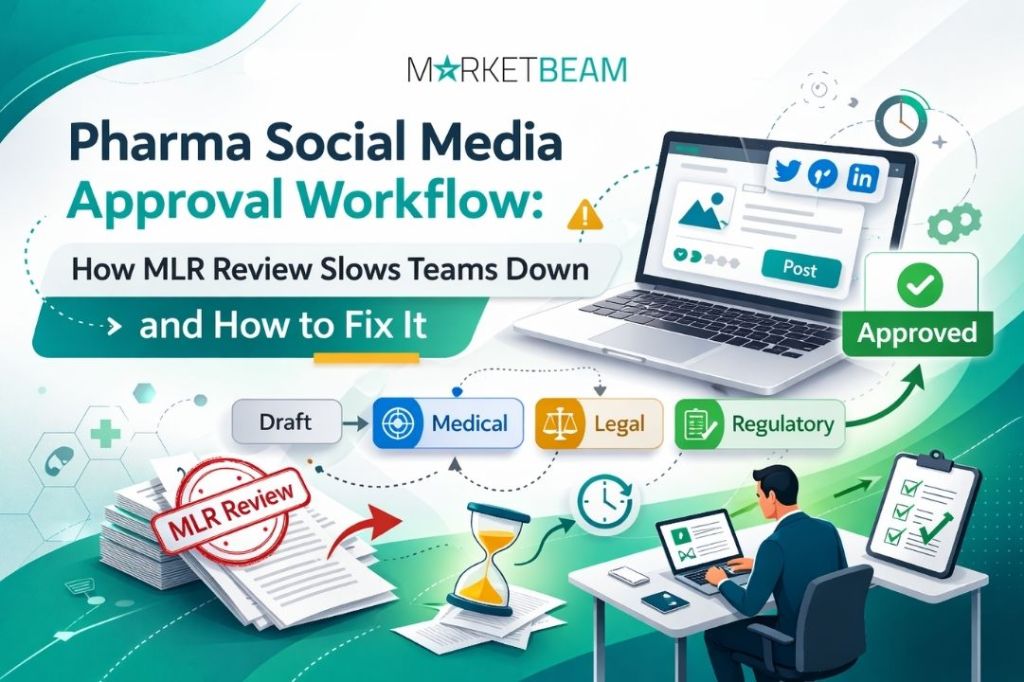
Many organizations follow structured promotional review processes involving medical, legal, and regulatory teams. These processes help ensure that claims made in marketing materials are supported by scientific evidence.
Modern life science marketing platforms are designed to streamline these workflows by centralizing content creation, approval, and distribution. This integration enables marketing teams to collaborate with compliance departments more efficiently.
By combining digital platforms with structured governance, companies can accelerate campaign execution while maintaining the integrity required in regulated industries.
Measuring Reach and Performance in Digital Campaigns
As digital marketing for life sciences continues to evolve, analytics has become a critical component of marketing strategy. Companies now track engagement metrics such as content views, social reach, and audience interaction.
Understanding how audiences engage with educational content allows marketers to refine their strategies and focus on the channels that deliver the greatest value.
Employee advocacy programs also benefit from detailed analytics. Marketing teams can evaluate how shared content performs across professional networks and measure the contribution of employee advocacy to overall brand visibility.
Through data-driven insights, organizations can continuously improve their life science marketing efforts and align their campaigns with long-term business goals.
The Future of Life Science Marketing
Looking ahead, the future of life science marketing will be shaped by three major trends: digital transformation, collaborative engagement, and intelligent automation.
Digital platforms will continue to expand the reach of scientific communication, allowing companies to connect with global audiences more effectively. At the same time, employee advocacy and social amplification will remain powerful tools for building credibility within professional communities.
Organizations that invest in digital marketing for life sciences will gain a significant competitive advantage. By combining educational storytelling, employee participation, and data-driven insights, scientific companies can build stronger relationships with their audiences.
Ultimately, the most successful life science marketing strategies will be those that balance innovation with compliance, ensuring that scientific breakthroughs reach the people who need them most.