
Pharma marketing is changing fast. Today, pharmaceutical brands cannot depend only on conferences, sales teams, print material, or traditional campaigns. Buyers, healthcare professionals, patients, partners, and investors now discover information across digital channels. This shift creates a major opportunity, but it also adds compliance pressure. Every message must be accurate, approved, traceable, and aligned with industry rules.
This is why modern pharma marketing needs more than content creation. It needs a clear strategy, compliant workflows, social media governance, launch planning, analytics, and strong approval processes. For regulated teams, speed matters, but safety matters more.
The challenge is simple. Pharma teams need to communicate faster without creating regulatory risk. A delayed campaign can reduce market impact. However, an unapproved or misleading post can damage trust and create compliance issues. The best approach is to build a system where marketing, medical, legal, regulatory, and commercial teams can work together smoothly.
For brands that want to manage compliant social media at scale, platforms like MarketBeam help connect content planning, approval workflows, publishing, employee advocacy, and analytics in one controlled environment.
What Is Pharma Marketing?
Pharma marketing is the process of promoting pharmaceutical products, healthcare solutions, disease awareness programs, corporate messages, and scientific value to the right audience. It includes communication with healthcare professionals, patients, caregivers, payers, partners, and internal stakeholders.
Unlike general marketing, pharma marketing operates in a regulated environment. Claims must be supported. Messaging must be fair and balanced. Promotional content often requires medical, legal, and regulatory review before it goes live. Social media activity also needs monitoring because comments, mentions, and user interactions can create compliance concerns.
In simple terms, pharma marketing is not only about visibility. It is about building trust while staying compliant. A good strategy helps a pharma brand educate audiences, support product launches, increase engagement, and maintain a strong digital presence without losing control of the message.
Modern pharma marketing includes digital campaigns, compliant social publishing, HCP engagement, content approval, product launch communication, employee advocacy, analytics, and social listening. When these parts work together, pharma companies can grow their reach while protecting brand reputation.
Why Pharma Marketing Needs a Digital-First Strategy
Pharma audiences are already digital. Healthcare professionals read online updates, join webinars, review clinical content, follow thought leaders, and use social platforms for professional discovery. Patients and caregivers also search online for treatment education, disease awareness content, and brand credibility signals.
A digital-first pharma marketing strategy helps companies meet audiences where they already spend time. However, pharma cannot use the same approach as consumer brands. Posts cannot be rushed. Claims cannot be casual. Teams cannot allow disconnected employees, agencies, or regional teams to publish inconsistent messages.
This is where many pharma teams face friction. Traditional approval workflows were not built for fast-moving social media. A single campaign may need review from several teams. If that process is manual, content can get stuck in email threads, spreadsheets, shared folders, and disconnected tools.
A digital-first strategy solves this by creating a clear workflow. Content is planned, reviewed, approved, scheduled, published, monitored, and measured through a repeatable process. This allows pharma marketing teams to move faster while keeping compliance at the center.
For companies using Veeva or similar systems, a connected workflow becomes even more important. A social media post should not sit outside the broader compliance ecosystem. MarketBeam’s Veeva integration helps life sciences teams connect approved content workflows with social media execution, reducing manual handoffs and improving control.
Key Challenges in Pharma Marketing
The biggest challenge in pharma marketing is balancing growth with compliance. A brand needs visibility, but every piece of communication must meet strict standards. This creates several practical problems for marketing teams.
The first challenge is slow approval. Social media moves quickly, but MLR review can take time. If teams rely on manual review cycles, campaigns may miss important windows. Product launches, awareness days, conferences, and market events all require timely communication.
The second challenge is content consistency. Pharma teams often work across countries, brands, agencies, and internal departments. Without a centralized system, different teams may publish slightly different messages. Even small wording changes can create risk.
The third challenge is employee advocacy. Employees can be powerful brand amplifiers, especially on LinkedIn. However, pharma companies must control what employees share. If employees create their own promotional posts, the company may lose control of claims, tone, and compliance standards.
The fourth challenge is monitoring. Pharma brands need to watch comments, mentions, and engagement for possible adverse events or compliance concerns. Social media is not a one-way channel. Once content is published, teams need a plan for what happens next.
The fifth challenge is measurement. Pharma marketers need to show performance, but analytics must connect to business goals. Impressions and likes are useful, but leadership also wants to understand reach, engagement quality, campaign contribution, employee amplification, and content performance.
These challenges make it clear that pharma marketing needs structured workflows, not random posting.
How to Build a Strong Pharma Marketing Strategy
A strong pharma marketing strategy starts with audience clarity. The team must know who the content is for. A campaign for healthcare professionals will look different from a patient education campaign. A corporate reputation campaign will differ from a disease awareness campaign. Each audience needs a clear message, channel plan, approval path, and success metric.
The next step is message control. Pharma teams should create approved messaging frameworks before content production begins. This helps writers, designers, agencies, and employees stay aligned. It also reduces review delays because the content is based on pre-approved language and claims.
Then comes channel selection. LinkedIn may work well for corporate updates, HCP engagement, employee advocacy, and thought leadership. X may support event conversations and industry news. Facebook and Instagram may help with awareness campaigns, depending on region and regulatory limits. The goal is not to post everywhere. The goal is to use the right platforms with the right controls.
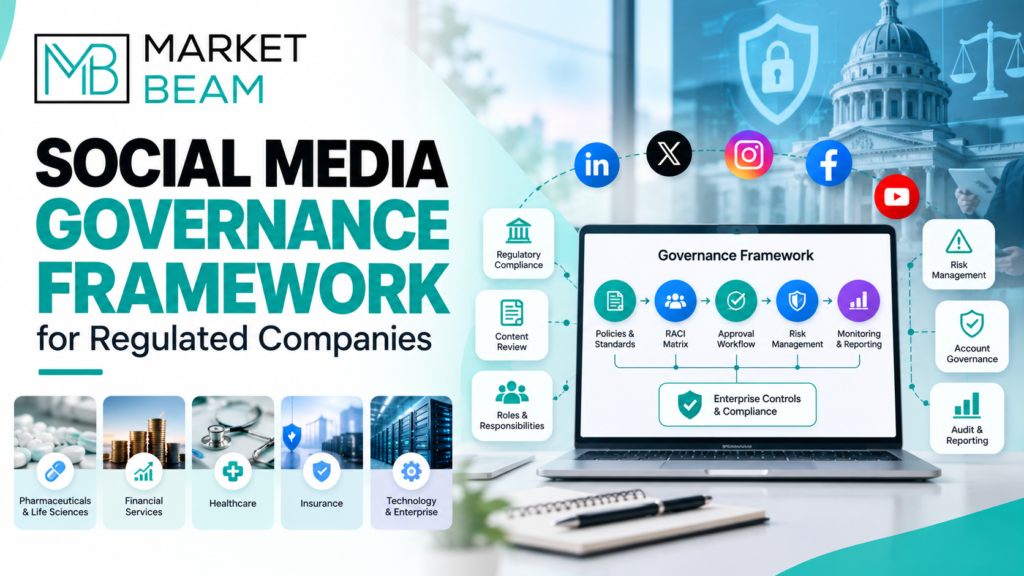
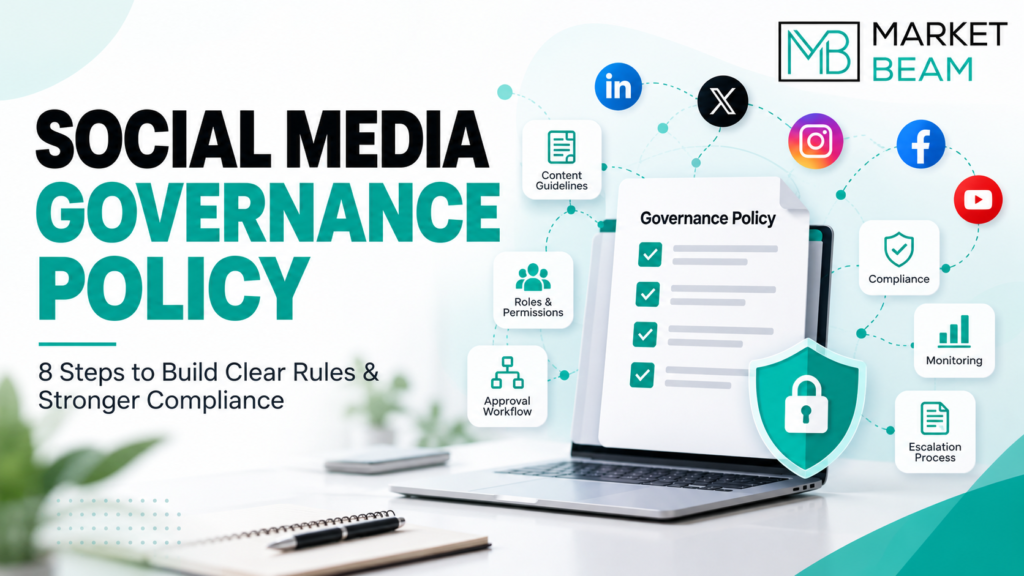
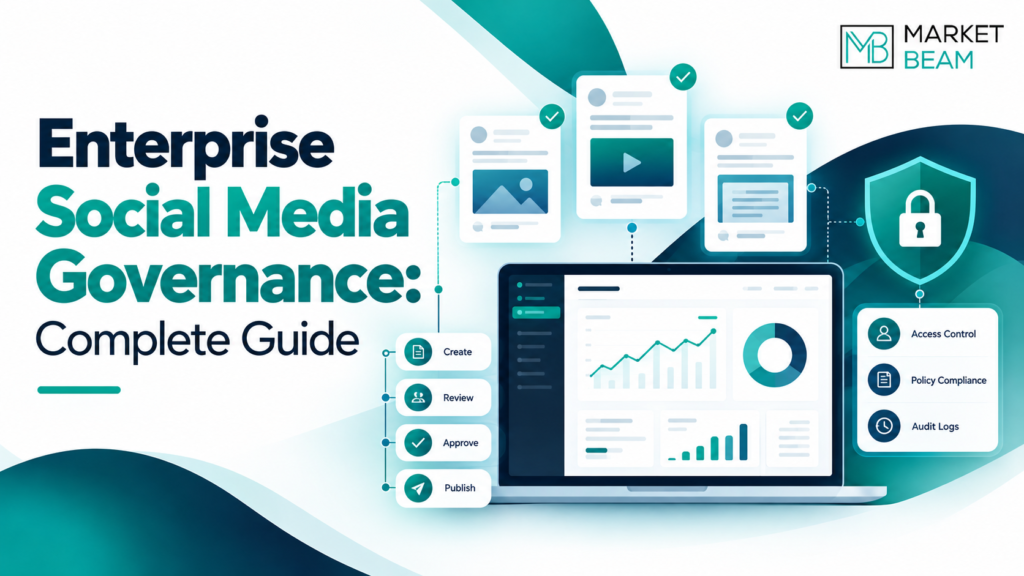
A strong strategy also needs a content approval process. Every asset should move through a defined workflow. Drafts should be reviewed, comments should be tracked, approvals should be documented, and final content should be easy to publish. This is why a social media publishing platform is valuable for pharma teams that need both speed and control.
Finally, the strategy should include measurement. Teams should review what content performs best, which channels drive engagement, which employees amplify reach, and which campaigns support business goals. MarketBeam’s social media analytics helps regulated teams understand performance while keeping social activity organized.
The Role of Content Approval in Pharma Marketing
Content approval is one of the most important parts of pharma marketing. It protects the company, the audience, and the brand. In regulated industries, approval is not a final checkbox. It is part of the full marketing workflow.
A strong content approval process helps teams avoid inaccurate claims, missing safety information, off-label messaging, inconsistent language, and unsupported statements. It also creates a record of who reviewed the content, what changed, and when the final version was approved.
This matters even more for social media. A post may look short, but it can still carry regulatory risk. A few words can change the meaning of a claim. An image, hashtag, or link can also affect context. Therefore, pharma marketing teams need to treat social content with the same discipline as other promotional assets.
MarketBeam’s AI MLR Prechecks can support this process by helping teams identify possible compliance issues earlier. This does not replace human review, but it helps reduce avoidable back-and-forth before content enters formal approval.
For many pharma companies, the future of pharma marketing depends on making approval workflows faster, clearer, and easier to manage.
Pharma Product Launches Need Social Media Planning
Product launches are one of the most important moments in pharma marketing. A launch requires education, awareness, field alignment, HCP engagement, internal coordination, and controlled communication. Social media can support all of these needs when it is planned properly.
A pharma product launch should not start with random posts after approval. It should begin with a content plan. The team should define launch phases, approved messages, target audiences, content formats, channel use, employee amplification, and measurement goals.
Before launch, social media can support disease awareness, corporate credibility, event visibility, and thought leadership. During launch, it can support approved announcements, educational content, conference updates, and leadership messages. After launch, it can support ongoing engagement, content performance tracking, and audience education.
The safest approach is to prepare approved social content before the launch date. This reduces last-minute pressure and helps teams publish on time. It also gives employees approved content they can share without creating their own unreviewed messages.
MarketBeam’s employee advocacy solution helps pharma teams extend reach through employees while keeping content controlled and compliant. This is important because employee sharing can increase visibility, but only if the message remains approved and consistent.
HCP Engagement and Omnichannel Pharma Marketing
HCP engagement is a growing part of pharma marketing. Healthcare professionals expect useful, relevant, and timely information. They do not want generic promotion. They want content that helps them understand science, treatment context, disease education, product updates, and patient support information.
Social media can support HCP engagement as part of a broader omnichannel strategy. It should not work alone. It should connect with webinars, events, email campaigns, sales enablement, approved content hubs, and field communication.
The goal of omnichannel pharma marketing is to deliver consistent messaging across touchpoints. When social media is disconnected from the rest of the strategy, teams lose visibility. When it is connected, teams can understand how content performs, where audiences engage, and which messages create interest.
This is where compliant social media management becomes important. Pharma teams need to coordinate content, approvals, publishing, advocacy, monitoring, and analytics in one place. Otherwise, omnichannel execution becomes fragmented.
A strong HCP engagement strategy should focus on value. Content should educate, clarify, and support professional understanding. It should not overclaim or oversell. This makes governance and approval essential.
Why Agencies Alone Are Not Enough
Many pharmaceutical companies work with agencies, and agencies can add strong creative and strategic value. However, agencies alone cannot solve every pharma marketing challenge. A brand still needs internal control, approval visibility, compliance records, publishing access, employee governance, and performance data.
If an agency creates content but the approval process stays manual, delays remain. If publishing happens from multiple tools, governance becomes harder. If employees share content outside a controlled system, risk increases. If analytics are scattered across platforms, reporting becomes difficult.
This is why pharma companies should think beyond the question of agency versus software. The better question is how to combine expert strategy with controlled execution.
MarketBeam can support internal teams and agencies by creating one workflow for compliant social media management. Agencies can help create content. Internal teams can review and approve. MarketBeam can manage publishing, advocacy, monitoring, and analytics in a controlled system.
This makes pharma marketing more scalable because the process does not depend on scattered emails, manual posting, or disconnected approvals.
How MarketBeam Supports Pharma Marketing Teams
MarketBeam is designed for regulated industries that need compliant social media management. For pharma marketing teams, this means the platform helps reduce the gap between marketing speed and regulatory control.
With MarketBeam, teams can plan content, manage approvals, publish across social channels, support employee advocacy, review analytics, and maintain control over social activity. This is especially useful for pharma, biotech, medtech, healthcare, and financial services teams that cannot afford unmanaged communication risk.
The platform supports compliant social publishing, controlled employee amplification, approval workflows, analytics, and integrations that matter for regulated teams. Instead of treating social media as a separate activity, MarketBeam helps bring it into a structured marketing and compliance workflow.
For teams focused on pharma marketing, this creates several advantages. Content can move faster. Employees can share approved messages. Campaign performance becomes easier to measure. Social governance becomes more consistent. Compliance teams gain better visibility. Marketing teams gain more confidence.
Explore how MarketBeam supports regulated teams through social media management for life sciences and compliant digital growth.
<strong>CTA: Ready to improve compliant pharma marketing? Schedule a MarketBeam demo and see how your team can manage social media approvals, publishing, advocacy, and analytics in one place.</strong>
Common Pharma Marketing Mistakes to Avoid
One common mistake is treating pharma marketing like normal B2B marketing. Pharma has different rules, review needs, audience expectations, and risk levels. The strategy must reflect that.
Another mistake is creating content before defining the approval pathway. This leads to rework, delays, and confusion. Approval should be built into the workflow from the beginning.
A third mistake is ignoring employees as a distribution channel. Employees can increase reach and credibility, but they need approved content and clear sharing rules.
A fourth mistake is measuring only surface-level engagement. Likes and impressions matter, but pharma marketers should also track approved content usage, employee shares, campaign reach, traffic contribution, engagement trends, and channel performance.
A fifth mistake is relying on disconnected tools. When content, approvals, publishing, monitoring, and reporting live in separate systems, teams lose visibility. For regulated industries, that creates unnecessary risk.
How to Measure Pharma Marketing Success
Pharma marketing success should be measured through both performance and governance. A campaign may generate engagement, but if it creates compliance problems, it is not successful. At the same time, a perfectly compliant campaign still needs to support business goals.
Useful performance metrics include reach, impressions, engagement rate, clicks, follower growth, content shares, video views, and website visits from social channels. For employee advocacy, teams should track employee participation, shared posts, engagement from employee networks, and contribution to total reach.
Governance metrics are also important. Teams should review approval cycle time, content rejection reasons, publishing consistency, campaign readiness, and audit trail completeness. These metrics help identify workflow bottlenecks.
For example, if launch content is consistently delayed, the issue may not be creative quality. It may be the approval process. If employee advocacy participation is low, the issue may be lack of approved content or unclear instructions. If content engagement is weak, the message or channel mix may need improvement.
Strong pharma marketing requires continuous improvement. Teams should review data, learn from performance, and refine future campaigns.
Future of Pharma Marketing
The future of pharma marketing will be more digital, more data-driven, and more compliance-focused. Teams will need to create more content across more channels while maintaining control. This will increase the need for automation, structured workflows, AI-assisted checks, and integrated approval systems.
However, technology should support strategy, not replace it. The best teams will combine human expertise with smart tools. Medical, legal, regulatory, marketing, and commercial teams will need to work together more closely.
Social media will continue to play a bigger role in brand trust, HCP engagement, awareness campaigns, event promotion, and employee advocacy. Companies that build compliant social workflows now will be better prepared for future growth.
In the long run, successful pharma marketing will depend on one core ability: communicating clearly, quickly, and responsibly.
Conclusion
Pharma marketing is no longer limited to traditional campaigns. It now includes digital communication, social media publishing, HCP engagement, product launch planning, employee advocacy, analytics, and compliance workflows. The opportunity is large, but so is the responsibility.
To succeed, pharma teams need a strategy that protects the brand while improving speed and reach. They need approved messaging, structured workflows, clear governance, and reliable measurement. They also need tools that understand regulated-industry requirements.
MarketBeam helps pharma teams manage social media in a compliant and scalable way. With support for publishing, approvals, employee advocacy, analytics, Veeva integration, and AI MLR Prechecks, MarketBeam gives regulated teams a better way to grow online.
FAQs
What is pharma marketing?
Pharma marketing is the process of promoting pharmaceutical products, disease awareness programs, healthcare education, and brand messages to audiences such as healthcare professionals, patients, caregivers, and partners. It must follow strict compliance and approval requirements.
Why is compliance important in pharma marketing?
Compliance is important because pharmaceutical communication must be accurate, fair, balanced, and supported by approved claims. Poorly managed content can create regulatory risk, damage trust, and lead to internal review issues.
How can social media support pharma marketing?
Social media can support pharma marketing by increasing awareness, promoting approved content, supporting product launches, engaging healthcare professionals, amplifying employee advocacy, and sharing educational updates in a controlled way.
What is the role of MLR review in pharma marketing?
MLR review helps ensure that medical, legal, and regulatory teams review promotional content before it is published. This process reduces risk and helps confirm that messages are accurate and compliant.
How does MarketBeam help pharma marketing teams?
MarketBeam helps pharma marketing teams manage compliant social publishing, approval workflows, employee advocacy, analytics, Veeva integration, and AI MLR Prechecks in one platform.