Social media is no longer optional for pharmaceutical companies. It plays a direct role in brand credibility, healthcare professional education, patient awareness, recruitment, investor relations, and corporate communications. However, unlike consumer industries, pharma operates under strict regulatory oversight that governs every public communication.
Pharma social media compliance exists to ensure that digital engagement does not compromise patient safety, mislead audiences, or violate regulatory standards. A single non-compliant post, reply, or employee share can trigger regulatory scrutiny, reputational damage, or long-term legal exposure.
This cluster blog expands on social media best practices for pharma by focusing specifically on compliance rules, operational risks, and proven best practices that regulated teams must follow to scale social media safely and confidently.
What Is Pharma Social Media Compliance?
Pharma social media compliance refers to the structured processes, policies, and technologies used to ensure that all social media activity aligns with regulatory, medical, and legal requirements. This applies to organic posts, paid campaigns, comments, replies, employee advocacy, influencer collaborations, and archived content.
Unlike most industries, pharmaceutical companies are accountable not only for what they publish, but also for how audiences interact with that content. Any communication that references a drug, therapy area, disease state, or treatment outcome may be interpreted as regulated promotional material.
Pharma social media compliance typically includes Medical, Legal, and Regulatory (MLR) review, fair balance between benefits and risks, adverse event identification and reporting, platform-specific content limitations, and long-term record retention for audits and inspections.
Compliance is therefore not a checklist activity. It is an ongoing operational discipline embedded into daily workflows.
Why Pharma Social Media Compliance Is Non-Negotiable
Pharmaceutical organizations operate under a higher standard of accountability than most industries. Social media amplifies both opportunity and risk, making compliance essential rather than optional.
Regulatory exposure is the most obvious driver. Authorities such as the U.S. Food and Drug Administration treat digital content the same way they treat traditional promotional materials. Non-compliance can result in warning letters, corrective action plans, or financial penalties.
Reputational risk is equally significant. Healthcare professionals, patients, advocacy groups, and regulators actively monitor pharma communications. A misleading claim, missing risk disclosure, or poorly handled comment can quickly erode trust.
Operational scalability is another concern. Without compliant workflows, pharma teams cannot safely expand social media activity across brands, geographies, agencies, or internal stakeholders.
Finally, legal accountability requires every post to be defensible years after publication. If regulators request documentation, companies must prove who approved the content, which version went live, and how interactions were monitored.
Regulatory Frameworks Governing Pharma Social Media
Pharma social media compliance is shaped by multiple regulatory bodies worldwide. While the underlying principles are similar, enforcement varies by geography.
United States
In the US, the FDA regulates prescription drug promotion and advertising. Expectations include truthful and non-misleading claims, balanced presentation of benefits and risks, strict prohibition of off-label promotion, and continuous monitoring for adverse events.
The Federal Trade Commission oversees influencer marketing, sponsored content disclosures, and deceptive advertising practices. This applies directly to social media collaborations and paid amplification.
Europe and the United Kingdom
In Europe and the UK, regulators such as the European Medicines Agency and the Medicines and Healthcare products Regulatory Agency impose strict limits on direct-to-consumer promotion. Many markets require local approvals and prohibit promotional messaging to the general public.
Global Compliance Considerations
Multinational pharma companies must also manage country-specific promotional restrictions, language and cultural interpretation, local pharmacovigilance obligations, and data privacy regulations. As a result, global brands need compliance frameworks that are standardized yet flexible enough to support local execution.
Common Compliance Risks in Pharma Social Media
Even well-governed organizations face recurring compliance risks due to the real-time and interactive nature of social media.
Off-label discussions are one of the most common risks. Comments, replies, or reshared third-party content can unintentionally reference unapproved uses of a product.
Lack of fair balance is another frequent issue. Short-form social content often highlights benefits while underrepresenting risks, which regulators may classify as misleading promotion.
Missed adverse events present serious exposure. User comments, private messages, or mentions may include reportable safety information that goes unnoticed without continuous monitoring.
Unapproved content variations occur when local teams edit captions, visuals, or hashtags after MLR approval, invalidating the original sign-off.
Missing audit documentation creates long-term risk. Without clear records, organizations cannot demonstrate compliance during inspections, audits, or legal inquiries.
Each of these risks increases as social media programs scale across regions and teams.
The Role of MLR Review in Pharma Social Media
Medical, Legal, and Regulatory review is the foundation of pharma social media compliance. MLR ensures that content is medically accurate, legally defensible, and aligned with approved labeling.
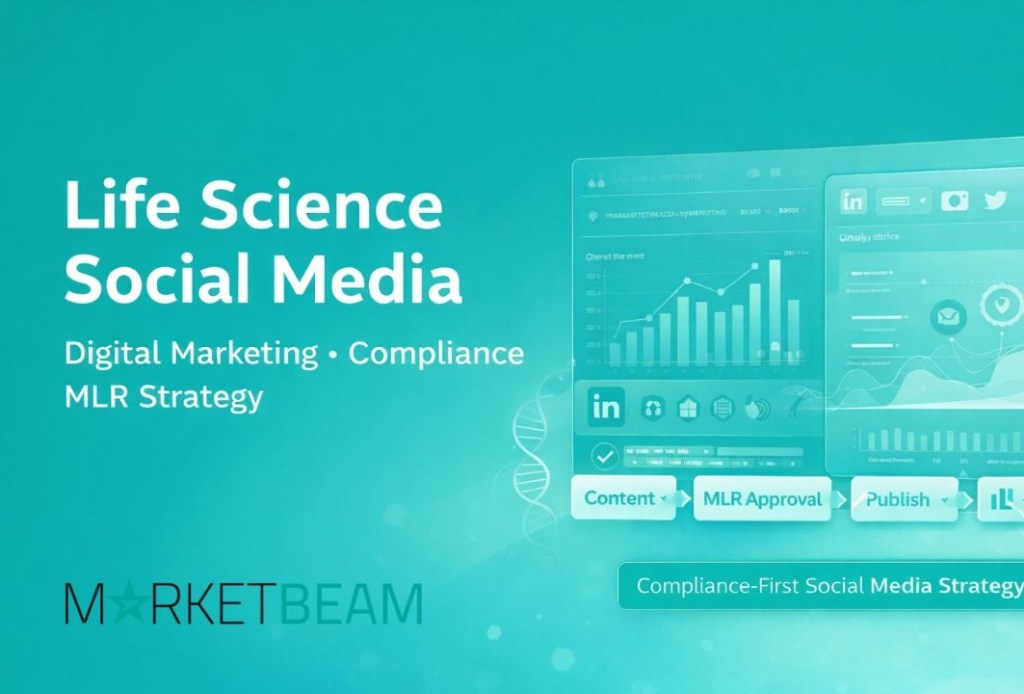
A structured MLR workflow for social media typically includes content creation by marketing teams, automated pre-checks for claims and risk language, review by medical, legal, and regulatory stakeholders, comment-level feedback and revisions, final approval with version locking, controlled publishing from approved systems, and archival storage for audits.
Traditional MLR processes designed for print or long-form assets often struggle with the speed and volume of social media. Digital-first MLR workflows enable faster turnaround without sacrificing compliance.
Platform-Specific Compliance Challenges
Each social platform introduces unique compliance considerations.
LinkedIn is widely used for healthcare professional engagement and corporate communication. Risks include professional claims, employee resharing, and unmoderated comment threads.
X (formerly Twitter) presents challenges due to character limits, which make fair balance difficult. Conversations evolve rapidly, increasing off-label and adverse event exposure.
YouTube and video platforms require verbal and visual risk disclosures. Comments remain visible long-term and must be monitored continuously.
Instagram and Facebook rely heavily on visuals, which can imply claims even without explicit text. Influencer and sponsored content must be clearly disclosed and approved.
Effective pharma compliance strategies account for these platform-specific risks rather than applying generic rules.
Best Practices for Pharma Social Media Compliance
Strong compliance programs are built into everyday workflows, not layered on at the end.
Embedding compliance early in the content creation process reduces rework and risk. Mandatory approval stages and standardized templates help prevent errors.
Centralizing content and governance eliminates version confusion and ensures consistent enforcement across teams and regions.
Automating risk detection through AI-assisted pre-checks helps identify promotional language, missing disclosures, or high-risk phrasing before MLR review.
Continuous conversation monitoring enables timely detection of adverse events, misinformation, or risky discussions.
Maintaining robust audit trails ensures every post is traceable, defensible, and inspection-ready years after publication.
Together, these practices transform compliance from a bottleneck into a scalable operating model.
Employee Advocacy and Compliance in Pharma
Employee advocacy can significantly extend reach but introduces additional compliance risk if not governed correctly.
Employees may unintentionally add personal commentary, modify captions, or respond to questions in ways that create regulatory exposure.
Best practices for compliant employee advocacy include allowing only pre-approved content to be shared, preventing caption or image edits, tracking who shared what and when, and retaining audit records for all employee activity.
When designed correctly, employee advocacy becomes a controlled extension of the brand rather than a compliance liability.
How Technology Enables Scalable Pharma Compliance
Manual processes cannot keep pace with modern pharma social media programs. Compliance-focused technology enables teams to scale safely.
Key capabilities include MLR-aligned approval workflows, automated enforcement of publishing controls, real-time adverse event monitoring, integration with regulated content repositories, and long-term audit and record retention.
Technology allows marketing teams to operate with speed while giving compliance and legal teams full visibility and control.
FAQ: Pharma Social Media Compliance
| Question | Answer |
|---|---|
| Is social media allowed for pharmaceutical companies? | Yes. Pharma companies may use social media if all content follows regulatory guidelines, passes MLR review, and maintains fair balance. |
| Do comments and replies require compliance oversight? | Yes. Comments may include off-label discussions or adverse events and must be monitored. |
| What qualifies as an adverse event on social media? | Any mention of side effects, safety concerns, or negative reactions related to a product. |
| How long should social media records be retained? | Typically 5–10 years, depending on regional regulations and internal policy. |
| Can employees share pharma content on social media? | Yes, but only pre-approved content through controlled advocacy programs. |
| Are influencers allowed to promote pharma brands? | Yes, with strict disclosures, approved messaging, and ongoing monitoring. |
| Does paid social media follow different rules? | Paid and organic content are held to the same regulatory standards. |
| Can AI be used in pharma social media compliance? | Yes, for pre-checks, monitoring, and workflow automation, with human oversight. |
Conclusion: Compliance as a Strategic Advantage
Pharma social media compliance is not about limiting communication. It is about enabling safe, scalable, and credible engagement in a highly regulated environment.
Organizations that invest in compliant workflows benefit from faster approvals, reduced regulatory risk, stronger trust with healthcare stakeholders, and the ability to scale global social media programs confidently.
As social media continues to shape pharmaceutical communication, compliance will remain a competitive advantage for brands that approach it strategically.
With MarketBeam, MedTech companies can manage influencer content, track engagement, and automate compliance—all within one secure platform.
👉 Learn more about Social Media Compliance for MedTech