Social media has evolved from a simple communication channel into critical business infrastructure. Brands today manage multiple platforms, regions, teams, and compliance requirements—often simultaneously. To keep up, organizations increasingly rely on social media automation powered by modern social media management software.
However, automation is not a blanket solution.
While automation can improve efficiency and consistency, automating the wrong activities can introduce compliance risks, reputational damage, and loss of trust—especially in regulated industries such as pharmaceuticals, life sciences, healthcare, and financial services.
This guide explains:
-
What social media automation can safely handle
-
What should not be automated
-
How the right social media management software balances speed, control, and governance
What Is Social Media Automation?
Social media automation refers to the use of software to manage repetitive, structured, and rule-based social media tasks without requiring constant manual intervention.
Within a modern social media management software, automation typically supports:
-
Content scheduling and publishing
-
Approval workflows
-
Employee advocacy distribution
-
Analytics and reporting
-
Archiving and audit trails
Automation does not mean removing people from the process. Instead, it reduces manual effort while maintaining oversight, consistency, and compliance.
Why Social Media Automation Became Essential
Three forces have made automation unavoidable.
1. Scale
Organizations now manage:
-
Multiple social platforms
-
Multiple business units
-
Multiple geographies
Manual posting and reporting no longer scale.
2. Speed
Social media operates in real time. Delays caused by email approvals, manual publishing, or fragmented tools slow down execution and reduce impact.
3. Risk
Every social media post can carry legal, regulatory, or reputational risk. Without structured controls, automation can amplify mistakes just as easily as it amplifies reach.
This is why social media management software has evolved beyond simple scheduling tools into platforms built for governance and accountability.
What Can Be Automated in Social Media (Safely)
Not all automation is risky. Many social media activities are predictable, repeatable, and well-suited for automation when managed correctly.
Content Scheduling and Publishing
Scheduling is the most widely adopted form of social media automation.
What can be automated
-
Scheduling posts across platforms
-
Time-zone-based publishing
-
Content calendars
-
Draft storage and reuse
Why it works
-
Rule-based execution
-
Low risk when approvals are enforced
-
Improves consistency and efficiency
Any enterprise-grade social media management software should support robust scheduling without compromising control.
Content Approval Workflows
Approval workflows are one of the most valuable automation capabilities—especially for regulated industries.
What can be automated
-
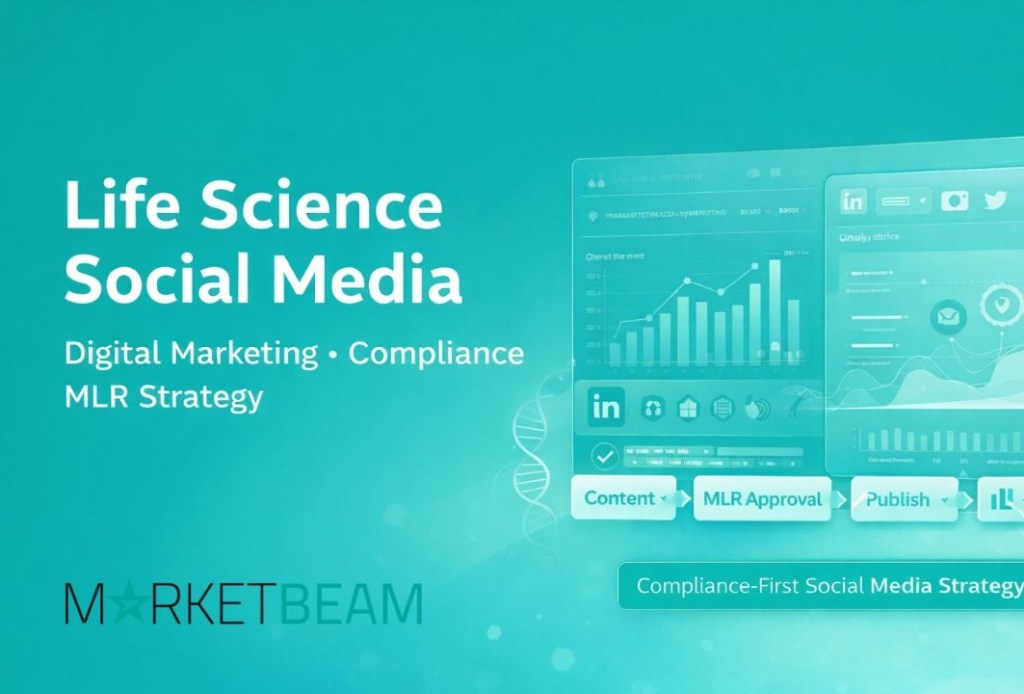
Multi-level approval chains (marketing, compliance, legal)
-
Role-based permissions
-
Version control and edit history
-
Automated publishing only after approval
Why it matters
-
Eliminates email chaos
-
Prevents unauthorized publishing
-
Creates a defensible audit trail
Approval automation is not about speed alone. It is about ensuring every post is compliant, traceable, and accountable.
Employee Advocacy Distribution
Employee advocacy can dramatically expand reach, but only when controlled.
What can be automated
-
Distribution of pre-approved content
-
Role-based access to advocacy libraries
-
One-click or auto-share options
-
Performance tracking
What should remain human
-
The decision to share
-
Optional personal commentary
When employee advocacy is embedded into social media management software, automation increases adoption while reducing compliance risk.
Analytics and Reporting
Analytics automation is both safe and highly effective.
What can be automated
-
Performance dashboards
-
Scheduled reports
-
Campaign-level analytics
-
Engagement and reach tracking
Why it works
-
Data-driven, not judgment-based
-
No compliance exposure
-
Saves hours of manual analysis
Automated analytics allow teams to focus on insights instead of spreadsheets.
Archiving and Audit Trails
Often overlooked, archiving is critical in regulated environments.
What can be automated
-
Post archiving
-
Edit history retention
-
Comment capture
-
User activity logs
For industries with retention and audit requirements, automated archiving is a foundational feature of social media management software.
What Should NOT Be Fully Automated
Automation is powerful—but only when used with restraint. Certain social media activities require human judgment and should never be fully automated.
Content Creation Without Human Review
AI can assist content creation, but it should not replace review.
Why full automation fails
-
Lacks context and nuance
-
Cannot assess regulatory implications
-
Risks tone, accuracy, and compliance
In regulated industries, every post must pass human validation—regardless of how it was created.
Automated Commenting and Engagement
Auto-reply bots can be dangerous.
Risks include
-
Responding incorrectly to sensitive topics
-
Missing medical, financial, or legal context
-
Escalating issues instead of resolving them
Safer alternative
-
Automated alerts
-
Human-approved responses
-
Escalation workflows
Social engagement should be assisted by automation, not driven by it.
Compliance Decisions
Compliance cannot be fully automated.
Why
-
Regulations evolve constantly
-
Interpretation varies by geography and context
-
Accountability must remain human
What automation should do instead:
-
Enforce workflows
-
Flag risks
-
Prevent unauthorized actions
This distinction separates consumer tools from enterprise-grade social media management software.
Crisis and Reputation Management
During crises, automation must step back.
Why
-
Situations change rapidly
-
Messaging requires precision and empathy
-
Mistakes can escalate instantly
Automation should support crisis management through visibility and controls—not replace decision-making.
Automation vs Control: The Real Trade-Off
| Area | Full Automation | Controlled Automation |
|---|---|---|
| Speed | High | High |
| Risk | High | Low |
| Compliance | Weak | Strong |
| Scalability | Fragile | Sustainable |
| Trust | Low | High |
The best social media management software does not choose between automation and control—it combines them.
Why Regulated Industries Need a Different Approach
Industries like life sciences, healthcare, and financial services face:
-
Regulatory scrutiny
-
Audit requirements
-
High reputational risk
Generic automation tools focus on volume and engagement.
Compliance-first platforms focus on governance, visibility, and accountability.
For these industries, automation must be:
-
Structured
-
Auditable
-
Role-based
-
Approval-driven
This is why regulated organizations require purpose-built social media management software, not generic schedulers.
How MarketBeam Approaches Social Media Automation
MarketBeam is designed around controlled automation.
What MarketBeam automates
-
Publishing and scheduling
-
Approval workflows
-
Employee advocacy distribution
-
Analytics and reporting
-
Archiving and audit readiness
What MarketBeam protects
-
Compliance integrity
-
Brand governance
-
Human decision-making
By automating workflows—not judgment—MarketBeam enables teams to scale social media safely and efficiently.
How to Decide What to Automate in Your Organization
Before automating any activity, ask:
-
Is this task rule-based or judgment-based?
-
Does it introduce compliance or reputational risk?
-
Is there a clear approval path?
-
Can mistakes be reversed easily?
If the task is repetitive and low-risk, automation adds value.
If it requires context and accountability, control must remain human.
The Future of Social Media Automation
The future is not full automation.
It is intelligent assistance.
Expect to see:
-
AI-assisted compliance checks
-
Smarter approval workflows
-
Deeper governance integrations
-
Greater transparency and auditability
Social media is no longer just a channel. It is operational infrastructure—and automation must reflect that reality.
Conclusion: Automation Is a Tool, Not a Strategy
Social media automation delivers efficiency only when applied thoughtfully.
The role of social media management software is not to remove humans from the process, but to:
-
Reduce friction
-
Increase visibility
-
Enforce governance
-
Enable scale without risk
For regulated industries, success lies not in automating everything—but in knowing what to automate and what not to automate.
What is social media automation?
Social media automation is the use of social media management software to handle repetitive tasks such as post scheduling, approval workflows, analytics reporting, employee advocacy distribution, and content archiving. Automation helps teams scale social media operations while reducing manual effort and errors.
What tasks can be safely automated in social media management?
The following tasks can be safely automated using the right social media management software:
-
Post scheduling and publishing
-
Content approval workflows
-
Employee advocacy content distribution
-
Analytics and performance reporting
-
Social media archiving and audit trails
These tasks are rule-based and predictable, making them suitable for automation.
What social media activities should not be automated?
Activities that require judgment, context, or regulatory interpretation should not be fully automated. These include:
-
Final content approval without human review
-
Automated commenting or replies
-
Compliance and regulatory decisions
-
Crisis communication and reputation management
Automation should support these activities, not replace human oversight.
Is social media automation safe for regulated industries?
Yes, social media automation is safe for regulated industries only when it is controlled and governance-driven. Compliance-focused social media management software ensures automation is combined with approval workflows, audit logs, and role-based access to reduce regulatory risk.
How does social media management software support compliance?
Social media management software supports compliance by:
-
Enforcing multi-level approval workflows
-
Restricting publishing access by role
-
Maintaining version control and audit trails
-
Automatically archiving content and engagement
These features help organizations meet regulatory and audit requirements.
Can employee advocacy be automated?
Employee advocacy can be partially automated. Social media management software can automate the distribution of pre-approved content, but the decision to share and personalize content should remain with the employee to maintain authenticity and reduce risk.
Does automation reduce control over social media?
No. When implemented correctly, automation increases control. Enterprise-grade social media management software uses controlled automation to ensure visibility, accountability, and governance while improving speed and efficiency.
What is the difference between social media automation tools and social media management software?
Automation tools focus mainly on scheduling posts. In contrast, social media management software provides a complete system that includes automation, approvals, compliance controls, analytics, employee advocacy, and audit readiness—making it suitable for enterprise and regulated environments.
Can AI fully automate social media content creation?
AI can assist with drafting and optimization, but it should not fully automate content creation—especially in regulated industries. Human review is essential to ensure accuracy, brand alignment, and compliance before publishing.
Why is automation risky without governance?
Automation without governance can:
-
Publish unapproved or non-compliant content
-
Amplify errors at scale
-
Create audit and legal exposure
This is why automation must be paired with structured workflows inside social media management software.
How do I decide what to automate in my social media strategy?
A good rule is:
-
Automate repetitive, low-risk, rule-based tasks
-
Control tasks that require judgment, context, or compliance interpretation
The right social media management software helps you apply this balance effectively.
With MarketBeam, MedTech companies can manage influencer content, track engagement, and automate compliance—all within one secure platform.
👉 Learn more about Social Media Compliance for MedTech