Social Media Marketing Management: Tools to Save Time and Improve ROI
In today’s digital-first world, social media marketing management has become a cornerstone of business growth. Companies across all industries rely on social platforms to increase brand awareness, engage with audiences, and drive sales. However, as the social media landscape continues to evolve, managing multiple platforms efficiently requires more than just occasional posting. A strategic, data-driven approach is essential to stay ahead of the competition.
The Growing Importance of Social Media Marketing Management
With billions of users actively engaging on platforms like LinkedIn, Facebook, Twitter, and Instagram, businesses have unprecedented opportunities to connect with their target audiences. Effective social media marketing management allows companies to:
- Build meaningful relationships with customers
- Strengthen brand visibility and reputation
- Generate leads and conversions through targeted campaigns
- Track and measure engagement for continuous improvement
As social media continues to shape customer behavior and preferences, businesses that invest in streamlined management strategies gain a competitive advantage in their industries.
Challenges Businesses Face in Managing Social Media
Despite its potential, managing social media presents several challenges for businesses, such as:
- Time Constraints: Regular content creation, posting, and engagement can be time-consuming.
- Content Consistency: Maintaining a consistent brand voice and posting schedule across multiple platforms.
- Performance Tracking: Analyzing campaign performance and ROI across various channels.
- Engagement Overload: Managing customer interactions and responding to messages promptly.
- Regulatory Compliance: Ensuring adherence to industry-specific regulations, especially for sectors like healthcare and finance.
Failing to address these challenges can lead to missed opportunities, decreased engagement, and potential reputational risks.
How the Right Tools Can Streamline Efforts and Boost ROI
The right social media management tools can help businesses overcome these challenges by offering automation, insights, and streamlined workflows. These tools empower businesses to:
- Automate repetitive tasks, such as scheduling and publishing posts.
- Enhance content planning with centralized dashboards and collaboration features.
- Monitor engagement metrics to optimize performance and strategy.
- Ensure compliance with regulatory guidelines through content approvals and audits.
By leveraging the right tools, businesses can save time, improve efficiency, and achieve a higher return on investment (ROI) from their social media efforts.
Key Elements of Effective Social Media Marketing Management
Effective social media marketing management goes beyond simply posting content. It requires a strategic approach that incorporates planning, engagement, performance tracking, and compliance to ensure long-term success. Below are the key elements that contribute to a well-managed social media strategy.
1. Content Planning and Scheduling
A well-structured content plan is the backbone of any successful social media strategy. Content planning and scheduling help businesses stay organized, consistent, and aligned with their marketing goals.
Key aspects of content planning:
- Developing a content calendar to organize posts across multiple platforms.
- Aligning content with business goals, campaigns, and seasonal trends.
- Diversifying content types, including text, images, videos, and interactive formats.
- Incorporating a mix of promotional, educational, and engaging content.
Scheduling tools, such as MarketBeam, Hootsuite, and Buffer, allow businesses to automate content distribution, ensuring posts are published at optimal times to maximize engagement.
Benefits:
- Saves time by automating repetitive tasks.
- Ensures consistent posting frequency.
- Helps maintain brand voice and messaging across platforms.
2. Engagement and Community Building
Social media is not just about broadcasting messages; it’s about creating conversations and fostering a sense of community. Effective engagement helps businesses build trust, loyalty, and long-term relationships with their audience.
Key strategies for engagement:
- Responding to comments, messages, and mentions promptly.
- Encouraging user-generated content to boost authenticity.
- Hosting live Q&A sessions, polls, and interactive content to increase participation.
- Personalizing interactions by addressing users by name and providing relevant responses.
A proactive engagement strategy helps businesses humanize their brand, turn followers into advocates, and boost social media reach organically.
Benefits:
- Builds a loyal customer base.
- Enhances brand reputation and credibility.
- Encourages more shares, comments, and interactions.
3. Analytics and Performance Tracking
Tracking and analyzing social media performance is crucial to refining strategies and improving ROI. Businesses need actionable insights to understand what works and what doesn’t.
Key performance indicators (KPIs) to track:
- Engagement metrics: Likes, shares, comments, and mentions.
- Reach and impressions: The number of people who see the content.
- Conversion rates: Tracking clicks that lead to desired actions such as sign-ups or purchases.
- Audience demographics: Insights into the age, gender, and location of followers.
Tools such as Google Analytics, MarketBeam, and Sprout Social provide comprehensive analytics dashboards that help businesses measure their impact and fine-tune their social media strategies.
Benefits:
- Helps identify high-performing content.
- Provides insights into audience preferences.
- Enables data-driven decision-making for better ROI.
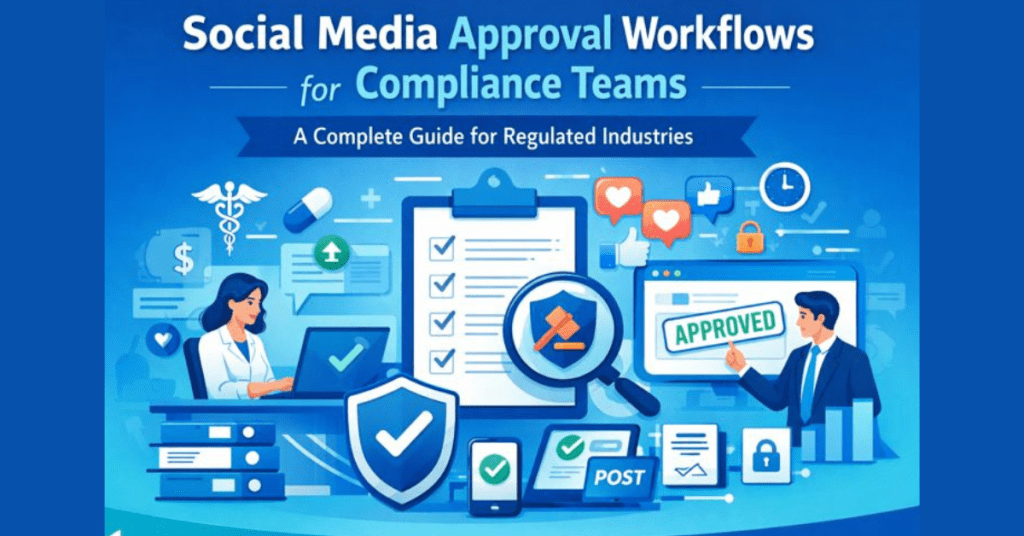
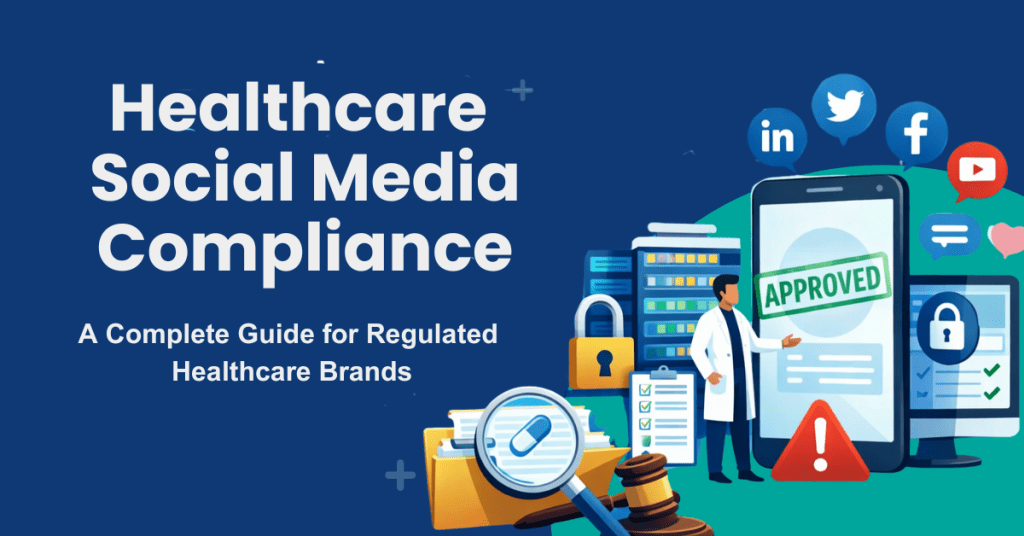
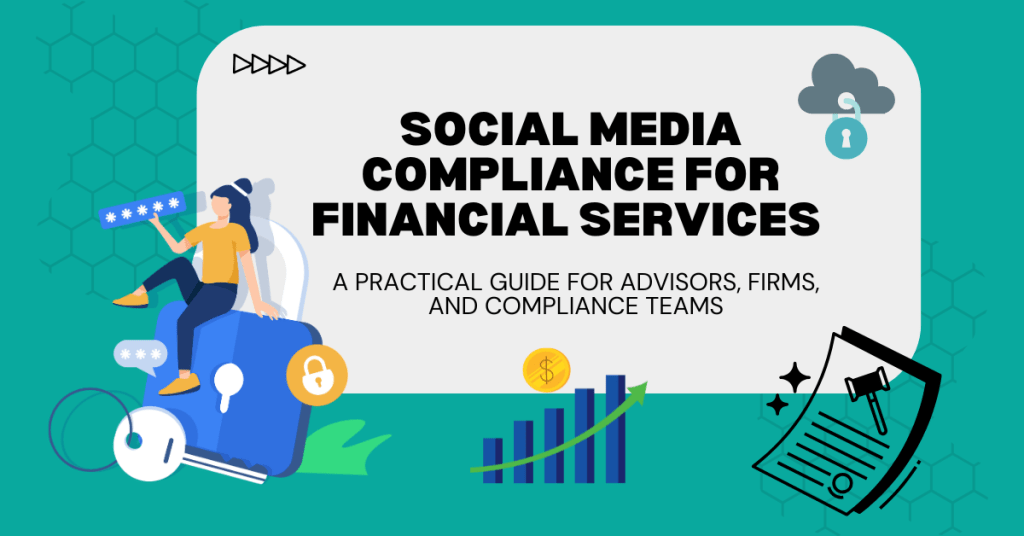
4. Compliance and Security
For businesses in regulated industries such as healthcare, finance, and pharmaceuticals, compliance is a critical aspect of social media management. Adhering to industry guidelines and ensuring data security are essential to avoid legal risks.
Key compliance factors:
- Ensuring content adheres to industry-specific regulations (e.g., FDA, HIPAA, GDPR).
- Implementing approval workflows to review content before publishing.
- Keeping a record of published content for audit purposes.
- Managing access to social media accounts with role-based permissions.
Security measures include:
- Using multi-factor authentication for social media logins.
- Monitoring accounts for suspicious activity.
- Training employees on social media best practices to avoid compliance violations.
Compliance-focused tools like MarketBeam offer built-in approval workflows and content archiving to ensure regulatory adherence while maintaining a robust social media presence.
Benefits:
- Reduces legal and reputational risks.
- Ensures brand messaging aligns with compliance requirements.
- Protects sensitive customer data from potential breaches.
By mastering these key elements—content planning, engagement, analytics, and compliance—businesses can create a sustainable and successful social media marketing strategy that drives engagement and ROI.
Benefits of Using Social Media Marketing Management Tools
Social media marketing management tools have revolutionized the way businesses handle their online presence. They provide a structured and efficient approach to managing social media accounts, enabling businesses to streamline operations, improve engagement, and achieve better ROI. Below are the key benefits of using social media marketing management tools.
1. Saving Time with Automation
Managing multiple social media platforms manually can be time-consuming and overwhelming. Social media management tools offer automation features that help businesses schedule and publish content seamlessly across various platforms.
How automation helps:
- Scheduling posts in advance: Tools like MarketBeam, Hootsuite, and Buffer allow businesses to create and schedule content across different channels, ensuring a consistent presence.
- Automated reporting: Generate performance reports without manual tracking, saving valuable time.
- Auto-responses: Set up automated replies to common inquiries, ensuring timely responses to customer queries.
Benefits:
- Reduces manual workload and saves hours of effort.
- Ensures timely posting, even outside of business hours.
- Frees up time for businesses to focus on strategy and creative initiatives.
2. Enhancing Content Consistency
Consistency is key to building a strong online presence and maintaining audience engagement. Social media marketing tools help businesses stay organized and maintain a unified brand voice across all platforms.
How tools improve content consistency:
- Content calendars: Visualize and plan content ahead of time to align with marketing campaigns and seasonal trends.
- Content libraries: Store and reuse pre-approved templates and visuals for consistent branding.
- Approval workflows: Ensure content aligns with company guidelines and compliance regulations before publishing.
Benefits:
- Builds a recognizable brand identity.
- Prevents gaps or inconsistencies in posting schedules.
- Ensures all content aligns with the overall marketing strategy.
3. Improving Audience Targeting and Engagement
Engaging with the right audience is crucial for social media success. Social media management tools provide insights and features that help businesses target their audience more effectively and foster meaningful interactions.
How tools enhance targeting and engagement:
- Advanced targeting options: Tools analyze audience demographics and behavior to tailor content for specific segments.
- Engagement tracking: Monitor interactions such as comments, shares, and mentions to respond promptly.
- Social listening: Track relevant conversations and trends to join discussions and engage potential customers.
Benefits:
- Connects businesses with the right audience at the right time.
- Increases customer engagement and builds long-term relationships.
- Enhances personalization, leading to higher conversion rates.
4. Data-Driven Decision Making for Better ROI
Social media marketing management tools provide valuable analytics that help businesses make informed decisions and optimize their strategies for better ROI.
How tools support data-driven decision-making:
- Performance tracking: Measure KPIs such as engagement rates, click-through rates, and follower growth.
- Competitor analysis: Compare performance against industry competitors to identify strengths and weaknesses.
- A/B testing: Experiment with different content types and strategies to find the most effective approach.
Benefits:
- Helps businesses understand what content resonates with their audience.
- Provides actionable insights to refine marketing strategies.
- Increases ROI by focusing efforts on high-performing tactics.
By leveraging social media marketing management tools, businesses can save time, ensure content consistency, improve engagement, and make data-driven decisions, ultimately leading to a more effective and profitable social media strategy.
Top Social Media Marketing Management Tools
Selecting the right social media marketing management tool is crucial for businesses looking to streamline their social media efforts, improve engagement, and achieve better ROI. Whether you need automation, analytics, or compliance support, there are several powerful tools available to suit different needs. Here’s a breakdown of some of the top tools to consider.
1. MarketBeam – Employee Advocacy & Compliance
Best for: Regulated industries such as life sciences, fintech, and healthcare that require compliance and employee advocacy.
MarketBeam is a specialized social media marketing tool that goes beyond traditional scheduling and publishing. It focuses on employee advocacy by empowering employees to share company-approved content, increasing organic reach and engagement. Additionally, it offers robust compliance features, making it ideal for businesses in regulated sectors.
Key Features:
- Automated content sharing through employees’ social networks.
- Approval workflows to ensure regulatory compliance.
- Real-time analytics for brand pages and employee shares.
- Integration with CRM platforms like Salesforce and Veeva.
Why Choose MarketBeam?
- Ensures industry compliance with built-in approval processes.
- Boosts brand reach through employee networks.
- Ideal for non-technical users with a user-friendly interface.
Pricing: Starts at $99 per month.
2. Hootsuite – Scheduling & Monitoring
Best for: Businesses looking for an all-in-one platform with content scheduling, social listening, and analytics capabilities.
Hootsuite is one of the most popular social media management platforms, providing a centralized dashboard to schedule posts, monitor social conversations, and analyze performance. It’s widely used by businesses of all sizes due to its scalability and extensive integrations.
Key Features:
- Multi-platform scheduling (Facebook, LinkedIn, Twitter, Instagram, etc.).
- Social listening to track brand mentions and hashtags.
- Team collaboration features for efficient content management.
- In-depth analytics with custom reporting.
Why Choose Hootsuite?
- Supports multiple accounts with ease.
- Robust analytics and monitoring capabilities.
- A large ecosystem of integrations with third-party tools.
Pricing: Offers a free plan with limited features; paid plans start at $99/month.
3. Buffer – Streamlined Publishing and Analytics
Best for: Small to mid-sized businesses focusing on content publishing and performance tracking.
Buffer is known for its simplicity and ease of use, making it a great choice for businesses that prioritize streamlined content scheduling and analytics without complex features. It’s ideal for companies that need a straightforward solution for managing their social media presence.
Key Features:
- Simple content scheduling across major social platforms.
- Performance analytics to track engagement and audience growth.
- Team collaboration features with user-level permissions.
- Browser extension and mobile app support for easy content sharing.
Why Choose Buffer?
- Easy-to-use interface for beginners.
- Affordable pricing with a free tier available.
- Great for businesses focusing on content-driven strategies.
Pricing: Free plan available; paid plans start at $15/month.
4. Sprout Social – Advanced Analytics & CRM Integration
Best for: Enterprises that require deep analytics, customer engagement, and CRM integration.
Sprout Social offers comprehensive social media management solutions with an emphasis on analytics and customer relationship management. It’s perfect for businesses that need advanced insights to optimize their social media strategy.
Key Features:
- Smart inbox to manage social conversations in one place.
- In-depth social media analytics with competitor benchmarking.
- CRM tools to manage customer interactions.
- Post performance tracking and audience demographic insights.
Why Choose Sprout Social?
- Excellent reporting and analytics features.
- Helps businesses understand audience behavior in detail.
- Integrates well with CRM systems to enhance customer relationships.
Pricing: Plans start at $249/month.
5. SocialBee – Budget-Friendly Automation
Best for: Startups and small businesses looking for affordable automation solutions.
SocialBee is a cost-effective social media management tool that offers advanced automation features, helping businesses save time while maintaining an active social media presence. Its affordability makes it an attractive option for small businesses and freelancers.
Key Features:
- Content categorization for better organization.
- Automated publishing to multiple platforms.
- Evergreen content recycling to maximize reach.
- Performance analytics and reporting features.
Why Choose SocialBee?
- Affordable pricing for small businesses.
- Excellent automation capabilities with minimal manual effort.
- Content reusability for better efficiency.
Pricing: Plans start at $19/month.
Choosing the Right Tool for Your Business
When selecting a social media marketing management tool, consider the following factors:
- Business Size and Goals: Determine if you need enterprise-level analytics or simple content scheduling.
- Features Required: Look for tools that align with your priorities, such as automation, compliance, or engagement tracking.
- Budget Constraints: Choose a tool that provides the best ROI without exceeding your marketing budget.
- Scalability: Ensure the tool can grow with your business as your social media presence expands.
By leveraging these top social media management tools, businesses can streamline their marketing efforts, improve audience engagement, and achieve better returns on their social media investments.
Choosing the Right Tool for Your Business
Selecting the best social media marketing management tool requires a clear understanding of your business goals, operational needs, and budget constraints. With numerous tools available in the market, choosing the right one can significantly impact your social media efficiency and return on investment (ROI). Here’s how you can make an informed decision.
1. Evaluating Your Business Needs
Before investing in a social media management tool, it’s crucial to assess your business’s unique requirements. Consider factors such as your target audience, marketing objectives, and internal resources to determine what features and functionalities will be most beneficial.
Key questions to ask:
- What are our primary social media goals (brand awareness, lead generation, customer engagement)?
- Which platforms do we actively use (LinkedIn, Twitter, Facebook, Instagram, etc.)?
- How much content do we produce weekly, and do we need automation?
- Do we require compliance and approval workflows (especially for regulated industries)?
- What is our team’s level of expertise in social media management?
Tip: If your business operates in a regulated industry such as healthcare or finance, compliance and approval features should be a top priority when choosing a tool.
2. Key Features to Look For
Different tools offer varying features, and it’s important to prioritize the functionalities that align with your social media goals. Below are the must-have features to consider when selecting a tool:
- Content Scheduling and Automation:
- Ability to schedule posts across multiple platforms in advance.
- Automated posting based on audience activity and engagement insights.
- Analytics and Reporting:
- In-depth performance metrics such as reach, engagement, and conversions.
- Customizable reports for stakeholder presentations.
- Social Listening and Engagement:
- Monitoring brand mentions and industry trends.
- Sentiment analysis to understand customer perceptions.
- Compliance and Security:
- Built-in approval workflows for regulated industries.
- Audit trails and content archives for compliance purposes.
- Role-based access control to ensure data security.
- Employee Advocacy Features:
- Empower employees to share brand content to extend reach.
- Track employee engagement and lead generation efforts.
- Integration with Other Platforms:
- CRM integrations (e.g., Salesforce, HubSpot) for lead tracking.
- Marketing automation integrations to streamline workflows.
Tip: Choose a tool that offers a free trial or demo to test its ease of use and key functionalities before making a commitment.
3. Pricing and Scalability Considerations
Cost is a critical factor when selecting a social media management tool. While some tools offer budget-friendly solutions for small businesses, others provide enterprise-grade features at a premium price.
Key factors to consider:
- Pricing plans: Evaluate the cost structure and see if it aligns with your budget. Some tools charge per user, while others offer fixed pricing.
- Scalability: Ensure the tool can accommodate your business growth, such as adding more social accounts or users as your operations expand.
- Hidden costs: Check for any additional costs related to integrations, advanced analytics, or custom features.
- Support and training: Consider whether the pricing includes dedicated customer support and training resources to help your team maximize the tool’s potential.
Comparison example:
| Tool | Starting Price | Key Features | Best For |
| MarketBeam | $99/month | Compliance, Employee Advocacy | Regulated Industries |
| Hootsuite | $99/month | Scheduling, Analytics | All Business Sizes |
| Buffer | $15/month | Publishing, Performance Tracking | Small Businesses |
| Sprout Social | $249/month | Advanced Analytics, CRM | Enterprises |
| SocialBee | $19/month | Budget-Friendly Automation | Startups and Solopreneurs |
Tip: If you are a small business or startup, look for tools that offer flexible plans without compromising essential features such as content scheduling and analytics.

By thoroughly evaluating your business needs, prioritizing essential features, and carefully analyzing pricing and scalability, you can confidently select the right social media marketing management tool to maximize your efficiency and ROI.
Best Practices for Maximizing ROI with Social Media Tools
Using social media marketing management tools effectively requires a strategic approach to maximize return on investment (ROI). Simply adopting a tool isn’t enough; businesses must follow best practices to ensure they are getting the most value out of their investment. Below are key best practices to help you leverage social media tools to their fullest potential.
1. Setting Clear Objectives and KPIs
To achieve success with social media, it’s crucial to set clear, measurable objectives and identify the right key performance indicators (KPIs) to track progress. Without well-defined goals, businesses may struggle to measure the effectiveness of their social media efforts.
How to set objectives effectively:
- Align goals with overall business objectives (e.g., brand awareness, lead generation, customer engagement).
- Use the SMART framework (Specific, Measurable, Achievable, Relevant, Time-bound) to define goals.
- Identify relevant KPIs such as:
- Engagement metrics (likes, comments, shares).
- Click-through rates (CTR) to measure content effectiveness.
- Conversion rates to track lead generation efforts.
- Audience growth and reach over time.
Tip: Regularly review goals and KPIs to ensure they align with evolving business priorities and market trends.
2. Creating a Content Calendar
A well-planned content calendar helps businesses maintain a consistent posting schedule, align with marketing campaigns, and effectively manage social media content across different platforms.
Key elements of a content calendar:
- Identify key dates and events relevant to your audience (e.g., industry events, product launches, holidays).
- Plan a mix of content types, including educational, promotional, and user-generated content.
- Schedule posts at optimal times to maximize reach and engagement.
- Allocate content across different platforms while ensuring brand consistency.
Benefits of using a content calendar:
- Prevents last-minute content creation stress.
- Ensures alignment with business goals and marketing campaigns.
- Improves team collaboration and accountability.
Tip: Use tools like MarketBeam, Hootsuite, or Buffer to automate content scheduling and gain visibility into upcoming posts.
3. Leveraging Automation Without Losing Authenticity
While automation is essential for efficiency, maintaining authentic engagement with your audience is equally important. Over-reliance on automation can make your social media presence feel robotic and disengaging.
Best practices for balancing automation and authenticity:
- Schedule routine posts but ensure real-time interactions for timely engagement.
- Personalize automated responses to retain a human touch.
- Regularly monitor comments and messages to respond with authentic, personalized replies.
- Use AI-driven automation for analytics and optimization while keeping content creation organic.
Examples of tasks to automate:
- Post scheduling and publishing across platforms.
- Performance reporting and analytics tracking.
- Social listening for tracking brand mentions and industry trends.
Tip: Avoid auto-replies for sensitive customer inquiries; instead, prioritize personalized responses to maintain trust.
4. Regularly Analyzing and Optimizing Campaigns
Consistently monitoring and optimizing your social media campaigns ensures that you are improving performance over time and achieving better ROI. Data-driven decision-making helps refine strategies based on actual performance metrics.
Steps to analyze and optimize effectively:
- Review analytics reports to identify trends and areas for improvement.
- Conduct A/B testing to determine the best-performing content formats and posting times.
- Analyze audience demographics and engagement patterns to adjust targeting strategies.
- Optimize underperforming campaigns by tweaking content, visuals, or CTAs.
- Track competitor performance to gain insights and refine your approach.
Key metrics to focus on:
- Engagement rates (likes, shares, comments).
- Website traffic driven from social media channels.
- Lead generation and conversion rates.
- Cost per acquisition (CPA) and return on ad spend (ROAS).
Tip: Leverage insights from social media tools like Sprout Social and MarketBeam to continuously refine content strategies and improve ROI.
By implementing these best practices—setting clear objectives, maintaining a content calendar, balancing automation, and optimizing campaigns regularly—businesses can maximize their ROI and build a successful social media presence.
Case Studies: How Businesses Improved ROI with Social Media Tools
Social media management tools have proven to be game-changers for businesses of all sizes, helping them improve efficiency, engagement, and ultimately, ROI. Whether small businesses are looking to expand their reach or large enterprises are aiming for deeper customer engagement, the right tools can deliver significant results. Here are real-world success stories that demonstrate the impact of social media management tools.
Success Stories from Small Businesses
Small businesses often have limited resources and budgets, making it crucial to maximize efficiency and ROI from their social media efforts. With the help of the right social media tools, many have transformed their marketing strategies and achieved impressive growth.
Case Study 1: A Local Boutique Using MarketBeam for Employee Advocacy
- Challenge: A small boutique brand struggled to expand its online presence and engage local audiences effectively.
- Solution: They adopted MarketBeam, leveraging its employee advocacy feature to amplify their content reach by encouraging employees to share posts within their networks.
- Results:
- 3x increase in organic reach through employee-shared content.
- 50% higher engagement rates on posts compared to previous manual efforts.
- Significant improvement in local foot traffic and online store sales.
- Key Takeaway: Employee advocacy can help small businesses leverage personal networks to achieve organic growth cost-effectively.
Case Study 2: Securonix Using MarketBeam for Enhanced Social Media Engagement
- Challenge: Securonix, a cybersecurity firm, faced difficulties in engaging their target audience and driving social media interactions due to limited internal resources. Their goal was to amplify their social reach and establish themselves as thought leaders in the cybersecurity industry.
- Solution: The company implemented MarketBeam to automate content sharing and utilize employee networks for broader reach. They focused on compliance-driven content approvals and real-time analytics to fine-tune their campaigns.
- Results:
- 70% increase in brand visibility across LinkedIn and Twitter.
- Enhanced employee participation with a 2x boost in content sharing.
- Higher engagement rates, leading to more qualified leads from social media.
- Key Takeaway: Leveraging social media automation and employee networks can significantly enhance engagement, particularly in highly specialized industries like cybersecurity.
Key Insights from These Case Studies
- Employee Advocacy Can Drive Organic Reach – Small businesses can tap into their employees’ networks to expand their social media footprint without heavy advertising costs.
- Automation Boosts Efficiency – Startups and enterprises alike benefit from automation to save time and maintain consistent messaging.
- Compliance Is Critical for Regulated Industries – Tools with approval workflows and compliance tracking ensure businesses stay within legal boundaries.
- Customer Engagement Drives Growth – Real-time interactions and social listening can help businesses connect with their audience and improve brand loyalty.
By learning from these success stories, businesses can implement similar strategies to improve their social media management, save time, and boost ROI.
In today’s fast-paced digital landscape, effective social media marketing management is crucial for businesses looking to maintain a strong online presence, engage with their audience, and achieve their marketing goals. By leveraging the right tools and strategies, businesses can work smarter—not harder—when it comes to social media.
Making Social Media Work Smarter, Not Harder
Managing social media doesn’t have to be overwhelming or time-consuming. With the right tools in place, businesses can:
- Automate repetitive tasks, freeing up time for strategic planning and creativity.
- Ensure content consistency, maintaining a strong brand presence across all platforms.
- Enhance engagement, by responding to audience interactions in real time.
- Leverage data-driven insights, to optimize content strategies and boost ROI.
By focusing on automation, analytics, and compliance, businesses can streamline their social media efforts, reduce manual workload, and achieve measurable results with minimal effort.
Try MarketBeam for Streamlined Management
If you’re looking for a comprehensive solution to simplify your social media marketing management, MarketBeam is the perfect tool to help your business:
✔ Automate content scheduling across multiple platforms.
✔ Enhance employee advocacy and maximize organic reach.
✔ Ensure compliance with industry regulations through approval workflows.
✔ Gain valuable insights to measure and optimize performance.
Take the next step in transforming your social media strategy. Try MarketBeam today and experience smarter, more efficient social media management!