
1. Introduction
Importance of Social Media in the Financial Services Industry
Social media has evolved into more than just a platform for brand awareness — it’s now a critical tool for customer engagement, education, and reputation management in the financial services industry. From large banks to fintech startups, financial institutions are increasingly turning to social media to connect with clients, share valuable insights, and differentiate themselves in a competitive market.
From Brand Engagement to Compliance Concerns
However, with opportunity comes responsibility. While social media enables real-time interactions and brand-building, it also opens the door to regulatory scrutiny, customer complaints going viral, and misinformation risks. For financial institutions — which operate in one of the most tightly regulated sectors — the stakes are higher. Every tweet, post, or reply could be subject to compliance checks and legal oversight.
Why Social Media Monitoring Is Critical in 2025
In 2025, real-time social media monitoring isn’t just a marketing function — it’s a compliance safeguard, a customer service enhancer, and a brand protector. With increasing regulatory expectations and customer demand for transparency, financial services companies must monitor digital conversations across all platforms to detect risks, address issues proactively, and ensure all communications remain compliant.
2. What Is Social Media Monitoring for Financial Services?
Definition and How It Differs from Social Listening
Social media monitoring refers to the real-time tracking of conversations, keywords, mentions, and engagement across social platforms. For financial services, this means keeping an eye on what clients, prospects, and even employees are saying about your brand, products, or industry trends.
While often used interchangeably, social listening focuses on analyzing broader trends, themes, and audience sentiment over time. In contrast, social monitoring is more immediate and action-oriented — it helps identify specific posts or interactions that may require a response, especially those that pose compliance or reputational risks.
Real-Time Tracking of Brand Mentions, Keywords, and Conversations
Effective social media monitoring tools continuously scan platforms like LinkedIn, X (formerly Twitter), Facebook, and forums for:
- Direct brand mentions (e.g., “@YourBank”)
- Industry keywords (e.g., “mortgage rates,” “fintech investments”)
- Hashtags and trending topics relevant to financial services
This tracking enables institutions to quickly spot viral feedback, customer questions, or negative sentiment before it escalates.
Monitoring Both Customer Sentiment and Regulatory Risks
In financial services, monitoring goes beyond marketing. Institutions must ensure their content and interactions meet regulatory standards (e.g., FINRA, SEC, GDPR). Monitoring tools help flag risky language, unauthorized disclosures, or misinformation — all in real time.
Additionally, analyzing sentiment helps gauge how your audience feels about your services. Are people frustrated with loan delays? Confused about investment options? Happy with customer service? Social monitoring provides these insights instantly, enabling faster decision-making and improved customer experience.
3. Why Monitoring Matters in the Financial Industry
Key Drivers: Trust, Transparency, and Responsiveness
Trust is the foundation of any relationship in the financial sector. Whether you’re a bank, fintech startup, or investment firm, your clients expect clarity, honesty, and quick responses — especially online. Social media monitoring allows you to actively track conversations, respond in real time, and demonstrate transparency. This builds credibility and fosters long-term client relationships.
Financial Services Are Under Constant Regulatory Scrutiny
Unlike other industries, financial services operate in a highly regulated environment. Institutions are required to maintain a record of public communication and ensure compliance with regulations like FINRA, SEC, FCA, or GDPR. Any misstep on social media — even an employee sharing incorrect financial advice — can lead to hefty fines or reputational damage. Monitoring helps ensure all content stays within regulatory guidelines and can be archived for audit purposes.
Social Media as a Growing Customer Service Channel
More customers now reach out to financial institutions via social platforms for support, questions, or feedback. Whether it’s a query about credit card limits or a complaint about a mortgage application, customers expect timely, accurate responses. Monitoring tools help your support teams catch and respond to these mentions quickly, improving customer satisfaction and retention.
Crisis Management: Identifying Red Flags Early
A single viral post or negative review can damage years of brand trust. Social media monitoring acts as an early warning system by flagging:
- Negative sentiment spikes
- High-frequency complaints
- Misinformation about your services
- Mentions of data breaches or fraud
By spotting issues early, you can take action before they escalate into full-blown crises.
4. Compliance and Regulatory Considerations
Overview of Major Regulations: FINRA, SEC, FCA, GDPR, and More
Financial institutions operate in one of the most tightly regulated sectors. When it comes to social media, firms must comply with various regulatory bodies that set strict communication standards:
- FINRA (U.S.) – Requires firms to ensure all communications, including social media posts, are fair, balanced, and not misleading.
- SEC (U.S.) – Regulates disclosures related to investment products and prohibits false or exaggerated claims.
- FCA (UK) – Enforces marketing compliance, ensuring that financial promotions are clear, fair, and not misleading.
- GDPR (EU) – Applies to all firms handling personal data, including data collection via social media, and mandates strict data privacy practices.
These regulations require financial firms to actively monitor, manage, and document their digital communications — making real-time social media monitoring a non-negotiable.
Examples of Non-Compliance on Social Media
Social media mistakes can lead to major financial and reputational consequences. Here are a few cautionary tales:
- A U.S.-based investment firm was fined $300,000 for a tweet that promised unrealistic returns without the required risk disclaimers.
- A bank’s employee shared client testimonials on LinkedIn without prior approval — a FINRA violation that resulted in formal enforcement.
- A European fintech ran Facebook retargeting campaigns without valid data consent, leading to a GDPR fine and public backlash.
These incidents underscore how easily social media content can cross compliance boundaries — and why ongoing monitoring is vital.
Why Monitoring Is Crucial for Record-Keeping and Audit Trails
Regulatory bodies often require firms to retain a record of all customer-facing communications — including social media posts, replies, and even deleted content. Without proper monitoring tools, this becomes incredibly difficult to manage.
Social media monitoring enables:
- Timestamped capture of posts, messages, and interactions
- Automated alerts for non-compliant content
- Content tagging and workflow tracking for review and approval
- Exportable audit logs for inspections or internal reporting
This streamlines compliance and ensures firms are always audit-ready.
Social Media Monitoring vs. Archiving: What’s the Difference?
While both are essential for compliance, they serve distinct functions:
| Aspect | Social Media Monitoring | Social Media Archiving |
| Purpose | Real-time detection, alerts, and risk mitigation | Long-term storage of digital communications |
| Focus | Tracking posts, mentions, and engagement instantly | Preserving records for legal and audit purposes |
| Use Cases | Flagging risky language, monitoring sentiment, alerts | Recalling historical data during compliance reviews |
| Primary Users | Marketing, compliance, customer service teams | Legal, audit, and compliance departments |
An effective social media governance strategy in financial services requires both capabilities — monitoring for proactive control, and archiving for reactive compliance.
5. Key Features to Look for in a Monitoring Tool
Not all social media monitoring tools are created equal — especially when it comes to the strict requirements of the financial services industry. Below are the essential features financial institutions should look for when selecting a tool that balances marketing efficiency with regulatory compliance.
Real-Time Alerts for Brand Mentions and Keywords
Speed is everything in social media. A monitoring tool should deliver instant alerts when your brand, products, or executives are mentioned — whether positively or negatively. It should also allow you to track specific keywords, hashtags, or competitor names, so your team can respond swiftly to customer concerns, emerging trends, or potential crises.
Flagging of Risky or Non-Compliant Language
To remain compliant with regulations like FINRA, SEC, or FCA, your tool should be able to automatically flag posts that include high-risk language. This includes:
- Promises of guaranteed returns
- Unauthorized investment advice
- Unapproved promotions
- Use of misleading financial terms
Automated flagging helps your compliance team step in before such content is published or goes viral.
AI-Powered Sentiment Analysis
Understanding how your audience feels about your brand is crucial. Advanced tools use AI to assess sentiment — whether posts are positive, neutral, or negative — across platforms. This helps identify PR risks early, track customer satisfaction trends, and fine-tune your messaging accordingly.
Integration with Compliance Workflows (e.g., Veeva, Salesforce)
Financial institutions often rely on enterprise platforms like Veeva for regulated content approval and Salesforce for CRM. Your monitoring tool should integrate seamlessly with these systems to:
- Route flagged posts through compliance workflows
- Log customer interactions into your CRM automatically
- Support MLR (Medical, Legal, Regulatory) approval cycles
These integrations streamline operations and keep marketing, sales, and compliance aligned.
Historical Logs and Reports for Audits
To meet audit requirements, your monitoring tool must offer robust historical logging. This includes:
- Timestamped records of all social interactions
- Approval workflows
- Reports of flagged incidents and responses
- Exportable archives for regulatory audits
Having this data readily accessible reduces compliance risk and simplifies internal reviews or external investigations.
6. Best Practices for Social Media Monitoring in Financial Services
To truly benefit from social media monitoring, financial institutions must go beyond basic alerts and tracking. A structured, cross-functional approach ensures that monitoring not only supports compliance but also enhances marketing performance and customer trust. Here are some proven best practices:
Develop a Content and Risk Monitoring Matrix
Start by building a monitoring matrix that outlines:
- Types of content (educational, promotional, transactional)
- Associated risk levels (low, medium, high)
- Required approvals or review steps
- Response protocols for flagged content
This structured approach helps teams quickly prioritize what needs attention and ensures consistent handling of different types of social posts.

Coordinate Between Marketing, Legal, and Compliance Teams
Social media monitoring isn’t just a marketing task — it’s a collaborative responsibility. Ensure seamless coordination between:
- Marketing teams, who create and publish content
- Legal and compliance departments, who define regulatory boundaries
- Customer service teams, who often engage directly with clients online
Establish shared workflows for content review, escalation paths for risky mentions, and clearly defined roles for each team.
Set Up Platform-Specific Monitoring Rules (LinkedIn, X, TikTok)
Each social platform has unique formats, audiences, and engagement styles. Tailor your monitoring approach accordingly:
- LinkedIn: Monitor long-form posts, thought leadership content, and employee shares.
- X (Twitter): Focus on real-time mentions, trending hashtags, and direct customer complaints.
- TikTok: Watch for viral short videos, influencer collaborations, and user-generated content using your brand name.
Customizing rules per platform ensures better coverage and relevance.

Monitor Both Brand-Owned and Employee Advocacy Content
Many financial firms encourage employees to share company content — a powerful strategy for reach and trust. However, employee advocacy introduces compliance risk if not monitored properly.
Best practices include:
- Using tools that allow pre-approved content sharing
- Monitoring employee posts for language that could be interpreted as financial advice
- Training employees on social media policies and content boundaries
Use Monitoring Insights for Campaign Improvement and Crisis Response
Social media monitoring is not just reactive — it should feed back into your strategy. Use insights from your monitoring data to:
- Identify high-performing content themes
- Spot common customer concerns and create targeted FAQs
- Improve response times and message tone
- Prepare playbooks for common crisis scenarios
Proactive use of insights can elevate your campaigns and prevent issues before they escalate.
By adopting these best practices, financial services companies can create a social media environment that is not only compliant but also customer-centric, data-driven, and reputationally secure.

7. Tools That Support Compliance-Focused Monitoring
Choosing the right social media monitoring tool is critical for financial institutions operating in a regulated environment. The ideal platform must offer more than just social tracking — it should also support compliance, approvals, analytics, and seamless integrations with enterprise tools.
Here’s a comparison of some of the top platforms designed (or adapted) for financial services:
Top Social Media Monitoring Tools for Financial Services
| Tool | Compliance Alerting | CRM & MLR Integration | Analytics & Reporting | Pricing | Best For |
| MarketBeam | ✅ Real-time, customizable | ✅ Veeva, Salesforce, HubSpot | ✅ Detailed + employee-level | Starts at $99/mo | Medium to large financial institutions |
| Sprinklr | ✅ Enterprise-grade | ✅ Salesforce, ServiceNow | ✅ Advanced AI analytics | $$$ (Enterprise only) | Global enterprises with large teams |
| Hootsuite + Proofpoint | ✅ (via add-on) | ✅ Limited MLR integrations | ✅ Standard with add-ons | $$ + additional costs | Firms needing basic compliance add-ons |
| Smarsh | ✅ Archiving + supervision | ✅ Strong archiving tools | ✅ Focused on record-keeping | $$$ (custom quote) | Archiving-focused compliance teams |
Why MarketBeam Is Ideal for Medium-Large Financial Institutions
While several platforms offer monitoring and basic compliance, MarketBeam stands out by offering a solution purpose-built for regulated industries like financial services, pharma, fintech, and healthcare.
Here’s what sets MarketBeam apart:
- ✅ Built-in MLR workflow support for content approvals
- ✅ Integrated employee advocacy monitoring — including auto-share and compliance tracking
- ✅ LinkedIn and CRM enrichment — ties social engagement to lead profiles
- ✅ Affordable pricing and faster onboarding than enterprise-heavy alternatives
- ✅ User-friendly interface, ideal for both marketers and non-technical users
- ✅ No-code compliance workflows and real-time flagging for high-risk content
MarketBeam enables financial institutions to strike the perfect balance between marketing agility and regulatory control — without the complexity or cost of legacy enterprise systems.
8. Real-World Examples / Use Cases
Social media monitoring isn’t just a tool — it’s a strategic asset. Here are three real-world-inspired examples showing how financial institutions have used monitoring to solve critical challenges and improve outcomes across customer service, compliance, and reputation management.
Example 1: A Mid-Sized Investment Firm Preventing Misinformation
Challenge:
A mid-sized wealth management company noticed a spike in online chatter after a blog post inaccurately claimed the firm was discontinuing its retirement services.
Solution:
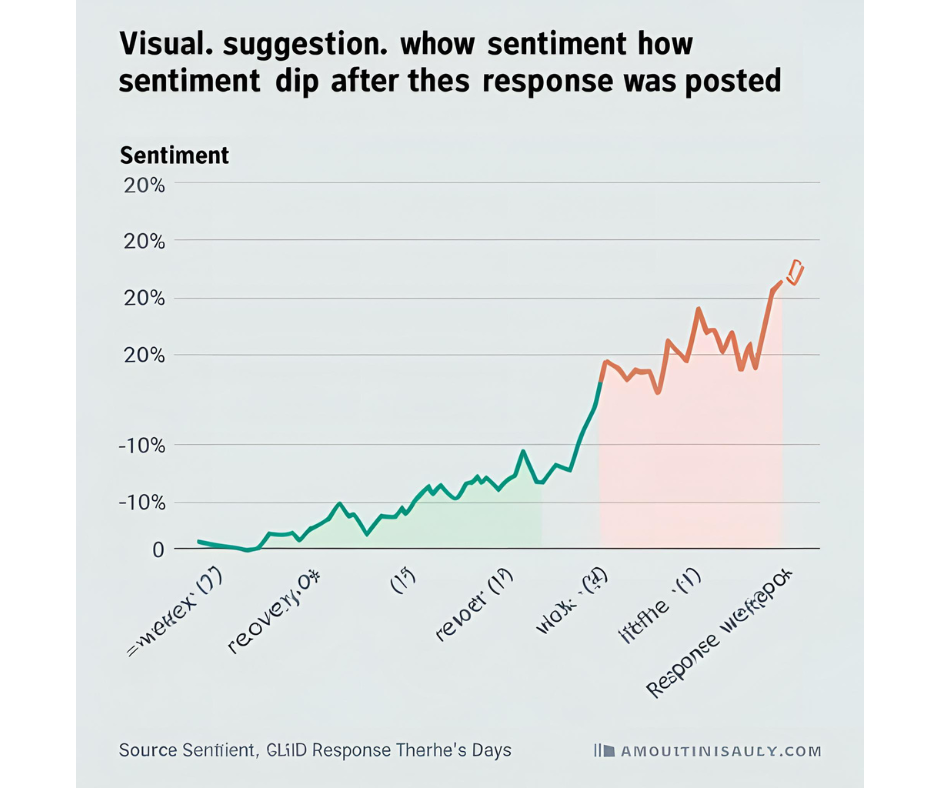
Using MarketBeam’s real-time monitoring and alert system, the firm’s team detected dozens of posts spreading this misinformation within the first 30 minutes. The compliance team flagged the trend, and the PR department quickly issued a correction across all platforms.
Outcome:
- Prevented a potential brand crisis
- Released an official statement within 2 hours
- Reclaimed narrative with accurate information
- Boosted online engagement by 22% after the post
Example 2: Bank Using Social Monitoring to Improve Customer Service Response Times

Challenge:
A regional bank was receiving complaints about long response times on social media, especially for mortgage-related queries.
Solution:
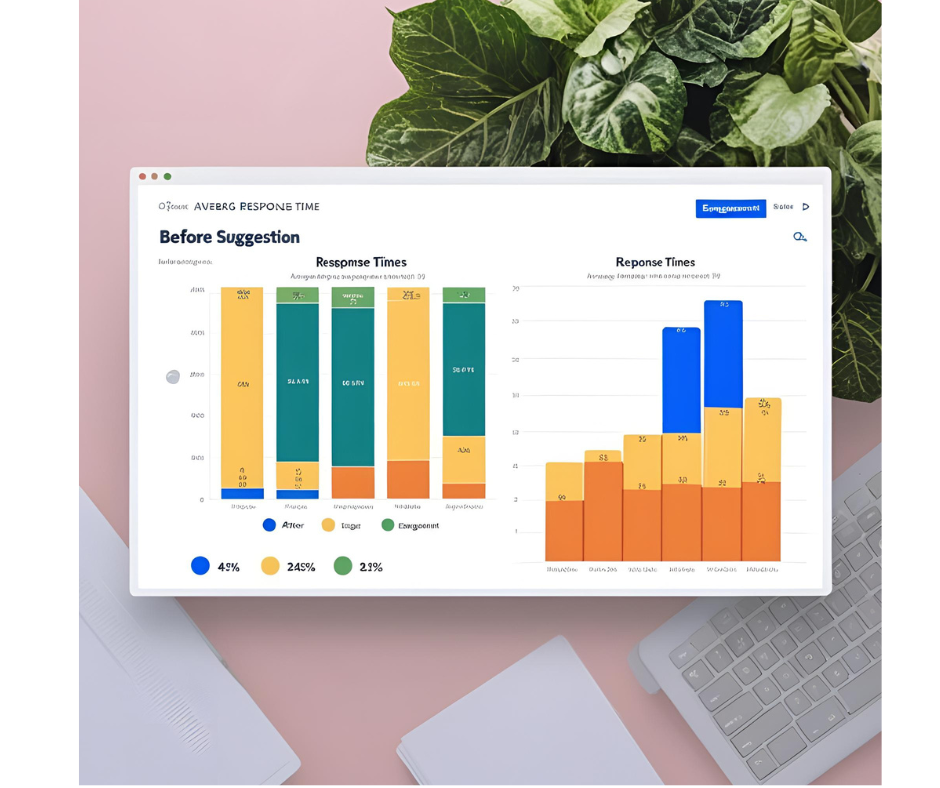
By enabling MarketBeam’s platform integrations with CRM and support teams, the bank used monitoring to:
- Automatically detect and route urgent customer posts
- Set SLAs for first response time
- Track agent response analytics
Outcome:
- 40% faster response time across Facebook and LinkedIn
- 18% increase in positive sentiment
- Identified trending customer pain points, which were addressed via FAQs and blog posts
Example 3: Compliance Team Avoiding Regulatory Action by Monitoring Flagged Posts
Challenge:
A fintech startup’s marketing team launched a new savings product campaign that included social posts suggesting “guaranteed growth” — a potential violation of FINRA’s advertising guidelines.
Solution:
Before the post went live, MarketBeam’s built-in compliance workflow flagged the risky language and routed it to the compliance team for review. The language was adjusted to reflect accurate, risk-compliant terminology.
Outcome:
- Avoided potential regulatory fines
- Preserved brand trust and legal safety
- Saved time and internal escalation effort
- Enhanced cross-department collaboration between marketing and legal

These use cases highlight the versatility and business value of social media monitoring — not just for compliance, but also for real-time engagement, brand protection, and smarter marketing decisions.
9. Emerging Trends in Social Monitoring for Finance
As the financial services industry continues its digital transformation, so does the landscape of social media monitoring. The tools and techniques once used purely for tracking mentions and replies are now evolving into intelligent, predictive systems — equipped to handle compliance, risk, and engagement at scale. Here are the top trends shaping the future of social monitoring in finance:
AI-Driven Risk Detection
Artificial intelligence is rapidly enhancing the ability to detect high-risk content before it escalates. AI models can now:
- Identify sensitive phrases or regulatory red flags
- Flag content that appears misleading or non-compliant
- Detect sentiment shifts that could signal customer dissatisfaction or reputational risk
These smart systems learn over time, helping compliance and legal teams intervene faster and with greater precision.
Monitoring Employee Engagement & Social Advocacy
As more financial institutions embrace employee advocacy programs, monitoring employee-shared content becomes crucial. Forward-thinking tools now:
- Track performance of shared posts by individual employees
- Monitor for brand alignment and compliance in employee-shared content
- Provide advocacy insights without infringing on privacy
This allows organizations to amplify their message while keeping oversight intact.
Predictive Compliance Scoring
Some platforms are introducing compliance scoring engines that evaluate the risk of a post before it’s published. This emerging capability:
- Assigns a risk score to each draft based on language, claims, and content type
- Flags content requiring pre-approval
- Guides marketing teams in making safer content choices up front
Think of it as a compliance check engine — offering guidance before a violation occurs.
Industry-Specific Dashboards & Reporting
One-size-fits-all analytics are being replaced by financial services-specific dashboards. These reports focus on:
- Regulatory compliance tracking
- Industry-specific engagement benchmarks
- Social media ROI by product type (e.g., loans, investments, insurance)
- Channel-level insights for platforms like LinkedIn, X, TikTok, and niche forums
Custom dashboards enable clearer communication between marketing, compliance, and C-level stakeholders — all aligned around data that matters most to finance.
By embracing these trends, financial institutions can move beyond reactive monitoring into a predictive, proactive, and performance-driven approach — all while staying compliant in an increasingly complex digital world.
10. Conclusion
In today’s fast-moving digital landscape, real-time social media monitoring is no longer optional for financial institutions — it’s essential. From identifying potential compliance violations to responding to customer concerns, effective monitoring ensures that your brand remains trusted, agile, and regulation-ready.
By adopting a monitoring strategy that balances brand engagement with risk mitigation, financial services firms can unlock powerful insights while staying aligned with strict industry standards. The right tool doesn’t just flag risks — it empowers teams to act confidently, collaborate better, and build stronger customer relationships.
In short: Smart social media monitoring = better brand control, better compliance, and better business outcomes.
Ready to take control of your brand’s digital presence with confidence?
🎯 Book a demo with MarketBeam
See how our purpose-built platform for regulated industries can protect your brand, simplify compliance, and maximize your social media ROI.
👉 Schedule your free demo today.
❓ Frequently Asked Questions (FAQs)
1. What is social media monitoring for financial services?
Social media monitoring for financial services is the process of tracking, analyzing, and auditing online conversations related to banks, fintechs, and investment firms. It ensures that every post or customer interaction follows FINRA, SEC, and FCA compliance guidelines while maintaining brand reputation.
2. Why is social media monitoring important for banks and financial institutions?
Monitoring helps financial institutions detect non-compliant language, prevent data leaks, and quickly respond to customer issues. It protects firms from regulatory fines and builds trust through transparent, compliant engagement across social channels.
3. How does AI improve compliance in social media monitoring?
AI technology automatically scans posts, comments, and replies for high-risk terms such as “guaranteed returns” or “investment advice.” It flags potential violations before publishing, saving compliance teams valuable time and preventing costly rework.
4. Which regulations govern social media use in the financial sector?
Financial firms must comply with rules set by FINRA, SEC, and FCA, including FINRA Rule 2210 for communications with the public and SEC Rule 17a-4 for record retention. These standards require accurate, balanced, and archived communications.
5. How is MarketBeam different from other monitoring tools?
MarketBeam combines AI-powered monitoring, automated compliance review, and employee advocacy in a single platform. Unlike traditional tools that only archive content, MarketBeam enables real-time publishing, alerting, and analytics for regulated industries.
6. Can employee advocacy programs be compliant in financial services?
Yes. With the right monitoring platform, employee advocacy can be both safe and compliant. MarketBeam ensures all employee posts go through pre-check reviews, maintaining consistency and compliance before amplification.
7. What are the emerging trends in financial social media compliance for 2025?
In 2025, financial compliance is shifting toward predictive AI, real-time risk detection, and cross-platform analytics. Firms are adopting integrated tools like MarketBeam to automate compliance checks while enhancing brand engagement.
8. How can financial organizations get started with MarketBeam?
Financial institutions can schedule a personalized demo to see how MarketBeam automates monitoring, compliance, and publishing workflows. Visit marketbeam.io to request a demo today.