Social Publishing and Its Role in Modern Digital Marketing
Understanding Social Publishing
– Definition of Social Content Distribution:
– Social publishing refers to the process of distributing content across social media platforms, blogs, and other online channels to reach wider audiences. This encompasses the sharing of blogs, videos, images, infographics, and other digital assets through social networks or media platforms.
– In today’s fast-paced digital environment, social publishing ensures that businesses can distribute content effectively and engage with their audience in real time.
Why Social Publishing is Crucial for Digital Marketing Success
– Enhancing Brand Visibility:
– Content broadcasting plays a pivotal role in increasing a brand’s presence online by consistently publishing valuable content that keeps the audience engaged. The more content you publish, the higher the chances of your brand appearing in front of potential customers.
– Example: A healthcare company regularly publishing educational content about new medical technologies through social media platforms improves its visibility among medical professionals and patients.
– Engagement Through Media Distribution:
– Social publishing enables brands to foster direct engagement with their audience. By broadcasting content that resonates with users, businesses can encourage conversations, shares, and loyalty. It also allows for immediate feedback, giving businesses an edge in understanding audience needs.
– Examples of Media Distribution Platforms: Twitter, LinkedIn, Facebook, Instagram, and industry-specific platforms like Veeva (for life sciences). Each platform provides unique opportunities for expanding a business’s digital footprint and reaching new demographics.
Strategic Role of Social Publishing in Marketing
– Content Sharing’s Impact on Different Industries:
– Healthcare: Regular publishing of patient education materials or research updates helps healthcare organizations stay relevant and credible.
– Technology: Tech companies use content sharing to explain complex solutions, driving engagement through thought leadership articles, product demos, and industry insights.
– Retail: Strategic content publishing through social media or product blogs promotes new products and seasonal sales, directly impacting purchasing decisions.
– Targeted Publishing for Niche Audiences:
– Personalized Content: Social publishing allows businesses to tailor their content to specific segments. This is especially useful for industries like life sciences and healthcare, where targeting by profession (e.g., doctors, researchers) or patient demographics is critical.
– Maximizing Reach: By targeting niche audiences through strategic platforms, brands can maximize their return on investment and create more impactful marketing campaigns.
2. Best Practices for Social Media Content Distribution
Top Tactics for Effective Content Publishing
- Optimize Your Content Distribution for Maximum Engagement:
- To maximize the impact of your content, it’s essential to optimize how and where it’s distributed. Each platform (LinkedIn, Instagram, Twitter, etc.) has its own set of algorithms and audience behaviors, which means your distribution strategy should be tailored to the platform you’re using.
- Diversify Your Content: Share a mix of content types (articles, videos, infographics) to engage different segments of your audience.
- Repurpose Content: Adapt your long-form blog posts into shorter social media snippets, or create infographics and videos from the same content to expand its lifespan.
- Leverage User-Generated Content (UGC): Encourage your audience to share their own experiences with your brand to build trust and community engagement.
Optimizing Your Content Schedule for Maximum Engagement
- Timing is Everything:
- One of the key factors in social publishing success is timing. Post when your target audience is most active on each platform to maximize your visibility.
- Platform-Specific Posting Times: For example, LinkedIn posts tend to perform better during business hours, while Instagram and Facebook posts often get more traction during evenings and weekends.
- Consistency Matters: Maintaining a consistent posting schedule (daily, weekly, or monthly) keeps your audience engaged and ensures that your content is part of their regular consumption habits.
- Frequency of Posting: Striking a balance is important. Too many posts can overwhelm your audience, while too few can result in loss of visibility and engagement.
- A/B Testing: Experiment with different posting times and frequencies to determine what works best for your brand and audience.
Tools to Enhance Your Social Publishing Strategy
- Leverage Automation for Efficiency:
- Social media publishing tools can save significant time and effort by automating content scheduling, allowing you to focus on strategy and content creation. These tools often come with analytics to help measure the effectiveness of your posts.
Top Tools for Social Publishing:
MarketBeam: Specifically designed for regulated industries like healthcare, MarketBeam allows automated scheduling, MLR-compliant publishing, and social media governance.
Buffer: A user-friendly tool for scheduling and analyzing content performance, especially popular for smaller teams.
Sprout Social: Offers a comprehensive set of tools, including post-scheduling, content performance analysis, and audience engagement tracking.
Hootsuite: Allows you to schedule posts, track social media metrics, and manage multiple platforms from one dashboard.
Essential Social Publishing Tools and Platforms
Top Tools for Streamlining Content Publishing
– MarketBeam: Specifically designed for regulated industries like healthcare and finance, MarketBeam automates content distribution while ensuring compliance with industry regulations. It integrates content review workflows, MLR approval, and employee advocacy, making it an ideal tool for enterprises needing strict oversight.
– Hootsuite: Known for its comprehensive dashboard, Hootsuite allows businesses to schedule posts, manage multiple social media accounts, and track performance metrics all in one place.
– Buffer: A user-friendly tool that simplifies social media scheduling and provides insights into post performance. Ideal for small businesses or individuals looking to maintain a consistent publishing schedule.
– Sprout Social: This tool provides a more in-depth approach to content publishing with features for social listening, analytics, and audience engagement, making it great for medium to large businesses.
– CoSchedule: A popular choice for teams who want to align social media with their broader content marketing strategies. Its editorial calendar feature simplifies planning, scheduling, and publishing posts across platforms.
Best Platforms for Maximizing Content Reach
– LinkedIn: A professional network platform that works especially well for B2B companies, providing great opportunities for content amplification through targeted posts and employee engagement.
– Instagram: Best for visual content and storytelling, Instagram is a key platform for businesses looking to connect with younger audiences through creative visuals and influencer partnerships.
– Facebook: Still one of the most widely used platforms, Facebook allows for detailed audience targeting and paid advertising, making it essential for businesses aiming to reach diverse demographics.
– Twitter/X: Twitter is ideal for real-time updates and concise content. Businesses can leverage hashtags, trends, and influencer collaborations to boost their reach.
– YouTube: As a video-sharing platform, YouTube is perfect for long-form content such as tutorials, product demos, and educational videos. It’s a great platform for building long-term engagement.
How to Choose the Right Tools and Platforms for Your Business
– Business Size: Smaller businesses may benefit from simpler, cost-effective tools like Buffer or Hootsuite, whereas larger enterprises with more complex needs (compliance, multiple teams) should consider platforms like MarketBeam or Sprout Social.
– Industry-Specific Needs: For businesses in regulated industries like healthcare or finance, tools that emphasize compliance (such as MarketBeam) are essential. In contrast, e-commerce businesses may prefer platforms with robust customer engagement tools like Instagram or Facebook.
– Marketing Goals: If your goal is brand awareness, platforms with broad reach like Instagram and YouTube may be ideal. For lead generation and professional networking, LinkedIn and Twitter offer better targeting options.
Ensuring Compliance in Social Media Publishing for Regulated Industries
Compliance and Regulatory Challenges in Social Publishing
– Challenges in Regulated Industries:
– In industries like healthcare, pharmaceuticals, and finance, adhering to strict regulatory guidelines is critical when sharing content. Missteps in social media publishing can lead to legal issues, penalties, or loss of reputation.
– Healthcare: Must comply with HIPAA regulations to ensure patient privacy in all forms of communication, including social media.
– Pharmaceuticals: Have to navigate FDA guidelines regarding the promotion of drugs and medical devices, ensuring all claims are accurate and not misleading.
– Finance: Institutions must adhere to guidelines like FINRA, ensuring that communications meet strict record-keeping and approval processes.
Tools to Ensure Compliance in Content Publishing
– MarketBeam:
– MarketBeam is specifically designed for regulated industries, providing built-in compliance features like MLR approval workflows, ensuring content meets legal requirements before it’s published.
– Compliance Features: Automates content review, ensuring that only pre-approved content is published, reducing the risk of errors and non-compliance.
– Hootsuite:
– Offers tools to track and archive social media activity, helping companies meet regulatory requirements, particularly for record-keeping in industries like finance.
– Sprout Social:
– Provides audit trails and approval workflows to help businesses stay compliant with industry-specific regulations.
– Compliant Publishing Tools: These platforms ensure that content goes through necessary checks before distribution, safeguarding businesses against legal challenges.
Best Practices for Navigating Social Media Compliance
– Create a Clear Approval Workflow:
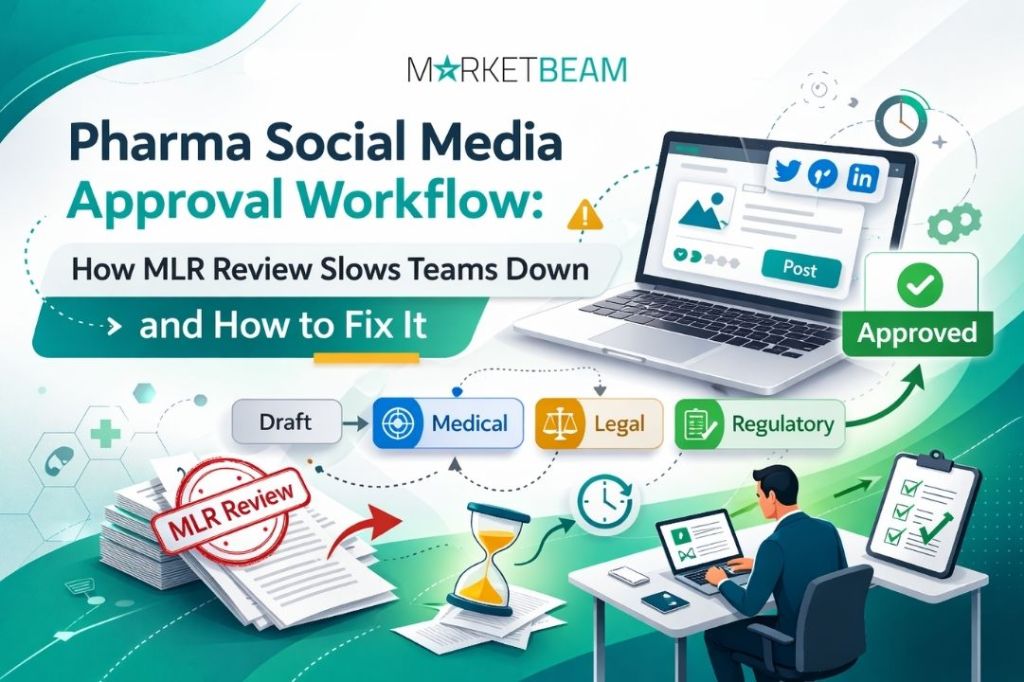
– Establish a clear, repeatable process for content creation, review, and approval to ensure all stakeholders, such as legal, regulatory, and marketing teams, sign off on every post before it goes live.
– Automated Content Review: Leverage automation tools like MarketBeam to ensure the content passes through predefined workflows without manual intervention, speeding up approval processes while ensuring compliance.
– Stay Up-to-Date with Regulations:
– Social media regulations evolve, and staying updated is crucial for avoiding non-compliance. Regularly review changes in healthcare regulations (e.g., FDA, HIPAA), financial rules (e.g., SEC, FINRA), or other industry guidelines.
– Maintain Detailed Audit Trails:
– Ensure that your social media activities are documented and archived, providing a clear audit trail. This is especially important for regulated industries that may be subject to periodic audits.
Future Trends and Predictions for Social Publishing in 2024
Emerging Trends in Social Content Distribution
– AI-Driven Content Creation and Personalization:
– Artificial intelligence is set to play an increasingly important role in content distribution. Tools that use AI for predictive analysis will help businesses understand what content resonates most with their audience and when to publish it.
– Personalized Media Distribution: AI-powered platforms will allow businesses to distribute personalized content to users based on their behavior, preferences, and past interactions, increasing engagement and conversions.
– Interactive Content: There will be a rise in interactive content such as polls, quizzes, and augmented reality (AR) experiences, which drive deeper user engagement.
How Tools and Platforms Will Evolve in 2024
– Automation and Smarter Scheduling:
– Social publishing tools will continue to evolve with increased automation capabilities, reducing the need for manual scheduling and enabling more sophisticated, data-driven content dissemination.
– AI Integration: Tools like MarketBeam and others are expected to integrate AI to provide more insightful recommendations for content timing, audience targeting, and engagement strategies.
– Multi-Platform Integration: As platforms like Facebook, Instagram, LinkedIn, and new emerging networks continue to evolve, social media management tools will provide more seamless cross-platform publishing and analytics.
Staying Ahead in Social Publishing
– Adopting the Latest Technologies:
– Businesses that embrace the latest tools, such as AI-driven content tools and advanced automation platforms like MarketBeam, will gain a competitive edge by being able to distribute highly relevant content faster and more efficiently.
– Focus on Compliance-Enabled Tools:
– With increasing regulations across industries, businesses in sectors like healthcare, finance, and life sciences will need to ensure their content strategies integrate compliance tools, such as those offered by MarketBeam. This will ensure they stay ahead of both legal and operational challenges.
– Future-Proofing Content Strategies:
– To stay ahead, businesses should continuously update their content strategies to accommodate the latest trends such as short-form video content, interactive media, and hyper-personalized content distribution.
– Investing in AI-powered analytics and compliance management tools will not only help businesses stay competitive but also future-proof their social publishing operations.
MarketBeam’s Role in Social Publishing and Compliance
How MarketBeam Fits Into Social Publishing
– Comprehensive Solution for Regulated Industries:
– MarketBeam is designed to meet the unique needs of businesses in highly regulated industries like healthcare, life sciences, pharmaceuticals, and finance. It offers a complete suite of features that streamline the process of content creation, approval, scheduling, and publishing, all while ensuring regulatory compliance.
– Automated Scheduling and Content Distribution: MarketBeam enables users to plan and schedule posts in advance, automating the publishing process across multiple platforms. This allows businesses to maintain a consistent online presence without manual intervention, saving time and resources.
– Compliance-Driven Features: What sets MarketBeam apart is its focus on regulatory compliance. It offers features tailored to industries that require strict oversight, ensuring that every piece of content meets legal and regulatory standards before it goes live.
MarketBeam as a Key Player in Social Media Compliance
– Built-In Compliance Management:
– MarketBeam provides robust compliance management tools, making it easier for businesses to adhere to regulatory guidelines such as MLR (Medical, Legal, Regulatory) approval processes. These tools are essential for ensuring that businesses meet industry standards, reducing the risk of non-compliance.
– Content Approval Workflows: MarketBeam allows for multiple layers of approval, ensuring that marketing, legal, and regulatory teams can review content before it is published. This workflow ensures that only pre-approved, compliant content is distributed, minimizing potential legal risks.
– Adhering to Industry Standards: Whether it’s HIPAA for healthcare or FINRA for finance, MarketBeam ensures that businesses can confidently manage their social publishing within these strict regulatory frameworks.
MarketBeam’s User-Friendly Platform for Effective Social Publishing
– Accessible to Non-Technical Users:
– One of the key advantages of MarketBeam is its intuitive, user-friendly interface. Even users without technical expertise or a dedicated marketing team can easily manage their social media presence. This makes it an excellent choice for businesses looking to streamline their publishing efforts while staying compliant.
– Streamlined Publishing: MarketBeam’s platform enables users to draft, schedule, and post content across social media channels with minimal effort, ensuring that businesses maintain a consistent presence online without needing extensive resources.
– Employee Advocacy Integration: MarketBeam also provides tools to empower employees to share company-approved content, extending the brand’s reach organically through employee networks while maintaining control over compliance.
Looking Forward: MarketBeam’s Contribution to Future Social Publishing Trends
– AI-Driven Analytics and Automation:
– As AI and automation continue to shape the future of social publishing, MarketBeam is at the forefront of these advancements. Its AI-driven analytics provide actionable insights into content performance, audience behavior, and optimal publishing times, allowing businesses to refine their strategies based on real-time data.
– Future-Proof Compliance Tools: As regulatory environments evolve, MarketBeam will continue to update its compliance features, ensuring that businesses in regulated industries can adapt to new rules and guidelines without sacrificing efficiency or effectiveness.
– Adapting to Emerging Trends: With a focus on innovation, MarketBeam is positioned to evolve alongside the changing digital landscape. It will continue to incorporate emerging trends such as interactive content, personalized media distribution, and multi-platform automation, helping businesses stay ahead in the ever-evolving world of social publishing.
Discover how MarketBeam streamlines social publishing with automated scheduling, compliance management, and AI-driven insights for regulated industries. Schedule your demo today!