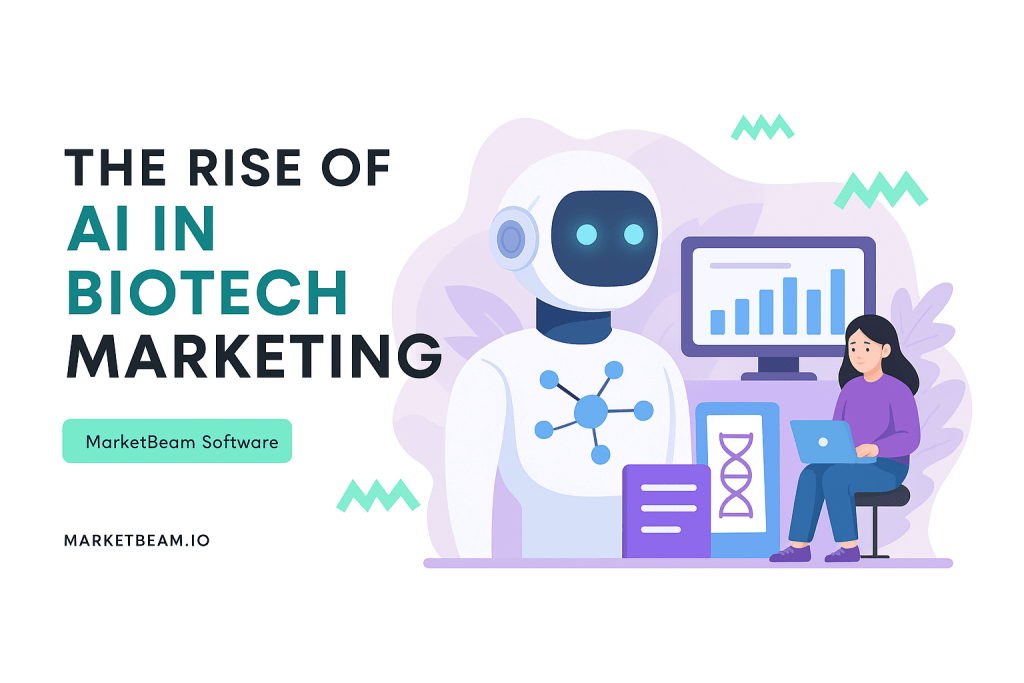
Artificial Intelligence (AI) has moved from research labs into the mainstream of digital marketing. For biotech companies, which balance cutting-edge science with strict compliance, AI offers a unique advantage: the ability to analyze data, predict outcomes, personalize campaigns, and stay compliant—all at scale.
This blog explores how AI adoption is reshaping biotech marketing, the tools enabling predictive analytics and content optimization, and how compliance in biotech compares with the pharmaceutical industry.
Growth of AI Adoption in Biotech Marketing
Biotech companies generate and rely on enormous volumes of complex data—from clinical trial results to market research, investor reports, and patient communities. Historically, marketing teams struggled to use this data effectively. AI is changing that.
Key Drivers Behind Adoption:
Data overload: Biotech teams deal with millions of data points across research, clinical trials, and publications. AI organizes and translates this into actionable insights.
Market competition: With thousands of startups competing for funding and visibility, AI gives biotech brands an edge by accelerating campaigns and proving ROI.
Digital transformation in healthcare: As more physicians, patients, and regulators engage digitally, AI ensures biotech companies deliver the right message at the right time.
Survey insight: According to Deloitte, over 60% of life sciences executives are increasing AI investments in marketing and commercial functions by 2026.
Tools for Predictive Analytics in Biotech Marketing
Predictive analytics is one of the strongest applications of AI in biotech marketing.
Forecasting campaign performance: AI models use past engagement data to predict which marketing channels will deliver the best ROI.
Adoption trends: AI helps anticipate how quickly physicians or investors will adopt new biotech innovations, allowing marketers to align messaging accordingly.
Budget optimization: Predictive AI recommends how to distribute marketing spend across conferences, digital ads, and social campaigns for maximum impact.
Example: A biotech firm launching a new gene therapy can use predictive analytics to estimate awareness timelines among oncologists, ensuring educational content goes live ahead of adoption peaks.
AI-Powered Segmentation: Beyond Demographics
Traditional segmentation in biotech relied on basic demographics—age, specialty, or region. AI expands this by analyzing:
Behavioral signals (how investors or researchers interact with biotech content)
Psychographic insights (beliefs, motivations, and attitudes toward innovation)
Contextual factors (timing, location, and intent of engagement)
This allows marketers to build micro-audiences. For instance:
Segment A: Oncology researchers active in immunotherapy publications
Segment B: Venture capitalists funding rare disease startups
Segment C: Physicians engaging in digital CME (Continuing Medical Education) programs
With this precision, biotech marketers don’t waste resources on broad campaigns. Instead, they hyper-target their niche audiences with personalized, compliant messaging.
Content Optimization with AI
AI helps biotech marketers maximize impact by ensuring every piece of content—from a LinkedIn post to a whitepaper—is engaging, optimized, and compliant.
Applications:
Natural Language Processing (NLP): Refines tone, improves readability, and ensures compliance-friendly language.
Real-time testing: AI tools compare headlines, calls-to-action (CTAs), and visuals to see what performs best.
SEO optimization: AI tools identify trending keywords like biotech marketing analytics or digital MLR review to ensure visibility.
Multi-channel adaptation: AI tailors the same message for physicians on LinkedIn, investors via newsletters, and regulators via technical documentation.
Example: Instead of guessing which headline works, AI can instantly recommend the best-performing title for a biotech thought-leadership blog.
Compliance in Biotech vs Pharma: Similarities and Differences
Regulatory compliance is a shared challenge across biotech and pharma marketing. However, the way AI supports these two industries has subtle differences.
Similarities
FDA & EMA oversight: Both industries must align with strict FDA/EMA guidelines and document all communications.
Adverse event monitoring: AI scans social platforms to flag mentions of side effects or risks in real time.
MLR (Medical, Legal, Regulatory) review: Every marketing asset must undergo compliance checks before release.
Differences
Scale: Pharma companies typically have dedicated compliance teams. Biotech startups may lack resources, so they lean more heavily on AI tools to reduce manual review.
Speed of innovation: Biotech marketing tends to move faster, focusing on niche therapies and investor education. AI bridges the gap between speed and compliance.
Audience differences:
Pharma = Patients + physicians (mass market)
Biotech = Researchers + investors (specialized audiences)
This is why biotech benefits more directly from AI-powered MLR prechecks—automated scans that reduce human workload while keeping content audit-ready.
Conclusion
AI is no longer optional for biotech marketers. It’s the backbone of data-driven decision-making, predictive targeting, and compliance-friendly content.
While pharma and biotech share regulatory hurdles, biotech companies—especially startups—can gain a competitive advantage by adopting AI earlier. Tools for predictive analytics, advanced segmentation, and AI-powered MLR prechecks allow biotech brands to:
Launch faster, smarter campaigns
Reduce compliance risks
Impress investors and regulators with audit-ready documentation
The rise of AI in biotech marketing isn’t just a trend. It’s the future of growth, credibility, and compliance in one of the world’s most competitive industries.