Maximizing Employee Advocacy on Social Media: Best Practices and Benefits
Definition of Employee Advocacy on Social Media
– Explanation of Employee Advocacy: Employee advocacy refers to the promotion of a company by its staff members through their personal social media channels. Employees share company content, news, and updates, acting as brand ambassadors.
– Importance in Today’s Digital Landscape: In an era where social media influences brand perception, employee advocacy harnesses the power of authentic voices to enhance brand visibility and credibility. With the rise of digital communication, the reach and impact of employee-shared content can be significantly higher compared to traditional marketing efforts.
Importance of Employee Engagement
– Why Employee Engagement is Crucial for Advocacy: Engaged employees are more likely to participate in advocacy programs. When employees feel connected to their company, they are more motivated to share positive messages and content about their workplace. High levels of engagement translate to more enthusiastic and authentic advocacy efforts.
– Benefits of Employee Engagement for Social Media Efforts: Employee engagement leads to several benefits for social media advocacy:
– Increased Participation: Engaged employees are more willing to actively participate in advocacy programs.
– Authenticity and Trust: Content shared by engaged employees is perceived as more genuine, boosting trust among the audience.
– Enhanced Morale: Advocacy efforts can further enhance employee morale, creating a positive feedback loop.
– Greater Reach: Engaged employees are likely to have a more significant impact on their networks, extending the company’s reach on social media.
This introduction sets the stage for the rest of the blog, emphasizing the interconnection between employee advocacy and engagement, and highlighting their importance in the modern digital landscape.
Benefits of Employee Advocacy on Social Media
Increased Reach
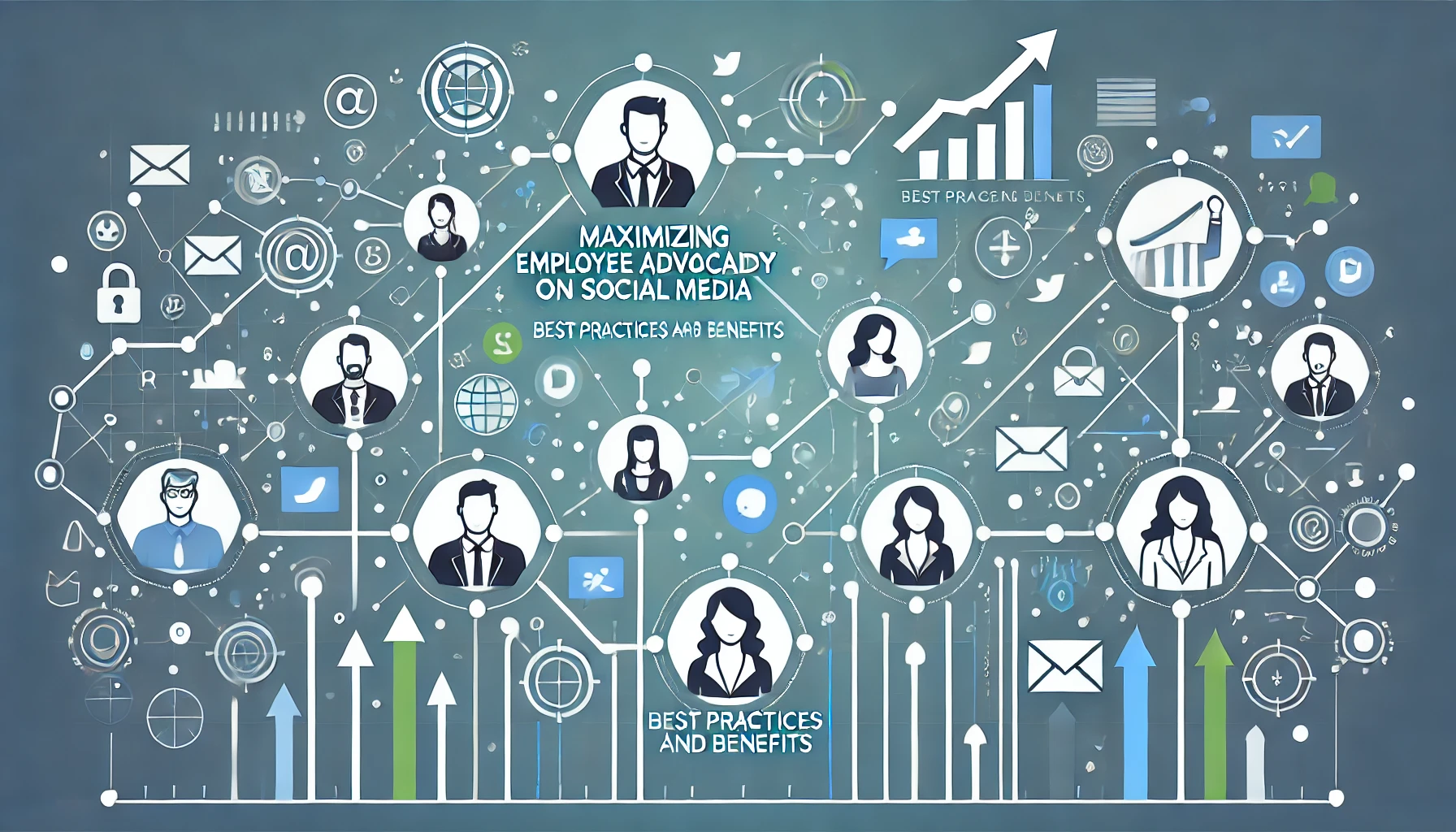
– How Employees Expand the Company’s Social Media Reach: When employees share company content on their personal social media accounts, they tap into their own networks, which often include different audiences than the company’s official channels. This significantly broadens the reach of the content, helping the company to engage with a wider and more diverse audience. Employees’ shares and endorsements can amplify the company’s message beyond its immediate followers, creating a ripple effect that increases visibility and brand awareness.
Enhanced Credibility
– Authenticity of Content Shared by Employees: Content shared by employees is often perceived as more authentic and trustworthy compared to corporate messages. When employees advocate for their company, it comes across as a personal endorsement rather than a marketing tactic. This perceived authenticity can lead to higher engagement rates and foster greater trust among potential customers. Employee voices are seen as genuine and relatable, making their advocacy a powerful tool for building credibility.
[button link=”#https://lp.marketbeam.io/website-demo” type=”big” color=”teal” newwindow=”yes”] Schedule Demo Today![/button]
Employee Engagement and Job Satisfaction
– Connection Between Advocacy and Improved Workplace Engagement: Employee advocacy programs can boost engagement by making employees feel valued and involved in the company’s success. When employees are encouraged to share their experiences and achievements, it fosters a sense of pride and ownership. This increased engagement often translates to higher job satisfaction, as employees feel more connected to their work and the company’s mission. Engaged employees are more likely to remain loyal and motivated, reducing turnover and enhancing overall productivity.
Talent Attraction
– Showcasing Company Culture and Values: Employee advocacy is a powerful tool for attracting top talent. When employees share positive experiences and insights about their workplace, it showcases the company culture and values in a relatable way. Potential job candidates are often more influenced by current employees’ testimonials than by formal job postings or marketing materials. By highlighting a supportive and dynamic work environment through employee advocacy, companies can attract individuals who are aligned with their culture and values, thereby improving recruitment efforts.
Incorporating these benefits into your blog will demonstrate the multifaceted advantages of employee advocacy on social media, making a compelling case for its implementation.
Best Practices for Implementing Employee Advocacy
Training and Education
– Best Ways to Engage Employees Through Training: Start by organizing workshops and training sessions that educate employees on the importance of social media advocacy and its benefits for both the company and themselves. Provide practical sessions on how to use social media effectively, highlighting the do’s and don’ts.
– Providing Social Media Best Practices: Develop a comprehensive guide or toolkit that includes best practices for social media usage. This should cover topics such as crafting engaging posts, appropriate use of hashtags, and maintaining professionalism online. Regularly update these resources to keep up with the latest trends and platform changes.
Clear Guidelines
– Importance of Establishing Clear Social Media Policies: Create and communicate clear social media policies that outline what is expected from employees when they share company-related content. These guidelines should ensure that all posts are in line with the company’s values and branding.
– Maintaining Consistent Messaging: Encourage consistency in messaging by providing employees with a content calendar and pre-approved messaging templates. This ensures that the core message remains uniform while allowing employees to add their personal touch.
Content Creation and Curation
– Tips on Creating Shareable Content: Provide employees with high-quality, engaging content that they can easily share. This can include blog posts, infographics, videos, and company updates. Ensure the content is diverse and relevant to different audiences.
– Encouraging Employees to Participate: Motivate employees to participate by recognizing and rewarding their efforts. Highlight their contributions in internal newsletters, social media shout-outs, or even through a dedicated employee advocacy leaderboard. Encourage them to share their own experiences and achievements related to their work.
Use of Technology
– Tools and Platforms to Facilitate Advocacy: Leverage employee advocacy platforms such as MarketBeam. These tools make it easy for employees to share approved content and track their advocacy activities.
– Tracking and Measuring Success: Implement metrics to measure the success of your employee advocacy program. Track key performance indicators (KPIs) such as the number of shares, engagement rates, and reach. Use these insights to refine and improve the program continuously.
By following these best practices, companies can effectively implement and sustain a successful employee advocacy program, ensuring that their employees are empowered to be authentic and enthusiastic brand ambassadors on social media.
Creating an Employee Advocacy Program
Setting Goals and KPIs
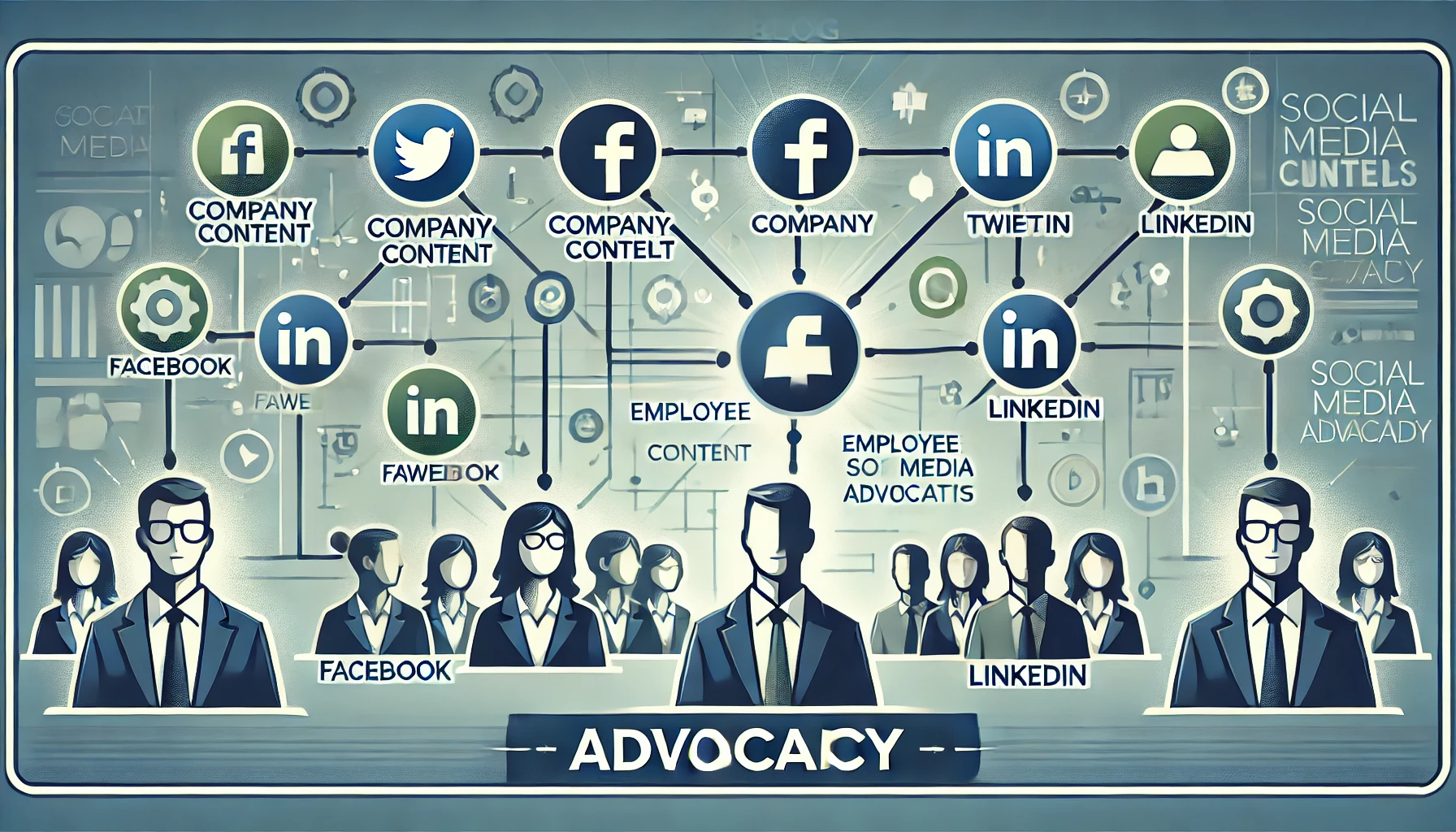
– Define Success and Key Performance Indicators: Start by outlining clear objectives for your employee advocacy program. These could include increasing brand awareness, improving employee engagement, or driving traffic to your website. Once objectives are set, establish key performance indicators (KPIs) to measure success. KPIs might include the number of posts shared by employees, engagement rates (likes, comments, shares), reach and impressions, website traffic from social media, and conversions or leads generated from employee-shared content.
Selecting Advocates
– Criteria for Choosing the Right Employees: Identify employees who are enthusiastic, knowledgeable about the company, and have a genuine interest in social media. Look for individuals who already engage with company content and have a positive attitude towards advocacy.
– Engaging Employees with High Social Media Presence: Focus on employees who have a strong social media presence and influence within their networks. These individuals can amplify your message more effectively. Encourage participation from different departments and levels within the organization to ensure diverse representation.
Incentives and Recognition
– Motivating Employees to Participate: Create a motivational environment by clearly communicating the benefits of participation, both for the company and the employees themselves. Highlight how advocacy can enhance their personal brand, build professional networks, and contribute to the company’s success.
– Offering Incentives and Recognition: Provide tangible incentives such as gift cards, bonuses, or additional paid time off. Recognize top advocates through internal communications, awards, or public acknowledgment on social media and at company events. Implement a leaderboard to track and showcase the most active advocates, fostering a healthy sense of competition.
By setting clear goals and KPIs, carefully selecting the right advocates, and providing incentives and recognition, companies can build a robust and effective employee advocacy program. This not only boosts the company’s social media presence but also enhances employee engagement and satisfaction.
Case Studies
Successful Examples
Example 1: Dell
– Overview: Dell has a well-established employee advocacy program known as “Dell Champions.”
– Strategies:
– Training and Certification: Dell provides extensive training and certification programs for its employees, ensuring they understand social media best practices and the company’s goals.
– Content Library: Dell offers a robust content library with pre-approved content for employees to share, making it easy for them to participate.
– Gamification: Dell uses gamification elements, such as leaderboards and badges, to motivate and recognize top advocates.
– Outcomes:
– Increased Engagement: Dell saw a significant increase in social media engagement and reach, with employees sharing content more frequently.
– Higher Sales Leads: The advocacy program contributed to generating new sales leads, enhancing Dell’s business performance.
Example 2: Adobe
– Overview: Adobe’s “Adobe Life” advocacy program encourages employees to share their experiences and insights.
– Strategies:
– Employee Stories: Adobe focuses on authentic storytelling, encouraging employees to share their personal experiences and achievements at Adobe.
– Support and Training: Adobe provides ongoing support and training to help employees become effective brand advocates.
– Recognition and Rewards: Adobe regularly recognizes and rewards top advocates through various incentive programs.
– Outcomes:
– Enhanced Brand Image: The program helped Adobe build a positive brand image by showcasing the company’s culture and values.
– Improved Recruitment: Adobe attracted top talent by highlighting employee experiences, making it an employer of choice for many professionals.
Example 3: IBM
– Overview: IBM’s “IBM Voices” program empowers employees to share insights and content across social media platforms.
– Strategies:
– Diverse Content: IBM provides a wide range of content types, from blog
posts to videos, ensuring there’s something for every employee to share.
– Integrated Tools: IBM uses integrated tools to streamline content sharing and track the impact of advocacy efforts.
– Employee Empowerment: IBM empowers employees to become thought leaders by encouraging them to share their expertise and industry insights.
– Outcomes:
– Thought Leadership: IBM’s program positioned many of its employees as thought leaders, enhancing the company’s reputation in the tech industry.
– Increased Web Traffic: The advocacy efforts led to increased web traffic and engagement on IBM’s online platforms.
Highlighting these successful examples demonstrates the tangible benefits of implementing an employee advocacy program. By adopting similar strategies and tailoring them to your company’s needs, you can achieve significant improvements in brand visibility, employee engagement, and overall business performance.
Challenges and Solutions
Common Obstacles
Employee Resistance or Fear of Social Media
– Obstacle: Employees may resist participating in advocacy programs due to fear of making mistakes, concerns about privacy, or a lack of confidence in using social media effectively.
– Solutions Based on Employee Engagement Research:
– Comprehensive Training: Offer thorough training programs to equip employees with the necessary skills and confidence to use social media. Include best practices, platform-specific tips, and real-life examples.
– Creating a Safe Environment: Encourage a culture where employees feel safe to share and experiment without fear of reprimand. Provide continuous support and open channels for feedback.
– Highlighting Personal Benefits: Emphasize how participating in the advocacy program can benefit employees personally, such as by enhancing their professional brand and networking opportunities.
– Gradual Introduction: Start with a small group of enthusiastic employees and gradually expand the program as others see the positive impact and become more comfortable.
– MarketBeam’s Role: MarketBeam simplifies the process by providing an intuitive platform where employees can easily access pre-approved content ready for sharing. The platform includes user-friendly training modules to build confidence and skills in social media usage.
Privacy and Compliance
– Obstacle:
Concerns about legal and privacy issues can hinder the implementation of an employee advocacy program. Both the company and employees need to ensure compliance with regulations and protect sensitive information.
– Solutions:
– Clear Guidelines and Policies: Develop and communicate clear social media policies that outline what is acceptable to share and what is not. Ensure these guidelines are easily accessible and understood by all employees.
– Regular Training on Compliance: Provide regular training sessions on legal and privacy issues related to social media use. Keep employees updated on any changes in regulations that may affect their online activities.
– Monitoring and Support: Implement monitoring tools to ensure compliance and provide a safety net for employees. Encourage them to seek guidance if they are unsure about sharing specific content.
– Protecting Sensitive Information: Educate employees on the importance of safeguarding company and customer information. Use examples to illustrate the potential risks and consequences of non-compliance.
– MarketBeam’s Role: MarketBeam helps mitigate compliance risks by ensuring all shared content is pre-approved and compliant with the latest regulations. The platform includes built-in compliance checks and alerts to safeguard both the company and employee interests.
[button link=”#https://lp.marketbeam.io/website-demo” type=”big” color=”teal” newwindow=”yes”] Schedule Demo Today![/button]
By leveraging MarketBeam’s features, companies can effectively overcome these challenges, creating a supportive environment that encourages employee participation in advocacy programs while ensuring legal and privacy compliance.