1. Introduction
In the world of regulated industries, content marketing has evolved from simple promotional tactics into a powerful educational tool. Industries like finance, healthcare, and life sciences now recognize that high-quality, credible content plays a vital role in building trust and driving engagement with specialized audiences.
Among these, content marketing for the life sciences stands out as particularly nuanced. Life science companies must communicate complex scientific concepts clearly, accurately, and compliantly—often to highly educated audiences such as researchers, clinicians, and regulatory stakeholders. Generic marketing strategies simply don’t resonate in such an environment.
That’s why tailoring content strategies for the life sciences is essential. A strong content approach not only improves brand visibility and lead generation but also helps position your company as a trusted authority in your field.

2. Understanding the Life Sciences Audience
When developing content marketing for the life sciences, it’s essential to understand who you’re speaking to. The typical audience includes scientists, researchers, clinicians, healthcare providers, regulatory professionals, and decision-makers in pharma or biotech companies. These individuals are highly educated, analytical, and time-constrained.
Their expectations are high. They look for:
- Credibility – backed by data, peer-reviewed references, or real-world applications
- Clarity – clear communication of complex scientific information
- Accuracy – technical precision with no room for fluff or vague claims
- Value – content that solves real problems or supports ongoing research and development

Engaging this audience is challenging because they often resist overly promotional content. Instead, they prefer in-depth insights, product application examples, and content that enhances their understanding or helps in decision-making. This means every piece of content must be purposeful, thoroughly researched, and well-crafted.
3. Key Components of an Effective Life Sciences Content Strategy
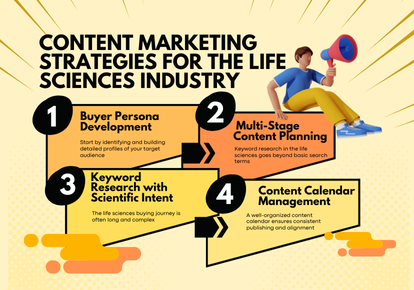
A successful approach to content marketing for the life sciences requires more than just publishing blog posts or whitepapers. It starts with a well-structured strategy that aligns with the unique needs of your scientific audience. Here are the core components:
🔬 Buyer Persona Development
Start by identifying and building detailed profiles of your target audience. These personas may include research scientists, lab managers, regulatory officers, or healthcare professionals. Understanding their roles, pain points, goals, and preferred content formats helps create relevant, personalized content that drives engagement.
🔎 Keyword Research with Scientific Intent
Keyword research in the life sciences goes beyond basic search terms. It involves identifying scientific, technical, and industry-specific keywords that your audience is actively searching for. Look for long-tail keywords, clinical terminology, or trending topics in scientific publications and journals.
🧭 Multi-Stage Content Planning
The life sciences buying journey is often long and complex. Your content should be planned to address each stage:
- Awareness: Educational blog posts, infographics, or explainer videos
- Consideration: Webinars, whitepapers, expert interviews
- Decision: Case studies, product datasheets, application notes
Creating a variety of content for each stage builds trust and keeps prospects moving through the funnel.
🗓️ Content Calendar Management
A well-organized content calendar ensures consistent publishing and alignment with product launches, events, or regulatory updates. It helps teams stay focused, track deadlines, and maintain a balance of content formats across channels.
When these components come together, you build a strong foundation for impactful, compliant, and measurable content marketing in the life sciences.

4. Types of Content That Work Best
An effective life sciences content strategy includes a mix of content formats tailored to educate, inform, and persuade a technically sophisticated audience. Choosing the right type of content ensures better engagement and aligns with your audience’s preference for data-backed, credible resources.
🧠 Educational Blog Posts
Well-researched blog content helps simplify complex scientific topics while boosting SEO. These posts should focus on solving industry-specific problems, explaining research trends, or highlighting innovations in biotech, pharma, and healthcare.
🎥 Scientific Webinars and Explainer Videos
Video content is powerful for demonstrating instruments, procedures, or study outcomes. Webinars hosted by subject-matter experts can foster thought leadership and build trust with an audience seeking deeper insights.
📘 Whitepapers, eBooks, and Technical Documentation
These long-form assets serve as lead magnets and help guide potential buyers through the consideration stage. Ensure that each resource is thoroughly researched, cited, and offers real scientific value.
🧪 Case Studies and Real-World Application Notes
Showcasing how your product or service solved a real-world problem in a research or clinical setting adds authenticity. Application notes are especially important for audiences needing practical implementation examples.
📊 Infographics and Visual Data Representations
When dealing with complex data, a clear visual representation can make all the difference. Infographics simplify dense material, making it easier for stakeholders to digest key findings or processes at a glance.
By strategically combining these formats, your life sciences content strategy becomes more versatile and effective—meeting your audience where they are and guiding them through the buyer journey.
5. Distribution Channels and Amplification Techniques
Even the most valuable content won’t deliver results unless it reaches the right audience. A strong content marketing for the life sciences plan includes not just content creation but also smart distribution and amplification tactics to maximize reach and ROI.
📱 Social Media for Life Sciences
Platforms like LinkedIn, X (formerly Twitter), and ResearchGate are ideal for sharing scientific content and connecting with researchers, healthcare professionals, and thought leaders. Sharing blog posts, study results, or webinar invites can spark engagement and brand recognition within niche communities.
📩 Email Marketing and Newsletters
Email remains one of the most effective channels for nurturing leads and keeping your audience informed. Tailor your messaging based on user segments—send technical updates to scientists, thought leadership to decision-makers, and product news to potential buyers.
🙋♂️ Employee Advocacy and Subject-Matter Amplification
Leverage your internal experts and teams to extend content reach. When scientists, product managers, or business leaders share content from their personal profiles, it adds credibility and often performs better than brand posts. Tools like MarketBeam can simplify and automate this process.
💰 Paid Promotion and SEO Alignment
Paid campaigns on platforms like LinkedIn or Google can target specific scientific roles and companies. Meanwhile, optimizing content for search engines ensures long-term discoverability. Together, SEO and paid promotion help balance short-term visibility with long-term organic growth.
The key is to distribute consistently across these channels while measuring what’s working—and doubling down on the most effective amplification methods.

6. Compliance and Accuracy in Life Sciences Content
When executing content marketing for the life sciences, maintaining compliance and accuracy is not optional—it’s essential. The industry is tightly regulated, and any miscommunication can lead to reputational damage, legal issues, or regulatory fines.
✅ Importance of Regulatory Approvals (e.g., MLR Review)
All promotional and educational materials—especially those referencing products, clinical data, or patient outcomes—must go through Medical, Legal, and Regulatory (MLR) review. This process ensures your content meets industry regulations, such as those set by the FDA or EMA, and avoids misleading claims or off-label information.
🔎 Fact-Checking and Citation Best Practices
Credibility is everything in life sciences. Ensure that all claims, statistics, and technical details are backed by peer-reviewed studies, clinical trials, or validated sources. Proper referencing and clear disclaimers also improve trust among scientific audiences.
🧰 Tools for Managing Content Workflows and Compliance
Manual workflows can delay approvals and create bottlenecks. Platforms like MarketBeam simplify this by offering:
- Centralized content approval workflows
- Audit trails and version control
- Real-time collaboration with reviewers
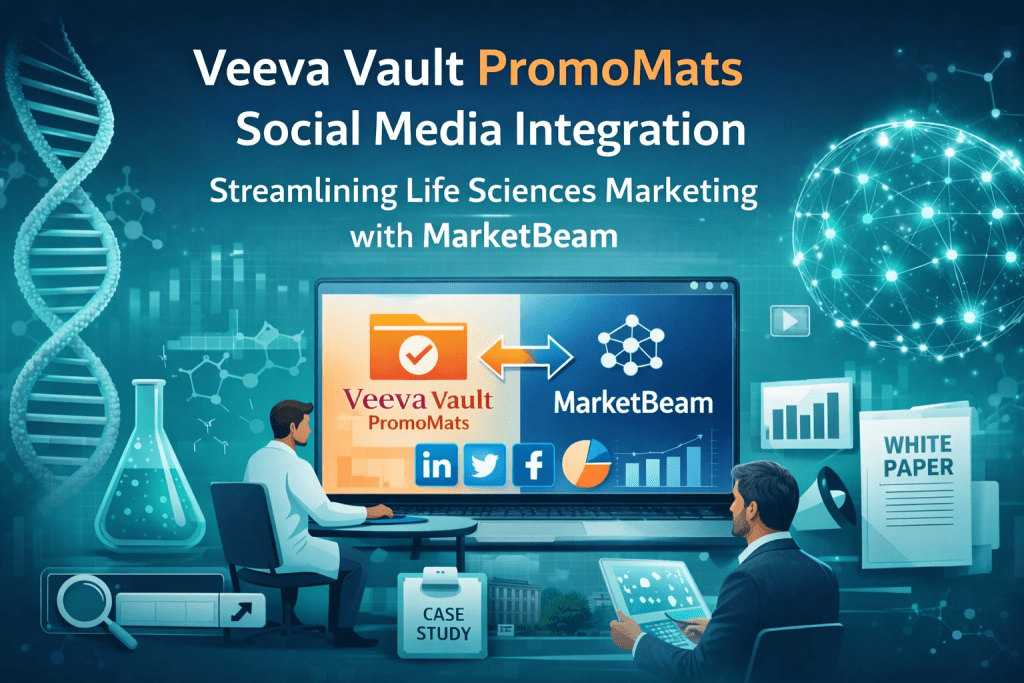
- Integration with MLR systems like Veeva Vault
With the right tools in place, life sciences companies can accelerate content delivery without compromising on accuracy or compliance.
7. How to Measure Success
Creating high-quality content is just the beginning. To ensure your content marketing for the life sciences delivers real business value, you need to track the right metrics and use data to refine your approach.
📊 Key Metrics to Track
- Engagement: Monitor likes, shares, comments, click-through rates, and time spent on page to understand what resonates.
- Lead Generation: Track form fills, downloads, webinar signups, and newsletter subscriptions as indicators of interest.
- Marketing Qualified Leads (MQLs): Identify which pieces of content are successfully moving prospects down the funnel toward sales readiness.
🔍 Using Analytics Tools for Deeper Insights
Platforms like Google Analytics, HubSpot, or MarketBeam’s built-in analytics can help you dive deeper. You can identify top-performing topics, sources of traffic, and audience behavior to guide future strategy.
🔁 Iterating Based on Performance
Data-driven content marketing means learning from what works—and what doesn’t. Use analytics to adjust your content calendar, refine targeting, or repurpose high-performing assets in new formats. Consistent analysis ensures your life sciences content stays relevant and effective.
8. Examples of Successful Life Sciences Content Marketing
To better understand how content marketing for the life sciences works in action, let’s explore a few examples of strategies that delivered measurable success. These real or anonymized case studies show how leading biotech and pharma companies have used content to engage audiences and generate results.
💡 Case Study 1: Biotech Company Drives Leads with Gated eBooks
A mid-sized biotech firm created a series of gated eBooks focused on gene editing techniques. By targeting researchers and lab managers, they offered in-depth scientific content in exchange for contact information. This strategy generated over 1,000 new leads in three months and positioned the company as a thought leader in CRISPR research.
🎥 Case Study 2: Pharma Brand Builds Trust Through Webinar Series
A pharmaceutical company launched a monthly webinar series featuring internal scientists and external KOLs (Key Opinion Leaders) discussing disease pathways and drug discovery innovations. These webinars not only increased live engagement but also fueled on-demand video content, blogs, and email campaigns, keeping their audience engaged long-term.
📘 Case Study 3: Life Sciences Supplier Boosts SEO with Educational Blogs
An equipment supplier targeting life sciences labs invested in educational blog posts optimized for niche scientific keywords. Over six months, their organic traffic increased by 45%, and their domain started ranking on page one for high-intent search queries related to lab automation.
Each of these examples shows the power of focused, strategic content—whether gated, live, or evergreen—in attracting the right audience and moving them toward conversion.
9. Why Tools Like MarketBeam Simplify Life Sciences Content Marketing
Creating high-quality content is only part of the equation—delivering it efficiently and compliantly is just as important in the life sciences industry. That’s where tools like MarketBeam come in, offering a tailored solution for organizations navigating complex workflows and regulations.
⚙️ Streamlined Publishing and Compliance Workflows
MarketBeam allows teams to plan, draft, review, and publish content—all within a single platform. With built-in approval workflows, life sciences marketers can manage Medical, Legal, and Regulatory (MLR) reviews more efficiently, reducing delays while staying fully compliant.
🔗 Integration with CRMs and Employee Advocacy
MarketBeam integrates with leading CRMs like Salesforce and platforms like Veeva Vault, ensuring seamless data sync and tracking. It also empowers internal experts to become brand advocates through easy employee amplification, helping your content reach a wider, more relevant audience organically.
📊 Real-Time Analytics Tailored for Regulated Industries
Unlike generic tools, MarketBeam provides analytics that align with life sciences KPIs—highlighting engagement, lead attribution, and reach across employee and brand channels. This level of insight supports better decision-making and strategy refinement.
If you’re looking to scale content marketing for the life sciences without overwhelming your team or risking compliance issues, MarketBeam offers the perfect balance of control, automation, and visibility.
10. Conclusion
In an industry where trust, accuracy, and scientific depth are essential, content marketing for the life sciences is more than just a promotional tactic—it’s a strategic advantage. A well-planned content approach helps life sciences companies educate their audience, generate high-quality leads, and stand out in a competitive, regulated environment.
The key is to start with a clear understanding of your audience, develop meaningful content for each stage of the buyer journey, and distribute it through the right channels. By staying consistent and leveraging tools built for your industry, you can scale your efforts without compromising compliance or quality.
Ready to elevate your life sciences content strategy?
Book a free demo with MarketBeam today and discover how we simplify compliant publishing, employee advocacy, and analytics—all in one platform.