
Social Media Is No Longer “Just Marketing”
Social media has evolved far beyond a branding or awareness channel.
For regulated industries, it has become regulated digital infrastructure.
Pharmaceutical companies, life sciences organizations, healthcare providers, medical device firms, and financial services institutions now rely on social platforms to:
Educate audiences
Engage professionals and customers
Support events and launches
Enable employee advocacy
Build trust and credibility
At the same time, these organizations operate under strict regulatory frameworks:
FDA and HIPAA in healthcare and pharma
FINRA, SEC, and FCA in financial services
GDPR and regional privacy laws globally
Despite this reality, many teams still use generic social media management software—tools designed for speed, volume, and convenience rather than compliance, governance, and auditability.
This mismatch creates operational friction, compliance risk, and long-term scalability problems.
This pillar guide explains why generic social media tools fail in regulated industries, the risks they introduce, and what modern social media management software must deliver to support compliant, scalable growth.
What Is Social Media Management Software?
Social media management software is a centralized platform used to:
Plan and schedule posts
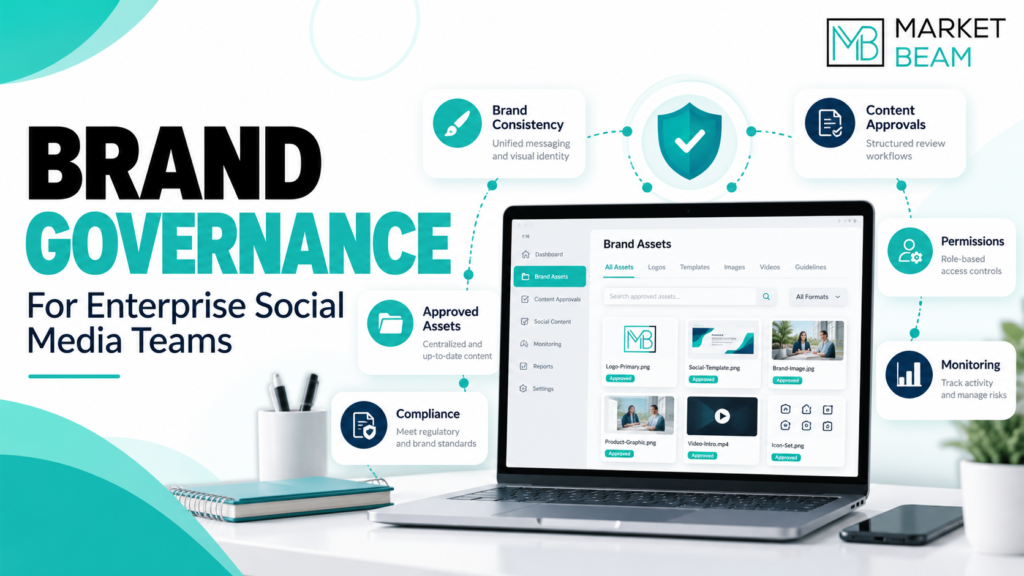
Manage approvals
Publish content across social channels
Monitor engagement and mentions
Analyze performance
For most consumer brands, this definition is sufficient.
For regulated industries, it is incomplete.
True enterprise-grade social media management software must also function as:
A compliance system
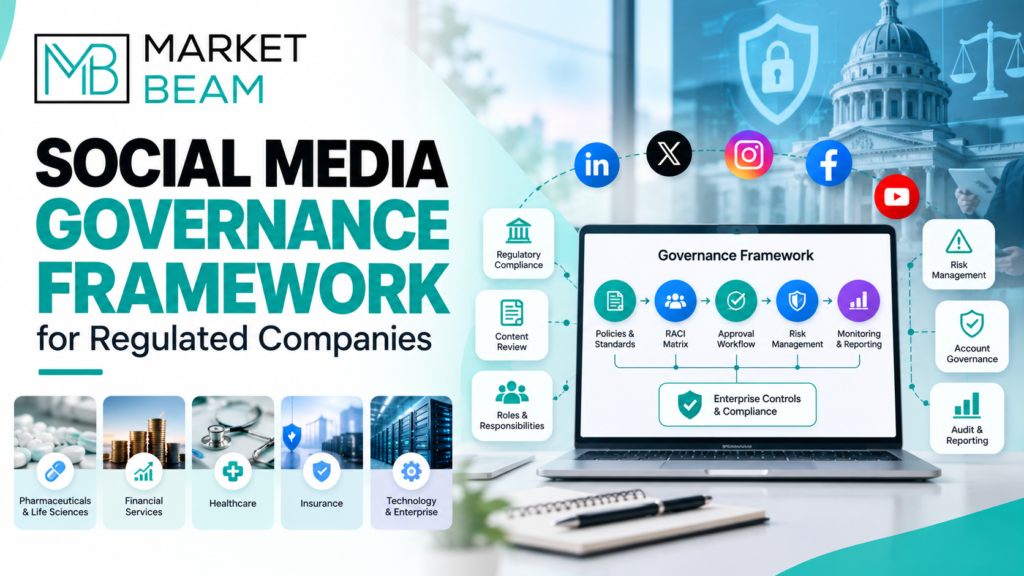
A governance framework
A risk mitigation layer
An audit-ready record of communication
This is where generic tools begin to break down.
Understanding Generic Social Media Tools
Generic social media tools are platforms originally built for:
Consumer brands
Marketing agencies
Startups and SMBs
Their design priorities are typically:
Fast scheduling
Bulk publishing
Content calendars
Engagement dashboards
Basic analytics
They assume:
Content risk is low
Speed is more important than scrutiny
Marketing teams operate independently
These assumptions do not hold true in regulated industries.
Why Regulated Industries Are Fundamentally Different
Before examining tool failures, it’s essential to understand the operating reality of regulated organizations.
Regulated industries must manage:
Pre-publication approvals (MLR, Legal, Compliance)
Strict content governance
Long-term archiving requirements (often 5–7+ years)
Adverse Event (AE) and complaint monitoring
Employee communication controls
Role-based access and accountability
Audit readiness at all times
Social media is not optional in these industries—but neither is compliance.
Generic tools were not built with this environment in mind.
The Core Reasons Generic Social Media Tools Fail
1. They Lack Native Compliance Workflows
Most generic social media management software treats approvals as a surface-level feature.
Common limitations include:
Single-step approvals
Email-based sign-offs
No role separation
No regulatory context
In regulated industries, approvals are not a checkbox.
They are structured workflows involving:
Marketing
Medical
Legal
Compliance
Each step must be documented, versioned, and auditable.
Without native compliance workflows, teams fall back on:
Email threads
Shared folders
PDFs and screenshots
This creates fragmentation, delays, and compliance risk.
2. Static Approval Models Don’t Match Dynamic Social Content
Social media content evolves constantly:
Copy changes
Hashtags are updated
Creative is resized or reused
Links are swapped
Paid amplification is added
Generic tools approve content once and assume it remains unchanged.
In regulated environments:
Any material change requires re-approval
Paid promotion may trigger new regulatory review
Employee sharing introduces additional risk
Static approvals simply cannot support this level of control.
3. Version Control Breaks at Scale
Generic tools typically show:
The latest version of a post
They often lack:
Version comparisons
Change logs
Approval history by version
In audits, regulators don’t ask:
“What did you publish?”
They ask:
“Who approved this version, when, and under what context?”
Without version-level governance, organizations cannot confidently answer.
4. Audit Trails Are Incomplete or Manual
Most generic social media management software stores:
Post content
Publish timestamps
Basic engagement metrics
They do not reliably store:
Approval history
Review comments
Edit timelines
Role-based decisions
As a result, audit preparation becomes:
Manual
Stressful
Error-prone
Regulated organizations need always-on audit trails, not exported spreadsheets.
5. No Adverse Event or Risk Detection
In pharma, healthcare, and medical devices, social media is a regulated listening surface.
Generic tools may offer:
Keyword alerts
Sentiment analysis
They do not offer:
AE-specific detection logic
Escalation workflows
Collaboration between marketing and safety teams
This forces organizations to manage risk outside the platform, increasing response time and exposure.
6. Employee Advocacy Becomes a Liability
Employee advocacy can dramatically increase reach and credibility.
However, in regulated industries, it introduces risk:
Off-label claims
Unapproved messaging
Inconsistent disclosures
Generic tools encourage:
Free-form sharing
Personal edits
Limited oversight
Without controlled workflows, employee advocacy becomes a compliance risk rather than a growth lever.
7. No Integration with Compliance Ecosystems
Regulated organizations already use:
Veeva Vault / PromoMats
CRM systems
Document management platforms
Generic social media tools operate in isolation.
This forces teams to:
Duplicate approvals
Manually sync content
Break compliance chains
True social media management software for regulated industries must integrate into existing compliance ecosystems.
8. Built for Speed, Not Governance
Generic tools optimize for:
Posting faster
Publishing more
Scaling volume
Regulated industries optimize for:
Accuracy
Accountability
Risk reduction
This philosophical mismatch is why generic platforms fail when governance matters most.
The Real Business Impact of Using Generic Tools
Organizations that rely on generic social media management software often experience:
Delayed campaigns due to manual approvals
Increased compliance exposure
Audit stress and documentation gaps
Low employee advocacy adoption
Poor collaboration between teams
Over-reliance on agencies
Fragmented reporting and visibility
Over time, this creates friction between marketing, compliance, and leadership teams.
What Regulated Industries Actually Need from Social Media Management Software
To support compliant growth, modern platforms must deliver:
Compliance-First Architecture
Compliance must be embedded, not layered on.
Structured Approval Workflows
Multi-step, role-based, and auditable approvals.
Continuous Governance
Not one-time approval—ongoing control.
Audit-Ready Records
Always-on, immutable, regulator-ready logs.
Risk Monitoring
AE detection, escalation, and collaboration.
Controlled Employee Advocacy
Pre-approved content with visibility and control.
Enterprise Integrations
Veeva, CRM, and compliance system alignment.
Generic Tools vs Compliance-First Platforms
| Generic Social Media Tools | Compliance-First Platforms |
|---|---|
| Speed-focused | Governance-focused |
| One-time approvals | Continuous compliance |
| Manual audit prep | Always-on audit trails |
| Free employee posting | Controlled advocacy |
| Channel-agnostic | Regulation-aware |
| Marketing-only | Cross-functional |
How MarketBeam Solves These Challenges
MarketBeam is purpose-built for regulated industries.
It treats social media not as a channel—but as regulated infrastructure.
MarketBeam enables:
Version-level content governance
Compliance-aware publishing
Safe, scalable employee advocacy
Audit-ready archiving
Risk and AE monitoring
Cross-team collaboration
Instead of forcing compliance into marketing tools, MarketBeam embeds compliance into the system itself.
Why Compliance-First Social Media Is a Competitive Advantage
Organizations that adopt compliance-first social media management software gain:
Faster approvals without risk
Higher confidence in publishing
Stronger collaboration between teams
Reduced audit burden
Greater employee participation
Sustainable social media scale
Compliance stops being a bottleneck—and becomes an enabler.
The Future of Social Media Management Software
As regulation increases and scrutiny grows, social media platforms will continue to demand:
Greater transparency
Faster response times
Stronger governance
Generic tools will struggle to keep up.
Compliance-first platforms will define the future.
Final Takeaway
Generic social media management software was never designed for regulated industries.
No amount of customization can transform a speed-first tool into a compliance system.
As social media becomes permanent, public, and auditable, regulated organizations must treat it as infrastructure—not just marketing.
Social media management software is no longer optional.
Compliance-first social media management software is inevitable.
FAQs: Social Media Management Software for Regulated Industries
What is social media management software?
It is a centralized platform that manages publishing, approvals, analytics, engagement, and governance across social channels.
Why do regulated industries need specialized platforms?
Because regulatory requirements demand structured approvals, audit trails, and risk monitoring that generic tools lack.
Are generic social media tools compliant?
Most are not designed for regulated environments and rely on risky manual processes.
Which industries need compliance-first social media management software?
Pharma, biotech, healthcare, medical devices, financial services, insurance, and other regulated sectors.
Can employee advocacy be compliant?
Yes—when content is pre-approved, controlled, and fully visible to compliance teams.
With MarketBeam, MedTech companies can manage influencer content, track engagement, and automate compliance—all within one secure platform.
👉 Learn more about Social Media Compliance for MedTech