Introduction to FDA’s Proposed Social Media Guidelines for Medical devices
The growing medical devices market is facing increasing scrutiny from regulators. For companies navigating this space, social media is both an opportunity and a risk. Staying aligned with FDA regulations ensures not only compliance but also long-term trust and growth. By understanding the regulatory challenges in medical devices, companies can connect with healthcare professionals and patients without putting their brand reputation at risk.
In the evolving world of medical device social media marketing, compliance is everything.
The Food and Drug Administration (FDA) plays a crucial role in regulating marketing and promotional activities within the pharmaceutical and medical device industries. This oversight extends to social media platforms, ensuring that companies promoting medical devices on social media adhere to strict guidelines. As demonstrated by the FDA’s draft guidance released on June 17, 2014, the principles and considerations outlined are specifically designed for companies using platforms with character space limitations, such as Twitter. This guidance is essential for maintaining the balance between effective marketing and regulatory compliance.

Understanding FDA Social Media Guidelines for Medical Devices
Overview of the FDA’s draft guidance released on June 17, 2014
The FDA social media guidelines help ensure safe and transparent communication online. The FDA’s draft guidance addresses the challenges faced by pharmaceutical and medical device companies when promoting their products on social media platforms like Twitter and Facebook, which have strict character limits. It emphasizes the importance of maintaining a balanced presentation of benefits and risks to ensure consumers receive accurate and transparent information.
Importance of disclosing benefits and risks on social media platforms with character space limitations
In the digital age, social media has become a powerful tool for reaching target audiences. However, the limited space available for content poses a challenge for companies to convey comprehensive information, including both benefits and risks associated with medical devices. Failure to disclose these aspects adequately can mislead consumers and lead to regulatory non-compliance.
Role of FDA in regulating marketing and promotional activities in the pharmaceutical and medical device industries
The FDA’s role in regulating marketing and promotional activities is to protect public health by ensuring that information provided to consumers is truthful, accurate, and not misleading. This includes overseeing advertising and promotional materials for medical devices, prescription drugs, and other healthcare products. Adherence to FDA guidelines is essential for companies to maintain ethical standards and regulatory compliance in their marketing efforts.
Effectively Communicating Risk and Benefit Information for Medical Devices on Social Media
Presenting Risk and Benefit Information
General Factors for Communication of Benefit Information
When communicating benefit information about medical devices on social media, it is crucial to ensure accuracy and avoid any misleading claims. Highlighting the key benefits in a concise and informative manner is essential, considering the character space limitations of these platforms. Companies must also disclose material facts about their products to provide a transparent picture to consumers.
Factors Considered in Disclosure of Risk Information
- Presenting risk information alongside benefit claims helps maintain a balanced presentation. It’s important to include the most serious risks associated with the medical device to provide a comprehensive overview. However, due to character limitations, concise disclosure is necessary.
- In situations where complete risk information cannot be included within the character constraints, providing mechanisms such as hyperlinks can allow users to access a more detailed discussion of the risks. This ensures that consumers have access to the information they need to make informed decisions.
Additional Recommendations for Product Information Inclusion
- Displaying the established name alongside the brand name of the medical device helps consumers identify and understand the product better.
- Including information about the dosage form and quantitative ingredients provides additional context and clarity to consumers.
- Using common abbreviations and symbols can be beneficial in addressing character space limitations while conveying essential information effectively.
By adhering to these guidelines and recommendations, companies can navigate the challenges of presenting risk and benefit information on social media platforms with character space limitations. This not only enhances transparency but also promotes responsible marketing practices within the medical device industry.
Impact of FDA Compliance on Medical Devices Market Growth
The medical devices market growth is closely tied to regulatory frameworks. While FDA oversight ensures patient safety and product quality, it can also create delays and additional costs. Approval timelines often determine when a new device can reach the market, directly influencing revenue potential.
Non-compliance comes with even higher risks: fines, product recalls, and reputational damage. These setbacks can reduce investor confidence, delay partnerships, and shrink overall market share.
In short, regulatory compliance is not just a checkbox — it is a defining factor in whether companies thrive or struggle in the competitive medical device industry.
Turning Compliance into a Competitive Advantage
Instead of viewing compliance as a burden, forward-thinking organizations treat it as a strategic differentiator. Companies that adopt digital platforms like MarketBeam can automate approval workflows, maintain transparent records, and manage risk more efficiently. This streamlining results in faster product launches and more consistent engagement with healthcare audiences.
In fact, current medical device industry trends show compliance-driven growth strategies are enabling companies to build trust and scale more effectively. When compliance becomes part of the marketing process, organizations don’t just avoid penalties — they unlock growth opportunities by entering the market quicker and with greater credibility.
Proactively Managing Misinformation and Adverse Event Reporting in Medical Devices on Social Media
Correcting Independent Third-Party Misinformation and Adverse Event Monitoring
Appropriate Corrective Information and Adverse Event Reporting
When addressing misinformation about medical devices on social media, it’s crucial to provide corrective information that is relevant, truthful, and non-promotional. This correction should adhere to FDA-required labeling guidelines and disclose the affiliation of the company providing the corrective information. Additionally, companies must actively monitor and report adverse events related to their medical devices and pharmaceutical products to ensure consumer safety and regulatory compliance.
Correcting Defined Portions of a Forum
To effectively correct misinformation, it’s important to identify and define the specific misinformation that needs correction within a forum or platform. This involves describing the location or nature of the incorrect information and providing a clear date for the correction to avoid any confusion among users.
Approaches to Correcting Misinformation
- Companies can adopt various approaches to correct misinformation, such as directly addressing it on the forum, providing corrective information to authors or users spreading the misinformation, or requesting intervention from site administrators to remove or rectify the incorrect information. These proactive steps help ensure that accurate and reliable information is available to consumers.
- It’s essential to acknowledge that while companies can take corrective actions, they are not accountable for third-party actions or subsequent misinformation that may arise after correction. However, by promptly and responsibly addressing misinformation, companies contribute to maintaining trust and credibility in their marketing communications.
By implementing these strategies and approaches, companies can effectively manage and correct independent third-party misinformation while also fulfilling their obligations for adverse event monitoring and reporting, contributing to a transparent and informed digital environment for medical device marketing.
Ensuring Regulatory Compliance and Monitoring in Medical Device Marketing
Compliance and Monitoring of Medical Devices on Social Media
FDA’s Stance on Continued Monitoring of Third-Party Websites and Social Media Platforms
The FDA emphasizes the importance of continued monitoring of third-party websites and social media platforms by medical device companies. This monitoring helps ensure that information related to their products remains accurate, up-to-date, and compliant with regulatory guidelines. Companies are responsible for actively monitoring user-generated content and addressing any misleading or inaccurate information promptly.
Non-Objection to Voluntary Corrections Meeting FDA’s Recommendations
The FDA encourages voluntary corrections by medical device companies to address misinformation or inaccuracies in their marketing materials. When companies take proactive steps to correct such information in line with FDA’s recommendations, the agency generally does not object to these corrective actions. This reflects a collaborative approach between regulatory authorities and industry stakeholders to uphold transparency and accuracy in marketing communications.
Reminder for Companies to Comply with Applicable Regulatory Requirements in Corrective Actions
Medical device companies must ensure that their corrective actions comply with all applicable regulatory requirements set forth by the FDA. This includes providing truthful and non-misleading information, adhering to labeling guidelines, and disclosing affiliations or relationships related to corrective information. Compliance with these requirements is essential to maintain ethical standards and regulatory compliance in marketing practices.
Recommendation for Companies to Maintain Records for Potential FDA Inquiries
As part of regulatory compliance, companies are advised to maintain detailed records of their marketing activities, corrective actions, and communications related to their medical devices. These records serve as evidence of compliance with FDA guidelines and can be valuable in addressing potential inquiries or audits by the FDA. Proper record-keeping demonstrates transparency, accountability, and a commitment to regulatory compliance within the medical device industry.
By adhering to these compliance and monitoring practices, medical device companies can uphold regulatory standards, address misinformation effectively, and maintain trust and credibility among consumers and regulatory authorities alike.
Navigating FDA Social Media Guidelines for Medical Devices
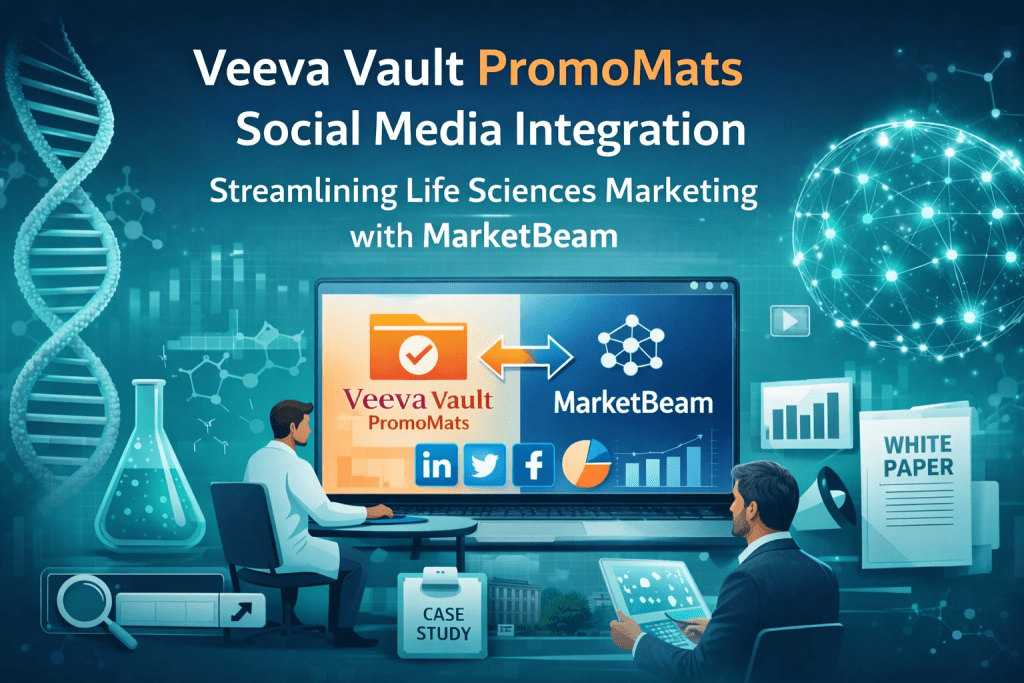
For companies focused on medical device social media marketing, staying compliant with evolving FDA social media guidelines is not just a regulatory necessity—it’s a brand protection strategy. In this blog, we’ll explore how tools like MarketBeam help ensure compliant social media marketing through automation, MLR compliance, and Veeva PromoMats integration.
Conclusion and Recommendations
Recap of Key Points from FDA’s Proposed Guidelines and Relevant Regulations
Throughout this discussion, we’ve explored the FDA’s proposed guidelines and regulations concerning medical device advertising on social media platforms. Key points include the importance of accurate and balanced communication of benefits and risks, addressing misinformation, and complying with FDA requirements for promotional materials.
Emphasis on the Importance of Truthful, Non-Misleading, and Compliant Communication
It cannot be overstated how crucial it is for companies in the pharmaceutical and medical device industries to prioritize truthful, non-misleading, and compliant communication in their advertising efforts. This not only fosters trust among consumers but also ensures regulatory adherence and ethical marketing practices.
Encouragement for Companies to Adhere to Guidelines for Effective and Ethical Social Media Engagement
In today’s digital age, effective and ethical social media engagement is paramount for companies promoting medical devices. Adhering to FDA guidelines, monitoring and reporting adverse events, and correcting misinformation in a timely and accurate manner are all integral parts of maintaining transparency and integrity in healthcare marketing.
As we move forward, it’s essential for companies to stay updated with evolving FDA regulations, implement best practices for social media engagement, and prioritize consumer safety and informed decision-making. By doing so, companies can not only maximize their impact but also contribute to a healthier and more informed marketplace for medical devices.
Q: What are FDA social media guidelines for medical devices?
A: The FDA social media guidelines outline how companies should promote medical products on platforms like LinkedIn or X while ensuring they include balanced risk/benefit info and follow labeling laws.
Q: How can I ensure MLR compliance?
A: Tools like MarketBeam help automate MLR compliance by routing posts through medical, legal, and regulatory checks before publishing.
Q: What is the role of Veeva PromoMats integration in compliance?
A: Veeva PromoMats integration allows seamless transfer of approved content to your social media platform while maintaining audit trails and approvals.
In today’s competitive landscape, compliance is not just legal protection — it is also a driver of trust, innovation, and growth. As medical device industry trends evolve, companies that embrace compliance tools can move faster, build credibility, and expand market share. Ultimately, FDA compliance is not just about avoiding penalties, but about becoming a growth enabler in the medical devices market.