Introduction — Understanding Pharma Marketing Compliance & MLR
Pharma Marketing Compliance ensures that every promotional asset—whether a website page, social media post, sales aid, brochure, email campaign, or video—meets strict medical, legal, and regulatory standards before public distribution. In an industry where inaccurate communication can directly impact patient safety, compliance is not optional; it is foundational.
As we move through 2026, regulatory expectations continue to intensify. Agencies such as the FDA, EMA, MHRA, and other global authorities are increasing scrutiny on pharmaceutical communications, especially across digital and social channels. Companies must now demonstrate:
Transparent communication
Faster yet compliant approval workflows
Full documentation and audit readiness
Consistent messaging across markets
Real-time control over digital content
At the center of this system sits the MLR review process—Medical, Legal, and Regulatory review—which acts as the compliance checkpoint for every marketing asset produced by pharma and life sciences organizations.
From drug launch campaigns to LinkedIn posts and employee advocacy content, MLR review ensures marketing remains scientifically accurate, legally compliant, and regulator-approved.
This guide explains how pharma marketing compliance works in 2026, how MLR processes function, common workflow challenges, emerging technologies, and how pharma companies can modernize compliance without slowing marketing execution.
What is MLR Compliance in Pharmaceutical Marketing?
MLR compliance refers to a structured review process where promotional content is evaluated through three lenses: Medical, Legal, and Regulatory. Each discipline ensures communication is safe, factual, and compliant with global standards.
Medical Review
Medical reviewers validate that claims are supported by clinical evidence. They ensure safety information is accurate and that benefits are not exaggerated or misleading.
Legal Review
Legal teams verify compliance with advertising and communication laws, ensuring language does not expose companies to litigation or regulatory action.
Regulatory Review
Regulatory reviewers confirm that materials align with guidelines from authorities such as the FDA, EMA, and other regional regulators. Required disclaimers, fair balance, and disclosures must be correctly presented.
Marketing Materials That Require MLR Review
Virtually all external-facing content requires review, including:
Social media posts
Email campaigns
Patient education materials
HCP promotional content
Websites and landing pages
Digital advertisements
Conference materials
Promotional videos
Sales presentations
Employee advocacy content
With digital communication expanding rapidly, even real-time social posts and rep-shared content must be compliant and documented.
Failure to follow proper MLR review can result in:
Regulatory warning letters
Fines and sanctions
Campaign takedowns
Product reputation damage
Loss of trust among healthcare providers and patients
Modern pharma marketing compliance requires scalable, digital-first MLR frameworks capable of handling growing content volume.
Step-by-Step MLR Review Workflow in 2026
Modern pharma companies rely on structured workflows and technology-enabled processes to manage MLR efficiently.
Step 1: Content Creation
Marketing teams create draft materials for campaigns, product promotions, or awareness initiatives. Content is typically managed inside centralized platforms enabling collaboration and version control.
Step 2: Internal Alignment
Brand teams and medical affairs teams review messaging internally to ensure campaign alignment before entering formal MLR.
Step 3: Formal MLR Review
Content moves into the official MLR workflow where:
Medical reviewers validate scientific accuracy
Legal reviewers confirm claim defensibility
Regulatory reviewers check guideline adherence
Feedback, edits, and approvals are documented within compliance systems.
Step 4: Final Approval & Compliance Lock
Once all reviewers approve, content is compliance-locked and cannot be modified without triggering another review cycle. Approved assets move to publishing or distribution channels.
Step 5: Archiving & Audit Documentation
All versions, comments, approvals, timestamps, and metadata are archived for future regulatory inspections.
This workflow ensures every piece of content remains traceable and defensible.
Common Challenges in Pharma Marketing Compliance
Despite its necessity, MLR workflows often slow marketing operations. Common problems include:
Manual Processes Delay Approvals
Email-based routing and spreadsheet tracking slow workflows and increase risk of missed approvals.
Version Control Problems
Teams often lose track of approved versions, risking accidental publication of outdated or unapproved content.
Departmental Silos
Medical, legal, and regulatory teams may operate separately, causing review delays and inconsistent feedback.
Digital Marketing Complexity
Social media, video marketing, and omnichannel campaigns create new compliance challenges not addressed by legacy workflows.
Outdated Marketing Tools
Generic marketing tools lack pharma compliance functionality such as audit trails, approval workflows, and regulatory integration.
Without modernization, marketing speed suffers while compliance risk increases.
Pharma Compliance Technology & Automation
To meet growing content demands while maintaining control, pharma companies are investing heavily in compliance automation.
Capabilities of Modern MLR Platforms
Modern pharma compliance platforms provide:
Automated approval routing
Centralized version management
Audit-ready logs
Reviewer role permissions
Workflow dashboards
Integration with publishing platforms
Integration Across Marketing Systems
Compliance platforms now connect with content management, CRM, marketing automation, and publishing tools, creating seamless asset flow from creation to distribution.
Real-Time Workflow Visibility
Dashboards allow teams to monitor approval status and avoid bottlenecks.
AI-Powered Compliance Assistance
AI tools now help identify:
Off-label claims
Missing disclaimers
Tone compliance risks
Scientific inconsistencies
AI reduces manual review time while improving accuracy.
Organizations adopting compliance automation frequently report major reductions in approval cycles while maintaining regulatory control.
How MarketBeam Supports Pharma Marketing Compliance
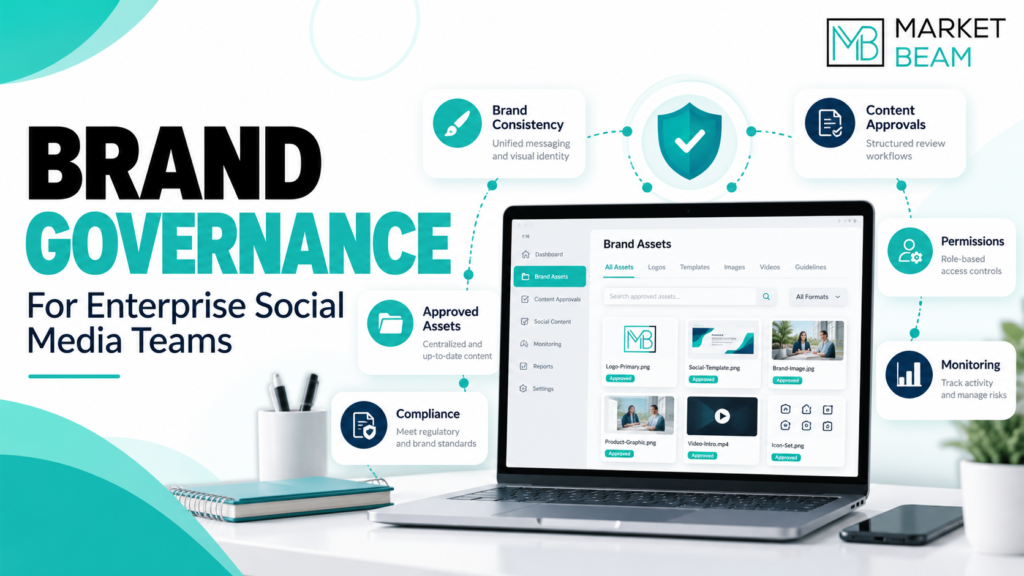
MarketBeam addresses compliance challenges by combining marketing execution with compliance governance in one platform.
Integration with Regulatory Systems
MarketBeam connects with systems such as Veeva PromoMats, ensuring only approved assets are published.
AI Compliance Pre-Checks
Content is automatically screened for risk before publication, reducing last-minute approval delays.
Audit-Ready Activity Logs
Every action, edit, and approval is logged, supporting inspection readiness.
Empowering Teams with Control
Marketing, sales, and employee advocacy teams can safely distribute approved content while compliance maintains oversight.
Reported Client Benefits
Pharma organizations using MarketBeam commonly report:
Faster campaign approvals
Improved cross-team coordination
Full audit readiness
Reduced compliance risk
MarketBeam enables compliant marketing at scale without sacrificing execution speed.
Best Practices to Improve MLR Efficiency
Technology alone cannot fix compliance challenges. Organizational alignment is equally important.
Involve Reviewers Early
Engaging MLR teams at planning stages reduces late-stage revisions.
Train Marketing Teams
Marketers trained on compliance basics create better initial drafts, shortening approval cycles.
Use Purpose-Built Compliance Software
Replace manual workflows with platforms built specifically for pharma content governance.
Define SLAs and Ownership
Clear timelines and responsibilities prevent delays.
Create Compliance Knowledge Libraries
Maintaining guidelines and precedent approvals helps teams avoid repeating mistakes.
Plan for Scale
Choose platforms capable of handling growing content volumes and global operations.
Compliance Trends Shaping 2026 and Beyond
Pharma marketing compliance continues evolving alongside digital marketing.
AI-Driven Compliance
AI will increasingly support automated review assistance.
Global Regulatory Alignment
Harmonization across global regulators will shape multinational campaign execution.
Increased Focus on Social & Video Compliance
Dynamic digital content will receive more regulatory scrutiny.
Rise of RegTech Solutions
Compliance technology will become standard infrastructure for pharma marketing.
Compliance as Competitive Advantage
Forward-thinking companies now see compliance as a growth enabler rather than a marketing obstacle.
Conclusion — Compliance is Now Marketing Infrastructure
In pharmaceutical marketing, compliance is no longer a final checkpoint—it is core operational infrastructure.
Modern pharma marketing compliance ensures content is accurate, defensible, and regulator-approved while enabling faster go-to-market strategies.
By adopting automated MLR workflows, centralized content management, and integrated publishing systems, organizations reduce approval timelines and minimize compliance risk.
Whether you are a global pharmaceutical company or an emerging biotech firm, modernizing compliance workflows is essential for successful marketing execution in 2026 and beyond.
Digital MLR is no longer a support function.
It is compliance infrastructure for modern pharma marketing.