
Introduction
In today’s digital-first world, businesses rely heavily on social platforms to engage audiences, strengthen brand awareness, and generate leads. While social media creates powerful opportunities for growth, it also introduces serious regulatory challenges for industries such as healthcare, pharmaceuticals, finance, biotech, and banking. These sectors must follow strict legal and industry-specific regulations when publishing content online. This is why Social Media Compliance has become an essential part of every regulated organization’s marketing strategy.
Companies operating in regulated industries cannot afford accidental policy violations, misleading claims, unauthorized disclosures, or non-compliant employee posts. A single mistake on social media can lead to financial penalties, damaged credibility, regulatory investigations, and loss of customer trust. As digital communication continues to grow, organizations need stronger governance processes to maintain Social Media Compliance while still delivering engaging content across platforms.
Modern brands are no longer asking whether compliance matters. Instead, they are searching for smarter ways to simplify approvals, reduce human error, and manage risk during content creation. This is where advanced compliance-focused platforms like MarketBeam play an important role in helping organizations publish content safely and efficiently.
Understanding Social Media Compliance
Social Media Compliance refers to the policies, approval workflows, monitoring systems, and regulatory safeguards businesses use to ensure social media activities align with industry laws and internal governance standards. It covers every stage of the social publishing process, from content creation and employee advocacy to approvals, archiving, and reporting.
Organizations in regulated industries face strict oversight from agencies such as the U.S. Food and Drug Administration, Financial Industry Regulatory Authority, and privacy frameworks like General Data Protection Regulation and Health Insurance Portability and Accountability Act. These regulations require companies to maintain transparency, protect sensitive information, and ensure public communications remain accurate and compliant.
Without a structured compliance strategy, businesses often struggle with inconsistent approvals, unmanaged employee posts, and delayed publishing cycles. Maintaining Social Media Compliance helps organizations build a controlled environment where content can be reviewed, approved, monitored, and archived before any regulatory issue occurs.
Why Social Media Compliance Matters
For regulated organizations, compliance is not simply a legal requirement. It is also a business necessity. Customers today expect brands to protect their data, communicate responsibly, and maintain transparency across every digital interaction.
Strong Social Media Compliance practices reduce the likelihood of reputational damage caused by misleading advertisements, unauthorized product claims, or inappropriate public responses. In industries like life sciences and finance, even minor violations can trigger audits, lawsuits, or investigations from regulators.
Compliance also improves operational efficiency. When businesses implement clear workflows and automated approval systems, teams spend less time fixing errors and more time creating valuable campaigns. Marketing, legal, and compliance teams can collaborate faster without sacrificing regulatory oversight.
In addition, organizations with mature compliance systems often gain a competitive advantage. Customers and stakeholders are more likely to trust brands that demonstrate responsible digital communication practices. Maintaining reliable Social Media Compliance standards helps companies strengthen brand credibility while safely scaling social media marketing efforts.
Common Risks in Social Media Compliance
One of the biggest challenges organizations face is managing human error during content creation and publishing. Social media teams work quickly to meet deadlines and engage audiences in real time. Without structured compliance controls, mistakes can easily occur.
Data privacy violations are among the most common compliance risks. Businesses handling healthcare or financial information must ensure customer data is securely processed and protected. Sharing confidential or personally identifiable information online can lead to major penalties and regulatory scrutiny. Effective Social Media Compliance policies help organizations reduce the risk of exposing sensitive information.
Advertising compliance is another major concern. Regulatory agencies require businesses to disclose sponsorships, avoid misleading claims, and maintain fair advertising practices. Pharma and healthcare companies must carefully review medical claims before publication, while financial institutions must include proper disclosures and risk statements in promotional content.
Employee advocacy can also create compliance risks when employees share unapproved or inaccurate information online. While employee advocacy programs increase brand visibility, businesses need controlled systems that ensure employees only distribute approved messaging. Strong Social Media Compliance frameworks help organizations maintain consistency across all employee-driven communications.
Content moderation is equally important. Brands must monitor comments, replies, and user-generated discussions to ensure inappropriate or misleading interactions do not violate platform policies or industry regulations. Real-time monitoring and escalation workflows are critical components of modern compliance management.
Regulatory Requirements Across Industries
Different industries follow different regulatory frameworks, which makes compliance management even more complex. Healthcare and life sciences companies must comply with HIPAA regulations while ensuring all promotional claims align with FDA requirements. Financial organizations must follow FINRA and SEC advertising standards to maintain transparency in customer communications.
Pharmaceutical companies often rely on Medical, Legal, and Regulatory review processes before publishing content. These MLR workflows ensure every post, advertisement, or campaign is reviewed for scientific accuracy and regulatory alignment. Maintaining Social Media Compliance within pharma marketing requires strong collaboration between compliance teams and marketing departments.
Global organizations must also manage international data protection requirements such as GDPR. These regulations govern how businesses collect, process, and store customer information online. Companies operating across multiple regions need scalable compliance systems capable of supporting different legal frameworks simultaneously.
Because regulations continue to evolve, organizations must regularly update their compliance policies and social media governance strategies. Businesses that fail to adapt may face operational disruptions and increased regulatory risks.
The Role of Technology in Social Media Compliance
Manual compliance management is no longer sustainable for enterprises managing multiple social platforms, teams, and campaigns. Modern organizations require intelligent tools that automate workflows, reduce review delays, and improve visibility across the publishing process.
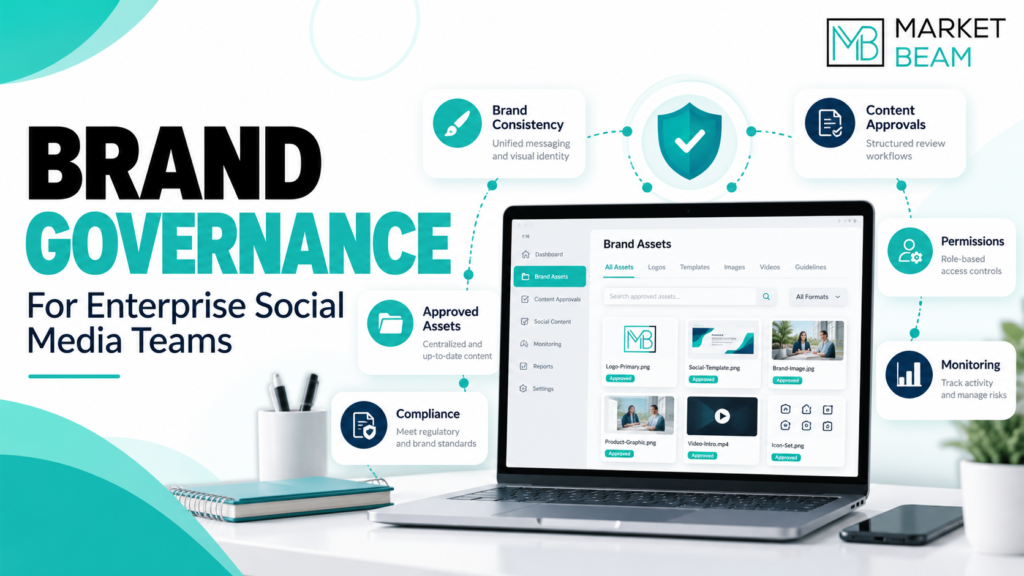
Technology-driven Social Media Compliance solutions allow businesses to centralize approvals, manage user permissions, archive content, and monitor engagement from one secure platform. Automated workflows significantly reduce the risk of unauthorized publishing while improving collaboration between marketing and compliance teams.
Artificial intelligence is also transforming compliance operations. AI-powered pre-check systems can identify risky phrases, missing disclosures, or policy violations before content is published. This proactive approach helps organizations minimize errors while accelerating time-to-market for campaigns.
Real-time analytics and monitoring tools further strengthen compliance efforts by helping teams identify unusual engagement patterns, policy risks, or unauthorized interactions. Businesses can quickly respond to potential issues before they escalate into regulatory concerns.
How MarketBeam Supports Social Media Compliance
MarketBeam is designed specifically for regulated industries that require advanced governance and compliance controls for social media marketing. Unlike generic social media management platforms, MarketBeam focuses heavily on helping organizations maintain Social Media Compliance while scaling digital engagement.
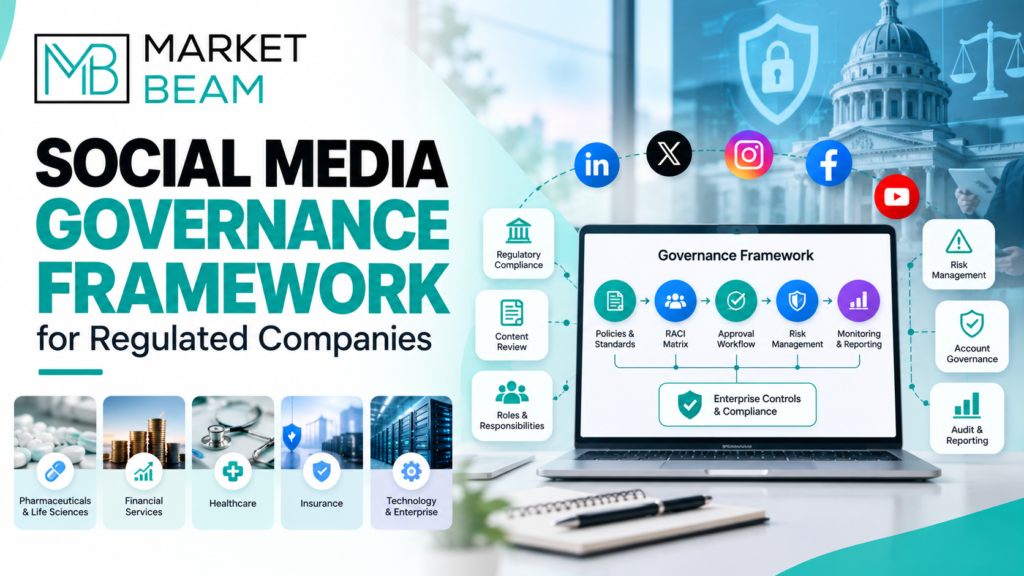
The platform streamlines approval workflows by allowing content to pass through Medical, Legal, and Regulatory reviews before publication. Teams can collaborate efficiently while maintaining full visibility into approval status and compliance history.
MarketBeam also provides secure content archiving and audit trails, making it easier for organizations to prepare for regulatory audits. Every action within the platform is recorded, helping businesses maintain accountability and documentation for future compliance reviews.
For healthcare and pharmaceutical organizations, MarketBeam supports structured MLR review processes that reduce publishing delays while ensuring content accuracy. Financial services companies benefit from built-in controls that support FINRA-compliant communications and record retention requirements.
The platform’s employee advocacy tools further strengthen Social Media Compliance by ensuring employees only share pre-approved content. This minimizes the risk of inconsistent messaging or accidental policy violations while still encouraging broader brand visibility.
In addition, MarketBeam includes analytics, monitoring, and engagement management features that help businesses track campaign performance without compromising regulatory requirements. Organizations can confidently scale social media operations while maintaining compliance across every stage of content distribution.
Best Practices for Maintaining Social Media Compliance
Successful compliance strategies begin with clear internal governance policies. Every organization should establish detailed social media guidelines covering approvals, employee behavior, disclosures, and data privacy expectations.
Training is another critical factor. Employees must understand how regulations apply to social media communication and how to avoid risky behavior online. Regular compliance education reduces confusion and improves accountability across departments.
Businesses should also implement centralized approval workflows to prevent unauthorized publishing. A structured review process ensures content is evaluated by the appropriate legal, regulatory, or compliance stakeholders before it reaches the public.
Continuous monitoring is equally important. Brands should regularly review published content, audience interactions, and employee advocacy activity to identify potential compliance risks. Effective Social Media Compliance requires ongoing oversight rather than one-time policy implementation.
Organizations should also maintain secure archives of all published content and engagement records. These archives provide valuable documentation during audits, investigations, or regulatory reviews.
Finally, businesses must invest in specialized compliance technology capable of adapting to changing regulations and scaling with organizational growth. Platforms designed for regulated industries provide far greater protection than generic publishing tools.
Conclusion
As digital marketing becomes increasingly regulated, businesses can no longer treat compliance as an afterthought. Organizations operating in healthcare, pharmaceuticals, finance, and other regulated industries must balance audience engagement with strict regulatory oversight. This makes Social Media Compliance one of the most important components of modern marketing operations.
Strong compliance strategies help businesses reduce risk, protect brand reputation, and maintain customer trust while scaling social media engagement. By implementing structured approval workflows, employee governance policies, and intelligent compliance technologies, organizations can confidently navigate the complexities of regulated digital communication.
Platforms like MarketBeam simplify compliance management by combining approvals, monitoring, employee advocacy, analytics, and audit-ready archiving into a single centralized solution. As regulations continue to evolve, businesses that prioritize Social Media Compliance will be better positioned to grow securely, maintain credibility, and succeed in highly regulated markets.