Digital marketing teams in regulated industries face a difficult challenge. They need to publish content quickly, stay active on social media, support employee advocacy, monitor audience conversations, and prove compliance at every step. However, one wrong post can create legal, financial, or reputational risk. This is why social media governance has become a must-have strategy for pharma, life sciences, healthcare, financial services, medtech, and other compliance-heavy businesses.
For many companies, social media is no longer handled by one person. Marketing teams create content, compliance teams review it, employees share approved posts, sales teams track engagement, and leadership expects clear reports. Without proper social media governance, this process can become slow, risky, and difficult to manage.
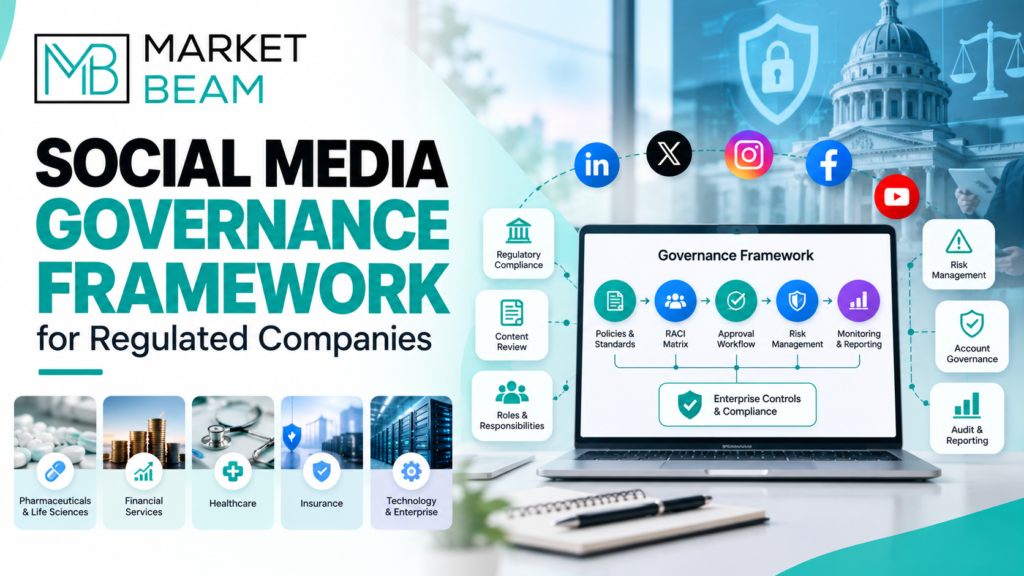
A strong social media governance framework helps teams publish with confidence. It defines who can create content, who can approve it, what employees can share, how content is archived, and how performance is tracked. More importantly, social media governance allows regulated brands to grow on social media without losing control.
What Is Social Media Governance?
Social media governance is the system of rules, workflows, roles, tools, and compliance controls used to manage a company’s social media activity. It covers content creation, review, publishing, employee sharing, monitoring, archiving, and reporting.
In simple terms, social media governance answers important questions. Who can post? What can they post? Who reviews content before publishing? Where are records stored? How should employees respond to online conversations? How can the company prove that every approval step was followed?
For regulated industries, these questions matter even more. A pharma company may need medical, legal, and regulatory approval before publishing content. A financial services company may need proper disclosures and recordkeeping. A healthcare brand may need to protect patient privacy and avoid unapproved claims.
Without proper social media governance, teams often rely on emails, spreadsheets, screenshots, and manual reminders. This increases delays and creates room for human error. A clear governance system brings structure to the entire process and helps teams work faster with less risk.
Why Regulated Industries Need Social Media Compliance
Social media moves fast, but regulated industries cannot afford careless communication. Every post, comment, employee share, and brand response may carry compliance risk. This is why social media compliance is one of the most important parts of social media governance.
A regulated brand must make sure that all public communication follows internal policies and industry rules. Pharma brands must avoid unsupported medical claims. Healthcare organizations must protect patient information. Financial businesses must manage disclosures, risk statements, and audit records.
The challenge is that social media content is often short, fast, and conversational. Teams may publish product updates, event promotions, employee posts, educational content, and thought leadership across many channels. If there is no review workflow, non-compliant content can go live before anyone notices.
Strong social media governance reduces this risk. It gives teams a clear approval path, keeps messaging consistent, and creates proof that the right review steps were followed. This is especially valuable when companies need audit trails, approval history, or archived social records.
How to Create a Social Media Policy for Employees
A social media policy is the foundation of any governance program. It tells employees what they can and cannot do when they post about the company, share company content, or engage with customers online.
A good policy should be simple, practical, and easy to follow. It should explain brand voice, approved topics, restricted topics, disclosure rules, privacy guidelines, and escalation steps. Employees should know when they can share content freely and when they need approval.
For regulated industries, the policy should also include rules for sensitive topics. Pharma employees should avoid discussing drug claims, side effects, patient cases, or off-label information. Financial employees should avoid giving personalized investment advice or making unsupported performance claims. Healthcare employees should avoid sharing patient-related information.
A strong social media policy supports better social media governance because it removes confusion. Employees do not have to guess what is safe. They get clear guidance before they post or share content.
The goal is not to stop employees from posting. The goal is to help them post safely. When employees understand the rules, they can support brand visibility without creating unnecessary risk.
Building a Social Media Employee Handbook
A social media employee handbook goes one step beyond a basic policy. While the policy explains the rules, the handbook explains how employees should apply those rules in daily activity.
It can include examples of approved posts, sample captions, do’s and don’ts, brand hashtag guidance, LinkedIn sharing tips, comment response rules, and escalation instructions. This makes the policy easier to understand and easier to follow.
For regulated industries, this handbook is very useful because employee advocacy is a major growth opportunity. Employees often have trusted professional networks, especially on LinkedIn. When they share approved company content, the brand can reach a much larger audience.
However, employee advocacy must be controlled. The handbook should explain what employees can share, whether they can edit approved captions, how they should disclose their connection to the company, and what they should do if someone asks a medical, legal, or financial question.
A good handbook turns employees into informed brand advocates. It also strengthens social media governance by helping every employee follow the same standards.
Designing a Social Media Approval Workflow
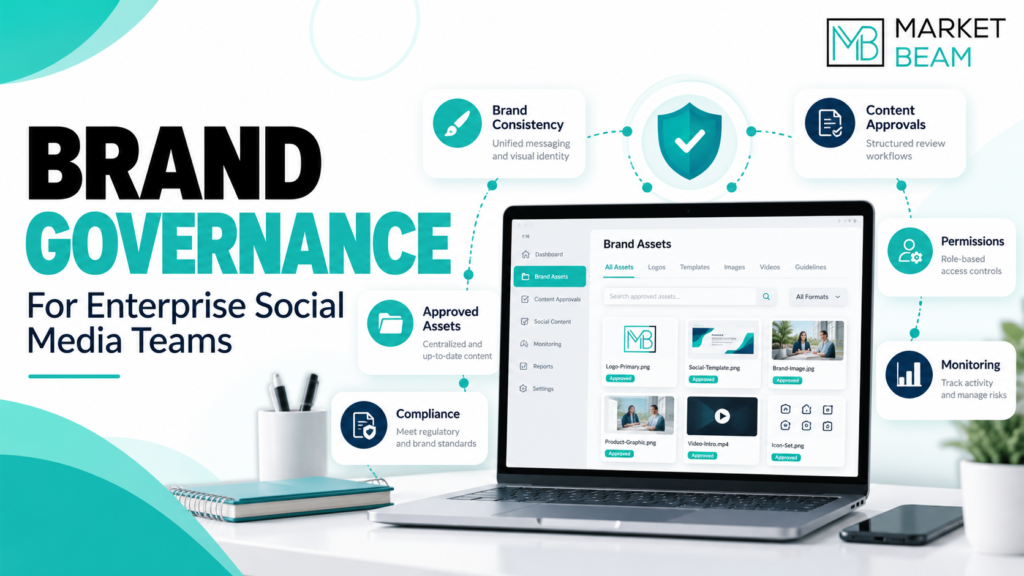
A social media approval workflow helps teams review and approve content before it goes live. This is one of the most important parts of social media governance.
In a simple business, one manager may review posts. In a regulated company, the process is often more complex. Content may need review from marketing, legal, compliance, medical affairs, product teams, or brand leadership. If the process is handled manually, approvals can become slow and confusing.
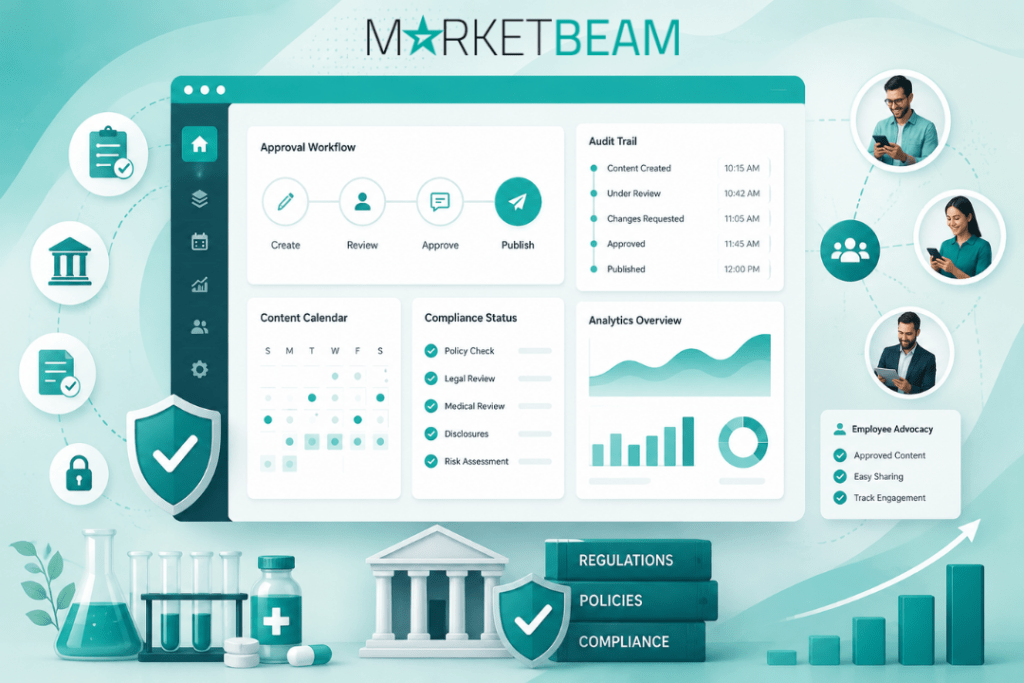
A strong workflow should clearly define every step. It should show who creates the post, who reviews it, who requests edits, who gives final approval, and who publishes it. It should also record comments, changes, timestamps, and approval history.
For pharma and life sciences teams, this may connect with MLR review. For financial services, it may connect with internal compliance review. For healthcare teams, it may include privacy and claims review.
A proper social media approval workflow helps reduce publishing delays. It also helps teams avoid missed reviews, duplicate feedback, and last-minute confusion. Most importantly, it creates a reliable record of the review process.
Why Social Media Archiving Software Matters
In regulated industries, publishing content is only part of the job. Companies also need to keep records of what was published, when it was published, who approved it, and how audiences engaged with it. This is why social media archiving software is important.
Archiving helps companies store social media records for audits, legal reviews, internal reporting, and regulatory needs. It may include published posts, deleted posts, comments, replies, approvals, edits, and engagement history.
Manual archiving is not enough for growing teams. Screenshots, spreadsheets, and email records can be incomplete or hard to search. They also create more work for marketing and compliance teams.
With social media archiving software, companies can maintain cleaner records and find information faster when needed. This supports stronger social media governance and reduces stress during audits. It also helps teams prove that approved content was published correctly.
For regulated brands, archiving should not be treated as an afterthought. It should be built into the publishing and approval process from the beginning.
Using B2B Social Listening to Monitor Brand Risk
Governance is not only about what your brand publishes. It is also about what people say about your brand, products, employees, competitors, and industry. This is where B2B social listening becomes useful.
Social listening helps teams track conversations across platforms. It can reveal customer questions, complaints, industry trends, competitor activity, brand mentions, and possible risk signals. For regulated industries, this is important because some conversations may require fast internal attention.
For example, a healthcare or pharma company may need to monitor mentions that could relate to adverse events. A financial services company may need to monitor misleading claims or customer complaints. A life sciences company may need to track conversations around product launches, conferences, or research updates.
B2B social listening also helps marketing teams create better content. By understanding what audiences discuss, teams can answer real questions and build stronger campaigns. When connected with social media governance, listening also becomes a risk-control tool.
LinkedIn Employee Advocacy with Compliance Control
LinkedIn is one of the most valuable platforms for B2B brands. It is especially important for pharma, life sciences, healthcare, medtech, fintech, and financial services because professional audiences are highly active there.
LinkedIn employee advocacy allows employees to share approved content with their networks. This can increase reach, trust, and engagement. People often respond better to posts from real employees than posts from brand pages alone.
However, regulated companies need guardrails. Employees should not have to guess what is safe to share. They should receive approved posts, clear captions, and simple sharing options. Marketing teams should also be able to track who shared content and how it performed.
This is where social media governance and advocacy work together. A compliant advocacy program gives employees the power to support the brand while keeping content controlled. It also allows marketing teams to scale reach without losing oversight.
For MarketBeam, this is a strong opportunity because employee advocacy can become a major advantage when combined with compliance workflows, content approval, and analytics.
Social Media Workflow for Regulated Marketing Teams
A strong social media workflow connects planning, creation, approval, publishing, monitoring, advocacy, and reporting. Without this structure, teams often waste time moving between tools and chasing approvals.
A regulated social media workflow should begin with content planning. Teams should decide campaign goals, target audiences, platforms, messaging, and approval needs. Next, content should be created inside a system where reviewers can comment and request changes. After approval, posts should be scheduled and published through controlled access.
Once content is live, teams should monitor engagement, respond carefully, and archive records. Finally, analytics should show what worked, what needs improvement, and which content supported business goals.
This workflow becomes more powerful when everything is connected. If publishing, approvals, advocacy, monitoring, and analytics happen in separate tools, governance becomes harder. A unified system helps teams save time, reduce risk, and make social media governance easier to manage.
What to Look for in Social Media Governance Software
The right social media governance software should help teams manage social media with control, speed, and visibility. It should not only schedule posts. It should support the full governance process.
Important features include approval workflows, role-based permissions, audit trails, archiving, employee advocacy controls, content calendars, analytics, monitoring, and compliance-ready reporting. For pharma and life sciences companies, Veeva or MLR-related workflows may also be important. For financial services, recordkeeping and review controls may be a key need.
A strong platform should also be easy for non-technical teams to use. Marketing teams should be able to create and schedule posts without confusion. Compliance teams should be able to review content quickly. Employees should be able to share approved posts with minimal effort.
The best social media governance software makes governance easier instead of adding more work. It turns social media governance into a repeatable process, not a manual task.
How MarketBeam Helps Regulated Brands Stay Compliant
MarketBeam is built for companies that need social media growth with compliance control. It helps regulated industries manage publishing, approvals, employee advocacy, monitoring, and analytics from one platform.
For marketing teams, MarketBeam supports content planning, scheduling, and performance tracking. For compliance teams, it helps create controlled review workflows, approval history, and audit-ready visibility. For employees, it makes advocacy easier by giving them approved content they can share safely.
MarketBeam is especially useful for life sciences, pharma, healthcare, medtech, financial services, and other regulated industries where social media governance needs more structure. It helps teams move faster while reducing the risk of unapproved or inconsistent content.
As social media becomes more important for B2B growth, regulated companies need more than a basic scheduler. They need a social media compliance platform that supports governance, workflow, advocacy, monitoring, and reporting together.
MarketBeam helps teams make social media governance practical. Instead of managing approvals, records, employee sharing, and analytics in separate tools, teams can bring these activities into a more controlled process.
Conclusion
Social media is now a core channel for regulated industries, but growth without control can create serious risk. That is why social media governance is essential. It gives teams the structure they need to publish content, manage approvals, guide employees, monitor conversations, archive records, and prove compliance.
For pharma, life sciences, healthcare, financial services, and medtech brands, social media governance is not just a marketing process. It is a business requirement. A clear policy, employee handbook, approval workflow, archiving system, and monitoring strategy can help teams stay active without losing control.
MarketBeam helps regulated brands bring these pieces together. With the right social media governance approach, companies can grow their social media presence, support employee advocacy, improve compliance, and build trust with their audience.