Introduction: The Shift in Life Science Marketing
Life science marketing is no longer limited to traditional outreach or scientific publications. In 2026, it has evolved into a digital-first ecosystem where trust, compliance, and scalability define success. Companies operating in pharmaceutical, biotech, and healthcare sectors must now balance strict regulations with the growing demand for real-time engagement across digital platforms.
This shift has made life science marketing more complex but also more powerful. With the rise of employee advocacy platforms and social media automation tools, organizations can now expand their reach while maintaining compliance. The ability to deliver consistent, approved, and high-quality content at scale is what separates leading brands from the rest.
Why Life Science Marketing Is More Challenging Today
Unlike other industries such as fintech or e-commerce, life sciences operate in a highly regulated environment. Every piece of communication must go through the MLR review process, ensuring it meets medical, legal, and regulatory standards. This often slows down content production and limits the ability to respond quickly to market trends.
At the same time, the competition in pharma digital marketing, biotech marketing, and healthcare social media marketing is increasing. Companies are expected to maintain a strong digital presence while ensuring that all messaging is accurate and compliant. This dual pressure creates a need for smarter systems that can manage both speed and compliance effectively.
Understanding Employee Advocacy in Life Sciences
Employee advocacy has emerged as a powerful solution within life science marketing strategy. It involves enabling employees to share approved company content across their personal networks, thereby increasing visibility and credibility.
In industries like pharmaceuticals and biotechnology, trust plays a critical role. When employees share content, it feels more authentic compared to branded messaging. This human element significantly improves engagement and builds stronger relationships with audiences.
A well-structured employee advocacy program ensures that all shared content is pre-approved and aligned with compliance guidelines. This allows companies to safely scale their reach without risking regulatory violations. Over time, organizations using employee advocacy software see measurable improvements in brand awareness, engagement rates, and lead generation.
The Role of Social Media Automation in Scaling Growth
Managing multiple social platforms manually is inefficient, especially for organizations dealing with high volumes of regulated content. This is where social media automation becomes essential in digital marketing for life sciences.
Automation allows companies to schedule posts, maintain consistency, and ensure that all content goes through the necessary approval workflows before publishing. It also helps teams manage content calendars, track performance, and optimize campaigns based on data insights.
Modern social media publishing platforms include structured workflows where content moves from draft to approval and then to publishing. These systems also support different content formats such as reels, carousels, and stories, ensuring flexibility in communication strategies. By integrating automation, companies can focus more on strategy and less on repetitive tasks.
MLR Review Process and Its Importance in Pharma Marketing
The MLR review process is a cornerstone of pharmaceutical digital marketing. It ensures that all communication is scientifically accurate, legally compliant, and aligned with regulatory standards.
Traditionally, this process has been time-consuming and manual. However, modern life science software solutions are now integrating MLR workflows directly into social media management platforms. This integration reduces delays and allows for faster content publishing without compromising compliance.
Understanding the importance of MLR is essential for any organization involved in digital marketing in the pharma industry, as it directly impacts both speed and credibility.
How MarketBeam Enables Modern Life Science Marketing
MarketBeam has positioned itself as a comprehensive platform for life science digital marketing by combining employee advocacy, automation, and compliance into a single solution. It addresses the key challenges faced by pharma and biotech companies by streamlining content distribution and approval workflows.
Through its employee advocacy platform, MarketBeam allows organizations to activate their workforce as brand ambassadors. Employees can share approved content effortlessly, increasing reach and engagement. At the same time, its social media automation software ensures consistent publishing across platforms.
What makes MarketBeam particularly effective is its built-in compliance system. By integrating approval workflows and MLR processes, it enables safe and scalable marketing. Additionally, its analytics capabilities help businesses measure performance, calculate reach, and optimize campaigns for better results.
How to Calculate Reach in Life Science Marketing
Reach is one of the most important metrics in social media marketing for healthcare and life sciences. It represents the number of unique users who see a piece of content.
Calculating reach involves understanding factors such as audience size, engagement rate, and content amplification. When employees share content through advocacy programs, the amplification effect increases significantly, allowing companies to extend their visibility beyond their immediate followers.
Using a social media reach calculator, organizations can track how their campaigns perform and identify areas for improvement. This data-driven approach is essential for building an effective life science marketing strategy.
Effective Digital Marketing Strategies for Pharma and Biotech
Successful biotech digital marketing and pharmaceutical marketing rely on a combination of content, technology, and distribution. Content marketing plays a central role, as scientific and educational content helps establish authority and trust. Blogs, whitepapers, and research-driven articles are particularly effective in engaging professional audiences.
At the same time, social media amplification through employee advocacy significantly enhances content reach. When combined with SEO strategies targeting keywords like life science SEO, digital pharma marketing, and biotech marketing, companies can achieve sustained visibility.
Paid campaigns also contribute to growth by targeting specific audiences and driving conversions. However, without a strong organic foundation supported by automation and advocacy, paid efforts alone are not enough.
Building Life Science Branding Through Social Media
Branding in life sciences is deeply connected to credibility and consistency. A strong digital presence requires clear messaging, accurate information, and continuous engagement with the audience.
Through healthcare social media management, companies can maintain a consistent voice and build trust over time. Social media platforms provide an opportunity to share insights, highlight innovations, and engage with stakeholders in a meaningful way.
When combined with employee advocacy programs, branding becomes more dynamic and human-centric. Employees act as trusted voices, reinforcing the company’s message and expanding its reach organically.
The Importance of Social Media Compliance
Compliance is a non-negotiable aspect of social media pharmaceutical marketing. Any violation can lead to serious consequences, including legal penalties and loss of credibility.
Social media compliance ensures that all content adheres to regulatory standards and avoids misleading claims. It also protects sensitive information and maintains transparency in communication.
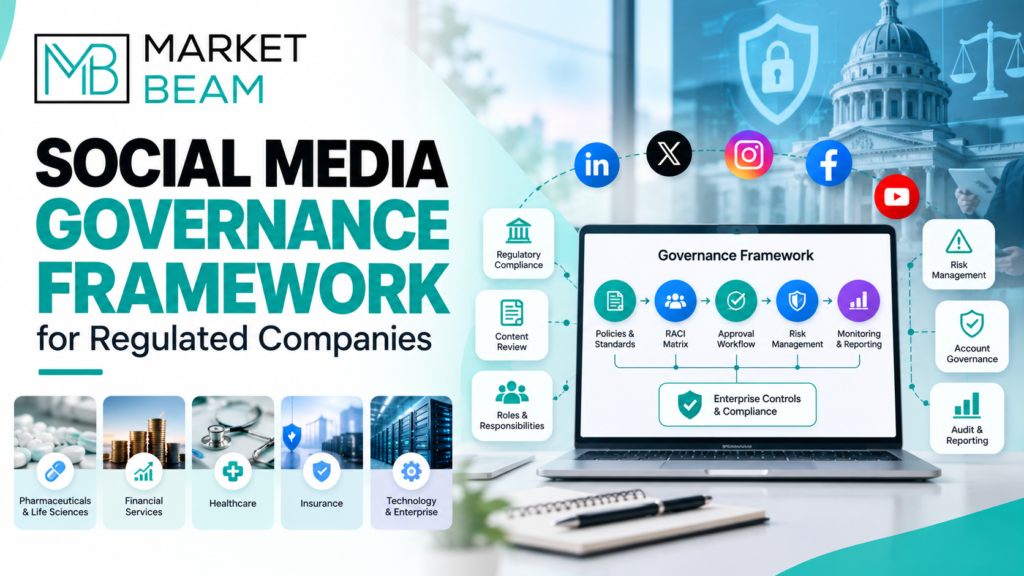
Modern social media compliance tools help organizations manage this complexity by integrating approval workflows, tracking content, and ensuring that only approved material is published. This is especially critical in industries like healthcare and pharmaceuticals, where accuracy and trust are paramount.
How Social Media Management Drives Brand Awareness
A well-structured approach to social media management for healthcare can significantly increase brand awareness. Consistent posting, data-driven strategies, and employee participation all contribute to higher visibility and engagement.
By leveraging social media automation tools and advocacy platforms, companies can ensure that their content reaches the right audience at the right time. Over time, this leads to stronger brand recognition and improved market positioning.
The Future of Life Science Marketing
The future of life science marketing lies in the integration of technology, data, and human-driven communication. Automation will continue to play a key role in scaling operations, while employee advocacy will drive authenticity and trust.
As digital transformation accelerates, companies must adopt advanced tools and strategies to remain competitive. Those that invest in life science marketing automation, employee advocacy solutions, and compliance-driven platforms will be better positioned to succeed in an increasingly complex landscape.
Conclusion
Life science marketing is evolving rapidly, and organizations must adapt to stay relevant. By combining employee advocacy, social media automation, and compliance-focused strategies, companies can create a scalable and effective marketing ecosystem.
Platforms like MarketBeam are enabling this transformation by simplifying workflows, enhancing reach, and ensuring compliance. For pharma and biotech companies looking to grow in 2026 and beyond, embracing these innovations is not just an option—it is a necessity.
FAQs
What is life science marketing?
Life science marketing involves promoting pharmaceutical, biotech, and healthcare products using digital strategies such as content marketing, SEO, and social media.
What is employee advocacy?
Employee advocacy is when employees share company-approved content on their personal social media profiles to increase reach and engagement.
How does social media automation help pharma companies?
It helps streamline content publishing, maintain consistency, and ensure compliance through automated workflows.
What is MLR in pharma?
MLR stands for Medical, Legal, and Regulatory review, a process that ensures all marketing content is compliant before publication.
How can life science companies increase brand awareness?
They can use a combination of employee advocacy, content marketing, SEO, and social media automation to expand reach and build trust.