Employee advocacy has become one of the most powerful—and underutilized—growth levers in modern marketing. In a world where audiences trust people more than brands, employees play a critical role in shaping how a company is perceived, discovered, and remembered.
This guide explains what employee advocacy is, why it works, and how organizations can build a successful employee advocacy program that benefits both the business and its people.
What Is Employee Advocacy?
Employee advocacy is the organic promotion of a company’s brand by its employees. It happens when employees voluntarily share positive messages about their workplace, products, culture, or values with their personal networks—online or offline.
This advocacy can take many forms:
-
Sharing company posts on social media
-
Talking about work experiences with peers
-
Wearing branded merchandise
-
Representing the company at industry events
-
Recommending products or services in conversations
Because these messages come from real people—not corporate accounts—they feel more authentic, trustworthy, and relatable.
Employee Advocacy Programs Explained
To make advocacy consistent and measurable, organizations often create employee advocacy programs. These programs:
-
Encourage participation without forcing it
-
Provide guidelines to reduce risk
-
Offer content, tools, and incentives
-
Align employee activity with marketing and business goals
A structured employee advocacy program transforms informal promotion into a scalable marketing strategy—while still preserving authenticity.
Why Employee Advocacy Works
Employee advocacy works because it is rooted in trust, reach, and credibility.
Studies consistently show that:
-
Employees collectively have up to 10× more social reach than official brand pages
-
Content shared by employees receives higher engagement than branded posts
-
People trust recommendations from individuals far more than from companies
Without structure, this potential remains largely untapped. With the right strategy, employee advocacy becomes a sustainable growth channel.
Why Is Employee Advocacy Important?
Employee advocacy delivers value across marketing, brand reputation, hiring, and internal culture. Three reasons make it essential.
1. It Unlocks the Power of Employee Networks
Every employee is a network hub—connected to potential customers, partners, hires, and influencers.
Employee advocacy helps brands:
-
Build interest faster after awareness
-
Shorten the customer journey
-
Support customer acquisition through trust-based relationships
While marketing teams excel at awareness, employees accelerate consideration and intent because of existing familiarity.
Employee networks also play a role beyond revenue:
-
Supporting sustainability initiatives
-
Promoting DEI values
-
Demonstrating cultural credibility
2. It Builds Brand Reputation Through Employee Credibility
Brands are often seen as profit-driven entities. Employees, however, are viewed as:
-
Friends
-
Peers
-
Colleagues
-
Subject-matter experts
When employees speak positively about their company, it reshapes brand perception.
Employee advocacy strengthens:
-
Brand trust
-
Employer branding
-
Talent attraction
-
Crisis resilience during reputational challenges
In moments of uncertainty, employee voices often carry more weight than corporate statements.
3. It Strengthens Internal Marketing and Alignment
Internal marketing focuses on helping employees understand and believe in:
-
Company mission
-
Values
-
Products
-
Strategic direction
When employees actively advocate for the brand, it signals genuine alignment. That belief spreads organically, creating a snowball effect—where confidence fuels participation, and participation fuels visibility.
Types of Employee Advocacy
Employee advocacy is not limited to social media. It appears across many touchpoints.
1. Social Media Advocacy
Social media is the most visible and scalable form of employee advocacy.
It includes:
-
Sharing company posts
-
Writing original content
-
Engaging with brand updates
-
Responding to DMs and comments
Employees—from interns to executives—humanize the brand simply by speaking in their own voice.
Review platforms like Glassdoor and LinkedIn also play a role, where current and former employees influence perception long after they leave.
2. Events and Conferences
Employees often represent organizations in places where the brand itself is not present.
These include:
-
Industry conferences
-
Webinars and podcasts
-
Local meetups
-
Guest talks
-
Product launches
Even casual mentions of their work can spark interest and credibility.
3. Content Creation
Employee advocacy does not require employees to become marketers.
It can naturally blend into:
-
Podcast appearances
-
Guest blogs
-
Short videos
-
LinkedIn posts
-
Webinars
The key is encouragement—not obligation.
4. Community Involvement
Participation in community initiatives reflects company values.
Examples include:
-
Volunteering
-
Fundraising
-
Environmental initiatives
-
Health and social causes
These actions build emotional trust and long-term goodwill.
5. Swag and Merchandise
Branded merchandise creates passive advocacy.
Employees promote the brand simply by:
-
Wearing branded apparel
-
Using branded accessories
-
Displaying company items in daily life
This form of advocacy requires minimal effort but delivers consistent visibility.
6. Internal Advocacy
How employees speak about the company internally matters just as much.
Positive internal conversations:
-
Influence morale
-
Shape culture
-
Strengthen collaboration
Internal advocacy is often the foundation of successful external advocacy.
Benefits of Employee Advocacy
Employee advocacy delivers measurable benefits for both employers and employees.
Benefits to the Employer
1. Better Employee Engagement
Employee engagement reflects emotional connection and motivation.
Employees who advocate for the brand:
-
Feel aligned with company values
-
Show higher commitment
-
Are more likely to stay longer
Advocacy reinforces engagement, which in turn boosts productivity and retention.
2. Increased Social Media Visibility
Brand pages can feel repetitive over time.
Employee advocacy:
-
Introduces fresh perspectives
-
Reaches new audiences
-
Keeps content human and relatable
This avoids audience fatigue while expanding reach organically.
3. Improved Brand Perception
Audiences often distrust overtly branded content.
Employee advocacy:
-
Feels authentic
-
Uses natural language
-
Adds personality to messaging
Employees humanize the brand simply by being associated with it.
4. Cost-Effective Marketing
Employee advocacy is unpaid promotion.
Even with incentives, the ROI typically outweighs the cost because:
-
Distribution is organic
-
Trust levels are higher
-
Reach is expanded without ad spend
Advocacy works best when it feels voluntary—not transactional.
Benefits to the Employee
1. Mental Relief and Positive Breaks
Employees already spend time on social media during work hours.
Advocacy provides:
-
Purposeful engagement
-
Mental refreshment
-
A break from routine tasks
When done right, it enhances—not harms—productivity.
2. Career Development and Visibility
Employee advocacy helps individuals:
-
Build personal brands
-
Establish thought leadership
-
Gain industry recognition
Active advocates often unlock:
-
Promotions
-
Speaking opportunities
-
New responsibilities
Training and recognition further strengthen this growth.
Real-World Examples of Employee Advocacy
-
A cybersecurity expert appears on a radio show and is introduced with company credentials, attracting qualified inbound interest.
-
An Instagram post featuring a workstation includes branded merchandise, leading a potential buyer to initiate a direct message.
-
A healthcare professional shares personal experience, leading to meaningful patient engagement through trusted connections.
Tips for Launching a Successful Employee Advocacy Program
Set Clear Guidelines
Guidelines should enable—not restrict—participation.
They should clarify:
-
What is encouraged
-
What to avoid
-
When to ask for help
-
How to handle uncertainty
Clear boundaries create confidence.
Motivate Participation
Incentives and recognition matter.
Effective motivation includes:
-
Rewards for milestones
-
Public recognition
-
Voluntary participation
Seeing others succeed inspires broader adoption.
Make Advocacy Easy
Advocacy should feel natural.
Programs should:
-
Offer ready-to-share content
-
Allow personalization
-
Respect individual voices
Authenticity is the foundation of trust.
Establish a Plan for Measuring Success
Avoid turning advocacy into a second job.
Instead, measure:
-
Marketing performance improvement
-
Reach and engagement lift
-
Brand mentions and referrals
Advocacy success is reflected in overall business impact.
How to Measure Employee Advocacy Success
Key metrics include:
Employee Participation
-
Number of active advocates
-
Posting frequency
-
Reach growth
Engagement Metrics
-
Likes, comments, shares
-
Comparison with brand-only content
Testimonials and Attribution
-
Candidate referrals
-
Customer feedback
-
Sales conversations influenced by advocacy
Strong participation signals a strong program.
Final Thoughts: Why Employee Advocacy Is Worth Investing In
Employee advocacy is not a trend—it is a long-term growth strategy.
When employees believe in the brand, the message travels further, resonates deeper, and lasts longer. With the right structure, tools, and culture, employee advocacy becomes one of the most credible and cost-effective marketing channels available.
If you’re ready to turn employee voices into measurable impact, a structured employee advocacy platform can help you scale safely, consistently, and compliantly.
Frequently Asked Questions (FAQs)
What is employee advocacy?
Employee advocacy is when employees voluntarily promote their company, brand, or values through their personal networks, both online and offline. This often includes social media sharing, event participation, and word-of-mouth recommendations.
Why does employee advocacy work better than brand marketing?
Employee advocacy works because people trust individuals more than corporate brands. Messages shared by employees typically receive higher reach and engagement since they feel more authentic and credible.
Is employee advocacy only about social media?
No. While social media is the most visible channel, employee advocacy also includes speaking at events, writing content, community involvement, internal advocacy, and even using branded merchandise.
What is an employee advocacy program?
An employee advocacy program is a structured initiative that encourages employees to share approved brand content while providing guidelines, tools, and incentives to align advocacy with business goals.
What are the benefits of employee advocacy for companies?
Employee advocacy helps organizations increase brand reach, improve trust, boost engagement, strengthen employer branding, and achieve more cost-effective marketing compared to paid promotion.
How does employee advocacy benefit employees?
Employees benefit through personal brand building, career visibility, professional growth, mental engagement, and recognition within and outside the organization.
Do employee advocacy programs require employees to create content?
No. Most programs focus on sharing or personalizing approved content. Content creation is optional and usually encouraged only for employees who are interested.
How do you measure employee advocacy success?
Success is measured through employee participation rates, engagement metrics, reach, brand mentions, referral impact, and qualitative feedback from candidates or customers.
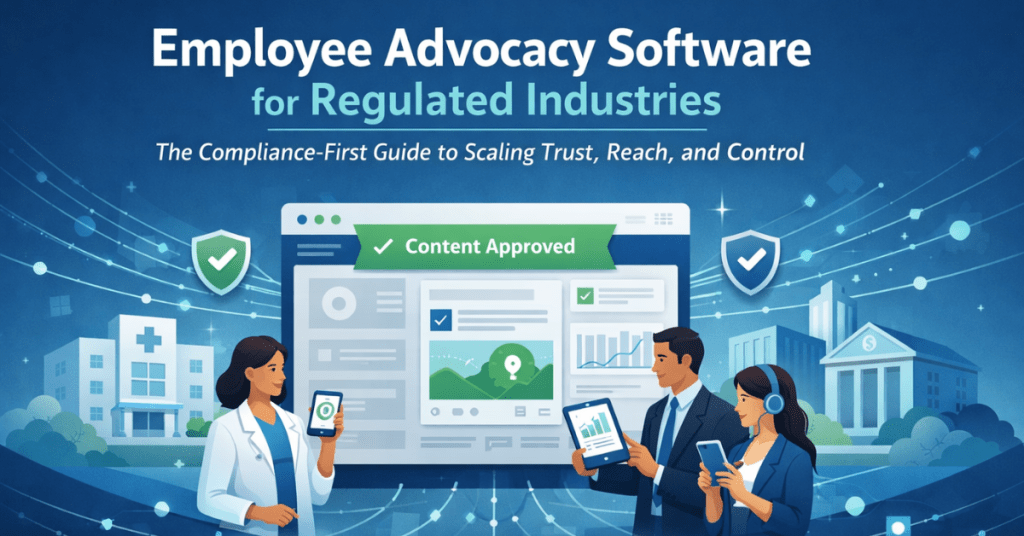
Is employee advocacy suitable for regulated industries?
Yes. In regulated industries, employee advocacy works best when supported by clear guidelines, pre-approved content, and governance controls to ensure compliance and reduce risk.
What makes a successful employee advocacy strategy?
A successful strategy focuses on voluntary participation, clear guidelines, ease of use, recognition, authenticity, and alignment with broader marketing and brand objectives.
Can employee advocacy improve employer branding?
Absolutely. Employees sharing real workplace experiences helps attract talent by showcasing company culture, values, and career opportunities in a credible way.
How often should employees participate in advocacy?
There is no fixed rule. Participation should feel natural and optional. Even occasional sharing can significantly extend brand reach when many employees are involved.
Is employee advocacy a long-term strategy?
Yes. Employee advocacy is most effective when treated as a long-term cultural and marketing initiative rather than a short-term campaign.
With MarketBeam, MedTech companies can manage influencer content, track engagement, and automate compliance—all within one secure platform.
👉 Learn more about Social Media Compliance for MedTech