Social media compliance refers to the policies, processes, and controls that ensure social media activity follows applicable laws, regulations, and internal governance standards. For regulated industries such as pharmaceuticals, healthcare, financial services, and publicly listed companies, social media is treated as formal communication rather than an informal marketing channel.
Every social media post, comment, reply, or shared link can be reviewed by regulators, auditors, or compliance teams long after it is published. This makes social media compliance a critical business requirement, not just a marketing consideration.
Social media has changed how organizations communicate with customers, patients, investors, and the public. What was once an informal channel is now a primary source of information, brand perception, and engagement.
For regulated industries, this shift introduces significant responsibility. Every social media post, comment, reply, or shared link can be treated as official communication. Regulatory bodies, auditors, and internal compliance teams may review this content long after it is published.
This is why social media compliance has become a critical business requirement rather than a marketing consideration.
This guide explains what social media compliance is, why it matters, who needs it, and how organizations can manage compliance effectively at scale.
What Is Social Media Compliance
Social media compliance refers to the policies, processes, and controls that ensure social media activity follows applicable laws, regulations, and internal governance standards.
It applies to content creation, content approval, publishing, engagement and responses, monitoring and listening, and record retention and audits.
Social media compliance ensures that organizations communicate responsibly, consistently, and defensibly across social platforms.
Why Social Media Compliance Is Important
Social media is public, fast-moving, and permanent. These characteristics make it powerful but risky, especially in regulated environments.
Without proper compliance controls, organizations risk publishing unapproved or misleading information, missing required disclosures, inconsistent messaging across teams or regions, poor handling of public comments, inability to prove compliance during audits, and regulatory penalties or reputational damage.
Social media compliance exists to reduce these risks and create confidence in how organizations communicate online.
Who Needs Social Media Compliance
While any organization benefits from compliance discipline, it is essential for regulated industries.
These include pharmaceutical and life sciences companies, healthcare providers and health tech companies, financial services firms, banks and insurers, publicly listed companies, and government or public sector organizations.
In these industries, social media activity is often subject to the same scrutiny as advertising, investor communication, or patient education.
Social Media Compliance vs Social Media Governance
Social media compliance and social media governance are closely related but not identical.
| Aspect | Social Media Compliance | Social Media Governance |
|---|---|---|
| Focus | Following laws and regulations | Managing internal rules and processes |
| Scope | Legal and regulatory requirements | Policies, roles, and controls |
| Ownership | Legal, compliance, risk teams | Marketing, communications, leadership |
| Purpose | Reduce regulatory risk | Ensure consistency and accountability |
Compliance is about obligation. Governance is about structure. Effective social media programs require both.
Common Social Media Compliance Requirements
Compliance requirements vary by industry and region, but common themes exist.
These include content approval before publishing, clear documentation of review processes, accurate and balanced claims, proper disclosures and disclaimers, secure handling of sensitive information, retention of social media records, supervision of employee activity, and monitoring of public engagement.
Managing these requirements manually becomes difficult as social media activity scales.
Why Manual Compliance Does Not Scale
Many organizations attempt to manage social media compliance using emails, spreadsheets, shared documents, or screenshots.
These methods lead to lost or incomplete approval records, confusion over final content versions, delays in publishing, inconsistent enforcement of rules, and stress during audits or inspections.
As the number of accounts, teams, and posts increases, manual compliance processes become unreliable and risky.
What Is Social Media Compliance Software
Social media compliance software is designed to embed compliance controls directly into social media workflows.
Instead of relying on people to remember rules, the software enforces them automatically.
At a high level, social media compliance software enables organizations to control who can create, approve, and publish content, enforce approval workflows, track every action taken on content, retain records for audits, monitor engagement and responses, and apply consistent rules across accounts.
This turns compliance into a repeatable process rather than an afterthought.
Core Elements of Social Media Compliance
Pre-Publish Review and Approval
Pre-publish compliance ensures that content is reviewed and approved before it goes live.
This includes routing content to the right reviewers, preventing publishing without approval, tracking changes and versions, and identifying final approved content.
Audit Trails and Record Retention
Audit readiness is a key requirement for regulated industries.
Compliance systems automatically record who created content, who approved it, when it was published, any edits or deletions, and engagement and responses.
These records provide evidence during audits or regulatory reviews.
Engagement and Response Oversight
Compliance does not stop after publishing.
Replies, comments, and direct messages must also be handled responsibly. Structured engagement ensures consistent response language, escalation of sensitive issues, visibility across teams, and documentation of interactions.
Monitoring and Social Listening
Monitoring public conversation is part of ongoing compliance.
Social listening helps organizations detect misinformation, identify emerging risks, track sentiment changes, and respond proactively to issues.
Listening supports both compliance and reputation management.
Social Media Compliance Across Industries
Pharmaceutical and Life Sciences
Life sciences organizations must manage medical, legal, and regulatory review, claims validation, fair balance, and adverse event awareness. Social media compliance ensures these requirements are met consistently.
Healthcare
Healthcare organizations must consider ethical communication, accuracy of information, patient trust, and reputation management. Compliance controls support responsible engagement.
Financial Services
Financial services firms face requirements around supervision, advertising standards, disclosure rules, and record retention. Social media compliance software helps meet these obligations.
Comparison Table: Manual Compliance vs Software-Driven Compliance
| Area | Manual Processes | Compliance Software |
|---|---|---|
| Approvals | Email and documents | Workflow-based |
| Audit readiness | Time-consuming | Built-in |
| Consistency | Depends on people | Enforced automatically |
| Scalability | Low | High |
| Risk exposure | High | Reduced |
How MarketBeam Supports Social Media Compliance
MarketBeam is built to support organizations operating in regulated environments.
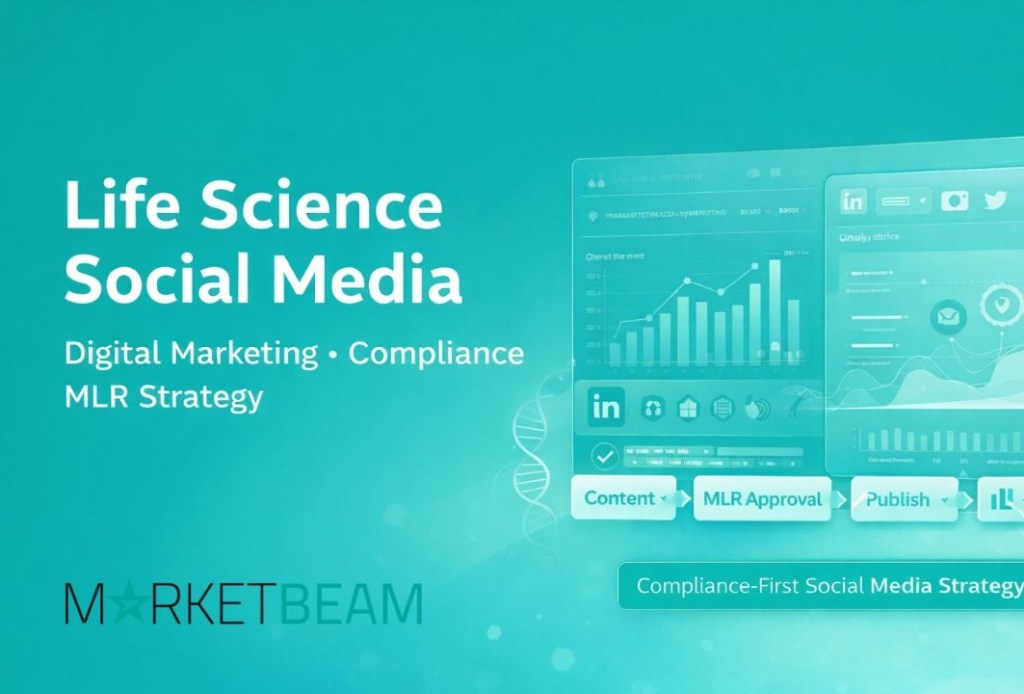
MarketBeam integrates social media management, approval workflows, monitoring, engagement oversight, analytics, and governance into a single platform. This allows teams to manage social media activity confidently while remaining audit-ready and compliant.
Rather than adapting generic tools, MarketBeam is designed with compliance as a core requirement.
FAQ Table: What Is Social Media Compliance
| Question | Answer |
|---|---|
| What is social media compliance? | It is the practice of ensuring social media activity follows laws, regulations, and internal policies. |
| Is social media compliance only for regulated industries? | It is essential for regulated industries but beneficial for any organization managing brand risk. |
| Does social media compliance slow down publishing? | No. Structured workflows often reduce delays by removing manual coordination. |
| Are comments and replies part of compliance? | Yes. Engagement is also regulated communication in many industries. |
| Can compliance be managed without software? | It can be attempted, but manual methods do not scale and increase risk. |
| Who owns social media compliance? | Typically a shared responsibility between marketing, compliance, legal, and leadership teams. |
Final Thoughts
Social media compliance is no longer optional. As social platforms continue to shape public perception and decision-making, regulated organizations must treat social media as a formal communication channel.
Understanding what social media compliance is and implementing the right processes and tools allows organizations to communicate with confidence rather than caution. With structured workflows, clear governance, and audit-ready systems, social media becomes a controlled, strategic asset instead of a regulatory risk.
With MarketBeam, MedTech companies can manage influencer content, track engagement, and automate compliance—all within one secure platform.
👉 Learn more about Social Media Compliance for MedTech