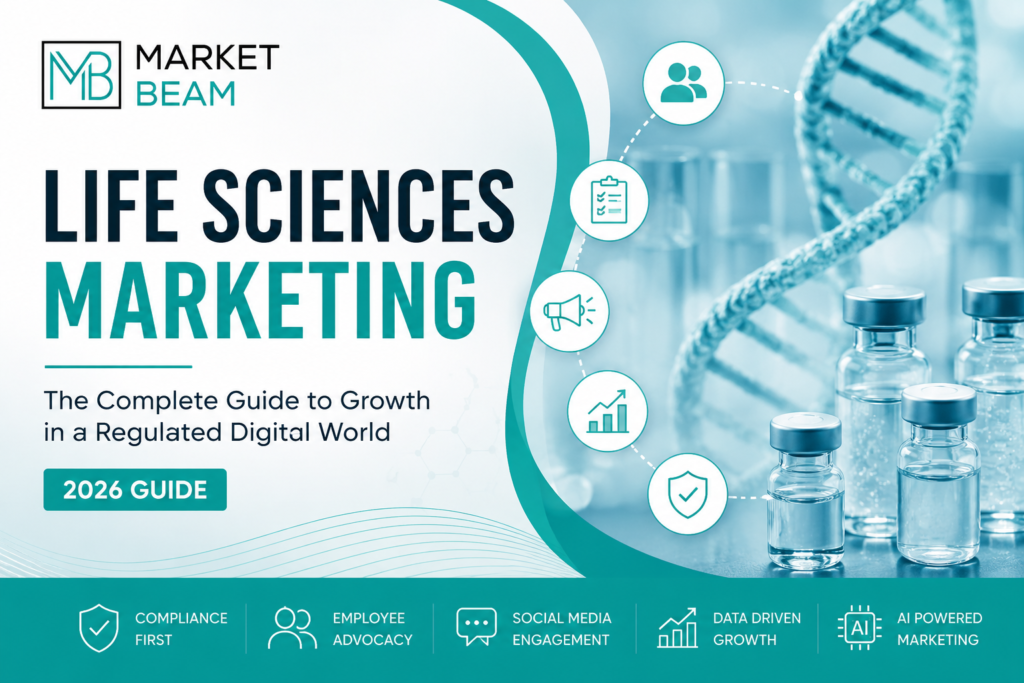
Life sciences marketing has entered a new era. Pharmaceutical companies, biotechnology firms, medical device manufacturers, diagnostics companies, and healthcare technology providers are competing in an increasingly digital environment where traditional marketing approaches are no longer enough to drive growth.
Healthcare professionals expect personalized digital experiences. Patients actively research treatments and therapies online before discussing options with physicians. Regulatory scrutiny continues to increase, while content volumes and communication channels continue to expand. As a result, life sciences organizations are under pressure to create more content, reach more audiences, and maintain compliance at every stage of the customer journey.
Life sciences marketing in 2026 requires a combination of digital innovation, regulatory expertise, data-driven decision making, and scalable content distribution strategies. Organizations that successfully balance these elements are outperforming competitors in engagement, brand awareness, lead generation, and customer trust.
Understanding Life Sciences Marketing
Life sciences marketing refers to the promotion of products, services, research, technologies, and innovations across pharmaceutical, biotechnology, medical device, diagnostics, and healthcare sectors. Unlike traditional B2B or B2C marketing, life sciences marketing operates within highly regulated environments that require strict governance, medical accuracy, and compliance oversight.
Marketing teams must communicate effectively with healthcare professionals, researchers, payers, patients, distributors, investors, and internal stakeholders while adhering to industry regulations and internal review processes.
The complexity of these requirements makes life sciences marketing one of the most specialized disciplines in modern digital marketing.
Why Digital Transformation Is Reshaping Life Sciences Marketing
The life sciences industry has experienced rapid digital transformation over the last several years. Healthcare professionals increasingly consume information through LinkedIn, webinars, podcasts, online communities, virtual conferences, and professional publications rather than relying solely on field representatives.
Organizations that previously depended on conferences and face-to-face meetings now require omnichannel marketing strategies that combine social media, email marketing, thought leadership content, employee advocacy, and digital advertising.
Artificial intelligence has further accelerated this transformation by enabling content personalization, predictive analytics, and automated compliance workflows.
Companies that embrace digital channels are seeing faster customer engagement cycles and stronger relationships with healthcare audiences.
The Growing Importance of Social Media in Life Sciences Marketing
Social media has become one of the most important channels for life sciences marketing strategies. Healthcare professionals increasingly use LinkedIn and other professional networks to stay informed about industry developments, clinical research, treatment innovations, and regulatory changes.
Organizations that consistently publish educational content establish credibility and authority within their market segments.
However, social media introduces unique challenges for regulated industries. Every post, comment, employee share, and audience interaction creates potential compliance risks if proper review processes are not in place.
This challenge has created growing demand for compliant social media management solutions that help organizations maintain governance while scaling digital engagement.
Employee Advocacy Is Becoming a Competitive Advantage
Corporate social media accounts often struggle with declining organic reach. Employee advocacy programs have emerged as one of the most effective methods for increasing visibility and engagement.
When executives, scientists, medical affairs professionals, researchers, and sales teams share approved content with their professional networks, organizations significantly expand their potential reach.
Healthcare professionals are also more likely to engage with content shared by individuals than by corporate pages.
Leading life sciences organizations are building structured employee advocacy programs that allow teams to safely amplify approved content while maintaining regulatory compliance.
This approach increases visibility, improves trust, and strengthens thought leadership across multiple audiences.
Regulatory Compliance Remains the Biggest Challenge
Compliance remains one of the defining characteristics of life sciences marketing. Marketing teams must navigate complex regulations while maintaining agility and speed.
Medical, Legal, and Regulatory review processes are essential for ensuring content accuracy and compliance. However, manual workflows often slow campaign execution and create operational bottlenecks.
Email approvals, spreadsheets, disconnected collaboration tools, and fragmented audit trails can significantly delay content publication.
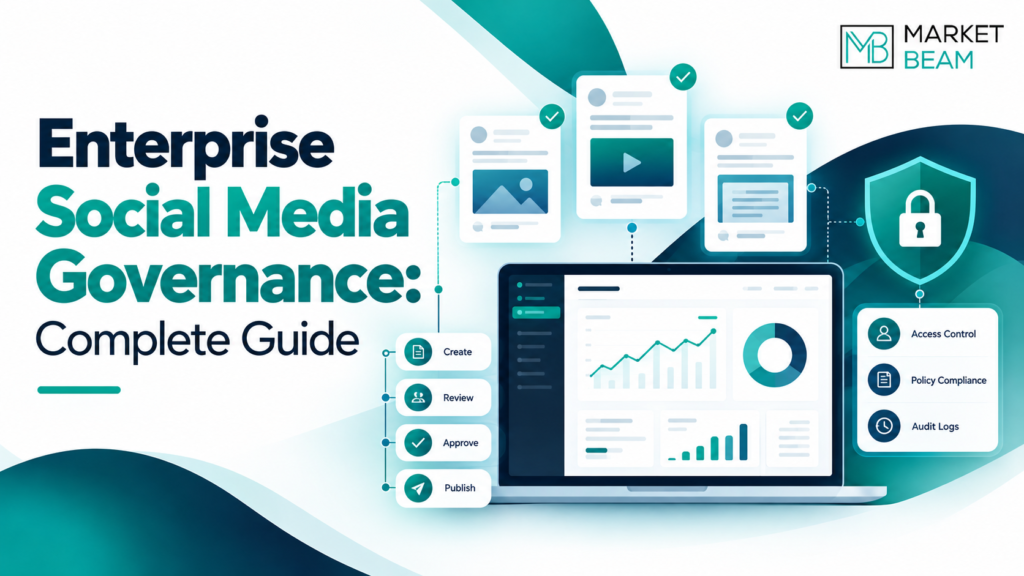
Modern life sciences organizations are investing in centralized compliance platforms that provide approval workflows, audit logs, content archiving, and automated governance controls.
These technologies reduce risk while improving operational efficiency.
Content Marketing Drives Authority and Trust
Educational content has become one of the most effective growth strategies in life sciences marketing. Healthcare professionals prefer evidence-based information that helps them solve clinical and operational challenges.
Organizations that publish valuable content consistently become trusted industry resources.
Articles discussing emerging therapies, clinical developments, treatment trends, healthcare technology, patient engagement, and regulatory updates attract highly qualified audiences.
Thought leadership content also supports search engine optimization, strengthens brand authority, and creates long-term traffic growth opportunities.
Companies that invest heavily in content marketing often experience stronger organic visibility and lower customer acquisition costs over time.
Data and Analytics Are Transforming Decision Making
Life sciences marketing has evolved from intuition-based decision making to data-driven optimization.
Marketing teams now track engagement rates, conversion performance, content consumption patterns, campaign attribution, customer journeys, and employee advocacy metrics in real time.
Advanced analytics platforms provide visibility into which content performs best, which channels generate the highest quality leads, and which audience segments respond most effectively to specific messaging.
These insights allow organizations to allocate budgets more effectively and continuously improve marketing performance.
Artificial Intelligence Is Redefining Marketing Operations
Artificial intelligence is becoming a foundational technology in life sciences marketing.
AI-powered tools assist with content creation, audience segmentation, campaign optimization, sentiment analysis, and compliance monitoring.
Rather than replacing human expertise, artificial intelligence enables marketing teams to operate more efficiently while focusing on strategic initiatives.
Organizations using AI-driven workflows are reducing content production times, improving personalization, and accelerating campaign launches without sacrificing compliance standards.
The combination of human expertise and artificial intelligence is becoming a defining characteristic of high-performing life sciences marketing teams.
The Role of Compliance-First Marketing Platforms
Traditional social media tools were not designed for highly regulated industries. As a result, many organizations struggle to scale social programs while maintaining governance requirements.
Compliance-first marketing platforms provide specialized capabilities such as approval workflows, content archiving, audit trails, employee advocacy controls, adverse event monitoring, and role-based permissions.
These capabilities enable organizations to execute sophisticated marketing programs without increasing regulatory exposure.
As compliance requirements continue to evolve globally, these platforms are becoming essential components of modern marketing technology stacks.

What the Future Holds for Life Sciences Marketing
The future of life sciences marketing will be shaped by artificial intelligence, employee advocacy, omnichannel engagement, and regulatory automation.
Organizations that continue relying on manual processes and disconnected systems will struggle to compete against digitally mature competitors.
Successful companies will combine educational content, compliant social media strategies, employee amplification, analytics, and AI-driven optimization to create scalable growth engines.
The winners in this market will not necessarily be the companies with the largest budgets. They will be the organizations that move quickly, operate efficiently, and build trust through valuable, compliant communication.
Final Thoughts
Life sciences marketing in 2026 requires more than promotional campaigns and product messaging. It demands strategic content creation, digital engagement, regulatory expertise, and operational efficiency.
The industry continues to evolve rapidly, creating new opportunities for organizations willing to embrace digital transformation.
Companies that invest in compliance-first technologies, employee advocacy programs, AI-powered workflows, and educational content strategies will be best positioned to lead the next generation of life sciences marketing.
For organizations operating in regulated industries, the ability to scale communication without increasing risk will become one of the most important competitive advantages of the decade.
Frequently Asked Questions
What is life sciences marketing?
Life sciences marketing refers to the strategies and activities used to promote pharmaceutical products, biotechnology solutions, medical devices, diagnostics, and healthcare technologies to healthcare professionals, patients, researchers, and other stakeholders while maintaining regulatory compliance.
Why is life sciences marketing different from traditional marketing?
Life sciences marketing operates in highly regulated industries where every communication must comply with regulations and internal approval processes. Marketing teams must balance education, engagement, and promotion with strict compliance requirements.
What are the biggest challenges in life sciences marketing?
The biggest challenges include regulatory compliance, lengthy approval workflows, limited organic reach, content personalization, measuring ROI, and managing communications across multiple digital channels while maintaining governance.
How important is digital marketing for life sciences companies?
Digital marketing has become essential for life sciences companies because healthcare professionals increasingly consume information through online channels such as LinkedIn, webinars, virtual events, and industry publications. Digital strategies help organizations improve visibility, engagement, and lead generation.
What role does social media play in life sciences marketing?
Social media helps life sciences organizations build thought leadership, engage healthcare professionals, share educational content, and amplify research and innovation. However, organizations must implement compliant social media workflows to manage regulatory risk.
What is employee advocacy in life sciences marketing?
Employee advocacy allows employees, executives, researchers, and sales teams to share approved company content through their personal social networks. This approach significantly increases reach, engagement, and trust while maintaining compliance.
How does AI improve life sciences marketing?
Artificial intelligence helps automate content creation, audience segmentation, campaign optimization, sentiment analysis, and compliance monitoring. AI allows marketing teams to operate more efficiently while improving personalization and scalability.
Why is compliance important in life sciences marketing?
Compliance protects organizations from regulatory penalties, reputational damage, and legal risks. Proper governance ensures that all marketing content follows industry regulations and internal approval requirements.
What should companies look for in a life sciences marketing platform?
Organizations should look for features such as approval workflows, audit trails, content archiving, employee advocacy capabilities, analytics, AI-powered content assistance, and integrations with existing compliance systems.
How can MarketBeam help with life sciences marketing?
MarketBeam helps life sciences organizations manage compliant social media publishing, employee advocacy, approval workflows, analytics, and AI-driven content distribution from a centralized platform designed for regulated industries.