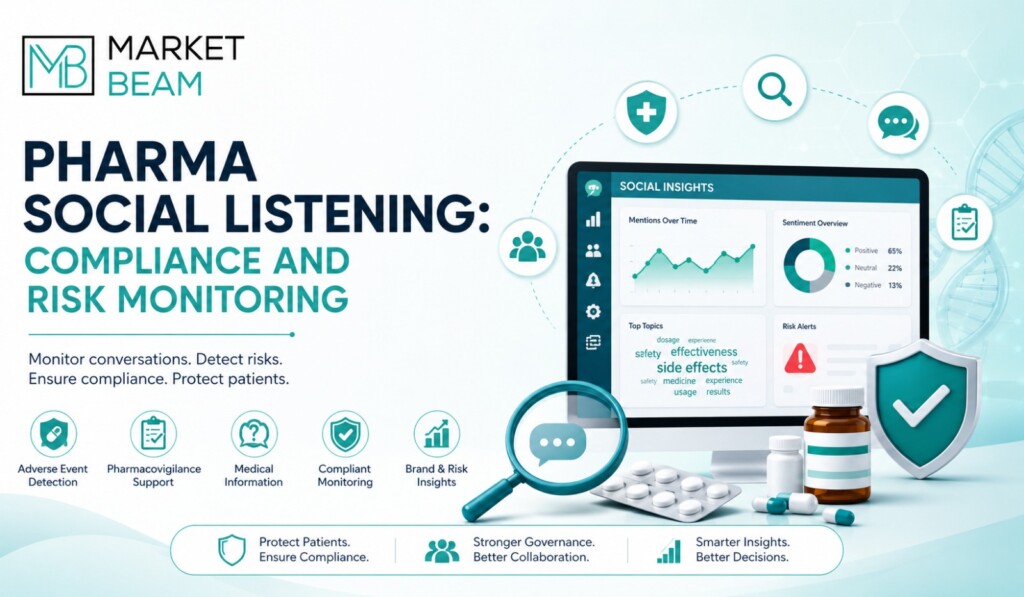
Pharmaceutical companies operate in one of the most highly regulated communication environments. Patients, healthcare professionals, caregivers, and consumers increasingly discuss medicines, treatments, brands, and health experiences across social media and online communities. These conversations can provide valuable insights, but they can also introduce compliance, safety, and reputation risks. A structured pharma social listening program helps organizations monitor these conversations while establishing appropriate processes for review and escalation.
Unlike conventional social media monitoring, pharmaceutical listening requires a stronger focus on governance and responsible handling of potentially sensitive information. Conversations may contain product complaints, questions about medicines, or information that could require specialized review.
An effective pharma social listening approach therefore connects monitoring with defined workflows. Marketing, communications, medical information, pharmacovigilance, legal, and compliance teams may all have different responsibilities when relevant conversations are identified.
For pharmaceutical organizations, the objective is not simply to collect more mentions. It is to identify meaningful signals, understand public conversations, and ensure potentially important information reaches the appropriate internal team.
MarketBeam helps enterprise organizations centralize social media management, listening, analytics, governance, and workflow processes to support more structured digital operations.
What Is Pharma Social Listening?
Pharma social listening is the process of monitoring and analyzing online conversations related to pharmaceutical brands, medicines, diseases, campaigns, competitors, and relevant healthcare topics.
It can help organizations understand how audiences perceive a product or campaign, identify recurring questions, monitor reputation, and detect conversations that may require internal attention.
A pharmaceutical listening program can include social networks, online communities, forums, blogs, review platforms, and other relevant digital channels. Organizations establish specific keywords and queries based on their monitoring objectives.
However, pharma social listening should not be treated as a replacement for formal pharmacovigilance systems. Social media monitoring can provide signals, but qualified safety professionals must determine whether information meets applicable safety-reporting requirements and follow the organization’s established procedures.
This distinction is essential. Listening technology helps identify potentially relevant conversations, while trained teams determine what action is appropriate.
Why Pharma Companies Need Social Listening
Pharmaceutical companies face a unique combination of marketing, safety, medical information, and regulatory responsibilities. Public conversations can influence brand reputation while also revealing important questions or concerns about medicines.
A structured pharma social listening strategy allows organizations to identify these conversations more efficiently than manual searches.
Marketing teams can evaluate campaign reactions and understand audience sentiment. Medical information teams can identify recurring questions that may require approved responses. Communications teams can monitor reputation, while safety teams may receive potentially relevant signals for further evaluation.
The value comes from connecting monitoring with clearly defined internal workflows. Not every mention represents a compliance or safety issue, but the organization needs a consistent method for determining which conversations require attention.
Social Listening and Pharmacovigilance
Pharmacovigilance focuses on the detection, assessment, understanding, and prevention of adverse effects or other medicine-related problems. Social media can sometimes contain information potentially relevant to these activities.
For this reason, pharma social listening programs should be designed with clear escalation procedures. When potentially relevant safety information is identified, it should be routed according to the organization’s established pharmacovigilance processes.
Listening platforms can assist with discovery and organization, but they should not independently determine whether a report is a valid safety case.
Pharmaceutical companies should establish clear ownership between social media teams and pharmacovigilance functions. This prevents important information from being overlooked while ensuring qualified professionals remain responsible for safety evaluation.
Adverse Event Detection on Social Media
Adverse event detection is one of the most sensitive applications of pharmaceutical social listening. Patients may discuss experiences with medicines using informal language, abbreviations, product references, or descriptions that differ from formal medical terminology.
An effective monitoring program can use carefully designed queries to identify potentially relevant conversations. AI-powered classification can help prioritize large volumes of information, but human review remains important when assessing potentially significant safety signals.
The organization’s established safety procedures should determine how identified information is documented, reviewed, and escalated.
Adverse event detection should therefore be treated as part of a controlled workflow rather than simply another social media analytics feature.
Medical Information and Social Conversations
Pharmaceutical organizations also need to monitor questions that may require medical information support.
Customers and healthcare audiences may ask about dosage, administration, product use, treatment expectations, or other medicine-related topics on social platforms. These questions should not be answered casually by unqualified marketing personnel.
A structured pharma social listening workflow can identify recurring questions and route them to the appropriate medical information function. Responses should follow approved organizational procedures and use appropriate, authorized information.
This approach helps organizations maintain consistent communication while reducing the risk of inaccurate or unauthorized medical claims.
Pharma Social Listening Use Cases
| Use Case | Primary Purpose |
| Adverse Event Detection | Identify potentially relevant safety conversations |
| Pharmacovigilance | Route signals for qualified safety evaluation |
| Medical Information | Identify product and treatment-related questions |
| Compliant Monitoring | Maintain structured oversight of digital conversations |
| Drug Safety | Support established safety-monitoring workflows |
| Brand Monitoring | Understand reputation and audience perception |
Building a Compliant Monitoring Workflow
An effective pharma social listening program needs a clearly documented workflow that defines how conversations are identified, reviewed, categorized, and escalated. Monitoring alone does not create compliance. The organization needs processes that connect digital signals with the appropriate internal teams.
The workflow can begin with predefined queries covering brand names, product names, common misspellings, campaign terms, competitors, and relevant healthcare topics. Once conversations are collected, they can be categorized based on business relevance and potential risk.
Potential safety-related conversations should follow the organization’s established pharmacovigilance procedures, while product questions may be routed to medical information teams. Reputation concerns can be handled by communications teams, and promotional or regulatory issues may require legal or compliance review.
Clear ownership is particularly important. Marketing teams should understand when they need to escalate a conversation rather than attempting to resolve it independently.
A structured workflow makes pharma social listening more consistent and helps ensure potentially important information reaches qualified teams.
Compliant Monitoring Best Practices
Compliant monitoring requires pharmaceutical organizations to establish clear policies before launching a listening program. Teams should understand what information is monitored, how it is handled, who can access it, and when escalation is required.
Organizations should use monitoring criteria that are aligned with legitimate business and safety objectives while respecting applicable privacy requirements and platform policies.
Role-based access can help limit sensitive information to authorized personnel. Documentation should also explain how monitoring activities are reviewed and how relevant information is transferred to appropriate internal functions.
Regular governance reviews are valuable because pharmaceutical communication requirements and digital platforms continue to evolve. Organizations should periodically evaluate their queries, workflows, access permissions, and escalation procedures.
The objective of compliant monitoring is not to eliminate every possible risk. Instead, it establishes a controlled process that allows organizations to gain useful insights while maintaining appropriate governance.
Drug Safety and Risk Monitoring
Drug safety should remain a priority when pharmaceutical organizations monitor public conversations. Social media may contain information that appears relevant to a medicine’s safety profile, but determining whether a conversation represents a reportable case requires qualified assessment.
For this reason, pharma social listening should work alongside formal safety processes rather than operate as an independent pharmacovigilance system.
Monitoring teams can identify potentially relevant conversations and route them to qualified safety professionals. Those professionals can then determine whether additional evaluation or reporting is required under the organization’s established procedures.
This separation of responsibilities helps prevent marketing teams from making safety decisions outside their expertise while ensuring potentially important information is not overlooked.
Common Risks in Pharma Social Listening
Pharmaceutical organizations face several risks when implementing pharma social listening. One is incomplete monitoring. If queries are too narrow, relevant conversations may not be identified.
Another risk is excessive noise. Broad queries can generate large volumes of irrelevant conversations, making it harder for teams to identify important signals.
Misclassification is another concern. AI can help categorize conversations, but healthcare terminology, sarcasm, abbreviations, and context can make automated analysis imperfect. High-risk conversations should therefore receive appropriate human review.
Organizations should also avoid treating social listening data as a substitute for formal pharmacovigilance, medical information, or regulatory systems. Each function has its own responsibilities and qualified personnel.
Strong governance, documented escalation procedures, and appropriate technology can reduce these risks while improving operational efficiency.
Pharma Social Listening Compliance Checklist
| Area | Recommended Practice |
| Monitoring Queries | Review brand, product, and relevant topic queries regularly |
| Adverse Event Detection | Route potential safety signals to qualified teams |
| Medical Information | Escalate product questions through approved processes |
| Access Control | Limit information access according to user responsibilities |
| Compliant Monitoring | Follow internal policies and applicable requirements |
| Escalation | Establish documented response and ownership procedures |
| Human Review | Review high-risk conversations before taking action |
How MarketBeam Supports Pharma Social Listening
MarketBeam helps pharmaceutical and other regulated organizations manage social media activities through centralized listening, analytics, governance, collaboration, and workflow capabilities.
Marketing and communications teams can use MarketBeam to gain visibility into digital conversations and identify trends that may influence brand reputation or campaign performance. Structured workflows can then help route relevant information to appropriate internal stakeholders.
For organizations implementing pharma social listening, this centralized approach can support collaboration between marketing, communications, compliance, medical information, and other business functions.
MarketBeam can also help organizations establish controlled workflows around monitoring and escalation, providing greater visibility into how social media activities are managed across enterprise teams.
Importantly, technology should complement rather than replace qualified regulatory, medical, or pharmacovigilance professionals. MarketBeam can support the operational workflow, while specialized teams remain responsible for evaluating safety, medical, and compliance matters according to their established procedures.
Conclusion
Pharma social listening can provide valuable visibility into how patients, healthcare audiences, and other stakeholders discuss pharmaceutical brands and products. However, pharmaceutical organizations must approach listening with stronger governance than conventional social media monitoring.
Effective programs combine targeted queries, adverse event detection, pharmacovigilance workflows, medical information escalation, compliant monitoring, and drug safety processes. Clear responsibilities ensure potentially important conversations reach qualified teams without placing regulatory or medical decisions in the hands of marketing personnel.
MarketBeam helps enterprises centralize social media management, listening, analytics, governance, and workflows, giving regulated teams greater operational visibility while supporting structured collaboration.
Connect With Us
Ready to strengthen your pharmaceutical social media monitoring?
Sales: sales@marketbeam.io
Tech Support: support@marketbeam.io
Connect with MarketBeam to explore enterprise social media listening, governance, analytics, and workflow solutions for regulated organizations.
Frequently Asked Questions
1. What is pharma social listening?
Pharma social listening is the structured monitoring and analysis of online conversations related to pharmaceutical brands, products, healthcare topics, campaigns, and competitors.
2. Can social listening replace pharmacovigilance?
No. Social listening can help identify potentially relevant signals, but qualified pharmacovigilance professionals must evaluate information according to the organization’s established safety procedures and applicable requirements.
3. How does adverse event detection work on social media?
Adverse event detection uses predefined queries and analytical technologies to identify potentially relevant medicine-related conversations. Identified information should then be routed to qualified safety teams for appropriate evaluation.
4. Why is compliant monitoring important for pharmaceutical companies?
Compliant monitoring helps pharmaceutical organizations establish controlled processes for accessing, reviewing, escalating, and documenting social media information while supporting applicable internal and regulatory requirements.
5. How does social listening support drug safety?
Drug safety teams can receive potentially relevant signals identified through listening workflows. Social listening supports discovery, while qualified professionals remain responsible for evaluating and processing safety information.
6. How does MarketBeam support pharma social listening?
MarketBeam provides centralized social media management, listening, analytics, governance, collaboration, and workflow capabilities that help regulated organizations coordinate monitoring and escalation while allowing specialized teams to handle medical, safety, and compliance decisions.