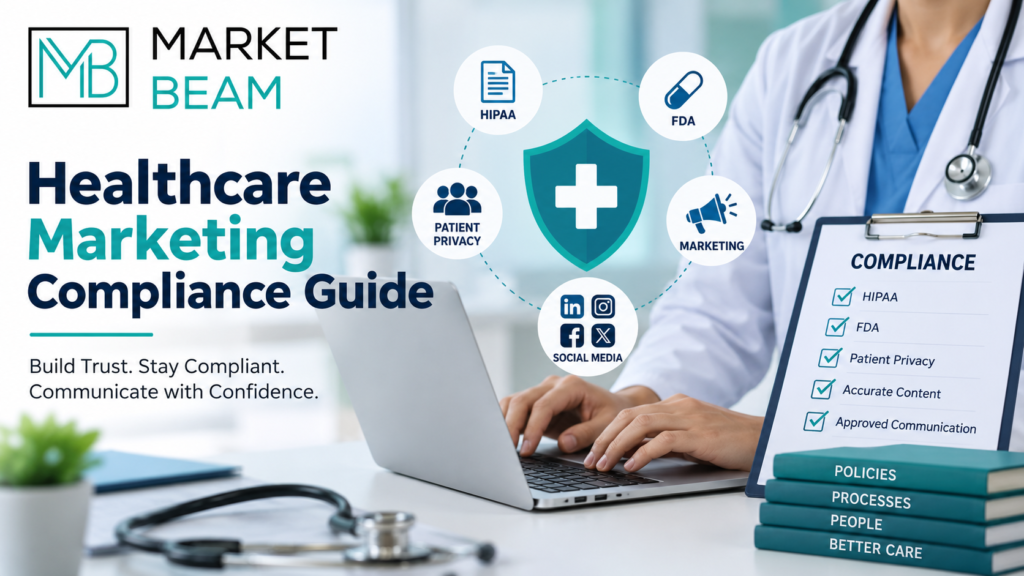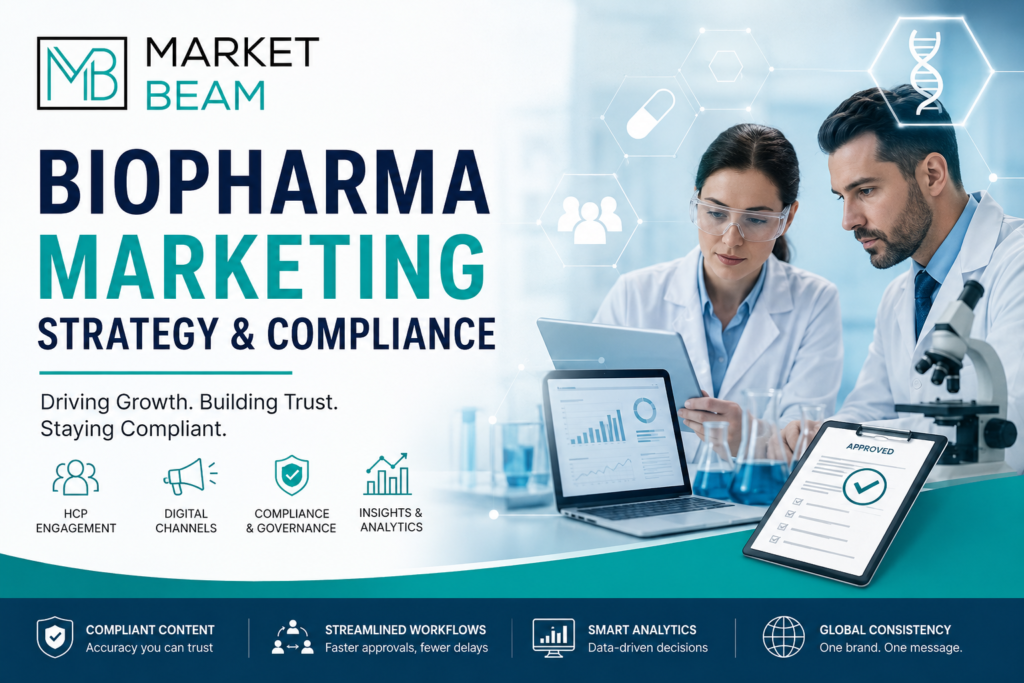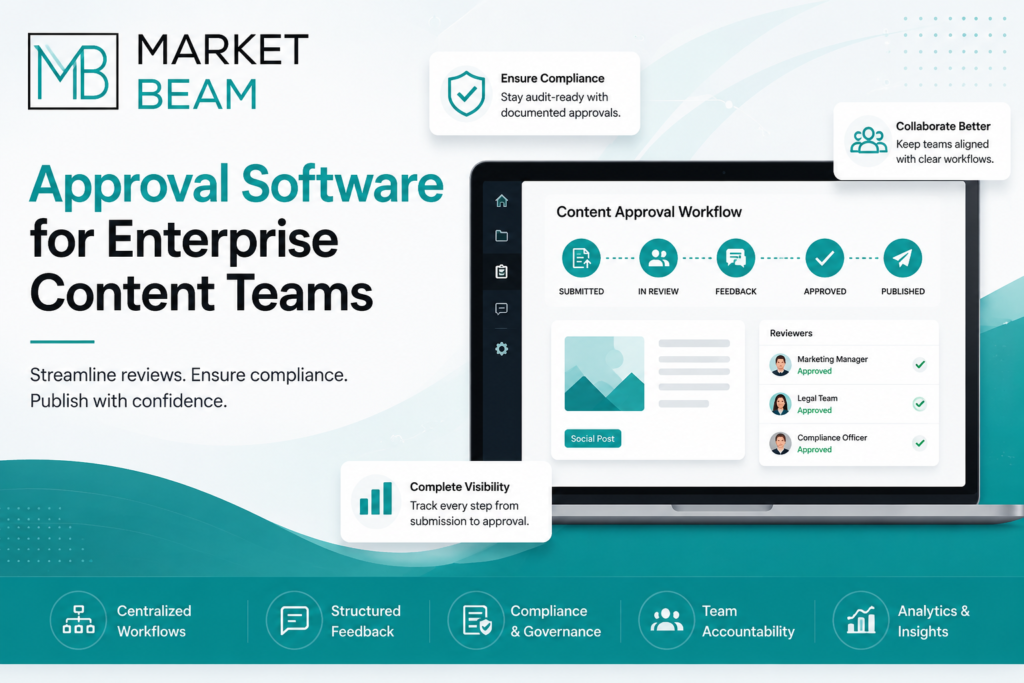
Marketing medical devices requires a careful balance between business growth and regulatory responsibility. Companies need to communicate product value, educate healthcare professionals, build brand awareness, and support product launches while ensuring their claims and promotional materials are accurate and appropriate for their intended audience. This makes medical device marketing more complex than ordinary B2B or consumer marketing.
A successful medical device marketing program must consider product claims, intended use, promotional messaging, digital channels, advertising practices, approvals, and post-publication monitoring. The risks can become even greater when companies manage social media, paid advertising, websites, email campaigns, webinars, and third-party communications at the same time.
For life sciences organizations, compliance should be part of marketing operations from the beginning. Teams need clear review processes, documented responsibilities, approved content, and reliable workflows that help prevent avoidable mistakes. MarketBeam supports regulated organizations with social media management, governance, compliance workflows, publishing, monitoring, and analytics, helping teams manage digital communications more efficiently.
What Is Medical Device Marketing?
Medical device marketing is the promotion and communication of medical devices to healthcare professionals, healthcare organizations, distributors, patients, caregivers, or other relevant audiences. Depending on the product and market, marketing may include websites, brochures, trade-show materials, email campaigns, social media, search advertising, webinars, videos, and sales enablement content.
Unlike ordinary marketing, medical device marketing must remain closely aligned with the product’s authorized intended use and supporting evidence. Promotional language should not create an inaccurate impression about safety, effectiveness, performance, or clinical outcomes.
This is why marketing teams in the life sciences sector need a clear distinction between creative messaging and approved claims. Content may be engaging, but it also needs to remain consistent with the organization’s regulatory and quality processes.
A strong approach to medical device marketing combines commercial strategy with disciplined content governance. Marketing, medical, legal, regulatory, and quality teams may all have a role depending on the product, market, and type of communication.
Why Compliance Matters in Life Sciences Marketing
Compliance is central to effective medical device marketing because promotional communications can influence healthcare decisions and shape how a product is understood.
A misleading statement can create regulatory risk, damage trust, and force a company to revise or withdraw promotional material. Problems may also arise when marketing claims are stronger than the evidence available to support them.
Life sciences companies should therefore establish review processes before campaigns are launched. Every major asset should be evaluated for accuracy, consistency, appropriate claims, and applicable regulatory considerations.
Strong compliance practices also make marketing more scalable. When teams have approved messaging, clear workflows, and defined responsibilities, they can move campaigns forward without repeatedly starting the review process from scratch.
For growing organizations, compliance is not simply a final approval step. It should be embedded throughout the medical device marketing lifecycle, from campaign planning and content creation through publication and monitoring.
Medtech Marketing Across Digital Channels
Modern medtech marketing extends across a wide range of digital channels. LinkedIn can support professional thought leadership, websites can educate prospects, webinars can demonstrate product applications, and paid campaigns can attract targeted audiences.
Each channel creates different communication considerations. A product page may provide detailed information, while a social media post may require a much shorter message. A video may communicate claims through both spoken words and visuals.
This makes centralized governance especially valuable. Teams should maintain consistent messaging across digital channels while adapting content to the format and audience of each platform.
Effective medtech marketing also requires collaboration. Marketing teams should work with medical and regulatory stakeholders to confirm that key product statements remain accurate when content is repurposed for different channels.
A centralized content library containing approved assets and messaging can make this process faster while reducing the chance of outdated information being reused.
Device Promotion and Promotional Claims
Device promotion should be based on accurate and supportable information. Marketing teams need to understand which claims are approved, what evidence supports those claims, and what limitations apply to their use.
Claims involving safety, effectiveness, performance, comparative advantages, or clinical outcomes deserve particular attention. A seemingly simple phrase can create risk if it implies an outcome that cannot be adequately supported.
A structured claim-review process helps teams identify high-risk language before it reaches publication. Instead of relying on individual judgment, organizations can maintain approved claims and supporting references that guide content development.
This approach makes device promotion more consistent across campaigns and helps reduce the amount of rework required during review.
Key Compliance Areas in Medical Device Marketing
| Marketing Area | Primary Compliance Consideration | Recommended Practice |
|---|---|---|
| Product Claims | Claims should be accurate and supportable | Use approved claims and references |
| Digital Advertising | Messaging must remain appropriate for the product and audience | Review creative and copy before launch |
| Social Media | Short-form content can oversimplify claims | Apply the same review standards as other promotional content |
| Visual Assets | Images can imply performance or outcomes | Review visuals as part of the complete message |
| Product Launch | Multiple channels increase coordination challenges | Establish a cross-functional launch workflow |
| Third-Party Content | External partners may communicate on the brand’s behalf | Provide clear guidance and approval processes |
FDA Advertising and Promotional Considerations
FDA advertising requirements are an important part of regulated life sciences communications. Organizations should evaluate promotional content according to the applicable requirements for the specific device, communication, and market.
Marketing teams need to avoid unsupported or misleading statements and should ensure that promotional material is consistent with authorized product information and company-approved claims.
Digital advertising introduces additional complexity because content can change rapidly and reach large audiences quickly. Paid search advertisements, social posts, display ads, landing pages, and videos should therefore be included in the organization’s overall review framework.
This does not mean every piece of content needs the same approval path. Instead, organizations should establish risk-based workflows that direct content to the appropriate reviewers.
By integrating FDA advertising considerations into campaign planning, companies can reduce delays and address potential issues before a launch.
Healthcare Digital Marketing Compliance
Healthcare digital marketing requires careful coordination because audiences may include healthcare professionals, patients, caregivers, and the general public.
The message, level of detail, and claims may need to differ depending on who is receiving the communication. Teams should also consider whether content is educational, corporate, or promotional and apply the appropriate internal review process.
Healthcare organizations should establish content standards covering claims, references, visuals, disclosures, and tone of communication. These standards help marketers create content more efficiently because they know what is acceptable before production begins.
For global organizations, healthcare digital marketing may require additional localization and review because regulatory expectations can differ between markets.
Centralized workflows can help teams manage these variations while maintaining a consistent governance structure.
Product Launch Compliance
A medical device launch can involve websites, paid campaigns, social media, sales materials, email communications, events, and distributor content. Coordinating all these channels requires careful planning.
Product launch teams should establish compliance milestones before creative production begins. Marketing should work with regulatory and quality stakeholders to identify claims, supporting documentation, required approvals, and publication dates.
A launch calendar should also identify dependencies between assets. If a product page changes, related social and advertising content may need to be reviewed as well.
This approach reduces the risk of publishing inconsistent information across channels. It also allows reviewers to plan their workload instead of receiving large volumes of content immediately before launch.
MLR and Cross-Functional Review
Although MLR is commonly associated with pharmaceutical promotion, the underlying principle of cross-functional review is highly relevant to many areas of regulated life sciences marketing.
Medical, legal, regulatory, quality, and marketing stakeholders may each evaluate different aspects of promotional content. Clear responsibilities prevent duplicate reviews and ensure that important risks receive the right level of attention.
A structured workflow should define who creates content, who reviews claims, who provides legal input, who approves publication, and who manages final release.
Centralized approval records also create a reliable history of what was reviewed and which version was approved.
For enterprise teams, this structure can make medical device marketing faster and more consistent without reducing oversight.
Social Media Marketing for Medical Devices
Social media has become an important channel for medical device companies, but it also creates unique compliance challenges. Posts are short, content moves quickly, and comments can create additional conversations that were not part of the original campaign.
Organizations should therefore apply the same governance discipline to social media as they do to websites and other promotional channels.
A controlled workflow can ensure that approved content is published while post-publication monitoring helps teams identify questions, complaints, or potential compliance concerns.
Employee advocacy also requires careful management. Employees and sales representatives may want to share company content, but organizations should provide approved resources and clear guidelines.
MarketBeam’s regulated-industry platform combines publishing, compliance workflows, monitoring, analytics, engagement, and employee advocacy capabilities to support these types of enterprise social media operations.
Common Medical Device Marketing Risks
The most common risks in medical device marketing often involve claims that are unclear, unsupported, outdated, or taken out of context.
Another risk is inconsistency between channels. A product website may use approved terminology while a social media post or sales presentation uses a stronger statement.
Visual content can also create unintended claims. An image, demonstration, before-and-after comparison, or headline may imply a product benefit that is not fully supported by the accompanying text.
Third-party communications can create additional challenges when agencies, influencers, distributors, or partners publish content independently.
These risks can be reduced through approved content libraries, standardized review processes, training, monitoring, and clear ownership.
How MarketBeam Supports Life Sciences Marketing Compliance
MarketBeam helps regulated organizations manage digital marketing through centralized workflows that connect content creation, review, publishing, monitoring, and analytics.
For medical device marketing teams, this type of centralized approach can improve collaboration between marketing and regulatory stakeholders while reducing the need for disconnected approval processes.
MarketBeam’s website highlights compliance automation, AI-assisted checks, human review, publishing controls, social monitoring, analytics, and governance for regulated organizations.
The platform can also help teams manage approved content and coordinate social media publishing through structured workflows. This is particularly valuable when a campaign includes multiple platforms and stakeholders.
For life sciences organizations, MarketBeam also highlights integration with Veeva PromoMats, supporting workflows in which approved promotional content is connected to social media execution.
The technology should complement, not replace, an organization’s regulatory, legal, medical, and quality review procedures.
Medical Device Marketing Compliance Checklist
| Compliance Requirement | What Teams Should Check |
|---|---|
| Approved Claims | Is the statement supported by approved evidence? |
| Intended Use | Does the content remain aligned with the product’s authorized use? |
| Promotional Review | Has the appropriate internal review been completed? |
| Digital Content | Are copy, visuals, video, and calls to action reviewed together? |
| Product Launch | Are all channels aligned before publication? |
| Social Monitoring | Are post-publication interactions monitored appropriately? |
| Documentation | Are approvals and final versions retained? |
| Governance | Are ownership and escalation responsibilities clearly defined? |
Conclusion
Effective medical device marketing requires a strong balance between commercial goals and regulatory discipline. Companies need to communicate product value clearly while ensuring that promotional claims, visuals, digital campaigns, and social media content remain accurate and appropriately reviewed.
By strengthening medtech marketing, device promotion, FDA advertising, healthcare digital marketing, and product launch processes through structured governance, organizations can reduce avoidable risks and improve campaign efficiency.
Centralized content management, approved claims, cross-functional review, documented workflows, and post-publication monitoring create a stronger foundation for compliant life sciences marketing.
MarketBeam brings compliance workflows, social media management, publishing, monitoring, analytics, and governance together for regulated organizations, helping teams manage digital communications more efficiently.
Connect With Us
Ready to strengthen your life sciences marketing and social media compliance process?
Sales: sales@marketbeam.io
Tech Support: support@marketbeam.io
Connect with MarketBeam to explore enterprise social media management, compliance workflows, governance, monitoring, and analytics for regulated organizations.
Frequently Asked Questions
1. What is medical device marketing?
Medical device marketing is the promotion of medical devices to healthcare professionals, organizations, patients, distributors, or other relevant audiences. It can include websites, social media, advertising, email, webinars, events, and sales materials.
2. Why is compliance important in medical device marketing?
Compliance helps ensure that promotional communications are accurate, supported by appropriate evidence, and aligned with applicable regulatory and company requirements. Strong review processes can also reduce reputational and operational risks.
3. What should companies consider when creating device promotion content?
Device promotion should use accurate and supportable claims and avoid statements that could create a misleading impression about a product’s safety, performance, effectiveness, or intended use. Relevant claims should go through the organization’s required review process.
4. Does FDA advertising apply to digital and social media content?
Depending on the product and communication, FDA advertising and promotional requirements may apply to digital channels. Companies should assess each communication according to the applicable regulatory requirements and their internal review policies.
5. How can companies manage compliance during a product launch?
A product launch should include early coordination between marketing and relevant regulatory, legal, medical, and quality stakeholders. Centralized approvals, approved claims, version control, and documented workflows can help teams coordinate communications across multiple channels.
6. How does MarketBeam support life sciences marketing compliance?
MarketBeam provides enterprise social media management capabilities that include compliance workflows, AI-assisted checks, approvals, publishing, monitoring, analytics, and governance. These tools can help regulated teams manage digital communications more consistently while maintaining appropriate human review.