
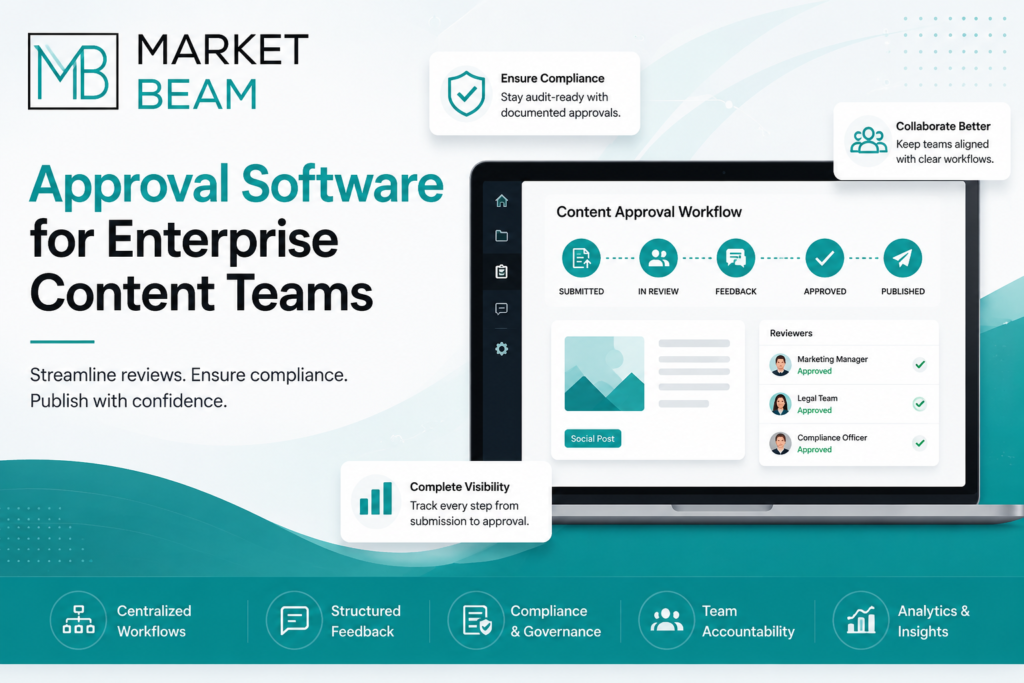
Enterprise content teams manage a constant flow of social media posts, campaigns, advertisements, emails, blog content, videos, and other digital assets. As the volume of content increases, so does the number of people involved in reviewing it. Marketing managers, designers, legal teams, compliance specialists, brand managers, and executives may all need to review different parts of the same campaign. Without a structured process, approvals can become slow, confusing, and difficult to track. This is where approval software becomes valuable.
Modern approval software gives enterprise teams a centralized way to submit content, collect feedback, manage revisions, record decisions, and move approved assets toward publication. Instead of relying on long email threads and scattered spreadsheets, organizations can create a clear workflow that shows exactly where every piece of content stands.
For regulated organizations, the need is even greater. Pharmaceutical, healthcare, financial, insurance, and other regulated companies often require documented reviews before content is published. A reliable approval platform can help teams improve efficiency while maintaining the governance and accountability required for controlled communications.
MarketBeam supports enterprise social media operations with centralized workflows, approvals, publishing, compliance, governance, and analytics, helping teams manage content through a more organized review process.
What Is Approval Software?
Approval software is a technology solution that helps organizations manage the review and approval of content before it is published or distributed. Instead of coordinating approvals manually, teams can create structured workflows that define reviewers, deadlines, feedback stages, and final approval authority.
A typical workflow starts when a creator submits an asset for review. The content can then move through marketing, brand, legal, compliance, or other review stages based on predefined rules. Reviewers can leave comments, request changes, or approve the asset within the same environment.
The main advantage of approval software is visibility. Team members can see whether an asset is still in review, has been returned for changes, or is ready for publication.
For enterprise teams managing large volumes of content, this visibility reduces confusion and makes it easier to keep campaigns moving without losing control.
Why Enterprise Content Teams Need Approval Software
Enterprise content operations are rarely managed by one person. A single campaign may involve writers, designers, marketers, subject matter experts, legal reviewers, compliance officers, and executives.
When these teams use email or shared spreadsheets for approvals, several problems can occur. Feedback may be missed, reviewers may evaluate different versions, and no one may have a clear view of the final approval status.
Using approval software creates a centralized workflow that keeps content, feedback, reviewers, and decisions together.
It also makes processes more scalable. Instead of creating a new manual process for every campaign, enterprises can establish reusable approval workflows based on content type, region, brand, or risk level.
This is especially helpful when multiple teams or agencies contribute to content production. Everyone can follow the same process while maintaining clear ownership and accountability.
Content Approval Software vs. Traditional Review
Content approval software is designed to replace fragmented review methods with a structured digital workflow.
Traditional approval usually involves sending files through email, attaching new versions, and manually tracking responses. As the number of reviewers increases, it becomes difficult to know which file is current and who has completed their review.
With content approval software, the asset remains connected to its comments, revisions, and approval status. Reviewers can work from a centralized version, helping reduce confusion and avoid unnecessary rework.
The workflow can also make approval requirements clearer. A low-risk social post might require marketing and brand review, while regulated promotional content may need additional legal, medical, or compliance review.
This flexibility allows enterprises to create workflows that match their actual operating model rather than forcing every piece of content through the same process.
The Role of Proofing Software
Proofing software focuses on reviewing content and collecting feedback in an organized environment. It can be especially useful for creative teams that work with images, videos, documents, advertisements, and other visual assets.
Instead of describing changes through email, reviewers can comment directly on the asset or specific areas that need adjustment. Designers and content creators can then make revisions while keeping a record of previous feedback.
For enterprise marketing teams, proofing software can improve collaboration between creative and non-creative stakeholders. It helps reviewers explain what needs to change while allowing creators to understand the request in context.
When proofing is connected to approval software, the organization can move from content review to formal approval without creating a separate process. This creates a smoother content lifecycle and reduces the risk of approved content being altered without further review.
Reviewer Collaboration Without the Email Chaos
Effective reviewer collaboration is central to successful content approval. Every reviewer should understand what they are expected to evaluate and when their feedback is needed.
A centralized platform gives reviewers a common workspace for comments, revisions, deadlines, and decisions. This reduces the need for repeated status requests and makes collaboration easier across different departments and locations.
Reviewer collaboration is particularly valuable for global enterprises, where content may require input from regional marketing teams, corporate brand leaders, compliance specialists, and local stakeholders.
The workflow should also distinguish between comments that require changes and comments that are simply informational. This helps content creators focus on actionable feedback rather than spending time interpreting multiple disconnected messages.
Clear review ownership ultimately makes approval software more effective because the platform and the people using it work from the same process.
Key Approval Software Features
| Feature | Enterprise Benefit |
| Approval workflows | Creates a consistent review process |
| Content versioning | Reduces confusion between drafts |
| Proofing | Simplifies visual and document reviews |
| Reviewer collaboration | Centralizes comments and decisions |
| Role-based access | Controls review and publishing permissions |
| Notifications | Keeps reviewers informed of pending tasks |
| Audit log | Records important workflow activity |
| Publishing integration | Helps approved content move into execution |
Common Content Approval Challenges
Even organizations with defined processes can face approval bottlenecks. One of the most common issues is unclear ownership. If multiple people can approve an asset but no one is accountable for the final decision, content can remain in review for too long.
Another challenge is excessive feedback. When too many stakeholders review the same content without clearly defined responsibilities, teams may receive conflicting requests that delay publication.
Version control is another frequent problem. A reviewer may approve one version while a creator later makes changes to a different file. Without centralized version management, teams can lose track of which asset is actually approved.
Manual follow-ups create additional workload. Marketing managers may spend hours reminding reviewers to complete tasks instead of focusing on campaign strategy.
These issues show why enterprise teams increasingly rely on approval software to create a single, visible process for content review and approval.
Approval Workflows for Regulated Industries
For regulated organizations, content review often involves more than a simple marketing approval. Pharmaceutical, healthcare, financial, insurance, and legal organizations may need input from legal, compliance, medical, regulatory, or brand teams before content can be published.
An approval software platform helps formalize these processes by creating review stages based on content type and risk. A routine brand update may need only marketing and brand approval, while a regulated promotional asset may require several additional reviewers.
A structured workflow also makes responsibilities visible. Each reviewer knows what they need to check, while the content owner can see whether an asset is waiting for feedback, returned for revision, or ready for publication.
This approach helps organizations reduce delays without removing necessary oversight. Instead of treating compliance as a final checkpoint, enterprises can build it directly into the content lifecycle.
Audit Logs and Compliance
An audit log is an important feature when organizations need clear records of content activity. It can document actions such as content creation, revisions, comments, approvals, rejections, and publishing activity.
For regulated teams, these records can improve internal accountability and make it easier to understand how a piece of content moved through the approval process. An audit log can also help teams investigate questions about when content was approved, who reviewed it, and which version was ultimately published.
However, an audit record is only useful when it is reliable and accessible. Enterprises should establish retention policies and permissions that align with their internal requirements.
When an audit log is integrated with approval software, reviewers and administrators can gain a complete view of the content lifecycle without maintaining separate records manually.
Choosing the Right Workflow Platform
The right workflow platform should be flexible enough to support different approval paths while remaining simple for everyday users.
Enterprise teams should consider how easily they can create workflows, assign reviewers, set deadlines, manage revisions, and track status. The platform should also support the content formats the organization regularly uses, including social media posts, images, videos, documents, and campaign assets.
Integration is another important factor. A strong workflow platform should fit into existing marketing operations rather than creating another isolated system.
Security and permissions also matter. Different users may need different levels of access, particularly when content contains sensitive information or requires regulated review.
For organizations managing high content volumes, automation can make a major difference. Automatic routing, reminders, and status updates reduce administrative work and help teams focus on actual content quality.
How MarketBeam Supports Content Approval
MarketBeam provides enterprise social media management capabilities that bring content planning, review, approvals, publishing, monitoring, and analytics into a broader social media workflow.
For teams looking for approval software, this integrated approach can reduce the need to manage content reviews across separate email threads and spreadsheets. Marketing teams can coordinate campaigns while relevant stakeholders participate in the required approval stages.
MarketBeam’s platform is particularly relevant for regulated organizations because its broader offering includes compliance-focused workflows, approval controls, and audit-ready social media management. The company also highlights AI-assisted compliance checks followed by human review, helping teams identify potential issues before publication.
This can support reviewer collaboration by giving stakeholders a more structured way to review content and maintain a record of decisions. It can also help connect approved content with controlled publishing rather than requiring teams to transfer files manually between systems.
The exact workflow should still be configured according to each organization’s internal policies and regulatory requirements. Technology supports the process, while designated reviewers remain responsible for final approval decisions.
Manual vs. Automated Content Approval
| Area | Manual Process | Automated Approval Software |
| Review Assignment | Email or messages | Automatic routing |
| Status Tracking | Spreadsheets | Centralized workflow |
| Feedback | Scattered across tools | Shared review space |
| Version Control | Multiple files | Centralized versions |
| Reminders | Manual follow-up | Automated reminders |
| Audit Records | Manually maintained | Integrated audit log |
| Publishing Readiness | Hard to verify | Clear approval status |
Best Practices for Enterprise Approval Workflows
A successful content approval process starts with clear rules. Organizations should define which assets require review, who owns each stage, and what conditions allow content to move forward.
Reviewers should have focused responsibilities rather than reviewing every aspect of every asset. This reduces unnecessary feedback and keeps campaigns moving.
Teams should also establish realistic deadlines. A workflow that expects immediate approval from several departments may create unrealistic bottlenecks.
Centralizing feedback is equally important. When comments, revisions, and decisions remain connected to the content, creators can resolve changes more efficiently.
Finally, organizations should review workflow performance regularly. Approval times, revision rates, and recurring bottlenecks can reveal where the process needs improvement.
Conclusion
Enterprise content teams need more than a place to store drafts. They need a reliable process for reviewing, approving, and publishing content at scale. Approval software provides that structure by centralizing workflows, feedback, permissions, version control, and approval records.
For regulated organizations, the value is even greater. Structured review can support legal, medical, regulatory, and compliance requirements while helping teams maintain accountability and audit readiness.
MarketBeam combines content workflows with enterprise social media management, compliance, publishing, monitoring, and analytics, helping organizations build a more connected approval process.
Connect With Us
Ready to streamline your content review and approval process?
Sales: sales@marketbeam.io
Tech Support: support@marketbeam.io
Connect with MarketBeam to explore enterprise content approval, compliance workflows, publishing, and social media management.
Frequently Asked Questions
1. What is approval software?
Approval software is a platform that helps teams submit content for review, collect feedback, manage revisions, obtain approvals, and track the status of assets before publication.
2. What is content approval software?
Content approval software centralizes the review process for marketing assets, making it easier to manage reviewers, versions, comments, deadlines, and final approval.
3. How does proofing software help content teams?
Proofing software helps reviewers comment on and review documents, images, videos, and other creative assets in a centralized environment, reducing scattered feedback.
4. Why is an audit log important?
An audit log records important actions and decisions throughout the content workflow. It can improve accountability and help organizations maintain clear records for internal reviews and audits.
5. What should enterprises look for in workflow software?
Enterprises should evaluate approval workflows, reviewer collaboration, version control, permissions, automation, audit records, integrations, scalability, and ease of use.
6. How does MarketBeam support content approval?
MarketBeam combines social media management with approval workflows, compliance processes, publishing, monitoring, analytics, and governance capabilities to help enterprise teams manage content more efficiently.