How Social Media Scheduling Helps Enterprise Teams Streamline Publishing and Approvals
For enterprise teams, scheduling involves more than choosing a date and time. It requires shared calendars, content ownership, creative reviews, approval workflows, account permissions, and performance tracking. The right process helps teams publish consistently without losing control of brand messaging or compliance requirements. This guide explores the tools, workflows, and best practices that make publishing more efficient across multiple teams.
What Is Social Media Scheduling?
Social media scheduling is the process of preparing content in advance and assigning dates and times for publication on selected social networks. A scheduling tool helps teams organize drafts, manage calendars, coordinate accounts, and publish content without manually posting every update.
For a small business, this may mean planning a few posts each week. For an enterprise, social media scheduling may involve hundreds of posts across brands, regions, business units, and channels. The workflow must account for different content owners, publishing permissions, review requirements, and campaign timelines.
Scheduling does not replace strategy or audience engagement. It creates the operational structure that helps teams publish consistently while leaving room to respond to timely conversations.
Why Enterprise Teams Need a Structured Scheduling Process
When teams plan posts independently, calendars become fragmented and important details can be missed. Duplicate content, conflicting announcements, expired campaign links, and unclear ownership can affect publishing quality.
A shared social media scheduling process gives contributors one view of planned activity. Content owners can see deadlines, reviewers can track work that needs attention, and publishers can confirm what is ready to go live. This is especially useful for organizations with centralized brand teams and regional marketers.
A structured workflow also helps balance consistency with flexibility. Teams can plan recurring content in advance while reserving time for urgent announcements, customer updates, and relevant industry developments.
1. Choose the Right Scheduling Tools
The right tool should support the networks your organization uses and the way your teams collaborate. Start by listing active accounts, brands, regions, users, content formats, and publishing volume. Then assess whether a tool can manage these requirements from one workspace.
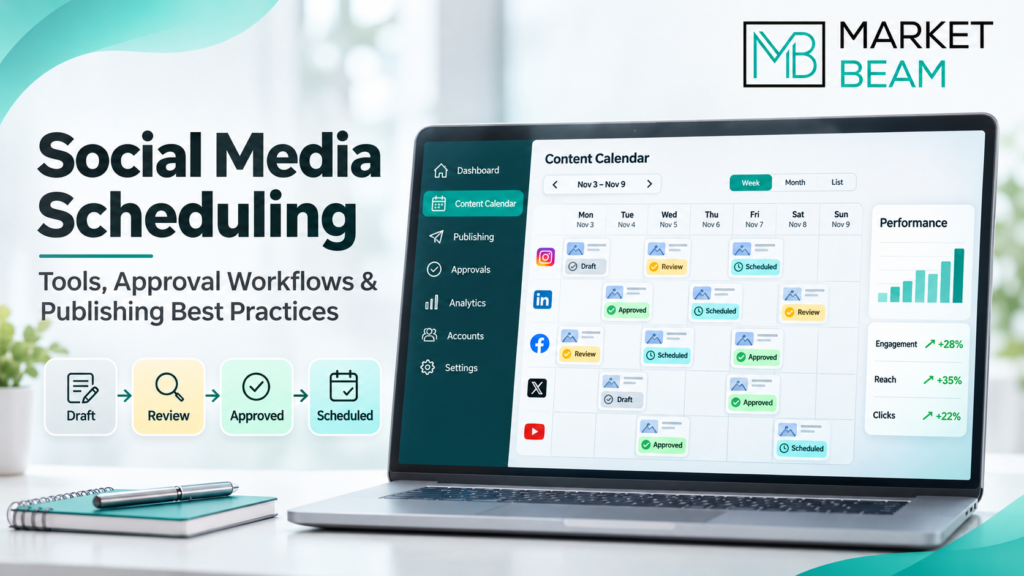
Look for a visual calendar, draft management, scheduled queues, post previews, bulk scheduling, notifications, and publishing status. A strong social media scheduling tool should make it easy to identify which content is planned, awaiting approval, scheduled, published, or blocked.
Enterprise buyers should look beyond the calendar. Role-based permissions, multi-brand management, collaboration, analytics, integrations, and audit history may be just as important as scheduling. Confirm that the product supports the social networks and publishing capabilities your business requires.
MarketBeam describes a publishing workflow that lets teams plan, create, approve, and publish content across multiple social channels from a centralized platform. Its publishing product also highlights AI-assisted content creation, collaboration, post previews, optimal-time insights, and coordination with employee advocacy.
2. Build a Shared Content Calendar
A content calendar turns strategy into an operational plan. Include the post topic, objective, audience, channel, format, owner, draft deadline, reviewer, approval status, publishing date, and destination link. This gives contributors the information they need without searching through separate messages.
Organize the calendar by campaign, brand, region, or content pillar. Use clear labels for product announcements, educational posts, events, customer stories, and employee advocacy content. A shared social media scheduling calendar also helps teams identify gaps, overlapping messages, and high-volume publishing periods.
Set realistic deadlines. When a post needs design, translation, legal review, or regional adaptation, those steps should be visible before the publishing date. Avoid treating the scheduled time as the only important deadline. The content must be ready and approved beforehand.
3. Create an Approval Workflow Before Scheduling
Scheduling content before the required review is complete can create risk. Define who drafts, reviews, approves, schedules, and publishes each type of post. Routine content may need a simple brand review, while product claims or regulated communications may require additional specialists.
A typical workflow looks like this:
| Stage | Responsible role | Expected action |
|---|---|---|
| Draft | Content creator | Prepare copy, creative, links, and channel variations |
| Brand review | Marketing or brand owner | Check tone, accuracy, and visual consistency |
| Specialist review | Legal, compliance, or subject expert | Review content when required |
| Approval | Authorized approver | Confirm the final version is ready |
| Scheduling | Social media manager | Assign account, date, time, and campaign |
| Publishing check | Account owner | Confirm the post published correctly |
The workflow should make ownership and status visible. Use due dates, notifications, comments, and version history to reduce unnecessary follow-ups. MarketBeam’s social approval guidance describes a process that moves content through creation, review, approval, scheduling, and publication, with audit history for regulated workflows.
4. Coordinate Scheduling Across Teams and Regions
Enterprise teams often work across time zones, languages, and local market priorities. A central calendar should provide visibility while allowing regional teams to contribute content that fits their audiences.
Set rules for global campaigns, local adaptations, and account ownership. Identify which messages must remain consistent and which details can be localized. For example, a global product announcement may use centrally approved claims, while regional teams adapt the timing, language, and event details.
Use clear account permissions so contributors can prepare drafts without automatically receiving publishing rights. A well-managed social media scheduling process gives local teams flexibility while preserving central oversight. It should also show when two teams plan to publish similar messages, helping avoid repetition across corporate and regional channels.
5. Select Publishing Times With Data
There is no universally best time to publish. Audience activity varies by platform, industry, geography, and content type. Use analytics to identify when followers are active, then test different time windows and compare results.
Consider audience time zones, campaign deadlines, and the purpose of each post. A webinar reminder may need to appear at several points before registration closes, while an executive announcement may require a coordinated release across channels.
Treat scheduling recommendations as a starting point rather than a guarantee. Review reach, engagement, clicks, and conversions over multiple posts. Adjust the calendar based on evidence, not assumptions. A practical social media scheduling routine includes regular performance reviews and changes to timing when audience behavior shifts.
6. Keep Compliance and Brand Governance in the Workflow
For enterprises, especially those in financial services and life sciences, publishing controls can be essential. Teams may need approved claims, required disclosures, documented sign-offs, controlled account access, and a record of what was published.
Make governance part of the process rather than a check performed after content has been scheduled. Define which post types require specialist review, how urgent content is escalated, who can edit approved drafts, and what happens when a scheduled post becomes outdated.
MarketBeam positions its platform around compliance-first social publishing. Its website describes AI prechecks, review and approval workflows, Veeva PromoMats integration, monitoring, and audit history for regulated social operations. These capabilities may be relevant where scheduling must connect with formal Medical, Legal, and Regulatory (MLR) or other internal review processes. Organizations should confirm the configuration against their own policies and regulatory obligations.
7. Monitor Scheduled Posts and Handle Exceptions
A scheduled post still needs oversight. Publishing can fail because of expired authorization, platform changes, media requirements, or account restrictions. Assign someone to check publishing status and respond to alerts.
Create an exception process for failed posts, incorrect links, unexpected comments, and time-sensitive developments. Decide when a post should be paused, edited, rescheduled, or escalated. Keep a record of the action taken so teams can identify recurring issues.
Reliable social media scheduling includes a human check around important announcements and campaigns. Automation reduces repetitive work, but it should not remove accountability for what appears on a public account.
8. Measure Publishing and Workflow Performance
Measure both content performance and operational efficiency. Content metrics may include reach, impressions, engagement, link clicks, video views, and conversions. Workflow metrics can include approval turnaround, on-time publishing, failed-post rate, revision cycles, and time spent coordinating content.
Use a consistent reporting period and compare similar content types. A large number of scheduled posts does not necessarily indicate success. The goal is to publish relevant content reliably and learn which messages support business objectives.
A social media scheduling report should answer practical questions: Are approvals delaying campaigns? Are teams publishing too frequently on one channel? Do certain formats perform better at particular times? Are regional accounts following the shared plan? Use these insights to improve calendars, staffing, and review processes.
Best Practices for Consistent Publishing
Keep the calendar realistic and leave room for timely content. Reuse approved content thoughtfully, adapting it to the audience and channel rather than repeating identical posts. Check copy, links, visuals, tags, accessibility text, and disclosures before approval.
Review permissions regularly and maintain a clear owner for every account. Keep campaign naming consistent so reporting is easier to consolidate. Coordinate organic publishing with paid campaigns, employee advocacy, and key business announcements through a shared social media scheduling process.
Conclusion
Effective social media scheduling combines a shared calendar, clear ownership, approval workflows, thoughtful timing, governance, and performance measurement. Enterprise teams should choose tools that support their actual channels and collaboration needs, not just basic post queues. Build a process that makes content status visible, protects brand consistency, and gives regional teams room to contribute. Review campaign results and workflow performance so publishing becomes more reliable over time.
Connect With MarketBeam
MarketBeam helps enterprise and regulated teams plan, create, review, approve, and publish social content through a centralized, governed workflow. The platform also connects publishing with employee advocacy, monitoring, analytics, and compliant paid campaigns.
Sales: sales@marketbeam.io
Tech Support: support@marketbeam.io
Website: https://marketbeam.io/
FAQs
1. What is social media scheduling?
It is the process of preparing posts in advance and assigning them a planned publication date and time across selected social networks.
2. What should businesses look for in social media scheduling tools?
Look for calendar views, multi-account publishing, draft management, approvals, post previews, notifications, analytics, permissions, and support for the social networks your business uses.
3. How far in advance should social media posts be scheduled?
Many teams plan recurring content several weeks ahead, but the right lead time depends on campaign complexity and approval requirements. Leave room for timely updates and urgent communications.
4. Why are approval workflows important for scheduling?
Approval workflows confirm that content has been reviewed by the right people before publication. They reduce errors, clarify accountability, and help regulated organizations document required reviews.
5. Can enterprise teams schedule content across multiple regions?
Yes. Enterprise tools can support shared calendars, multiple accounts, role-based permissions, and regional contributions. Teams should also account for local language, time zones, and approval requirements.