Introduction
Healthcare advertising agencies help pharmaceutical, biotech, medical device, healthcare, and wellness brands build campaigns that are creative, measurable, and responsible. Unlike general advertising, healthcare marketing often requires careful review of medical claims, audience targeting, disclosures, creative assets, and regulatory requirements.
For that reason, choosing among healthcare advertising agencies is not only about creative work, media buying, or campaign reach. The right agency also needs to understand how regulated content moves from strategy to approval, publication, monitoring, and reporting.
Modern healthcare marketing also extends beyond traditional campaigns. Brands use websites, search, social media, video, paid media, influencer programs, and educational content to connect with healthcare professionals and consumers. As a result, healthcare advertising agencies need to manage more channels while maintaining message consistency and compliance.
What Do Healthcare Advertising Agencies Do?
Healthcare advertising agencies develop and manage advertising programs for organizations operating in healthcare and life sciences. Their services can include campaign strategy, creative development, paid search, social advertising, content marketing, media planning, audience research, and analytics.
The exact role depends on the client. A pharmaceutical brand may need patient awareness or HCP-focused campaigns, while a medical device company may need product education, demand generation, or lead acquisition.
For healthcare advertising agencies, the major difference is the need to balance marketing goals with medical accuracy and regulatory considerations. Claims should be supportable, and promotional materials may require review before publication.
The Federal Trade Commission states that health-related advertising claims should be truthful, not misleading, and supported by appropriate evidence. The FTC also explains that advertisers are responsible for both express and implied claims communicated to consumers.
Why Healthcare Advertising Requires Specialized Expertise
Healthcare audiences make decisions using information that can affect health, treatment, safety, and finances. Therefore, healthcare campaigns require a clear understanding of the product, audience, scientific evidence, and applicable requirements.
This is where experienced healthcare advertising agencies can provide value. These agencies often coordinate marketing, medical affairs, legal, regulatory, brand teams, and external creative partners.
For pharmaceutical promotion, FDA guidance includes specific considerations for internet and social media communications. FDA materials address how risk and benefit information should be presented on internet and social media platforms, including platforms with character limitations.
As a result, healthcare advertising agencies need to treat campaign execution as a coordinated process rather than a purely creative activity.
Key Services Offered by Healthcare Advertising Agencies
Healthcare advertising agencies can provide a broad range of services depending on the goals of a healthcare, pharma, biotech, or medtech brand.
Healthcare Campaign Strategy
Strategy defines the audience, campaign objective, positioning, messaging, channels, budget, and measurement framework. Agencies may build different strategies for patients, caregivers, physicians, pharmacists, or other healthcare professionals.
A strong strategy also defines which claims can be communicated and which materials require additional review.
Pharma Marketing and Brand Campaigns
A pharma marketing agency may support product launches, disease awareness programs, HCP engagement, patient education, brand campaigns, and digital marketing.
The emphasis should remain on approved messaging and evidence-backed claims. This becomes especially important when campaigns involve product benefits, risks, comparative statements, or treatment outcomes.
Social Media and Paid Advertising
Social platforms can support awareness, education, recruitment, and engagement. Campaigns can include organic content, paid social, video, and community management.
For example, pharma Facebook ads require careful planning around targeting, creative claims, landing pages, disclosures, platform requirements, and approved messaging. Healthcare advertising agencies should ensure that campaign assets follow the relevant review process before distribution.
Content and Creative Development
Content can include videos, articles, infographics, landing pages, email campaigns, display ads, and social posts.
Experienced healthcare advertising agencies should be able to adapt approved messaging for different formats without changing the intended meaning or creating unsupported claims.
Analytics and Campaign Measurement
Strong agencies should connect campaign activity with meaningful outcomes. Depending on the objective, useful metrics may include reach, engagement, website traffic, leads, conversions, and cost efficiency.
How to Choose Healthcare Advertising Agencies
Choosing healthcare advertising agencies requires more than reviewing a creative portfolio. Companies should evaluate industry expertise, workflow, compliance processes, technology, and reporting.
First, review the agency’s experience in your category. Pharma, medical devices, biotech, hospitals, and consumer health brands can have very different requirements.
Next, examine the review process. Ask how medical, legal, and regulatory stakeholders are involved and how revisions are documented.
Finally, check how the agency handles digital workflows. A campaign that requires several approvals can become difficult to manage if the team depends on email chains, spreadsheets, and disconnected publishing tools.
| Evaluation Area | Questions to Ask |
|---|---|
| Industry expertise | Has the agency worked with similar healthcare products and audiences? |
| Compliance workflow | How are medical, legal, and regulatory reviews handled? |
| Creative | Can approved claims be adapted across channels? |
| Paid media | Can campaigns run across search, social, video, and display? |
| Analytics | Can campaign results be connected to business goals? |
| Technology | What tools support approvals, publishing, and monitoring? |
| Reporting | How are campaign and compliance reports delivered? |
Healthcare Advertising Agencies and Compliance Workflows
One of the most important areas to assess is how healthcare advertising agencies handle regulated content.
A typical workflow may look like:
Brief → Draft → Medical/Legal/Regulatory Review → Approval → Publish → Monitor → Archive
This structure helps teams identify higher-risk content before publication and gives stakeholders a clear role in the process.
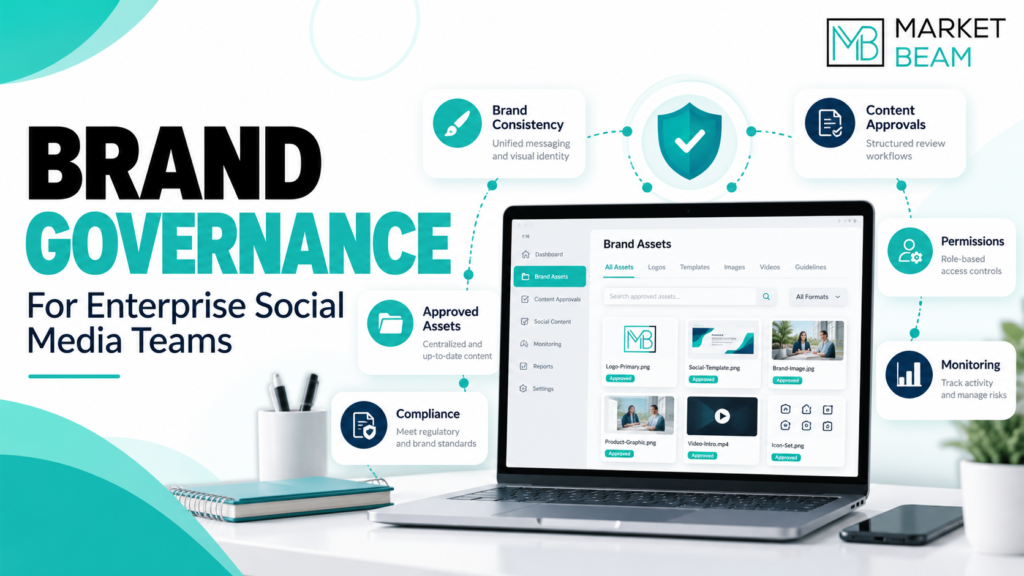
MarketBeam provides a platform focused on compliant social media management for life sciences. Its current life sciences offering integrates social publishing and monitoring with Medical-Legal-Regulatory review, including Veeva Vault PromoMats integration.
MarketBeam also describes automated content review, audit trails, social publishing, employee advocacy, monitoring, and compliance workflows for regulated organizations.
For healthcare advertising agencies, this type of workflow can improve coordination between content creation, internal review, publishing, and post-publication monitoring.
What Healthcare Advertising Agencies Should Monitor
Healthcare campaigns do not end when an advertisement goes live. Teams also need to monitor comments, responses, campaign changes, and audience interactions.
For life sciences brands, social media monitoring may help identify potential safety-related information that requires escalation. MarketBeam describes social monitoring with response guidance and escalation of potential adverse events to pharmacovigilance teams.
This is particularly important for campaigns that allow comments or other forms of user interaction.
Therefore, healthcare advertising agencies should consider monitoring part of the original campaign plan rather than treating it as a separate task after publication.
Common Mistakes to Avoid
Even experienced healthcare advertising agencies can encounter recurring campaign challenges.
The first is creating claims that go beyond available evidence. The FTC emphasizes that advertisers need appropriate substantiation for objective health-related claims before dissemination.
The second is treating disclosures as an afterthought. A disclosure should not contradict or weaken the overall impression created by the advertisement.
Another problem is version control. When approved content is manually copied into different platforms, small wording or formatting changes can happen without formal review.scx
Finally, organizations may rely on generic social media tools that do not connect publishing with their medical, legal, and regulatory workflow.
A Better Technology Workflow
Technology can help healthcare advertising agencies and internal teams create a more controlled process.
Instead of creating content in one system, requesting approval through email, and publishing through another application, teams can connect the workflow.
MarketBeam integrates with Veeva Vault PromoMats so social content can move through the MLR review process before publishing. Its platform also provides publishing, monitoring, employee advocacy, and audit-related capabilities.
This approach does not replace professional regulatory judgment. Instead, it creates a structured workflow that can reduce manual handoffs and improve visibility.
Healthcare Advertising Trends to Watch
The healthcare marketing landscape continues to move toward digital and social channels. Brands increasingly combine paid media, social content, educational assets, video, and data-driven targeting.
At the same time, regulatory review remains important. The FDA maintains guidance covering internet and social media promotion for prescription drugs and medical devices, while the FTC continues to emphasize truthful, non-misleading, substantiated health advertising.
This means healthcare advertising agencies need to balance creative development with disciplined review, measurement, and governance.
For brands planning campaigns around pharma social media, paid search, or healthcare advertising awards, the ability to document the campaign process can also become an important operational advantage.
Why MarketBeam Matters for Healthcare Marketing
MarketBeam is designed for regulated organizations that need social media management connected to compliance workflows. Its current life sciences platform supports MLR review, social publishing, monitoring, employee advocacy, and Veeva Vault PromoMats integration.
For healthcare advertising agencies, this can be useful when client teams need a more structured process for approved social content. Instead of separating content review from publishing, teams can connect these stages in one workflow.
That structure can help reduce manual work while giving internal stakeholders clearer visibility into approvals and publishing activity.
Conclusion
Healthcare advertising agencies play an important role in helping healthcare, pharmaceutical, biotech, and medical device brands reach relevant audiences with accurate and engaging content.
However, healthcare advertising requires more than creative campaigns. Successful programs connect strategy, content development, medical and regulatory review, publishing, monitoring, and analytics.
When evaluating healthcare advertising agencies, companies should look closely at industry experience, compliance workflows, technology, paid media capabilities, analytics, and campaign scalability.
For organizations managing regulated social media, MarketBeam provides a compliance-focused workflow that connects social publishing and monitoring with MLR review and Veeva Vault PromoMats.
Connect With Us
Healthcare marketing needs creativity, control, and compliant execution. MarketBeam helps life sciences teams connect social media publishing with review, monitoring, employee advocacy, and MLR workflows. (MarketBeam)
Sales
Tech Support
FAQs
1. What do healthcare advertising agencies do?
Healthcare advertising agencies help healthcare, pharmaceutical, biotech, and medical device brands plan, create, distribute, and measure advertising campaigns across digital and traditional channels.
2. How is a pharma marketing agency different from a general advertising agency?
A pharma marketing agency typically needs deeper experience with pharmaceutical audiences, scientific claims, medical content, regulatory review, and complex approval processes.
3. Do healthcare advertising agencies manage pharma Facebook ads?
Many healthcare advertising agencies can manage paid social campaigns, including pharma Facebook ads, but requirements depend on the product, audience, advertising platform, and applicable regulations.
4. Why is MLR review important for healthcare advertising?
Medical, legal, and regulatory review helps organizations verify that approved content is accurate, appropriately supported, and aligned with applicable requirements before distribution.
5. How can technology help healthcare advertising agencies?
Technology can connect content creation, review, approvals, publishing, monitoring, and reporting. MarketBeam integrates social publishing with MLR review processes and Veeva Vault PromoMats for life sciences organizations.
6. What should companies consider when selecting healthcare advertising agencies?
Consider healthcare industry experience, regulatory workflow, creative capabilities, paid media expertise, analytics, technology integrations, reporting, and the agency’s ability to support your campaign scale.