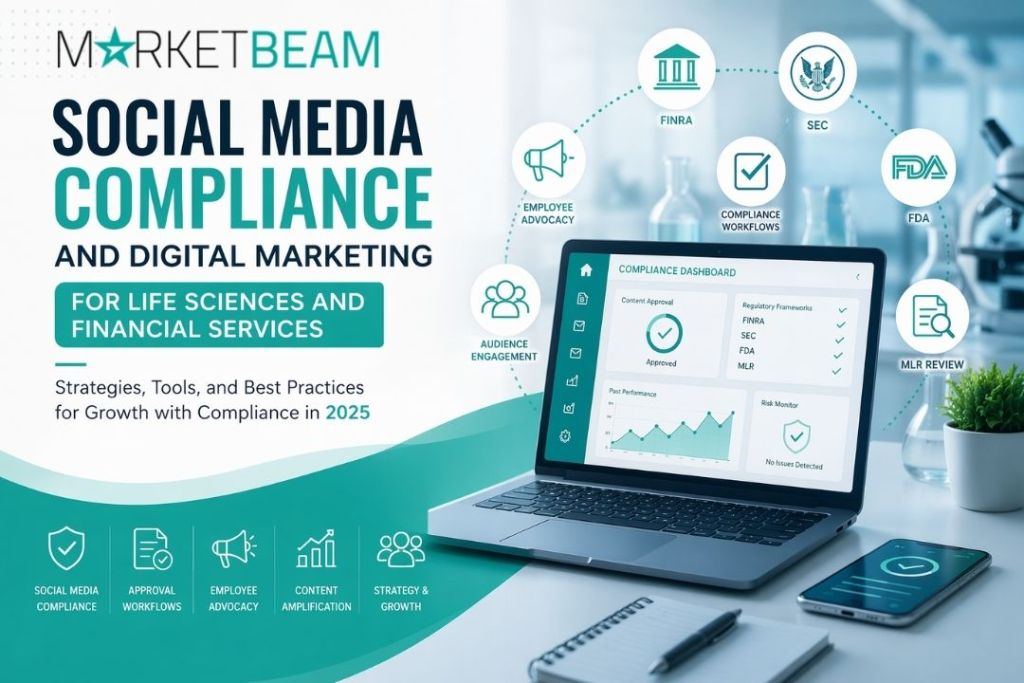
The rapid evolution of digital platforms has transformed how regulated industries like financial services and life sciences communicate and grow. However, this shift brings increasing regulatory pressure, making social media compliance a critical part of any digital strategy.
Organizations must balance innovation with strict frameworks such as FINRA, SEC, FDA, and MLR review processes. At the same time, they must scale using content marketing, employee advocacy, and amplification strategies. Therefore, building a system that aligns growth with compliance is essential for success in 2025.
Introduction to Social Media Compliance in Regulated Industries
Financial services and life sciences operate in environments where every communication must be accurate, traceable, and approved. As a result, social media compliance has become a core operational requirement.
Companies must ensure that all digital interactions follow regulatory standards. This not only reduces legal risk but also builds trust with customers and stakeholders. Consequently, structured governance and approval workflows are now mandatory.
Understanding FINRA and SEC Compliance Requirements
In financial services, FINRA and SEC regulations define how organizations manage digital communication. These rules require proper record-keeping, transparent messaging, and supervised publishing.
To support this, businesses use compliance-driven tools that automate monitoring and archiving. These systems ensure that all content is reviewed before publishing, helping teams maintain social media compliance without slowing down execution.
Why Financial Services Need Advanced Social Media Management Tools
Managing multiple accounts across platforms requires more than basic scheduling. Financial brands need tools that combine publishing, analytics, and regulatory control.
Modern platforms allow teams to track engagement, measure reach, and maintain compliance standards in one place. As a result, organizations can scale digital efforts while minimizing risk and maintaining operational efficiency.
Employee Advocacy and Content Amplification Strategies
Employee advocacy has become a powerful way to expand brand reach. However, without proper controls, it can introduce compliance risks.
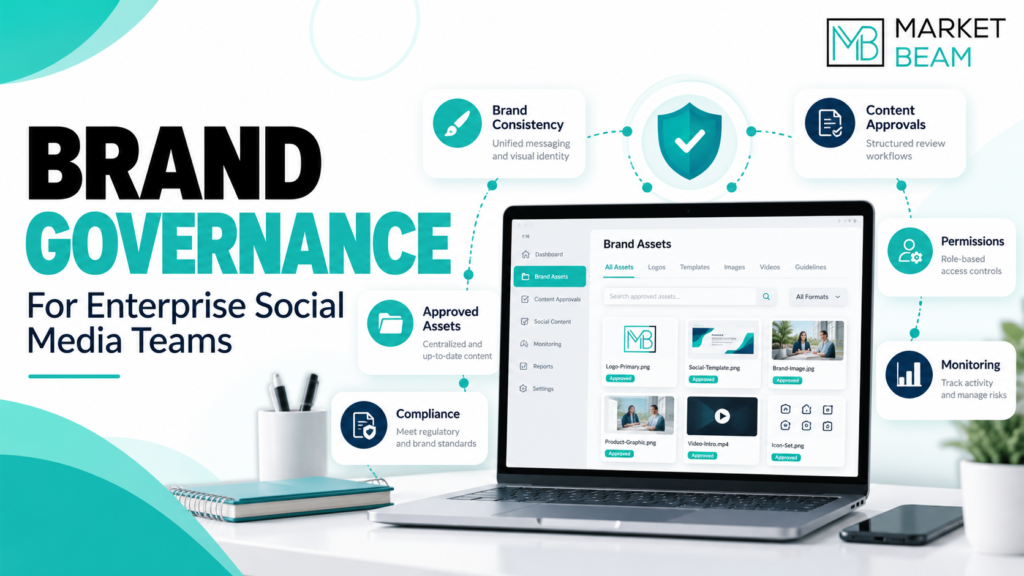
With structured approval systems, employees can safely share pre-approved content. This ensures consistency while maintaining social media compliance across all communications. Similarly, content amplification platforms help distribute content at scale while staying within regulatory boundaries.
Social Media Publishing and Performance Optimization
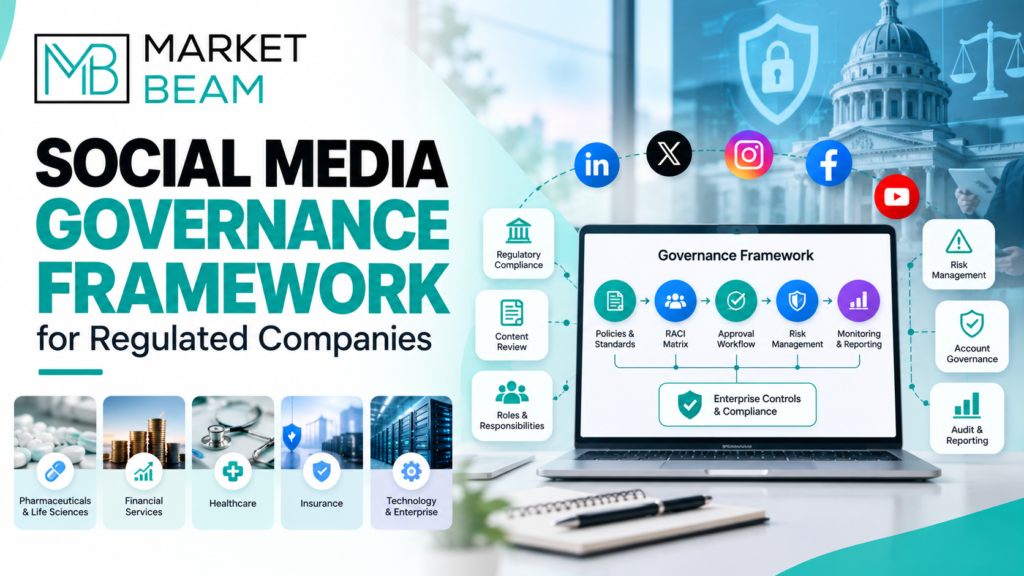
Social media publishing involves planning, creating, approving, and distributing content. In regulated industries, each step must align with compliance requirements.
Approval workflows ensure that content meets regulatory standards before going live. At the same time, analytics tools help optimize performance by identifying what works best. This combination enables brands to grow while maintaining strong compliance practices.
Biotech and Life Sciences Marketing Landscape
Marketing in life sciences comes with unique challenges. Companies must communicate complex scientific information while adhering to strict FDA guidelines.
At the same time, there is a growing shift toward more human-centered communication. Storytelling helps simplify complex topics and improve engagement. However, all messaging must still follow social media compliance standards to avoid risk.
MLR Review Process and Healthcare Compliance
The MLR (Medical, Legal, Regulatory) review process ensures that all healthcare marketing content is accurate and compliant. It is a critical component of social media compliance in life sciences.
Platforms like Veeva Vault PromoMats help streamline approvals through centralized workflows. These systems improve efficiency while ensuring that all content meets regulatory standards before publication.
Digital Marketing Strategies for Biotech Companies
Biotech companies need a multi-channel strategy that includes SEO, content marketing, and paid search. However, all activities must align with regulatory requirements.
Scientific content marketing simplifies complex topics, making them easier to understand. Meanwhile, storytelling helps connect with audiences on a human level. When combined with social media compliance, these strategies drive both engagement and trust.
Content Marketing for the Life Sciences Industry
Content marketing plays a key role in educating audiences and building authority. Blogs, whitepapers, and webinars are commonly used formats.
To succeed, content must align with business goals such as lead generation and brand awareness. In addition, marketing automation tools help streamline campaigns and track results efficiently.
Technology and Collaboration in Regulated Marketing
Collaboration platforms help teams manage content, approvals, and campaigns across departments. These systems reduce manual errors and improve efficiency.
Life science and financial technology vendors are increasingly offering integrated solutions that combine marketing capabilities with compliance features. This allows organizations to operate more effectively in regulated environments.
Future Trends in Digital Marketing for Regulated Industries
Digital marketing in regulated industries is evolving rapidly. AI is playing a growing role in campaign optimization and content analysis.
At the same time, social listening tools are becoming more advanced, offering real-time insights into audience behavior. Companies that adopt these technologies while maintaining social media compliance will gain a competitive edge.
Conclusion
Navigating digital marketing in regulated industries requires a balance between innovation and control. Financial services must follow FINRA and SEC regulations, while life sciences companies must adhere to FDA and MLR requirements.
By combining employee advocacy, content amplification, and strong compliance frameworks, organizations can scale safely. Ultimately, success in 2025 will depend on the ability to integrate growth strategies with social media compliance.
FAQs
What is social media compliance?
It ensures that all social media communication follows regulatory guidelines and industry standards.
What is FINRA social media compliance?
It refers to rules that require financial firms to maintain transparency, supervision, and proper record-keeping on social platforms.
What is MLR in healthcare marketing?
MLR stands for Medical, Legal, and Regulatory review, ensuring that all content is accurate and compliant.
How can biotech companies attract more visitors?
They can use SEO, scientific content marketing, and storytelling strategies to improve visibility and engagement.
What are employee advocacy platforms?
These platforms allow employees to share approved content, helping increase brand reach while maintaining compliance.