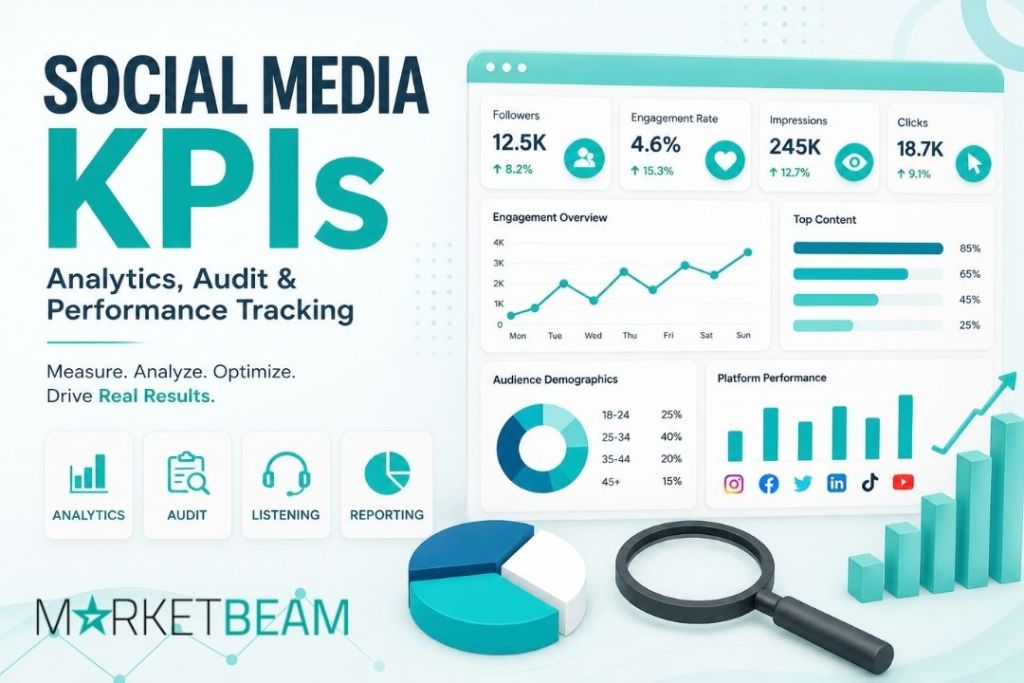
Introduction to Social Media KPIs
If you are posting content regularly but not seeing results, the problem is not your content it is your measurement. This is where social media KPIs become critical.
Social media KPIs (key performance indicators for social media) help you understand whether your strategy is actually working or just creating noise. Without tracking the right social media measurements, you cannot improve engagement rates, optimize campaigns, or scale performance.
In today’s competitive digital space, brands that win are not just posting they are analyzing, auditing, and optimizing based on social media data analysis.
What Are Key Performance Indicators for Social Media?
Social media KPIs are measurable values that indicate how effectively your social media efforts are achieving business goals.
These indicators are not just numbers. They represent insights into your audience behavior, content performance, and overall digital growth.
For example, instead of simply counting likes, a strong KPI strategy focuses on engagement rates, impressions in social media, audience growth, and conversions.
The goal is not to track everything. The goal is to track what actually impacts your business.
Why Social Media KPIs Matter for Growth
Tracking social media KPIs gives you clarity. Without KPIs, your strategy becomes guesswork.
First, KPIs help you measure performance accurately. Second, they guide decision-making using real data instead of assumptions. Third, they improve ROI by identifying what works and eliminating what does not.
Most importantly, reporting on social media becomes meaningful only when KPIs are clearly defined. Otherwise, reports are just vanity metrics without actionable insights.
Core Social Media KPIs You Must Track
To build a strong strategy, you need to focus on the right social media measurements.
Engagement rates are one of the most important social media KPIs. They show how actively users interact with your content through likes, comments, shares, and saves. A higher engagement rate indicates strong audience connection.
Impressions in social media tell you how many times your content is displayed. While impressions do not guarantee interaction, they reflect reach and visibility.
Follower growth rate is another essential KPI. It helps you understand whether your brand awareness is increasing over time.
Click-through rate (CTR) shows how many users are taking action after seeing your content. This is crucial for campaigns focused on traffic or conversions.
Conversion rate is the most business-focused KPI. It measures how many users complete desired actions such as purchases or sign-ups.
These key performance indicators for social media together give a complete picture of performance.
Understanding Social Media Measurements & Data Analysis
Effective social media data analysis goes beyond tracking numbers. It involves understanding patterns and extracting insights.
For example, analyzing engagement trends across different content types can help you identify what resonates most with your audience. Similarly, tracking performance by posting time can optimize your content schedule.
Social media data gathering should be consistent and structured. Without proper data collection, even the best tools cannot provide meaningful insights.
This is why businesses invest in social media automated reporting, which simplifies data collection and ensures accuracy.
Social Media Audit: What, Why & How
A social media audit is a complete evaluation of your social media presence.
What is a Social Media Audit?
A social media audit involves reviewing all your profiles, content performance, audience behavior, and overall strategy.
Why Social Media Auditing is Important
Without regular audits, your strategy becomes outdated. Trends change, algorithms evolve, and audience preferences shift.
A proper social media auditing process helps you identify gaps, remove underperforming content, and refine your approach.
How to Do a Social Media Audit
Start by listing all your social media accounts. Then analyze performance metrics such as engagement rates, impressions in social media, and follower growth.
Next, conduct an audience audit to understand demographics, interests, and behavior.
Finally, compare your performance with industry benchmarks to identify improvement areas.
Social Listening vs Social Monitoring Explained
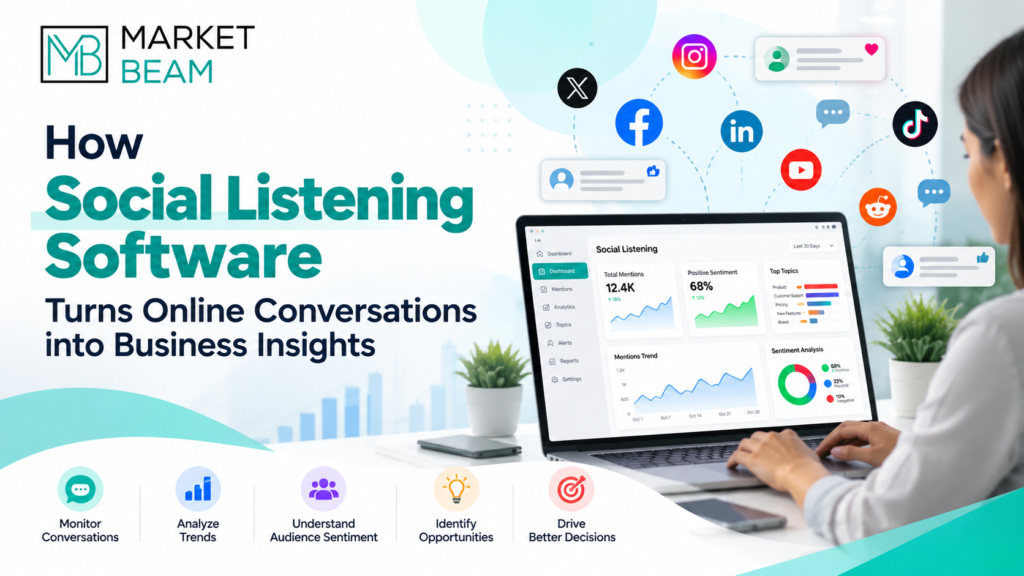
Understanding the difference between social listening vs social monitoring is essential for advanced analytics.
Social monitoring focuses on tracking mentions, comments, and direct interactions. It is reactive and helps in managing conversations.
On the other hand, social listening definition refers to analyzing broader conversations, trends, and sentiments around your brand or industry.
Social media monitoring vs listening is not a choice. Both are necessary.
Monitoring helps you respond. Listening helps you strategize.
Using the right listening tools for social media, you can track brand sentiment, identify trends, and gain competitive insights.
Automated Reporting & Data Gathering
Manual reporting is time-consuming and prone to errors. This is why social media automated reporting is becoming essential.
Automated tools collect data, generate reports, and provide insights in real time. This allows marketers to focus on strategy instead of spreadsheets.
Reporting on social media should include key metrics such as engagement rates, impressions, conversions, and audience insights.
Consistent reporting ensures that your social media KPIs are aligned with business goals.
Benchmarking Engagement Rates
Understanding the average engagement rate on social media helps you evaluate performance.
Benchmarking allows you to compare your results with industry standards. This helps in setting realistic goals and identifying improvement opportunities.
A strong benchmark social media engagement rate varies by platform, industry, and audience size. However, the key is continuous improvement rather than comparison.
Creating a Social Media KPI Strategy
To build an effe continuously using insights from audits, reports, and listening tools.
Want to Improve Your Social Media Performance?
If you want to scale your brand using data-driven strategies, start by mastering your social media KPIs.
Explore our advanced analytics solutions and learn how to turn data into growth.
Conclusion
Success in social media is not about posting more. It is about measuring better.
By focusing on the right social media KPIs, conducting regular audits, and leveraging data analysis, you can transform your strategy from random posting to strategic growth.
Whether it is understanding engagement rates, performing a social media audit, or using listening tools, the key is consistency and optimization.
The brands that win are the ones that measure, learn, and improve continuously.
FAQs
1. What are social media KPIs?
Social media KPIs are measurable metrics used to evaluate the performance of social media campaigns and strategies.
2. How to do a social media audit?
A social media audit involves analyzing account performance, audience insights, content effectiveness, and benchmarking against competitors.
3. What is the difference between social listening and monitoring?
Social monitoring tracks direct interactions, while social listening analyzes broader trends and audience sentiment.
4. What is a good engagement rate?
The average engagement rate on social media varies by platform, but consistent growth and improvement are more important than benchmarks.
5. Why is social media data analysis important?
It helps in understanding audience behavior, optimizing content strategy, and improving overall ROI.