Social media has evolved from a branding channel into a critical business communication platform. Organizations use LinkedIn, X, Facebook, Instagram, YouTube, and emerging platforms to engage customers, educate stakeholders, support sales teams, recruit talent, and strengthen relationships with partners and investors. However, for organizations operating in regulated industries, every social media post carries compliance implications that cannot be ignored.
This is where social media compliance becomes essential.
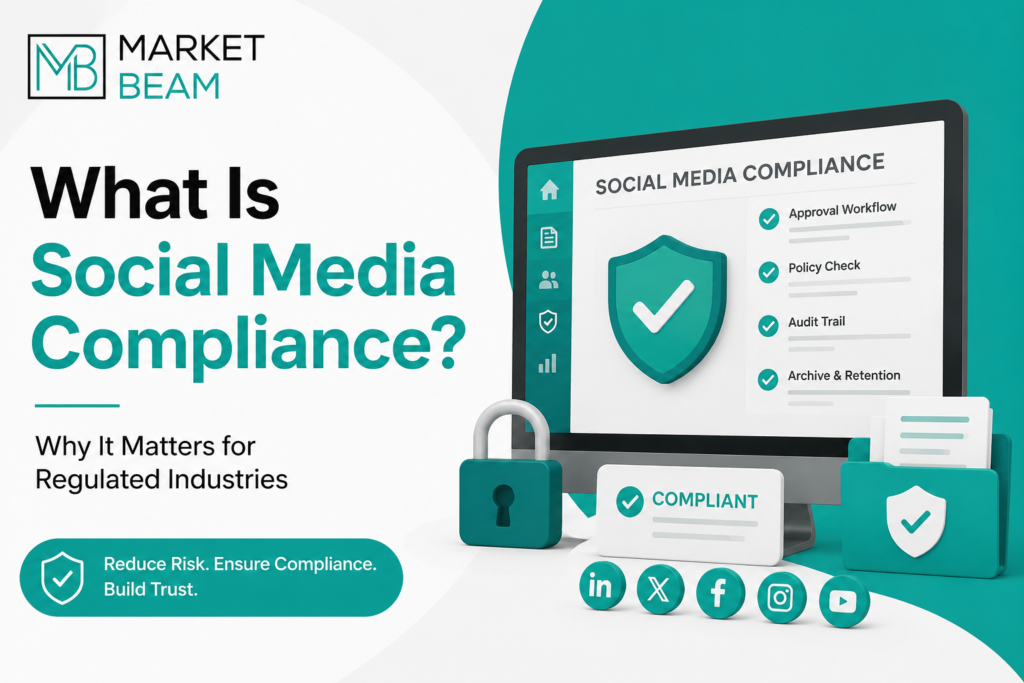
Social media compliance refers to the processes, technologies, policies, and governance frameworks that ensure all social media activity adheres to industry regulations, legal requirements, and internal corporate policies. While compliance is important for every organization, it becomes business-critical for industries such as life sciences, pharmaceuticals, healthcare, financial services, insurance, and publicly traded enterprises.
As regulatory scrutiny increases and organizations adopt AI-powered content creation and employee advocacy programs, maintaining compliance across social channels has become more complex than ever before.
Understanding Social Media Compliance
Social media compliance is the practice of ensuring that all social content, employee posts, comments, responses, advertisements, and customer interactions meet applicable regulatory standards and organizational requirements.
Compliance extends beyond simply approving posts before publishing. Modern organizations must manage content approvals, archiving, audit trails, employee advocacy policies, adverse event reporting, disclosure requirements, and retention policies across multiple social networks.
Without proper governance, a single post can expose organizations to fines, legal action, reputational damage, or regulatory investigations.
The challenge becomes even greater when multiple teams are involved in social media activities. Marketing teams want to publish quickly, legal teams focus on risk reduction, compliance teams require documentation, and executives expect measurable business results.
Balancing speed with governance is one of the biggest challenges facing regulated industries today.
Why Regulated Industries Face Greater Risk
Companies operating in regulated sectors face unique obligations that do not apply to traditional businesses.
Pharmaceutical organizations must comply with promotional regulations, fair balance requirements, adverse event reporting obligations, and medical-legal-regulatory review processes.
Financial institutions must follow communication archiving requirements, disclosure regulations, record retention policies, and supervision rules.
Healthcare organizations must protect patient information and ensure communications comply with privacy regulations.
Public companies must prevent the disclosure of material non-public information while maintaining transparent investor communications.
These requirements apply not only to official corporate accounts but increasingly to employee advocacy programs, executive social media activity, and influencer partnerships.
A single unapproved claim or missing disclosure can create significant business risk.
The Growing Complexity of Modern Social Media
The compliance landscape has changed dramatically over the past few years.
Organizations are publishing more content than ever before. Employees are becoming brand advocates. Executives are building personal brands on LinkedIn. AI tools are generating content at scale. Customers expect faster responses and real-time engagement.
Traditional compliance processes based on email approvals and spreadsheets are no longer sufficient.
Modern enterprises require centralized workflows that can manage approvals, maintain audit trails, archive communications, and ensure governance across every social touchpoint.
As social programs scale, manual processes quickly become bottlenecks that slow marketing teams and increase operational risk.
Common Social Media Compliance Challenges
One of the biggest challenges organizations face is maintaining consistency across multiple teams and regions.
Large enterprises often operate across several countries with different regulatory requirements and approval processes. Content that is compliant in one market may require additional review in another.
Another challenge involves employee advocacy initiatives. Employee-generated content often delivers significantly higher engagement than corporate posts, but organizations must ensure employees share approved messaging and maintain required disclosures.
Content approvals can also become a major obstacle. Marketing teams want to move quickly while legal and compliance stakeholders need time for review. Without defined workflows, campaigns can become delayed and teams lose productivity.
Archiving requirements create another layer of complexity. Many industries require organizations to retain social communications for several years and provide records during audits or investigations.
Managing all these requirements manually becomes unsustainable as social programs grow.
The Role of Social Media Compliance Software
Social media compliance software helps organizations automate governance while enabling teams to publish content efficiently.
Modern compliance platforms centralize content approvals, automate review workflows, maintain audit logs, archive communications, and provide visibility across the entire social media lifecycle.
Instead of relying on disconnected tools and email chains, organizations can manage compliance from a single platform.
A robust social media compliance solution typically includes approval workflows, role-based permissions, audit-ready reporting, social media archiving, employee advocacy governance, AI content monitoring, and policy enforcement capabilities.
The objective is not to slow marketing teams down but to remove friction while reducing risk.
Key Features Organizations Should Look For
The most effective compliance platforms combine governance with usability.
Organizations should look for configurable approval workflows that support legal, compliance, and marketing stakeholders. Automated routing ensures content reaches the correct reviewers without delays.
Audit trails are equally important because they provide evidence of approvals, edits, and publishing activity during audits or investigations.
Archiving capabilities help organizations meet retention requirements and retrieve historical content quickly when necessary.
Employee advocacy controls ensure employees only share approved content while maintaining visibility into engagement and reach.
AI-powered compliance monitoring is becoming increasingly valuable as organizations adopt generative AI for content creation and social publishing.
The best solutions combine all these capabilities in a single platform rather than forcing teams to manage multiple disconnected systems.
The Business Impact of Strong Compliance Processes
Organizations that invest in social media compliance often experience improvements beyond risk reduction.
Approval cycles become faster because workflows are automated and standardized.
Marketing teams spend less time chasing approvals and more time creating campaigns.
Legal and compliance teams gain visibility into communications without becoming bottlenecks.
Executives receive confidence that their organizations can scale social media activities without increasing regulatory exposure.
Employee advocacy programs expand safely because governance is built directly into the sharing process.
Ultimately, compliance becomes an enabler of growth rather than a barrier to innovation.
Why Compliance Will Become Even More Important in 2026 and Beyond
The rise of AI-generated content is changing how organizations approach governance.
AI can dramatically increase content production speed, but it also increases the risk of inaccurate claims, inconsistent messaging, and regulatory violations.
At the same time, regulators are increasing scrutiny around digital communications, disclosures, and record retention.
Organizations that establish strong compliance foundations today will be better positioned to adopt new technologies and scale their digital strategies safely.
The future belongs to organizations that can move quickly while maintaining governance and trust.
Final Thoughts
Social media compliance is no longer optional for regulated industries.
As organizations expand social media programs, launch employee advocacy initiatives, and adopt AI-powered content creation, governance becomes increasingly important.
The most successful organizations are moving away from manual approvals and fragmented processes toward centralized compliance platforms that combine speed with control.
For life sciences, pharmaceutical, healthcare, financial services, and enterprise organizations, effective social media compliance protects brands, reduces risk, improves efficiency, and enables sustainable growth.
Organizations that invest in compliance today will be better prepared for the increasingly regulated digital landscape of tomorrow.
If your organization is evaluating ways to streamline approvals, improve governance, and reduce risk, platforms such as MarketBeam are helping regulated industries manage compliant social media operations at enterprise scale.
Frequently Asked Questions
What is social media compliance?
Social media compliance is the process of ensuring that all social media content, communications, and activities follow industry regulations, legal requirements, and internal company policies. It includes content approvals, archiving, audit trails, disclosure management, and governance controls.
Why is social media compliance important for regulated industries?
Regulated industries such as pharmaceuticals, healthcare, financial services, and insurance face strict communication regulations. Social media compliance helps organizations reduce legal risk, prevent regulatory violations, and maintain accurate records of all social interactions.
What industries require social media compliance software?
Industries that commonly require social media compliance software include life sciences, pharmaceuticals, healthcare, banking, financial services, insurance, and publicly traded enterprises that operate under strict regulatory oversight.
What are the biggest social media compliance risks?
Common social media compliance risks include unapproved claims, missing disclosures, inadequate record retention, employee policy violations, adverse event reporting failures, and the accidental disclosure of confidential or non-public information.
What features should social media compliance software include?
A social media compliance platform should include approval workflows, audit trails, content archiving, role-based permissions, employee advocacy governance, compliance monitoring, and reporting capabilities to support regulatory requirements.
How does social media compliance software help marketing teams?
Social media compliance software automates approvals and governance processes, allowing marketing teams to publish content faster while reducing compliance risk and improving collaboration with legal and compliance teams.
Can employee advocacy create compliance risks?
Yes. Employee advocacy can create compliance risks if employees share unapproved messaging or fail to include required disclosures. Organizations should implement governance controls and approved content libraries to support compliant employee sharing.
How does AI impact social media compliance?
AI enables organizations to create content faster, but it can also increase the risk of inaccurate claims, inconsistent messaging, and regulatory violations. Compliance workflows and AI governance policies help organizations use AI safely.
What is the difference between social media management software and social media compliance software?
Traditional social media management software focuses on publishing and analytics, while social media compliance software adds approval workflows, governance controls, audit logs, archiving, and regulatory reporting capabilities required by regulated industries.
How can organizations improve their social media compliance strategy?
Organizations can improve social media compliance by implementing clear governance policies, standardizing approval workflows, training employees, maintaining audit trails, and using compliance software to automate oversight and reporting.