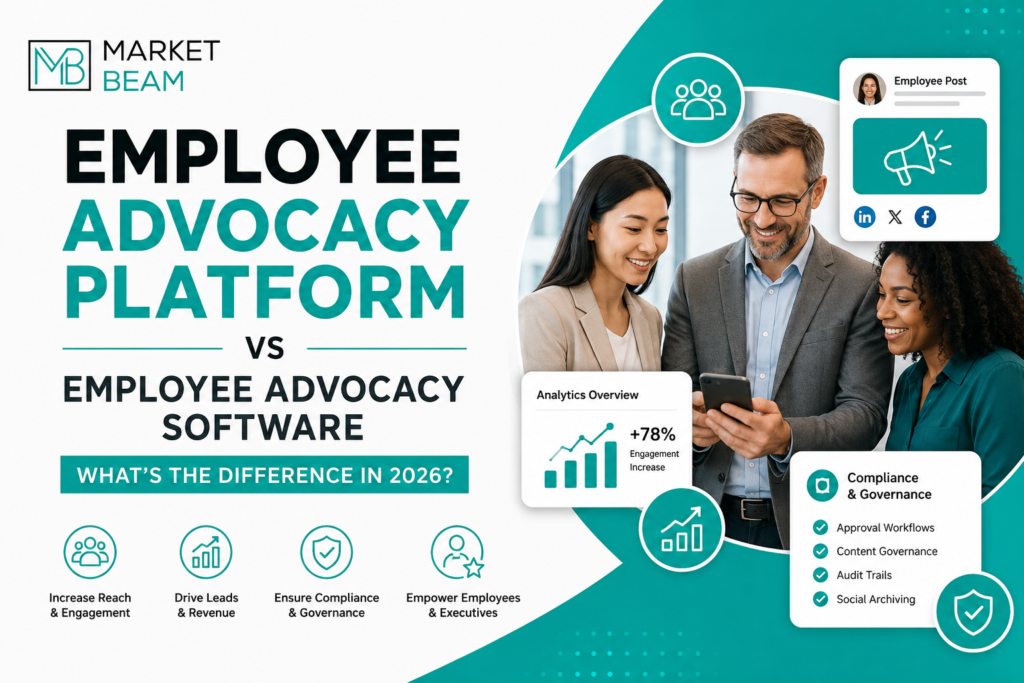
An Employee Advocacy Platform has become one of the most important growth technologies for enterprises in 2026. As organic social reach declines and advertising costs continue to rise, organizations are increasingly relying on employees, executives, and sales teams to amplify content, increase visibility, and build trust across professional networks.
As companies evaluate solutions in this space, two terms appear repeatedly: employee advocacy platforms and employee advocacy software. While many vendors use these terms interchangeably, there are important differences that buyers should understand before making an investment decision.
Understanding these differences can help marketing teams, communications leaders, and compliance stakeholders choose the right solution for long-term growth.
What Is Employee Advocacy?
Employee advocacy is the practice of enabling employees, executives, sales teams, and subject matter experts to share approved company content through their personal social media networks.
The goal is to extend reach beyond corporate channels and leverage the combined influence of employees. Modern buyers trust recommendations from people more than brands, making advocacy one of the most effective forms of digital marketing available today.
A modern advocacy solution allows marketing teams to curate content while giving employees the flexibility to personalize and share messages in their own voice. Employees can discover content, customize posts, and publish directly to social channels with minimal effort.
Organizations that successfully implement employee advocacy often see improvements in brand awareness, lead generation, employer branding, and thought leadership.
What Is Employee Advocacy Software?
Employee advocacy software refers to the technology used to manage employee sharing activities and automate advocacy workflows.
Traditional solutions focused primarily on content distribution and social sharing. Marketing teams uploaded content while employees selected posts to publish on their social profiles.
Today’s enterprise solutions have evolved significantly beyond these basic capabilities. Organizations now require analytics, executive advocacy programs, compliance workflows, governance controls, and integrations with CRM and social media management systems.
This evolution is one of the reasons the term Employee Advocacy Platform has become increasingly common in enterprise buying conversations.
Employee Advocacy Platform vs Employee Advocacy Software
The easiest way to understand the difference is to consider the business objective behind each solution.
Employee advocacy software helps organizations distribute content efficiently.
An Employee Advocacy Platform supports a complete advocacy strategy that includes content creation, employee engagement, executive advocacy, analytics, compliance management, and performance measurement.
| Employee Advocacy Platform | Employee Advocacy Software |
|---|---|
| Supports complete advocacy programs | Supports content distribution |
| Includes compliance workflows | Primarily focuses on publishing |
| Enables executive advocacy | Focuses mainly on employee sharing |
| Integrates with enterprise systems | Often works as a standalone tool |
| Supports analytics and attribution | Provides activity reporting |
| Designed for enterprise growth | Designed for tactical campaigns |
Most leading vendors now deliver both capabilities through a single enterprise solution.
Why Enterprises Are Investing in Advocacy Solutions
Enterprise buyers are no longer looking for tools that simply schedule social posts. They need solutions that support broader business workflows and multiple departments.
Modern platforms connect marketing, communications, HR, sales, compliance, and executive leadership teams into one ecosystem.
Employees gain access to approved content.
Marketing teams gain additional reach.
Sales teams improve social selling efforts.
Executives establish thought leadership.
Compliance teams maintain governance and control.
This level of collaboration is one of the primary reasons enterprises are increasingly investing in advocacy technologies instead of standalone sharing tools.
Features to Look For in Modern Advocacy Solutions
Selecting the right solution requires evaluating several important capabilities.
Content curation is essential because marketing teams need a centralized location to distribute approved content.
One-click sharing remains one of the most valuable features because employees are more likely to participate when sharing requires minimal effort.
Analytics capabilities should track clicks, impressions, engagement, employee participation rates, and lead generation impact.
Executive advocacy support has become increasingly important as organizations invest in leadership branding initiatives.
Artificial intelligence is also becoming a major differentiator. AI-powered recommendations can optimize publishing times and personalize messaging suggestions for employees.
Integration capabilities are equally important. The best solutions integrate with CRM systems, collaboration tools, and social media management platforms.
LinkedIn Employee Advocacy Is Driving Enterprise Growth
LinkedIn employee advocacy has become one of the fastest-growing areas within B2B marketing.
Corporate pages often struggle to generate engagement due to algorithm limitations and increasing competition for attention.
Employees, however, possess highly engaged professional networks that trust their recommendations and expertise.
An Employee Advocacy Platform helps organizations unlock this opportunity by enabling employees to share approved content while maintaining brand consistency.
Many organizations report significantly higher engagement rates from employee-shared content compared to content published through corporate pages alone.
Advocacy in Regulated Industries
Organizations operating in regulated industries face unique challenges when implementing employee advocacy programs.
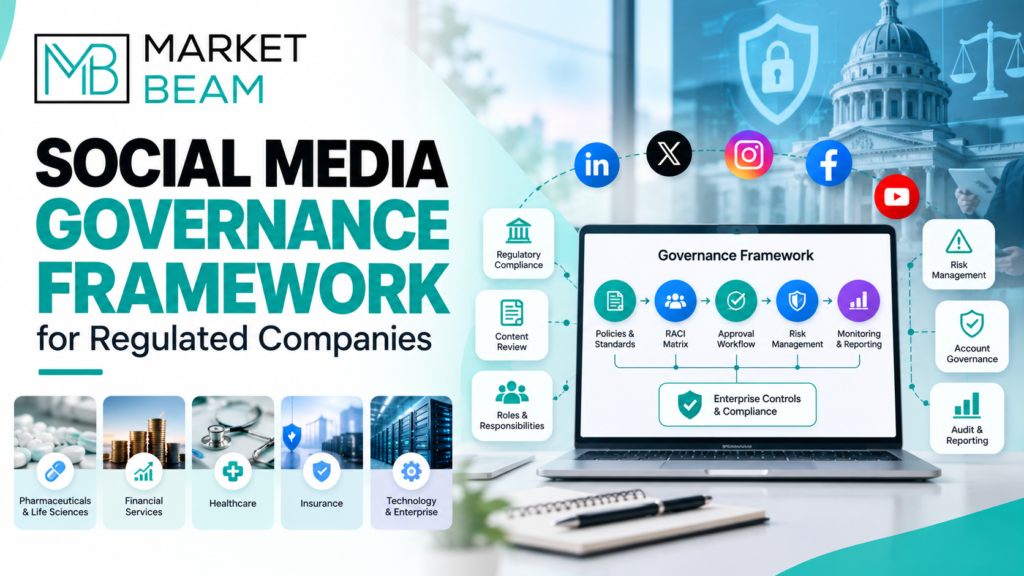
Pharmaceutical companies, life sciences organizations, healthcare providers, banks, insurance firms, and financial institutions must ensure that social media activity complies with regulatory requirements and internal governance policies.
A compliant advocacy solution includes approval workflows, governance controls, social media archiving capabilities, and audit trails.
Compliance teams can review content before distribution while maintaining complete visibility into employee sharing activity.
For highly regulated sectors, compliant employee advocacy has become a competitive advantage rather than an optional feature.
Supporting Financial Services and Pharma Teams
Employee advocacy for financial services continues to grow as firms seek new ways to increase visibility while remaining compliant with industry regulations.
Similarly, employee advocacy for pharma organizations is becoming increasingly important as companies look for compliant ways to educate healthcare professionals, investors, and patients.
Enterprise solutions provide the governance, reporting, and oversight capabilities required by regulated industries, allowing organizations to scale advocacy programs without sacrificing compliance standards.
Business Benefits of Employee Advocacy
The most obvious benefit is increased reach.
Employees collectively possess networks that are significantly larger than most corporate social media audiences.
An Employee Advocacy Platform allows organizations to activate these networks without increasing advertising spend.
Employee-shared content often generates stronger engagement because audiences trust individuals more than brands.
Organizations also benefit from improved employer branding, stronger executive visibility, increased employee engagement, and better social selling outcomes.
Modern solutions provide detailed analytics that connect advocacy activity with business outcomes such as leads, opportunities, and revenue influence.
Choosing the Right Solution
Organizations evaluating an Employee Advocacy Platform should prioritize ease of use because adoption determines program success.
Employees are more likely to participate when content discovery and sharing are simple and intuitive.
Analytics capabilities should provide clear visibility into employee engagement and business impact.
Integration capabilities should support existing technology investments.
For regulated industries, compliance functionality should include approval workflows, governance controls, social media archiving, and audit trails.
Organizations should also evaluate executive advocacy capabilities because leadership participation often drives adoption across employee populations.
Future Trends in Employee Advocacy
The Employee Advocacy Platform market is evolving rapidly as artificial intelligence transforms enterprise marketing.
AI-powered recommendations, automated content personalization, predictive analytics, and intelligent publishing schedules are becoming standard capabilities.
Organizations are increasingly connecting advocacy programs with employer branding initiatives, employee engagement strategies, and demand generation programs.
Executive advocacy will continue to grow as leadership visibility becomes a competitive advantage across B2B industries.
The companies that succeed will be those that treat advocacy as a long-term business initiative rather than a short-term campaign.
Final Thoughts
The difference between an Employee Advocacy Platform and employee advocacy software may appear small, but it reflects a significant shift in how organizations approach employee-driven marketing.
Employee advocacy software focuses on content sharing and workflow automation.
An Employee Advocacy Platform goes much further by connecting employees, executives, compliance teams, analytics, and business objectives into a single ecosystem.
As enterprises continue investing in digital growth strategies, these solutions will become a core component of modern marketing technology stacks and a key driver of long-term business growth.
Frequently Asked Questions
What is an Employee Advocacy Platform?
An Employee Advocacy Platform enables employees, executives, and sales teams to share approved company content across their personal social media channels while maintaining brand consistency and compliance.
What is the difference between an Employee Advocacy Platform and employee advocacy software?
Employee advocacy software focuses on content distribution and sharing, while an Employee Advocacy Platform provides analytics, executive advocacy, compliance workflows, and enterprise integrations.
What features should an enterprise solution include?
Key capabilities include content curation, one-click sharing, analytics, executive advocacy support, audit trails, AI-powered recommendations, and integrations with CRM and social media management systems.
Can these platforms be used in regulated industries?
Yes. Many solutions are specifically designed for life sciences, pharmaceuticals, healthcare, banking, and financial services organizations that require compliance workflows and governance controls.
How does employee advocacy improve business results?
Employee advocacy increases organic reach, improves engagement, strengthens employer branding, supports social selling initiatives, generates leads, and helps establish executive thought leadership.