Understanding what is a content calendar is essential for any business that wants to publish consistent, high-quality content. Whether you manage a startup, a growing company, or a global enterprise, creating content without a structured plan often leads to missed deadlines, inconsistent messaging, duplicated efforts, and lower engagement. A content calendar solves these challenges by providing a clear roadmap for planning, creating, approving, publishing, and measuring content across every marketing channel.
Today’s marketing teams produce blogs, social media posts, email campaigns, webinars, videos, landing pages, and more. Managing all these assets without a centralized system quickly becomes overwhelming. Instead of deciding what to publish every day, businesses use a content calendar to organize campaigns weeks or even months in advance. This allows every piece of content to support broader marketing goals while maintaining a consistent publishing schedule.
As competition for online visibility continues to grow, understanding what is a content calendar has become a fundamental part of building a successful content marketing strategy. It helps improve collaboration, increase productivity, strengthen SEO performance, and deliver a better experience for customers.
What Is a Content Calendar?
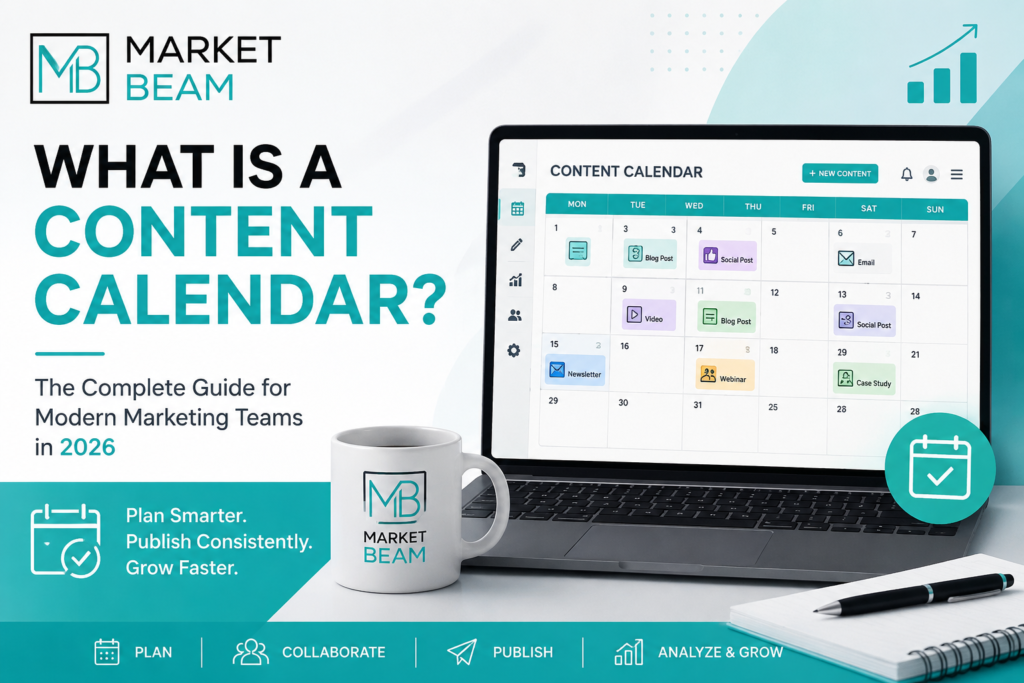
A content calendar is a planning and scheduling tool that helps businesses organize marketing content before it is published. It provides a centralized view of upcoming campaigns, publishing dates, assigned team members, distribution channels, approval status, and marketing objectives.
Rather than reacting to last-minute requests, marketing teams work proactively with a planned schedule. Every blog post, social media update, email newsletter, or promotional campaign is mapped out in advance, making it easier to coordinate work across departments and maintain consistency.
Modern content calendars are far more advanced than traditional spreadsheets. They often integrate with content management systems, social media management platforms, analytics tools, approval workflows, and AI-powered marketing software. These integrations allow businesses to manage the complete content lifecycle from idea generation to performance reporting.
Why Is a Content Calendar Important?
Publishing content consistently is one of the biggest challenges for marketing teams. Without a structured process, businesses often struggle to keep campaigns organized and aligned with their objectives. A content calendar eliminates this problem by giving everyone involved a clear view of upcoming activities.
Writers know which articles need to be completed, designers can prepare creative assets ahead of time, social media managers understand publishing schedules, and leadership teams can review campaigns before they go live. This improves collaboration while reducing delays caused by last-minute changes.
A content calendar also supports search engine optimization. Search engines reward websites that publish relevant content consistently. By planning content around keyword strategies and customer interests, businesses can improve organic visibility while creating a better user experience.

What Should a Content Calendar Include?
An effective content calendar contains much more than publication dates. Every content asset should include the information needed for successful collaboration throughout the production process.
Most organizations track working titles, content formats, publishing platforms, campaign names, target audiences, SEO keywords, responsible team members, approval stages, and publication schedules. Larger enterprises may also include supporting assets, internal notes, compliance reviews, and campaign objectives.
Keeping all this information in one centralized location reduces communication gaps and ensures everyone involved understands the current status of each project. Instead of relying on lengthy email conversations or multiple spreadsheets, marketing teams work from one shared source of truth.
Different Types of Content Calendars
Content calendars can be tailored to different marketing activities depending on business needs. Social media teams typically manage daily or weekly posts across platforms such as LinkedIn, Facebook, Instagram, and X. Editorial teams organize blog articles, ebooks, whitepapers, and case studies using editorial calendars that support long-term SEO strategies.
Email marketing teams often maintain separate schedules for newsletters, promotional campaigns, and customer communications, while video marketing departments coordinate production timelines and publishing dates for webinars, tutorials, and product demonstrations.
Many enterprise organizations combine these activities into one integrated marketing calendar that provides complete visibility across multiple departments. This approach ensures campaigns remain coordinated while preventing scheduling conflicts and duplicated work.
How to Create a Content Calendar
Building a successful content calendar starts with defining clear marketing goals. Every piece of content should support a measurable objective, whether that is increasing website traffic, generating qualified leads, improving search rankings, launching a product, or educating customers.
Once goals are established, marketers identify their target audience and research the topics that matter most to them. Keyword research, customer feedback, and competitor analysis help teams develop valuable content ideas that address real audience needs.
The next step is selecting the marketing channels where content will be published. Most organizations distribute content through their website, blog, email newsletters, and social media platforms. Responsibilities are then assigned to writers, designers, editors, reviewers, and publishers so everyone understands their role before production begins.
Finally, publishing schedules should remain realistic and sustainable. Consistency is far more valuable than publishing large amounts of content that cannot be maintained over time. A well-managed content calendar allows businesses to build momentum, strengthen brand authority, and support long-term marketing growth.
Common Challenges Without a Content Calendar
Businesses that do not use a content calendar often face avoidable problems that reduce the effectiveness of their marketing efforts. Deadlines are missed because responsibilities are unclear, important campaigns launch without supporting content, and seasonal opportunities are overlooked. Marketing teams also spend unnecessary time deciding what to publish instead of focusing on creating valuable content.
Another common challenge is content duplication. Without centralized planning, multiple team members may unknowingly work on similar topics, wasting time and resources. Random publishing also weakens SEO because articles are created without a structured keyword strategy or topic clusters. Over time, these issues lead to inconsistent branding, lower engagement, and reduced marketing performance.
Best Practices for Managing a Content Calendar
A content calendar should remain flexible while supporting long-term planning. Marketing teams should review their schedules regularly to adjust priorities based on campaign performance, customer feedback, business objectives, and industry trends. Planning at least one month ahead provides enough time for writing, design, approvals, and revisions without creating unnecessary pressure.
Successful organizations also revisit high-performing content instead of constantly creating new material. Updating existing blogs, refreshing statistics, improving SEO, and repurposing articles into social media posts or videos helps maximize the value of every content asset. Regular performance reviews allow marketers to identify which topics generate the most traffic, engagement, and conversions so future content decisions are backed by data rather than assumptions.

How AI Is Transforming Content Calendars
Artificial intelligence has changed the way marketing teams plan and manage content. Instead of relying solely on manual brainstorming and spreadsheets, businesses now use AI-powered platforms to automate many parts of the planning process.
AI can recommend content ideas based on search trends, identify gaps in existing content, suggest relevant keywords, optimize publishing schedules, and even generate first drafts for blogs and social media posts. It also simplifies collaboration by assigning tasks, tracking approvals, and sending reminders before deadlines.
Platforms such as MarketBeam combine AI-powered planning with content creation, approval workflows, publishing, analytics, and compliance management in one platform. This allows marketing teams to reduce repetitive work while maintaining consistency across every campaign.
Content Calendars for Regulated Industries
Organizations in healthcare, pharmaceutical, biotechnology, financial services, and other regulated industries have additional responsibilities when publishing content. Marketing materials often require legal, medical, brand, and compliance approvals before they can be shared publicly. Without proper planning, these review processes can delay campaigns and create operational challenges.
A centralized content calendar helps teams monitor every stage of the approval process while ensuring campaigns remain on schedule. Combined with AI-powered compliance tools, businesses can reduce manual errors, improve collaboration, and maintain regulatory standards without slowing down marketing operations.
Measuring the Success of a Content Calendar
Creating a content calendar is only valuable if it delivers measurable business results. Organizations should evaluate their calendars using performance metrics that align with marketing goals.
Key indicators include organic website traffic, keyword rankings, engagement rates, lead generation, click-through rates, and conversions. Operational metrics such as publishing consistency, approval turnaround time, and content production speed also help determine whether workflows are improving.
Reviewing these metrics every month allows marketing teams to refine future campaigns, improve resource allocation, and identify the types of content that produce the strongest results.
The Future of Content Calendars
Content planning is becoming increasingly intelligent. Artificial intelligence, automation, and predictive analytics are transforming traditional calendars into strategic marketing platforms. Future systems will recommend content opportunities, predict audience engagement, personalize publishing schedules, and automate repetitive tasks based on historical performance and business goals.
Rather than replacing marketers, AI enables them to spend more time developing creative campaigns and less time managing administrative work. Businesses that combine strategic planning with AI-powered automation will be better positioned to produce consistent, high-quality content at scale.
Conclusion
Understanding what is a content calendar is essential for building a successful content marketing strategy. A content calendar provides structure, improves collaboration, supports consistent publishing, and ensures every piece of content contributes to larger business objectives. Instead of reacting to deadlines, marketing teams can work proactively with a clear plan that improves efficiency and content quality.
As organizations continue expanding their digital presence across blogs, websites, email, social media, webinars, and video platforms, structured content planning becomes even more important. Businesses that invest in a well-managed content calendar and AI-powered marketing tools will strengthen SEO performance, improve customer engagement, and achieve sustainable long-term growth.
Frequently Asked Questions
What is a content calendar?
A content calendar is a planning tool that helps businesses organize, schedule, manage, and publish content across multiple marketing channels using one centralized workflow.
Why is a content calendar important?
It improves organization, publishing consistency, collaboration, SEO performance, and campaign planning while helping teams meet deadlines more efficiently.
Who should use a content calendar?
Content calendars are valuable for startups, small businesses, enterprises, marketing agencies, healthcare organizations, educational institutions, nonprofits, and any team responsible for creating digital content.
How far in advance should content be planned?
Most businesses plan one to three months ahead, while larger organizations often maintain quarterly or annual content calendars to support major marketing campaigns.
Can AI improve content planning?
Yes. AI helps marketers discover new content ideas, optimize publishing schedules, automate workflows, improve collaboration, and analyze performance, making content planning faster and more effective