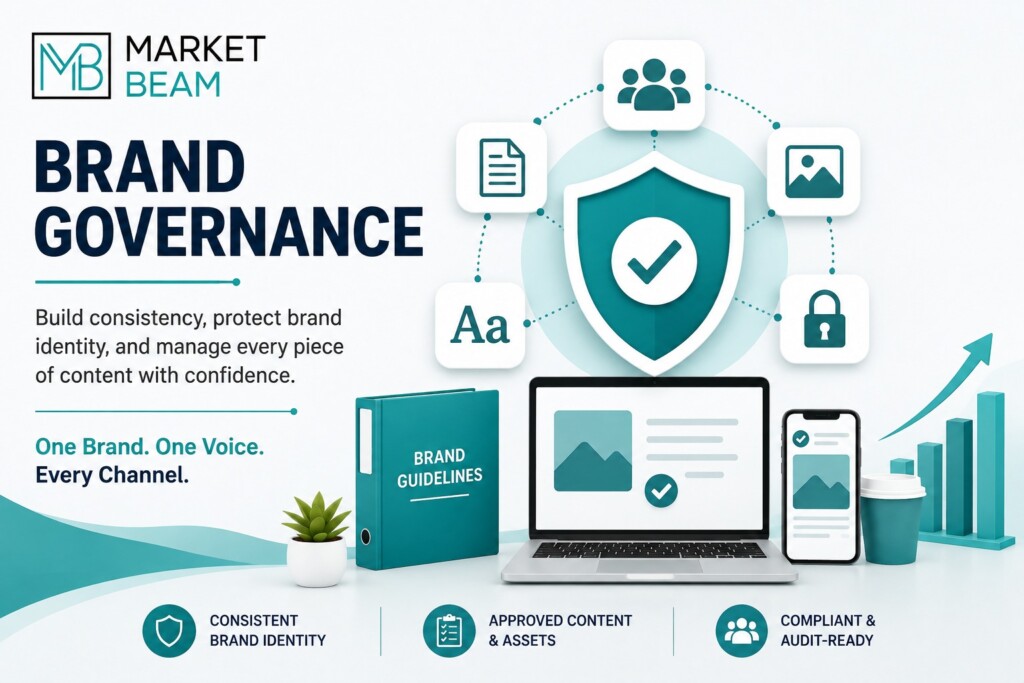
Social media has become one of the most influential channels for enterprise communication. Organizations use platforms such as LinkedIn, Facebook, Instagram, X, and YouTube to connect with customers, partners, employees, and stakeholders around the world. As businesses expand across multiple brands, regions, and departments, maintaining a unified brand identity becomes increasingly challenging. This is where brand governance plays a critical role.
A well-defined brand governance strategy helps organizations ensure every social media post, campaign, image, and customer interaction reflects approved brand standards. Without structured governance, enterprises risk inconsistent messaging, outdated creative assets, unauthorized content, and reduced customer trust.
For organizations operating in regulated industries, effective brand governance also supports compliance by ensuring digital communications align with internal policies, legal requirements, and industry regulations. It enables marketing teams to move quickly while maintaining consistent quality, security, and accountability across every social media channel.
MarketBeam provides enterprise organizations with centralized content management, approval workflows, collaboration tools, and governance capabilities that help teams protect brand integrity while scaling digital communications efficiently.
What Is Brand Governance?
Brand governance is the framework of policies, processes, standards, and technologies that guide how an organization manages its brand across all communication channels. It ensures that every marketing activity reflects the organization’s approved identity, messaging, visual standards, and communication objectives.
Unlike traditional brand guidelines, brand governance extends beyond logos and colors. It defines how content is created, reviewed, approved, published, monitored, and updated throughout its lifecycle.
A comprehensive governance program establishes clear responsibilities for marketing teams, designers, legal reviewers, communications specialists, and executive stakeholders. This structured approach improves collaboration while protecting brand reputation across every digital platform.
As enterprises grow, brand governance becomes essential for maintaining consistency across multiple business units, geographic regions, and customer touchpoints.
Why Enterprises Need Brand Governance
Large organizations often manage dozens of brands, hundreds of campaigns, and multiple social media accounts simultaneously. Without centralized oversight, maintaining consistent communication becomes increasingly difficult.
Implementing brand governance enables enterprises to standardize marketing processes while reducing operational complexity. Teams can create content confidently because governance provides clear expectations regarding messaging, creative standards, approvals, and publishing procedures.
Strong governance also supports regulatory oversight in industries such as healthcare, pharmaceuticals, finance, and manufacturing, where inaccurate communications may create legal or compliance risks.
Organizations that invest in brand governance strengthen customer trust, improve operational efficiency, and protect long-term brand value.
Achieving Brand Consistency Across Every Channel
One of the primary objectives of brand governance is maintaining brand consistency.
Customers interact with organizations across websites, social media platforms, email campaigns, digital advertisements, webinars, and customer support channels. Every interaction should reinforce the same visual identity, messaging style, tone of voice, and organizational values.
Strong brand consistency helps customers recognize and trust the organization regardless of where they encounter the brand.
To achieve this consistency, enterprises should establish standardized messaging frameworks, editorial guidelines, design systems, and content review procedures that apply across every department.
Marketing teams also benefit from documented style guides that define language preferences, visual standards, accessibility requirements, and communication principles.
Managing Approved Assets Effectively
Successful brand governance depends on maintaining centralized access to approved assets.
Approved assets include logos, templates, graphics, product images, videos, campaign materials, brand messaging, typography, and visual design elements that have been reviewed and authorized for organizational use.
Without centralized management, employees may accidentally use outdated logos, inconsistent messaging, or unauthorized creative materials that weaken the brand.
Organizations should maintain a secure digital asset library where marketing teams can quickly access the latest approved assets while preserving version history and usage guidance.
A centralized repository improves collaboration, reduces duplication, and ensures that every campaign reflects current brand standards.
Implementing Effective Content Controls
Enterprises require structured content controls to maintain governance throughout the content lifecycle.
Content controls define how content is created, reviewed, approved, published, monitored, and archived. They establish approval requirements, editorial responsibilities, quality standards, and publishing authority across every social media channel.
Well-designed controls help organizations prevent unauthorized publishing, inconsistent messaging, and operational errors.
Marketing teams should follow standardized workflows that route content through designated reviewers before publication. Depending on organizational requirements, legal, compliance, communications, or executive stakeholders may also participate in the approval process.
Automation further strengthens content controls by reducing manual coordination while maintaining complete approval histories and audit trails.
Core Components of Brand Governance
| Governance Component | Business Value |
| Brand Consistency | Creates a unified customer experience |
| Approved Assets | Ensures employees use current brand materials |
| Content Controls | Standardizes content review and publishing |
| Brand Compliance | Reduces legal and regulatory risks |
| Enterprise Branding | Aligns communication across departments |
| Governance Reviews | Supports continuous improvement |
Common Brand Governance Challenges
Despite recognizing the importance of governance, many organizations struggle to implement effective brand governance.
One common challenge involves decentralized marketing operations. Different departments or regional teams may create content independently, leading to inconsistent messaging and visual identity.
Another issue is poor asset management. Without centralized repositories for approved assets, employees may unknowingly use outdated templates, logos, or messaging that no longer reflects current brand standards.
Organizations also encounter difficulties maintaining brand consistency across multiple social media platforms, languages, and geographic markets. As marketing operations expand, manual processes often become inefficient and difficult to manage.
In regulated industries, insufficient content controls may increase the risk of publishing inaccurate, non-compliant, or unauthorized communications.
Implementing structured governance processes, centralized collaboration, and enterprise technology helps organizations overcome these challenges while strengthening operational efficiency and protecting long-term brand reputation.
Strengthening Brand Compliance
A successful brand governance program depends on maintaining strong brand compliance across every communication channel. Brand compliance ensures that all social media posts, campaigns, visuals, and customer interactions align with approved organizational standards, legal requirements, and internal policies.
Organizations should establish documented review procedures that verify messaging accuracy, visual consistency, accessibility, and regulatory requirements before content is published. Marketing teams should work closely with communications, legal, compliance, and executive stakeholders to ensure every campaign reflects approved brand guidelines.
Regular audits also improve brand compliance by identifying outdated assets, inconsistent messaging, unauthorized content, and opportunities for continuous improvement. These reviews help organizations maintain a unified brand experience while reducing operational and reputational risks.
Embedding compliance into daily marketing operations allows enterprises to scale social media activity without compromising quality or governance.
Building Enterprise Branding Standards
Strong enterprise branding extends beyond visual design. It establishes a consistent identity that customers, employees, and stakeholders recognize across every digital touchpoint.
A mature brand governance strategy should define standards for messaging, tone of voice, visual identity, editorial style, accessibility, and customer engagement. These standards should apply consistently across corporate accounts, regional teams, employee advocacy programs, and partner communications.
Organizations should also create reusable templates, campaign frameworks, and content libraries that simplify content creation while preserving brand consistency.
Centralized governance helps marketing teams collaborate efficiently while ensuring every campaign reinforces the organization’s identity and long-term strategic objectives.
Leveraging Technology to Improve Brand Governance
As enterprises manage increasing volumes of digital content, manual governance becomes difficult to sustain.
Technology strengthens brand governance by centralizing content planning, approvals, digital asset management, publishing, and reporting within a single platform. Automated workflows reduce manual effort while ensuring every post follows established review procedures before publication.
Organizations also benefit from centralized libraries containing approved assets, eliminating confusion about which logos, templates, or messaging should be used.
Workflow automation further enhances content controls by routing content through predefined approval stages and maintaining complete audit histories. These capabilities improve collaboration while reducing publishing errors and operational delays.
Technology also provides leadership with greater visibility into governance performance, enabling organizations to monitor policy adherence and continuously improve digital operations.
Best Practices for Brand Governance
| Best Practice | Business Benefit |
| Maintain brand consistency across channels | Builds customer trust and recognition |
| Centralize approved assets | Eliminates outdated branding materials |
| Standardize content controls | Improves publishing accuracy and efficiency |
| Strengthen brand compliance | Reduces regulatory and reputational risks |
| Develop enterprise branding standards | Creates a unified brand experience |
| Conduct governance reviews | Supports continuous improvement |
| Automate approval workflows | Increases collaboration and scalability |
How MarketBeam Supports Brand Governance
Managing enterprise branding requires more than publishing social media content. Organizations need a centralized platform that supports governance, collaboration, content management, approvals, and compliance throughout the content lifecycle.
MarketBeam provides an enterprise solution that helps organizations strengthen brand governance across multiple brands, business units, and regulated industries. Marketing, communications, legal, compliance, and executive teams can collaborate within one environment while maintaining complete visibility into campaign development and approval processes.
The platform supports centralized management of approved assets, enabling teams to access current logos, templates, messaging, and creative resources from one secure location. This improves brand consistency while reducing the risk of outdated or unauthorized materials being used in campaigns.
MarketBeam also enhances content controls through configurable approval workflows, role-based permissions, workflow automation, and audit-ready documentation. These capabilities help organizations strengthen brand compliance while simplifying campaign management.
By supporting scalable enterprise branding through centralized governance and intelligent automation, MarketBeam enables organizations to protect brand integrity while improving operational efficiency across every social media channel.
Conclusion
As organizations expand their digital presence, brand governance becomes essential for protecting brand identity, improving collaboration, and maintaining consistent customer experiences. A structured governance strategy helps enterprises achieve brand consistency, manage approved assets, strengthen brand compliance, implement effective content controls, and support scalable enterprise branding.
Organizations that invest in governance reduce operational risks while creating more efficient marketing processes and stronger customer trust.
MarketBeam empowers enterprises with centralized collaboration, workflow automation, digital asset management, approval workflows, and governance capabilities that simplify enterprise branding while supporting secure, compliant, and consistent social media management.
Connect With Us
Ready to strengthen your brand governance strategy?
Sales: sales@marketbeam.io
Tech Support: support@marketbeam.io
Discover how MarketBeam helps enterprises improve brand consistency, streamline approvals, centralize digital assets, and maintain compliant social media operations at scale.
Frequently Asked Questions
1. What is brand governance?
Brand governance is the system of policies, standards, processes, and technologies that helps organizations manage brand identity, messaging, visual assets, and communications consistently across all channels.
2. Why is brand consistency important?
Brand consistency strengthens customer recognition, builds trust, improves credibility, and creates a unified experience across websites, social media, advertising, and other communication channels.
3. What are approved assets?
Approved assets are officially authorized logos, templates, graphics, videos, messaging, and design resources that employees should use when creating marketing and communication materials.
4. What are content controls?
Content controls are governance processes that define how content is created, reviewed, approved, published, monitored, and archived to maintain quality, compliance, and consistency.
5. How does brand compliance support governance?
Brand compliance ensures that all communications follow approved brand standards, internal policies, and applicable regulatory requirements, reducing operational and reputational risks.
6. How does MarketBeam support brand governance?
MarketBeam provides centralized collaboration, digital asset management, workflow automation, configurable approvals, role-based permissions, audit-ready documentation, and enterprise social media management that help organizations strengthen brand governance, improve brand consistency, and maintain compliant enterprise branding.