Turn Social Media Data Into Measurable Marketing Growth
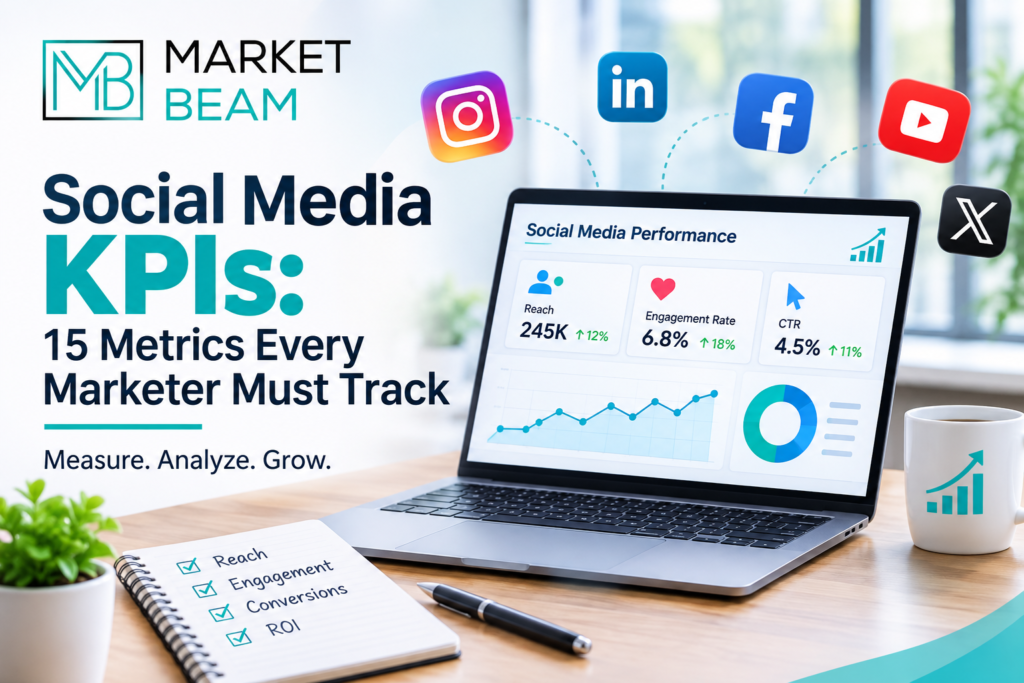
Publishing content across social channels is only the beginning of a successful marketing strategy. Businesses also need to understand what their content achieves, how audiences respond, and whether campaigns contribute to wider business objectives. This is where social media KPIs become essential.
The right social media KPIs help marketers move beyond likes and followers to measure engagement, visibility, traffic, conversions, and operational efficiency. Instead of making decisions based on assumptions, teams can use performance data to identify opportunities, improve campaigns, and allocate resources more effectively.
For enterprise organizations managing multiple channels, brands, and teams, tracking social media KPIs consistently is especially important. A centralized measurement strategy creates better visibility, improves accountability, and makes reporting more valuable for marketing leaders.
What Are Social Media KPIs?
Social media KPIs, or key performance indicators, are measurable values used to evaluate whether social media activities are achieving specific marketing or business objectives.
While social media metrics provide information about activity, social media KPIs connect that information with a goal. For example, impressions measure content visibility, but reach may be a primary KPI for an awareness campaign. Similarly, clicks may indicate interest, while conversions demonstrate whether users completed a desired action.
Businesses should select social media KPIs according to their campaign objectives rather than tracking every available metric. A focused measurement framework helps marketers understand performance without overwhelming teams with unnecessary data.
15 Social Media KPIs Every Marketer Should Track
1. Reach
Reach measures the number of unique users who have seen your content. It is useful for evaluating brand awareness, campaign distribution, and audience exposure.
Tracking reach as one of your social media KPIs helps identify whether your content is connecting with new audiences. Compare reach across channels, campaigns, and content formats to understand which distribution strategies work best.
2. Impressions
Impressions represent the total number of times content is displayed. Unlike reach, impressions can include multiple displays to the same person.
Among important social media KPIs, impressions help marketers understand content visibility. A high impression count combined with low engagement may indicate that content is being displayed but is not generating sufficient audience interest.
3. Engagement Rate
Engagement rate measures audience interactions relative to reach, impressions, or followers, depending on the calculation method.
It is one of the most useful social media KPIs for evaluating content relevance. Likes, comments, shares, saves, and other interactions can indicate whether content resonates with your audience.
4. Click-Through Rate (CTR)
Click-through rate measures the percentage of users who click a link after seeing your content. It is particularly important for campaigns designed to drive website visits, registrations, downloads, or product interest.
A strong CTR among your social media KPIs indicates that your message and call to action are encouraging users to take the next step.
5. Conversion Rate
Conversion rate measures how many users complete a desired action after interacting with your social content. Conversions may include purchases, form submissions, demo requests, registrations, or downloads.
Conversion-focused social media KPIs help connect marketing activity with business outcomes and provide stronger evidence of campaign effectiveness.
6. Follower Growth Rate
Follower growth rate measures how quickly your audience is expanding over a specific period.
Tracking follower growth as part of your social media KPIs helps evaluate brand visibility and audience development. However, growth should be assessed alongside audience quality and engagement rather than treated as an isolated success metric.
7. Share Rate
Share rate measures how frequently audiences share your content. Shares can extend organic reach and introduce your brand to new audiences.
Include share rate in your social media KPIs when your strategy focuses on educational content, thought leadership, community building, or brand advocacy.
8. Video Completion Rate
Video completion rate measures the percentage of viewers who watch a video through to the end.
This KPI helps marketers understand whether videos maintain audience attention. Reviewing completion rates alongside watch time can help improve storytelling, video length, and creative structure.
9. Cost Per Click (CPC)
Cost per click measures how much a paid campaign spends for each click generated. It helps evaluate the efficiency of paid social campaigns.
When reviewing paid social media KPIs, compare CPC with campaign objectives, audience quality, landing-page performance, and conversion results. A lower CPC is not automatically better if the traffic is less relevant.

10. Cost Per Lead (CPL)
Cost per lead measures the amount spent to generate a lead through a marketing campaign.
CPL is particularly valuable for B2B organizations and lead-generation teams. Combining CPL with lead quality and conversion data makes your social media KPIs more useful for budget decisions.
11. Response Time
Response time measures how quickly a brand responds to comments, messages, and customer questions.
This KPI is important for customer service, community management, and reputation management. Faster responses can improve customer experience, although response quality and issue resolution should also be measured.
12. Share of Voice
Share of voice measures your brand’s visibility in conversations compared with competitors within a defined market or topic.
It helps businesses evaluate brand presence, campaign visibility, and competitive positioning. Include this KPI when your strategy focuses on awareness, industry leadership, or reputation.
13. Employee Advocacy Engagement
Employee advocacy engagement measures interactions generated through employee-shared brand content.
Enterprises using employee advocacy programs can track shares, clicks, engagement, and audience reach. These social media KPIs help determine whether employee participation is contributing to brand visibility and communication goals.
14. Content Approval Turnaround Time
Approval turnaround time measures how long content takes to move through internal review and approval processes.
This operational KPI is particularly useful for enterprise and regulated organizations. Tracking approval time can identify workflow bottlenecks, repetitive revisions, and opportunities to improve collaboration.
A social media approval tool can help centralize review activities, manage stakeholders, and create visibility into approval progress.
15. Return on Investment (ROI)
ROI evaluates the business value generated by social media activities relative to their costs.
Organizations can assess campaign revenue, qualified leads, influenced pipeline, or other measurable outcomes against social media investments. ROI provides a business-focused perspective that connects social media KPIs with wider marketing objectives.
Social Media KPI Framework by Marketing Objective
Not every campaign needs the same measurements. Your primary social media KPIs should align with the purpose of your campaign.
| Marketing objective | Primary KPI | Supporting metrics |
|---|---|---|
| Brand awareness | Reach | Impressions, follower growth |
| Engagement | Engagement rate | Shares, comments, saves |
| Website traffic | CTR | Link clicks, landing-page visits |
| Lead generation | Conversion rate | CPL, qualified leads |
| Paid advertising | CPC | CPM, CTR, conversions |
| Customer service | Response time | Response rate, resolution time |
| Employee advocacy | Advocacy engagement | Shares, reach, clicks |
| Content efficiency | Approval turnaround | Revision count, publishing time |
This framework helps teams prioritize the social media KPIs that matter most for each campaign. It also prevents reporting from becoming a collection of disconnected numbers.
How Social Media Reporting Improves KPI Tracking
Effective social media reporting turns performance data into insights that teams can act on. Instead of reviewing individual platform analytics separately, marketers can consolidate important social media KPIs into dashboards and reports.
Reports should include campaign objectives, KPI targets, actual performance, comparisons with previous periods, and recommendations for improvement.
For example, a campaign may generate strong reach but weak CTR. This could indicate that the content attracts attention but needs a stronger call to action. Similarly, strong clicks but low conversions may suggest that the landing page or offer requires improvement.
Consistent social media reporting helps teams identify these patterns, communicate results to leadership, and use social media KPIs to guide future campaigns.
Instagram Feed Size and Thumbnail Size: Why They Matter
Visual presentation can influence content performance. Using the correct Instagram feed size helps ensure that images and graphics display clearly without unwanted cropping or loss of important elements.
Instagram thumbnail size also matters when marketers create videos, carousel posts, and profile content. Consistent visual formatting can improve content presentation and create a more recognizable brand experience.
While Instagram feed size and Instagram thumbnail size are not direct performance indicators, they can influence how audiences interact with content. Marketers should consider creative quality, formatting, and audience engagement together when evaluating their social media KPIs.
How MarketBeam Helps Teams Track Social Media KPIs
MarketBeam helps organizations manage social media publishing, analytics, monitoring, employee advocacy, and reporting through a centralized platform.
Its analytics capabilities support tracking metrics such as impressions, clicks, click-through rates, and engagement rates. Teams can review performance across channels, analyze content trends, and identify opportunities to improve their strategies.
For enterprise and regulated organizations, MarketBeam also connects social media management with governed workflows and compliance-oriented processes. A social media approval tool can help teams coordinate reviews, improve visibility, and manage publishing workflows more efficiently.
By bringing analytics and social media operations together, MarketBeam helps organizations use social media KPIs to support better decisions, more effective campaigns, and improved operational visibility.

Conclusion
Tracking the right social media KPIs helps businesses understand whether their marketing efforts are generating meaningful results. From reach, impressions, and engagement to conversions, ROI, and approval turnaround time, each KPI provides a different perspective on performance.
The best approach is to select metrics according to your objectives, establish realistic targets, and review results consistently. Strong social media reporting makes it easier to identify trends, improve content, optimize campaigns, and demonstrate marketing value.
With centralized analytics, publishing, monitoring, and workflow capabilities, MarketBeam helps enterprise teams make performance measurement more connected and actionable.
Connect with Us
Want to simplify analytics, improve social media reporting, and manage social media workflows more efficiently? Connect with MarketBeam to explore how its platform can support your marketing goals.
Sales: sales@marketbeam.io
Tech Support: support@marketbeam.io
Frequently Asked Questions
1. What are social media KPIs?
Social media KPIs are measurable indicators used to evaluate how effectively social media activities achieve marketing or business goals. Common examples include reach, impressions, engagement rate, clicks, conversions, follower growth, and ROI.
2. Which social media KPIs are most important?
The most important KPIs depend on your objective. Awareness campaigns focus on reach and impressions, engagement campaigns measure interactions, traffic campaigns track CTR, and lead-generation campaigns prioritize conversions and CPL.
3. How often should social media KPIs be reviewed?
Performance should be monitored regularly, with weekly reviews for active campaigns and monthly or quarterly reviews for broader strategy. The frequency depends on campaign duration, business goals, and reporting requirements.
4. What is the difference between social media metrics and KPIs?
Metrics measure activities or results, while KPIs are selected metrics directly connected to a specific objective. For example, impressions are a metric, but reach may be a primary KPI for an awareness campaign.
5. How does social media reporting help businesses?
Social media reporting organizes performance data into useful insights. It helps businesses compare campaigns, identify trends, understand audience behavior, evaluate progress against goals, and make better marketing decisions.
6. How can MarketBeam help track social media KPIs?
MarketBeam offers social media analytics and reporting alongside publishing, monitoring, employee advocacy, and workflow capabilities. These tools help enterprise teams centralize performance tracking and use data to improve social media strategies.