How Digital Marketing Connects Social Media With Your B2B Growth Strategy
B2B buyers discover companies through search, content, webinars, sales conversations, and social channels. A strong digital marketing strategy connects these touchpoints around shared business goals.
Enterprise marketing, sales, product, regional, and compliance teams must coordinate messaging, campaigns, publishing, and measurement. A connected digital marketing plan gives each group a shared direction, while social media distributes content and builds relationships.
What Is an Integrated B2B Digital Marketing Strategy?
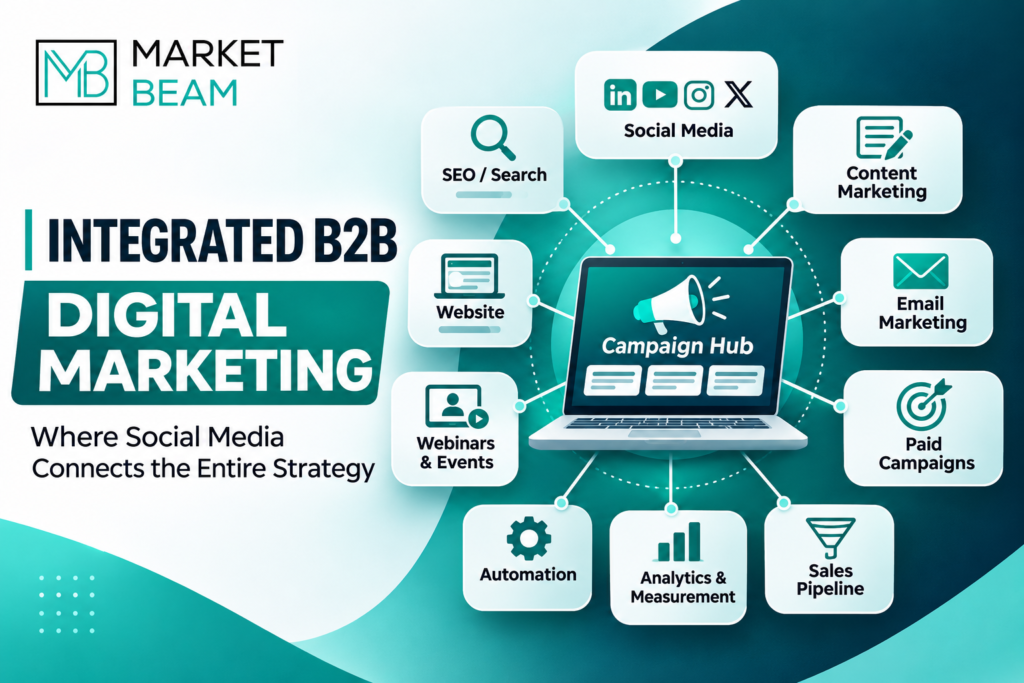
An integrated digital marketing strategy connects SEO, content marketing, social media, email, paid advertising, websites, webinars, and automation across the buying journey.
Each channel has a distinct role, but audiences should experience one consistent brand. Search answers research questions, email nurtures contacts, paid campaigns promote resources, and social media extends reach. Effective digital marketing is not about using every platform. It is about choosing channels that fit buyer behavior and connecting them through shared campaigns, content, data, and reporting.
1. Set Goals and Understand Your B2B Audience
Set digital marketing outcomes such as target-account awareness, qualified leads, demos, registrations, opportunities, or retention. Give each campaign one objective and define its success action.
Map the buying committee: executives, technical evaluators, practitioners, procurement, and compliance stakeholders. Use interviews, CRM data, sales feedback, analytics, and support questions to understand their needs.
A focused digital marketing strategy turns these insights into messages and channel choices that attract the right accounts.
2. Give Every Channel a Clear Role
A digital marketing channel plan gives every activity a purpose: search captures research intent, content educates, email nurtures, paid search captures demand, and paid social reaches professional audiences. Integrated digital marketing connects these roles.
LinkedIn can distribute thought leadership, events, customer stories, and product education; YouTube can host demonstrations. Include social channels in digital marketing when they reach relevant buyers and can be managed consistently.
| Channel | Role in the B2B journey | Example measures |
|---|---|---|
| SEO and website | Capture research intent | Organic visits, qualified conversions |
| Content marketing | Educate and build trust | Engaged sessions, downloads |
| Social media | Distribute ideas and engage audiences | Relevant reach, engagement, referral visits |
| Nurture known contacts | Clicks, replies, conversions | |
| Paid search and social | Capture or create demand | Cost per lead, qualified conversions |
| Webinars and events | Build deeper understanding | Registrations, attendance, opportunities |
Do not give every channel the same target. A social post may create awareness or bring a prospect to an article without generating a demo immediately. Digital marketing measurement should reflect each channel’s role and contribution to the wider journey.
3. Build Campaigns Around Shared Content
Content connects channels. Create a report, guide, webinar, or article around a buyer question, then adapt it for each channel. This makes digital marketing more coherent and reusable.
A compliance webinar can use a landing page, email, social posts, paid promotion, and speaker videos. Its recording can become clips, a summary, and sales material.
This makes digital marketing efficient and keeps campaign execution connected: each asset has a purpose, owner, reviewer, date, destination, and goal. Add refresh dates for information that may become outdated. This keeps digital marketing assets accurate.
4. Connect Social Media With the Wider Plan
Social media can amplify articles, promote webinars, distribute research, support launches, and enable employee advocacy within digital marketing. Each post should offer a useful next step as part of the wider digital marketing plan. Social media makes digital marketing visible between major campaign launches.
Coordinate organic and paid activity. Organic posts reveal audience interests; paid campaigns extend selected messages. Align landing pages and creative, and use consistent campaign names and tracking parameters.
Provide employees with approved content and sharing guidance. Digital marketing is stronger when corporate channels, employees, and sales reinforce a consistent message.
5. Align Marketing and Sales
Use sales feedback on questions, objections, and buying triggers to improve content topics, campaign messages, and follow-up resources. This keeps digital marketing connected to real buyer conversations.
Agree on lead qualification, routing, and handoff information. Ask which assets help sales conversations and which questions delay opportunities.
A digital marketing campaign brief should record audience, problem, offer, channels, timeline, owners, and measures. This aligns digital marketing with commercial priorities and pipeline.
6. Build Governance Into Enterprise Workflows
Enterprise campaigns involve brands, regions, account owners, and reviewers. Define permissions, brand guidelines, escalation paths, records, and procedures for sensitive comments.
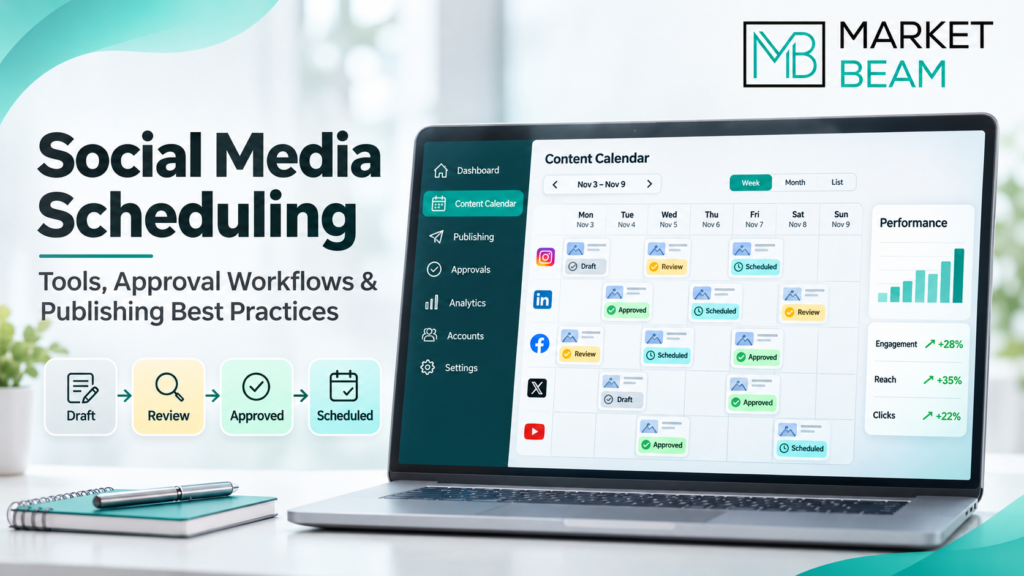
Regulated teams may need to review claims, disclosures, customer communications, and paid creative. Build checks into publishing; social content must not bypass review as part of a digital marketing campaign.
MarketBeam focuses on the social media part of this operating model. Its platform describes centralized publishing, employee advocacy, social analytics, monitoring and adverse-event management, and compliant paid ads. The website presents these capabilities as a governed social media lifecycle, from content creation and compliance review to publishing and measurement. MarketBeam can therefore support organizations that need control over social activity within a wider marketing plan.
7. Measure the Journey, Not Just Channels
Track digital marketing results such as reach, engagement, traffic, email response, conversions, and registrations. Connect them to qualified leads, opportunities, pipeline influence, retention, and cost.
| Objective | Example KPIs | Review question |
|---|---|---|
| Awareness | Target-account reach, branded search | Are the right people discovering us? |
| Engagement | Engaged visits, shares, comments, email clicks | Is the content useful? |
| Lead generation | Qualified forms, demo requests, cost per lead | Are we attracting suitable prospects? |
| Pipeline support | Opportunities influenced, sales asset usage | Does marketing help buying conversations? |
| Operational quality | Approval time, launch delays, publishing accuracy | Can teams execute reliably? |
Combine analytics, CRM, and campaign tracking with consistent UTMs. Separate direct conversions from assisted influence: prospects may discover a brand on social, return through search, and convert after email or sales contact.
Review results, improve weak points, and stop ineffective activity. Digital marketing requires ongoing learning and budget adjustments. Review digital marketing performance by channel and campaign.
8. Create a Practical 90-Day Plan
Month one: audit channels, audiences, content, objectives, tracking, ownership, approvals, and sales handoffs.
Months two: choose priority campaigns, build the calendar, refresh assets, align landing pages and email, and prepare social distribution with review steps.
Month three: launch, review channel and pipeline indicators, collect sales feedback, and adjust creative, targeting, topics, and investment. This phased digital marketing approach makes integration manageable.
Conclusion
A strong B2B digital marketing strategy connects search, content, email, paid campaigns, website experiences, and social media around shared audience needs and business outcomes. Social media is most valuable when it distributes useful information, supports campaigns, creates engagement, and reveals audience concerns.
Set clear goals, assign each channel a role, coordinate content and sales, and build governance into publishing. Measure the full journey rather than isolated activity, then refine the plan using evidence.
Connect With MarketBeam
MarketBeam helps enterprise and regulated teams manage the social media lifecycle through centralized publishing, employee advocacy, analytics, monitoring, and compliant paid campaigns. Explore how its governed social workflows can support the social media component of your integrated marketing plan.
Sales: sales@marketbeam.io
Tech Support: support@marketbeam.io
Website: https://marketbeam.io/
LinkedIn: https://www.linkedin.com/company/marketbeam
FAQs
1. What is digital marketing in B2B?
It uses online channels such as search, websites, content, social media, email, and paid advertising to reach business buyers, educate decision-makers, generate demand, and support sales.
2. Why is social media important in an integrated strategy?
Social media distributes content, builds professional relationships, supports campaigns, encourages engagement, and reveals audience concerns. It works best when connected to website, email, paid, and sales activity.
3. Which digital channels should a B2B company prioritize?
Priorities depend on audience and buying process. Many B2B plans combine SEO and website content, email, LinkedIn or other relevant social channels, paid search or social, and webinars.
4. How can B2B teams measure digital marketing performance?
Track traffic, engagement, clicks, and conversions, then connect them to qualified leads, opportunities, pipeline influence, and customer outcomes through analytics and CRM reporting.
5. How does MarketBeam support an integrated marketing plan?
MarketBeam supports the social media component through publishing, employee advocacy, analytics, monitoring, and compliant paid campaigns. It helps teams govern and measure social activity alongside the broader channel strategy.