Social media is now a major channel for marketing, customer engagement, thought leadership, and brand communication. However, organizations in regulated industries face a different set of challenges from ordinary businesses. A post may need approval before publication, employee communications may need supervision, and customer comments may require careful monitoring. For these organizations, choosing the right tool for regulated social media can make the difference between a controlled workflow and a fragmented compliance process.
A specialized tool for regulated social media should do more than schedule posts. It should help teams create content, review it, obtain the right approvals, publish approved communications, monitor conversations, and maintain clear records. This is especially important for pharmaceutical companies, healthcare organizations, banks, financial services firms, fintech businesses, insurance providers, and other regulated enterprises.
MarketBeam is built around enterprise social media management with a strong focus on compliance, governance, workflow automation, publishing, monitoring, and analytics. Its platform is designed to help regulated teams manage social media activities through centralized processes rather than disconnected tools.
What Is a Tool for Regulated Social Media?
A tool for regulated social media is a platform that combines social media management with controls needed by organizations subject to legal, regulatory, or internal compliance requirements.
Traditional social media tools often focus on publishing calendars, content scheduling, engagement, and basic analytics. Those features remain useful, but regulated organizations also need structured review, controlled permissions, approval tracking, and auditability.
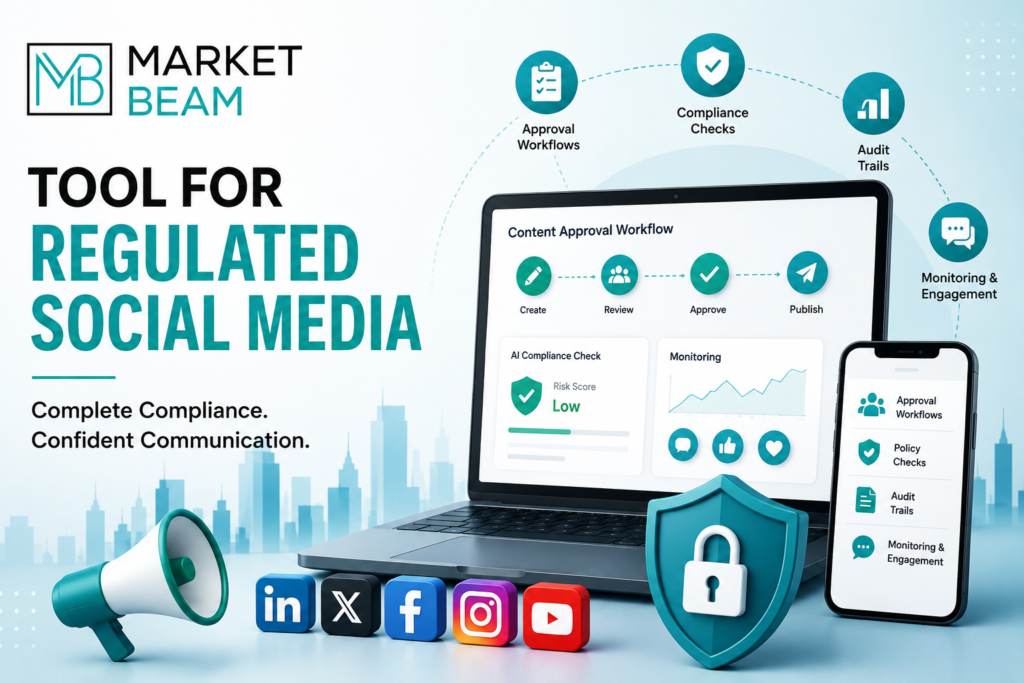
The right tool for regulated social media creates a controlled path from content creation to publication. Marketing teams can prepare campaigns, reviewers can evaluate content, authorized users can approve it, and publishing teams can release only the approved version.
After publication, the platform should also support monitoring and reporting. This creates a complete workflow instead of treating compliance as a single review step.
Why Regulated Organizations Need Specialized Tools
Managing regulated social media without dedicated controls can create unnecessary risk. Teams may use email to exchange drafts, spreadsheets to track approvals, and separate social platforms to publish content. As the number of campaigns and users grows, this approach becomes harder to manage.
A specialized tool for regulated social media centralizes these activities and provides greater visibility across the content lifecycle.
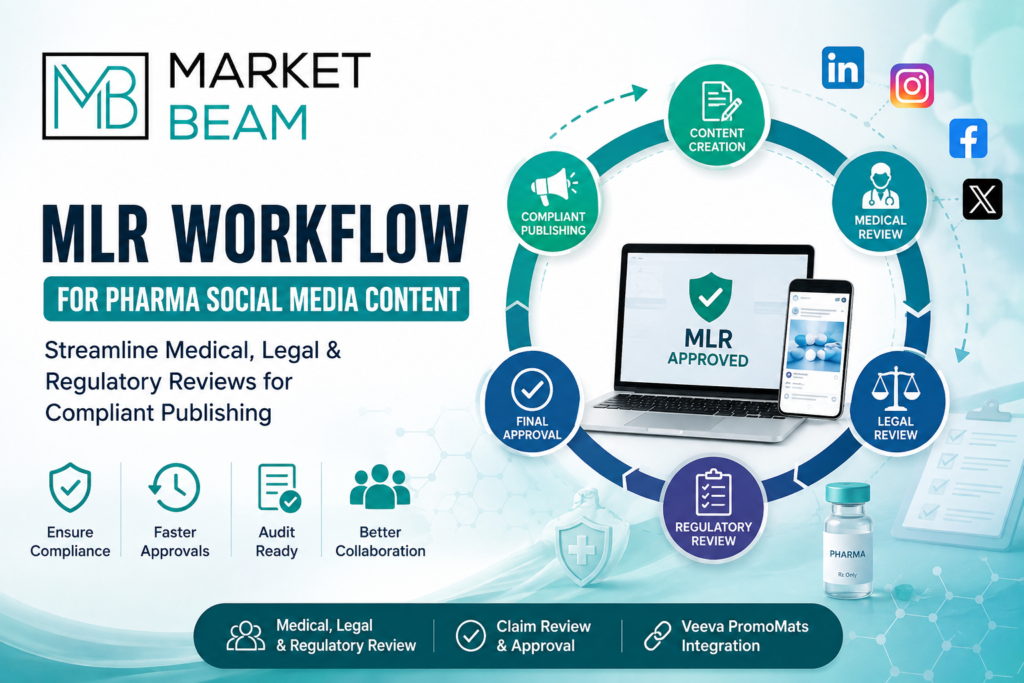
A pharmaceutical company, for example, may need medical, legal, and regulatory review. A financial institution may require compliance supervision for specific communications. A fintech company may manage both corporate accounts and employee advocacy programs.
Each of these situations creates different workflow requirements. A flexible platform allows organizations to define processes based on campaign type, content risk, business unit, or market.
Centralization also improves accountability. Teams can identify who created content, who reviewed it, who approved it, and when it was published.
Social Media Compliance Tools vs. General Social Platforms
The main difference between social media compliance tools and general social media platforms is the level of governance they provide.
A general platform may allow a team to schedule and publish content quickly. A compliance-focused solution adds controls around that activity. These controls can include approval workflows, role-based permissions, policy checks, audit trails, content monitoring, and structured escalation.
For regulated companies, these controls are not simply administrative features. They help create repeatable processes that support internal policies and regulatory obligations.
A strong tool for regulated social media should therefore connect compliance with day-to-day social media execution. Teams should not need to manually transfer approved content from one system to another simply to publish it.
What Social Media Compliance Software Should Include
Effective social media compliance software should support both compliance teams and marketing teams. If a platform is too difficult for marketers to use, teams may create workarounds that weaken governance.
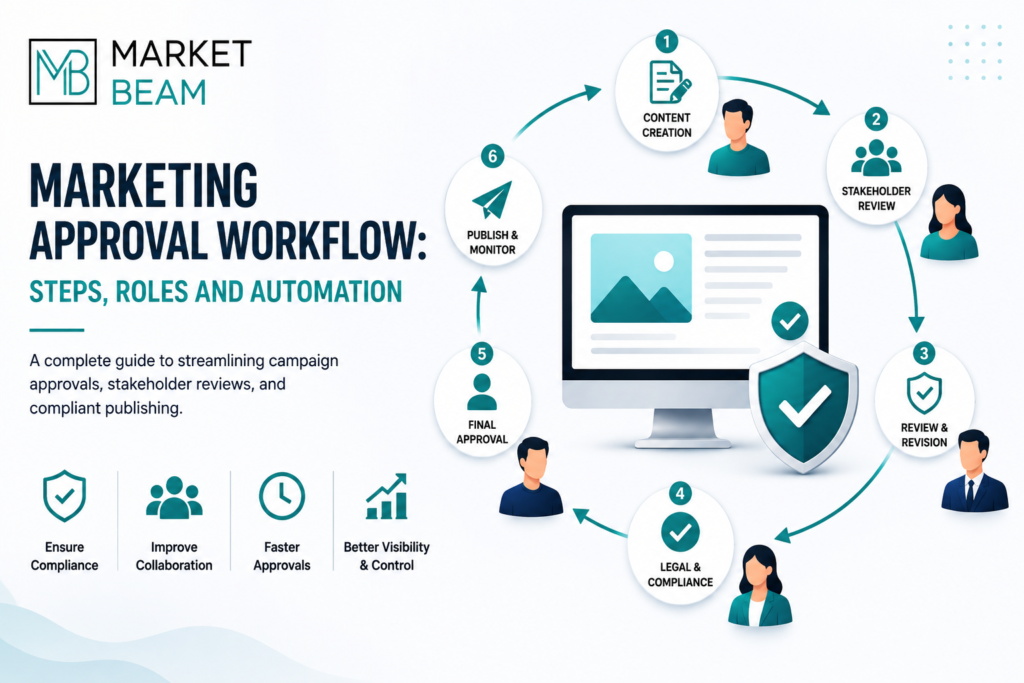
The platform should provide a clear content workflow. Users should be able to draft content, submit it for review, receive feedback, revise it, and move it through final approval without losing version history.
Automation can improve this process by routing content to the right reviewers based on predefined rules. Automated checks can flag possible policy issues before human review, helping reviewers focus their time on higher-risk content.
The system should also create a reliable record of decisions. Audit trails help organizations understand how content moved through the approval process.
A useful tool for regulated social media should also support publishing and monitoring after approval. That keeps the full process in one environment.
Managing Regulated Social Media at Scale
The complexity of regulated social media grows as organizations add more accounts, products, employees, and markets.
A business may have a corporate account, product-specific accounts, regional accounts, executive profiles, and employee advocacy programs. Each account may have different responsibilities and approval requirements.
A centralized social media compliance platform can help teams maintain visibility across these channels.
Role-based access is especially important. Marketing employees may need permission to create drafts, while compliance teams may need review access and only authorized users should have final publishing rights.
Centralized workflows also support faster collaboration. Instead of asking multiple departments for approval through email, teams can keep content reviews, comments, and decisions in one location.
Essential Features of a Compliance-First Social Media Tool
| Capability | Why It Matters |
| Approval workflows | Ensures content follows required review steps |
| Policy checks | Helps identify potential compliance issues early |
| Role-based permissions | Controls who can create, review, approve, and publish |
| Audit trails | Maintains records of actions and decisions |
| Version control | Helps teams work with the correct content version |
| Monitoring | Supports oversight after publication |
| Analytics | Measures performance across campaigns and channels |
| Centralized publishing | Reduces the need to manage multiple platforms separately |
Common Social Media Compliance Challenges
One of the biggest problems with social media compliance is fragmented processes. When content creation, review, publishing, and reporting happen in different systems, teams can lose visibility into the overall workflow.
Another challenge is unclear responsibility. If no one knows who owns final approval, content may be delayed or published without the right review.
Employee advocacy can create additional complexity. Employees may want to share company content quickly, but regulated organizations need a controlled way to manage approved communications.
There is also the challenge of post-publication activity. A compliant post can generate comments, questions, complaints, or other interactions that require attention.
These challenges show why organizations need a social media compliance solution that supports the entire workflow rather than focusing only on pre-publication approval.
Building a Strong Compliance Workflow
A successful workflow starts by identifying which types of content require review and which teams should be involved.
Marketing teams can create and coordinate campaigns, while compliance, legal, medical, or regulatory teams review material where necessary. Clear approval stages help prevent unnecessary delays because everyone understands their role.
Organizations should also establish escalation procedures for comments, complaints, or other high-risk interactions. This is particularly useful for regulated organizations that need to route specific issues to specialist teams.
A centralized tool for regulated social media can automate many of these steps while preserving human decision-making where it matters.
The goal is not to automate compliance completely. Instead, automation should reduce repetitive administrative work and help qualified reviewers focus on important decisions.
Social Media Compliance for Regulated Industries
Social media compliance for regulated industries varies by sector, but the underlying need for control is similar.
Pharmaceutical organizations may need structured medical, legal, and regulatory review. Banks and financial institutions may require supervision, recordkeeping, and controlled employee communications. Insurance companies may need review processes for promotional claims and customer-facing content.
The best tool for regulated social media should therefore be flexible enough to support different policies and approval requirements.
Industry-specific workflows are particularly useful when organizations operate across several regulated sectors or geographic markets.
Financial Services Social Media Compliance
Financial services social media compliance is especially important because employees, advisors, and corporate accounts may all participate in external communications.
Financial organizations should consider workflows for content review, publishing permissions, employee advocacy, monitoring, recordkeeping, and supervisory oversight.
A centralized tool for regulated social media can help firms apply consistent processes across different teams while maintaining clear accountability.
The same principle applies to fintech social media compliance. Fast-growing fintech companies need to maintain marketing speed without allowing compliance to become an afterthought.
Choosing the Right Tool for Regulated Social Media
Selecting a tool for regulated social media should begin with the organization’s compliance needs, not with a list of marketing features. A platform may offer excellent scheduling and analytics, but that does not automatically make it suitable for regulated communication.
First, evaluate how the platform handles content review. Can teams create content, run compliance checks, route it to the right reviewers, and record approvals in one workflow? The answer matters because manual processes can create delays and make it harder to maintain a clear record of decisions.
Next, assess monitoring and governance capabilities. A good platform should provide visibility into published content, employee activity, comments, and other social interactions. It should also support role-based permissions so users have access appropriate to their responsibilities.
Another important factor is scalability. The best tool for regulated social media should support multiple brands, accounts, teams, regions, and regulatory requirements without forcing organizations to create separate processes for every department.
Finally, consider how easily the platform fits into existing marketing and compliance operations. The goal is to improve efficiency while keeping human review and organizational accountability at the center of the process.
What Makes a Strong Social Media Compliance Platform?
A modern social media compliance platform should connect marketing execution with compliance controls. Teams need to create content quickly, but they also need confidence that the required checks and approvals have taken place before publication.
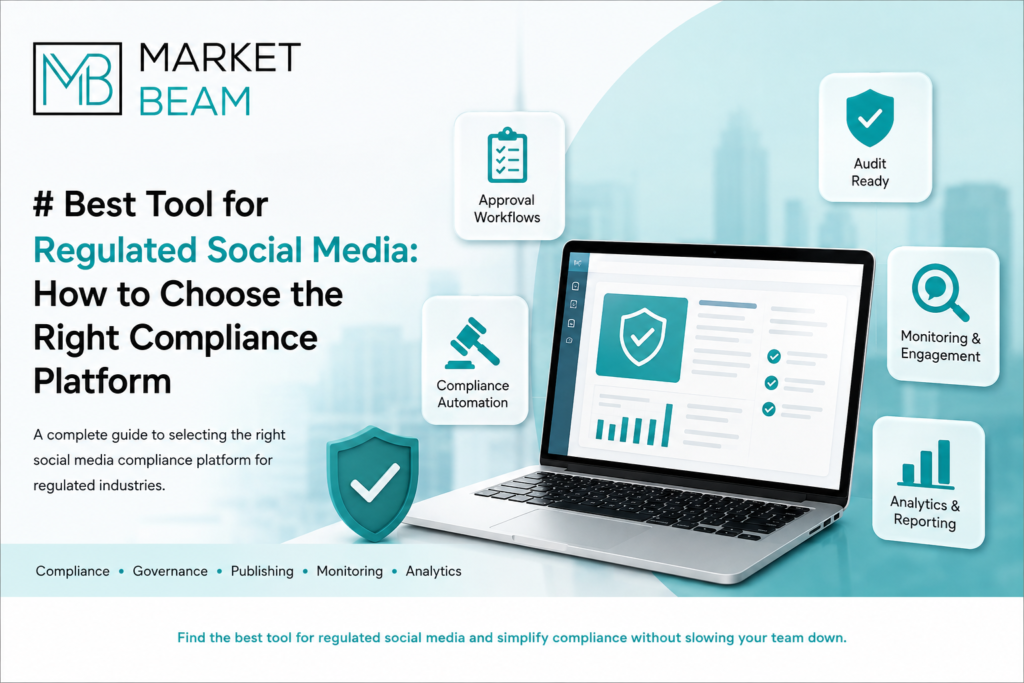
Useful capabilities include automated policy checks, approval workflows, role-based access, version control, audit trails, monitoring, analytics, and centralized publishing.
MarketBeam‘s current platform brings these functions together. Its website describes review and compliance automation, AI prechecks, human review, social publishing, employee advocacy, paid ads and compliance, engagement and community management, and analytics and reporting.
The platform’s AI is positioned as an aid to reviewers rather than a replacement for them. MarketBeam describes a process in which content is created, checked by AI against policies and regulations, reviewed by people, and then published.
That workflow is particularly useful for organizations seeking regulated social media compliance without creating excessive manual work.
Social Media Compliance Software for Regulated Industries
The needs of regulated organizations vary by sector, but the core requirement remains controlled communication.
Pharmaceutical organizations may require medical, legal, and regulatory reviews. Financial services firms may need supervision, recordkeeping, and approval processes. Healthcare organizations may need stronger privacy and content controls.
This is why social media compliance software for regulated industries should be flexible enough to support different policies, workflows, and approval structures.
MarketBeam’s platform specifically identifies life sciences, financial services, and enterprise teams as key audiences. Its website also highlights compliance-focused workflows and governance for regulated social media operations.
Rather than creating a separate compliance process for every platform, enterprises can use a centralized system to manage their social operations under consistent controls.
Financial Services Social Media Compliance
Financial services social media compliance is especially important because communication may involve corporate accounts, advisors, employees, and other representatives.
Organizations need to control who can publish, what content requires approval, and how communications are monitored and retained. These requirements become more difficult to manage as the number of employees and accounts increases.
MarketBeam’s financial-services offering states that it supports organizations regulated by FINRA, SEC, FDIC, CFPB, and other agencies. It also highlights regulatory prechecks, approved publishing, monitoring, and employee advocacy.
For fintech businesses, the same principle applies. Fintech social media compliance should be integrated into normal marketing operations rather than managed through disconnected spreadsheets and email approvals.
Manual vs. Compliance-First Social Media Management
| Area | Manual Approach | Compliance-First Platform |
| Content Review | Email and spreadsheets | Centralized approval workflow |
| Compliance Checks | Mostly manual | Automated prechecks plus human review |
| Publishing | Multiple platform logins | Controlled publishing |
| Employee Advocacy | Difficult to supervise | Approved-content workflows |
| Monitoring | Separate tools | Integrated monitoring |
| Records | Manually maintained | Centralized audit trails |
| Reporting | Multiple reports | Centralized analytics |
| Governance | Inconsistent | Standardized controls |
How MarketBeam Supports Regulated Social Media
MarketBeam is positioned as a compliance-first social media management platform for regulated organizations. Its current website highlights centralized review workflows, AI compliance prechecks, publishing controls, employee advocacy, engagement, monitoring, analytics, and reporting.
The platform’s workflow is designed to help teams identify potential problems before content reaches human reviewers. MarketBeam says its AI precheck can flag high-risk language, policy violations, unapproved claims, outdated information, and missing required disclosures.
For enterprise teams, this can reduce repetitive checking while keeping human review in place.
MarketBeam also supports the operational side of compliant social media management. Teams can plan and publish content, manage employee advocacy, handle engagement, and monitor activity from a centralized environment.
For financial services, MarketBeam specifically describes compliance controls for banks, brokerage firms, insurance companies, and other financial organizations, including regulatory prechecks and monitoring.
The result is a more connected approach to social media compliance in which marketing, compliance, and governance processes work together.
Best Practices for Implementing a Compliance Tool
Technology works best when it is supported by clear internal policies. Before implementation, organizations should define which content requires review, who can approve it, and which users can publish.
Teams should also establish escalation procedures for complaints, regulatory issues, and other potentially sensitive conversations. Regular access reviews are important as employees change roles or leave the organization.
Training should remain part of the program. Employees need to understand both the technology and the organization’s social media rules.
Finally, organizations should review performance regularly. Approval times, compliance issues, publishing errors, monitoring activity, and campaign results can all reveal where workflows need improvement.
A tool for regulated social media should make these processes easier to follow, not simply add another layer of administration.
Conclusion
The right tool for regulated social media combines compliance, governance, publishing, monitoring, and analytics in a single workflow. Regulated organizations need more than a scheduler. They need controls that help teams review content, manage permissions, document decisions, monitor activity, and maintain accountability.
Whether your organization needs social media compliance tools, social media compliance software, or a complete social media compliance solution, the platform should be selected according to your specific regulatory environment and internal policies.
MarketBeam combines AI-assisted compliance checks, human review workflows, publishing, employee advocacy, monitoring, analytics, and governance for regulated social media operations.
Connect With Us
Ready to strengthen your regulated social media operations?
Sales: sales@marketbeam.io
Tech Support: support@marketbeam.io
Connect with MarketBeam to explore a centralized approach to compliant social media management for regulated industries.
Frequently Asked Questions
1. What is a tool for regulated social media?
A tool for regulated social media is a platform that combines social media management with compliance, governance, approval, monitoring, and recordkeeping capabilities required by regulated organizations.
2. What should social media compliance software include?
Social media compliance software should ideally provide content review workflows, policy checks, role-based access, approval tracking, audit trails, monitoring, publishing controls, and reporting.
3. Why do regulated industries need specialized social media tools?
Regulated businesses often need stronger oversight of content, approvals, employee communications, and records. Specialized tools help integrate these controls into everyday social media operations.
4. What is regulated social media compliance?
Regulated social media compliance means managing social communications according to applicable laws, regulations, industry requirements, and internal organizational policies.
5. How does financial services social media compliance work?
Financial services social media compliance typically involves defined review and supervision processes, publishing controls, recordkeeping, monitoring, and appropriate employee access based on the firm’s regulatory obligations.
6. Why is MarketBeam a suitable option for regulated organizations?
MarketBeam combines AI compliance prechecks, human review, publishing, employee advocacy, monitoring, engagement, analytics, and governance in one platform designed for regulated industries.