Introduction
Ad integration with YouTube, FB and Insta is becoming an important part of modern digital advertising. Businesses increasingly use video, social content, paid campaigns, and analytics together to reach customers across multiple touchpoints. Instead of managing each channel separately, marketing teams want connected workflows that make campaign planning, publishing, measurement, and optimization easier.
A strong ad integration with YouTube, FB and Insta strategy can help marketers coordinate creative assets, audience messaging, campaign schedules, and performance data. However, these platforms have different advertising environments, formats, targeting options, and reporting systems. Successful integration requires a clear structure rather than simply running the same ad everywhere.
For enterprise marketing teams, the goal is to create a connected campaign process while maintaining control over content, approvals, analytics, and brand consistency.
What Is Ad Integration With YouTube, FB and Insta?
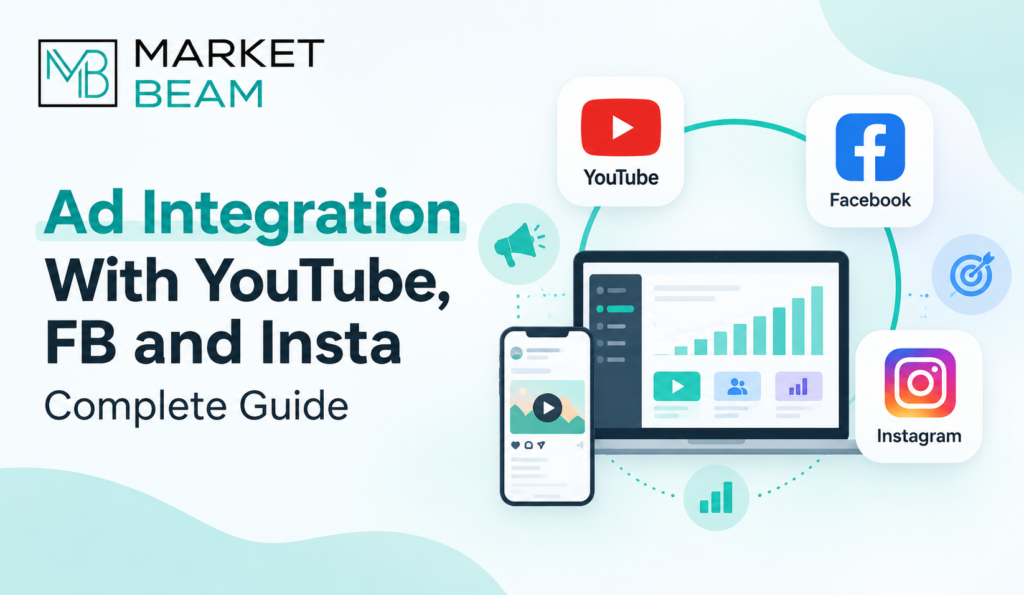
Ad integration with YouTube, FB and Insta means connecting campaign planning, creative assets, publishing, advertising, and performance measurement across YouTube, Facebook, and Instagram.
YouTube advertising is managed through Google Ads, where marketers can create video campaigns designed for objectives such as sales, leads, website traffic, and YouTube reach, views, and engagements.
Facebook and Instagram are commonly part of the same social advertising workflow, making it possible for marketers to coordinate campaigns across Meta’s social platforms.
The key benefit of ad integration with YouTube, FB and Insta is coordination. Instead of creating disconnected campaigns, marketers can build a single campaign strategy and adapt the creative for each platform.
Why Ad Integration With YouTube, FB and Insta Matters
Customers rarely follow a simple path from seeing an advertisement to making a purchase. A person might watch a product video on YouTube, see a brand message on Instagram, and later interact with a Facebook campaign.
This makes ad integration with YouTube, FB and Insta valuable for businesses that want to maintain consistent messaging throughout the customer journey.
It can also help marketing teams compare channel performance. A campaign may generate strong video engagement on YouTube while producing more website interactions through Facebook or Instagram.
Rather than evaluating each platform independently, marketers can look at the complete campaign and understand how different channels contribute to the overall objective.
Key Benefits of Ad Integration With YouTube, FB and Insta
A connected advertising workflow can create several operational benefits.
1. Consistent Campaign Messaging
Ad integration with YouTube, FB and Insta allows teams to coordinate headlines, offers, visual themes, calls to action, and campaign timing.
The creative does not need to be identical across platforms. In fact, platform-specific adaptation is usually more effective. A longer video may work well for YouTube, while a short vertical video may be better suited to Instagram.
The important part is keeping the core message consistent.
2. Better Campaign Coordination
Marketing teams often work with different people responsible for video, social media, paid advertising, design, and analytics.
Without ad integration with YouTube, FB and Insta, these teams can easily create disconnected campaigns.
A centralized workflow makes it easier to coordinate launch dates, creative updates, campaign themes, and reporting requirements.
3. Easier Performance Analysis
Advertising data can become difficult to manage when each channel has separate dashboards.
A well-planned ad integration with YouTube, FB and Insta approach encourages marketers to establish common campaign naming, tracking parameters, conversion goals, and reporting structures.
MarketBeam supports Google Analytics integration for configuring and analyzing UTM parameters, including source, medium, and campaign information. This can help marketers connect social publishing activity with website traffic and campaign measurement.
4. Better Use of Creative Assets
One campaign can generate multiple creative formats. A video may be edited into a long-form YouTube version, a shorter social video, and supporting image or text content.
With ad integration with YouTube, FB and Insta, marketing teams can organize these assets around a common campaign instead of treating each version as an unrelated project.
YouTube, Facebook, and Instagram Play Different Roles
Integration does not mean every platform should receive exactly the same content.
YouTube is especially useful for video-focused campaigns. Google Ads supports several video ad formats, including skippable in-stream, non-skippable in-stream, in-feed video, bumper, and Shorts formats.
Facebook can support broader social advertising and audience engagement, while Instagram is particularly suited to visual storytelling, short-form video, and mobile-first creative.
A good ad integration with YouTube, FB and Insta strategy respects these differences.
| Platform | Common Strength | Creative Focus | Key Measurement Areas |
|---|---|---|---|
| YouTube | Video reach and engagement | Video, Shorts, storytelling | Views, engagement, conversions |
| Broad social reach | Video, images, links | Reach, clicks, conversions | |
| Visual discovery and engagement | Reels, images, Stories | Reach, engagement, clicks |
Build a Connected Ad Integration Workflow
A successful ad integration with YouTube, FB and Insta process starts before an advertisement is published.
First, define the campaign objective. The objective could be brand awareness, website traffic, lead generation, engagement, or sales.
Next, define the audience and core campaign message. After that, create platform-specific assets that maintain the same campaign theme.
The approval stage should then verify brand messaging, creative quality, links, tracking parameters, and any applicable compliance requirements.
Finally, publish the campaigns and monitor the results.
A simple workflow can look like:
Strategy → Creative → Review → Approval → Publishing → Measurement → Optimization
This structure makes ad integration with YouTube, FB and Insta easier to manage across larger marketing teams.
Tracking Is Essential
One of the biggest challenges with cross-platform advertising is knowing which channel generated a result.
Marketers should use consistent campaign naming and tracking parameters across campaigns. UTM parameters can help identify the source, medium, campaign, and other attributes associated with website visits.
For example, a campaign could use a shared campaign name while changing the source for each platform.
| Tracking Element | Example |
|---|---|
| Source | youtube |
| Medium | paid-video |
| Campaign | spring-product-launch |
| Content | 15-sec-demo |
| Landing page | Product page |
This structure makes ad integration with YouTube, FB and Insta more measurable because teams can connect campaign activity with website behavior.
How MarketBeam Fits Into the Workflow
MarketBeam currently provides social media integrations that include Facebook and Instagram, along with other social networks. Its integration platform supports centralized publishing, monitoring, engagement, and analytics.
MarketBeam also supports Google Analytics integration for UTM configuration and campaign measurement.
It is important to distinguish social media management from paid-media platform management. The current MarketBeam integrations page lists Facebook and Instagram among supported social platforms, but does not list YouTube as a social publishing integration.
Therefore, teams evaluating ad integration with YouTube, FB and Insta should map which parts of the workflow are handled by MarketBeam and which are handled directly through Google Ads or the relevant advertising platform.
This distinction helps organizations build realistic workflows without assuming that every advertising function exists inside one platform.
Best Practices for Ad Integration With YouTube, FB and Insta
A strong ad integration with YouTube, FB and Insta strategy should begin with one campaign objective rather than three separate platform plans.
Create a shared campaign brief that includes the target audience, message, offer, landing page, creative direction, tracking structure, and success metrics.
Then adapt the creative for each environment. Avoid forcing a YouTube asset into an Instagram format without considering aspect ratio, viewing behavior, and attention span.
Teams should also maintain consistent naming conventions. This makes reporting easier and reduces confusion when multiple campaigns are active at the same time.
Finally, establish a regular optimization process. Review performance by platform, creative, audience, and conversion activity, then update campaigns based on the data.
Common Challenges
Even with ad integration with YouTube, FB and Insta, several challenges can affect campaign performance.
The first is inconsistent creative. Different teams may create content with different offers or messaging.
The second is fragmented reporting. When every platform uses separate naming conventions and metrics, comparing results becomes difficult.
The third is poor tracking. Without consistent UTM parameters and campaign names, marketers may struggle to connect advertising activity with website conversions.
Another challenge is approval management. Enterprise teams often need brand, legal, compliance, or regional review before content can be published.
A structured social media workflow can reduce these operational problems by creating clearer ownership and approval steps.
Measuring Cross-Platform Campaign Success
Successful ad integration with YouTube, FB and Insta should be measured using business outcomes rather than vanity metrics alone.
Depending on the campaign objective, useful metrics may include reach, engagement, video views, click-through rate, cost per click, leads, conversions, and return on advertising spend.
YouTube reporting can include views, costs, and budget information through Google Ads.
However, marketers should avoid comparing every metric directly. A video view on YouTube is not necessarily equivalent to an Instagram engagement or Facebook click.
Instead, establish a shared business goal and then evaluate each platform based on its role in achieving that goal.
Conclusion
A thoughtful ad integration with YouTube, FB and Insta strategy connects campaign planning, creative development, social publishing, advertising, tracking, and measurement.
The biggest advantage is not simply reaching people on three platforms. It is creating a consistent campaign journey while allowing each platform to perform the role it handles best.
YouTube provides a strong environment for video advertising through Google Ads, while Facebook and Instagram can support social reach, engagement, and visual content distribution.
For enterprise teams, the next step is creating a workflow that connects these activities with clear ownership, approval processes, tracking, and reporting.
MarketBeam can help centralize Facebook and Instagram social media workflows and connect campaign activity with analytics through Google Analytics.
Connect With MarketBeam
Looking to create a more organized ad integration with YouTube, FB and Insta workflow?
MarketBeam helps marketing teams streamline social media planning, publishing, engagement, monitoring, and analytics while supporting structured campaign workflows.
Sales
Tech Support
Frequently Asked Questions
1. What does ad integration with YouTube, FB and Insta mean?
Ad integration with YouTube, FB and Insta means coordinating advertising strategy, creative, tracking, publishing, and measurement across these platforms instead of managing each campaign independently.
2. Can the same ad creative be used on YouTube, Facebook, and Instagram?
The same core campaign concept can be reused, but the creative should usually be adapted for each platform. Video length, aspect ratio, placement, user behavior, and calls to action can differ.
3. Why is tracking important for cross-platform advertising?
Tracking helps marketers understand where traffic and conversions originated. Consistent campaign names and UTM parameters make it easier to connect advertising activity with website performance.
4. Does MarketBeam integrate with Facebook and Instagram?
Yes. MarketBeam’s current integrations page lists Facebook and Instagram as supported social platforms and describes centralized publishing, monitoring, engagement, and analytics.
5. Does MarketBeam provide YouTube advertising integration?
MarketBeam’s current integrations page does not list YouTube among its social media integrations. YouTube advertising is managed through Google Ads, where marketers can create and manage video campaigns.
6. How can enterprises manage ad integration more efficiently?
Enterprises can use a shared campaign strategy, platform-specific creative, centralized approvals, consistent tracking parameters, and cross-channel reporting. Social media management tools can also reduce manual work around planning and publishing.