
Compliance & MLR Review for Social Media: Best Practices for Regulated Industries
Introduction
Social media gives regulated organizations a powerful way to reach customers, healthcare professionals, investors, employees, and other important audiences. However, industries such as life sciences, pharmaceuticals, healthcare, and financial services must balance speed and engagement with strict governance and regulatory requirements.
This is where Compliance & MLR Review becomes essential.
MLR stands for Medical, Legal, and Regulatory review. It is a structured process used to evaluate promotional and communication materials before they are published. For social media teams, the process may involve reviewing claims, disclosures, supporting evidence, brand messaging, regulatory requirements, and internal policies before content goes live.
A strong review workflow helps organizations reduce compliance risk while maintaining an active and efficient social media presence.
This guide explains how regulated organizations can improve approval workflows, strengthen social media governance, maintain audit trails, and use technology to support more efficient content review.
What Is Compliance & MLR Review?
Compliance & MLR Review is the process of reviewing marketing and communication materials through the appropriate medical, legal, regulatory, compliance, or internal approval teams before publication.
The exact workflow varies by organization and industry.
For example, a pharmaceutical company may require medical and regulatory review of product-related claims, while a financial services organization may have different supervisory, recordkeeping, and communications requirements.
The objective is to make sure content is accurate, appropriately reviewed, documented, and aligned with applicable regulations and internal governance standards.
How the MLR Review Process Works
A typical MLR workflow involves several stages.
First, the marketing or social media team creates the content. Depending on the subject matter, the content may then be routed to medical, legal, regulatory, compliance, or other designated reviewers.
Reviewers evaluate areas such as:
Accuracy of statements and claims
Supporting evidence
Required disclosures
Promotional language
Regulatory considerations
Brand guidelines
Internal policies
Market- or region-specific requirements
If changes are required, the content returns to the marketing team for revision. Once all required stakeholders approve the content, it can proceed to publishing.
A structured workflow can help organizations reduce unnecessary back-and-forth and maintain a clear record of who reviewed and approved each asset.
Why Social Media Compliance Matters
Social media moves quickly, but regulated organizations cannot treat publishing like an unrestricted marketing channel.
Content may need to pass through several layers of review before it can be posted.
A weak governance process can create several risks, including inaccurate claims, missing disclosures, inconsistent messaging, inappropriate promotional language, insufficient documentation, or publication without required approvals.
Strong social media governance helps organizations create a more controlled environment while allowing marketing teams to remain active across platforms such as LinkedIn, Facebook, Instagram, X, and other channels.
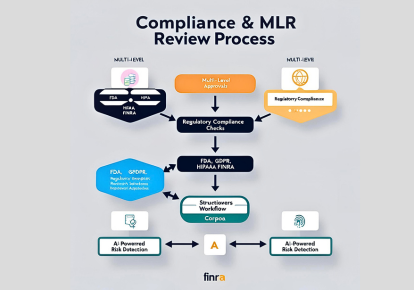
Infographic displaying Compliance & MLR Review workflow, including multi-level approvals, legal checks, and regulatory compliance monitoring for social media content
Key Features of a Compliant Social Media Management Platform
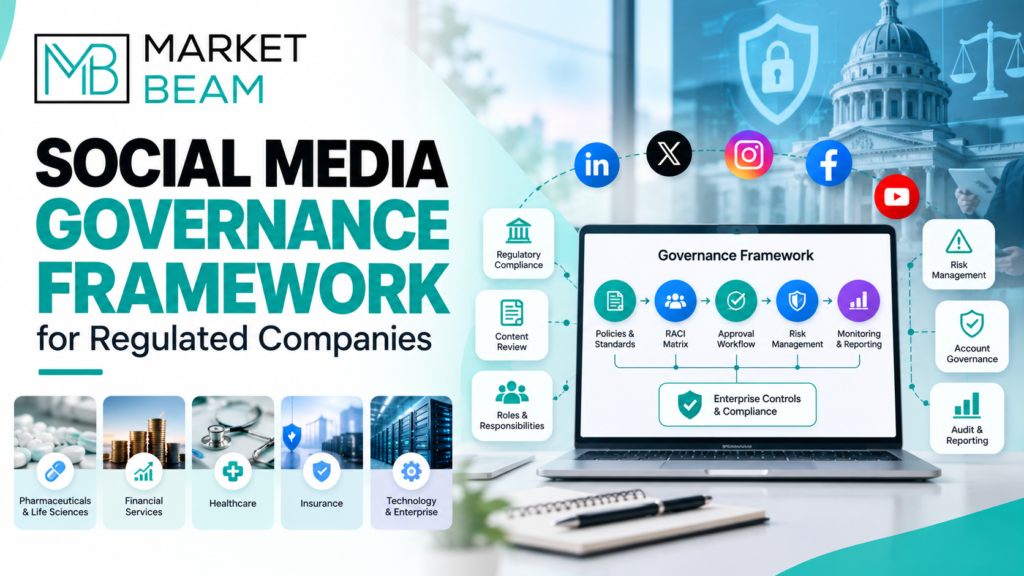
Organizations operating in regulated industries should look for social media technology that supports governance throughout the content lifecycle.
1. Multi-Level Approval Workflows
A compliant platform should support sequential or multi-stage approval processes.
Content may need to move through marketing, medical, legal, regulatory, or compliance reviewers before publishing.
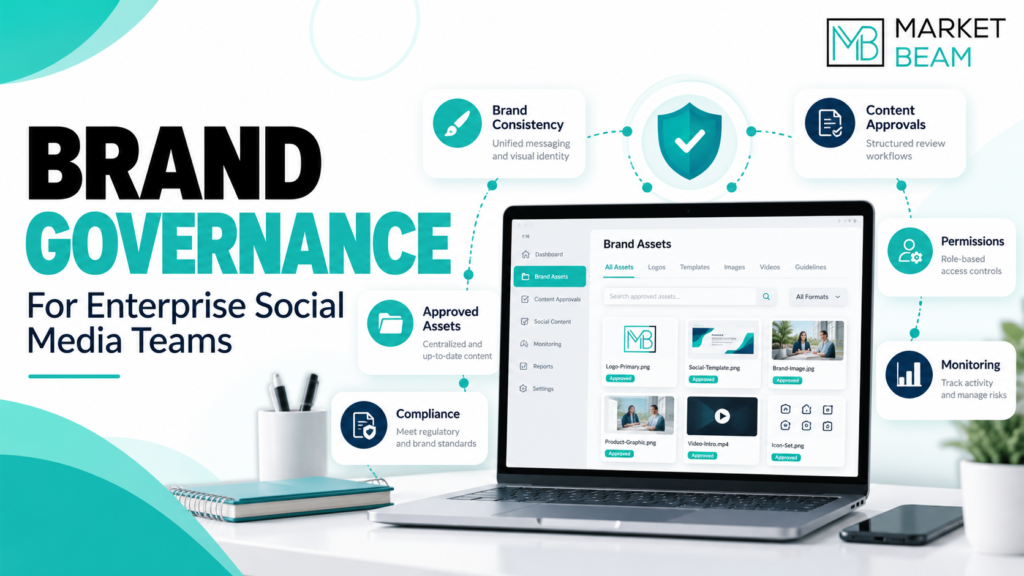
Instead of managing these approvals through disconnected emails and spreadsheets, a centralized workflow provides greater visibility into the status of each piece of content.
Teams can see what is pending, approved, rejected, or awaiting changes.
2. Compliance Monitoring
Monitoring tools can help teams identify content that may require additional review before publishing.
Automated checks may help surface sensitive terminology, potentially problematic language, missing information, or content that does not align with defined policies.
Technology should support human reviewers rather than replace them. Final decisions should remain aligned with an organization’s internal governance and regulatory processes.
3. Audit Trails and Content History
Detailed audit trails are important for regulated organizations.
A social media management system should maintain records of activities such as:
Content creation
Content edits
Reviewer comments
Approval decisions
Publishing activity
Workflow changes
This creates greater accountability and allows teams to understand how a piece of content moved through the approval process.
4. Role-Based Access and Permissions
Not every employee should have the same level of access.
Role-based permissions can help organizations control who can create, edit, approve, schedule, or publish social media content.
For example, a marketing employee may be allowed to draft content while only authorized reviewers can approve it for publication.
This reduces the risk of unauthorized publishing and helps organizations maintain clearer governance.
5. Region-Specific Governance
Global organizations often operate across multiple jurisdictions.
The content that can be published in one country or region may require additional review in another.
A strong social media governance platform should support localized approval workflows, permissions, and content policies so teams can apply different requirements based on geography, business unit, or audience.
6. Promotional and Off-Label Risk Management
Life sciences organizations must take particular care with product-related communications.
Social media content involving regulated products may require review for promotional claims, required disclosures, supporting information, and other applicable requirements.
Instead of relying only on manual processes, organizations can use structured workflows to flag content for additional review before it is published.
7. Recordkeeping and Documentation
Documentation is an important part of regulated communication.
Organizations should be able to maintain a clear history of approved content, reviewer activity, revisions, and publishing actions.
This can make internal reviews and compliance audits easier while reducing dependence on scattered communication channels.
Regulatory Considerations for Social Media
Different regulatory frameworks apply to different industries and activities.
Organizations should avoid treating all regulations as interchangeable.
FDA Considerations for Life Sciences
Life sciences and pharmaceutical organizations may need to consider FDA requirements when communicating about regulated products.
This can include areas such as product claims, risk information, promotional communications, and responses related to product use.
Internal MLR teams typically play an important role in evaluating these communications before publication.
HIPAA Considerations for Healthcare
Healthcare organizations may also need to consider privacy and data protection requirements.
Teams should be careful when publishing information that could expose protected or sensitive health information.
Social media workflows should include clear internal policies regarding patient information, employee access, approvals, and content handling.
FINRA Considerations for Financial Services
Financial services organizations may have supervisory and recordkeeping requirements related to business communications on social media.
Organizations should establish clear processes for approving, supervising, and retaining applicable social communications.
GDPR and Data Privacy
Organizations operating in regions covered by GDPR must also consider how personal data is collected, stored, processed, and used.
This is especially relevant when social media programs involve tracking, lead generation, audience targeting, or personal information.
Best Practices for Compliance & MLR Review
A strong governance program involves more than simply adding an approval step.
Build a Clear Approval Workflow
Define exactly who must review specific types of content.
Simple corporate posts may follow one workflow, while product-related communications may require additional medical, legal, or regulatory review.
Standardize Review Criteria
Create clear review guidelines for marketing and approval teams.
These may include claims, disclosures, evidence requirements, brand standards, regulatory requirements, prohibited terminology, and regional considerations.
Maintain Detailed Audit Logs
Keep a record of revisions, approvals, comments, and publishing activity.
Centralized documentation helps reduce confusion and gives teams a reliable source of truth.
Train Marketing and Social Media Teams
Employees should understand the rules that apply to the content they create.
Training can help marketers identify potentially sensitive content before it reaches reviewers, which can reduce unnecessary revisions.
Use Approved Content Libraries
Organizations can improve efficiency by maintaining repositories of approved social media content.
Marketing teams and employees can reuse approved assets where appropriate instead of starting the review process from scratch every time.
Establish Clear Escalation Processes
Some content may require additional review.
Organizations should define how high-risk or unclear content is escalated and who is responsible for making the final decision.
Review Governance Policies Regularly
Regulations, platforms, internal policies, and organizational structures change over time.
Approval workflows and governance policies should be reviewed periodically to make sure they remain relevant and effective.
How MarketBeam Supports Compliance and MLR Workflows
Managing regulated social media through email, spreadsheets, and disconnected tools can create delays and reduce visibility.
MarketBeam helps organizations bring social publishing, employee advocacy, approval workflows, monitoring, and analytics into a more connected environment.
Teams can use MarketBeam to establish structured approval processes before content is published.
Marketing teams can prepare social media content and route it through the appropriate internal reviewers based on organizational requirements.
Centralized workflows help teams maintain visibility into approval status, reduce manual coordination, and maintain records of workflow activity.
MarketBeam also supports social publishing across multiple channels, helping approved content move efficiently from review to distribution.
For organizations with employee advocacy programs, approved content can be made available for employees to share while maintaining stronger control over what content is distributed.
These capabilities are particularly useful for regulated industries where marketing teams need to balance speed, reach, governance, and internal oversight.
Learn more about MarketBeam’s security and compliance capabilities or explore how MarketBeam supports life sciences organizations.
Frequently Asked Questions
What does MLR stand for?
MLR stands for Medical, Legal, and Regulatory review. It is commonly used by life sciences and pharmaceutical organizations to evaluate promotional and communication materials before publication.
Why is MLR review important for social media?
Social media content can be published quickly and distributed widely. A structured review process helps organizations make sure sensitive or regulated content receives appropriate internal approval before it becomes public.
Can social media content go through multiple approval levels?
Yes. Organizations can establish multi-stage workflows that route content through different reviewers depending on the subject matter, risk level, business unit, or region.
What is an audit trail in social media compliance?
An audit trail records activities associated with a piece of content, such as edits, reviewer comments, approvals, workflow changes, and publishing actions.
Can AI replace medical, legal, or regulatory reviewers?
AI can assist by identifying potentially sensitive language or content that may require additional attention. However, automated systems should support established review processes rather than replace qualified human reviewers.
How can companies manage compliance across multiple regions?
Organizations can create market-specific workflows, permissions, review requirements, and content policies based on geography or business unit.
What should companies look for in a compliant social media management platform?
Useful capabilities include multi-level approvals, role-based permissions, audit trails, content history, centralized publishing, monitoring, approved content libraries, and flexible governance workflows.
Conclusion
Social media offers significant opportunities for regulated organizations, but it also requires strong governance.
A well-designed Compliance & MLR Review process helps marketing teams coordinate with medical, legal, regulatory, and compliance stakeholders before content is published.
By combining structured approvals, audit trails, role-based permissions, governance policies, and centralized social media management, organizations can improve operational efficiency while maintaining stronger oversight.
Technology can make this process easier, but the most effective approach combines the right platform with clear internal policies, trained employees, and qualified reviewers.
Ready to Simplify Your Social Media Approval Workflow?
MarketBeam helps regulated organizations manage publishing, approvals, employee advocacy, monitoring, and analytics within a connected social media workflow.
Explore MarketBeam and schedule a demo to see how your team can streamline social media governance and approvals.