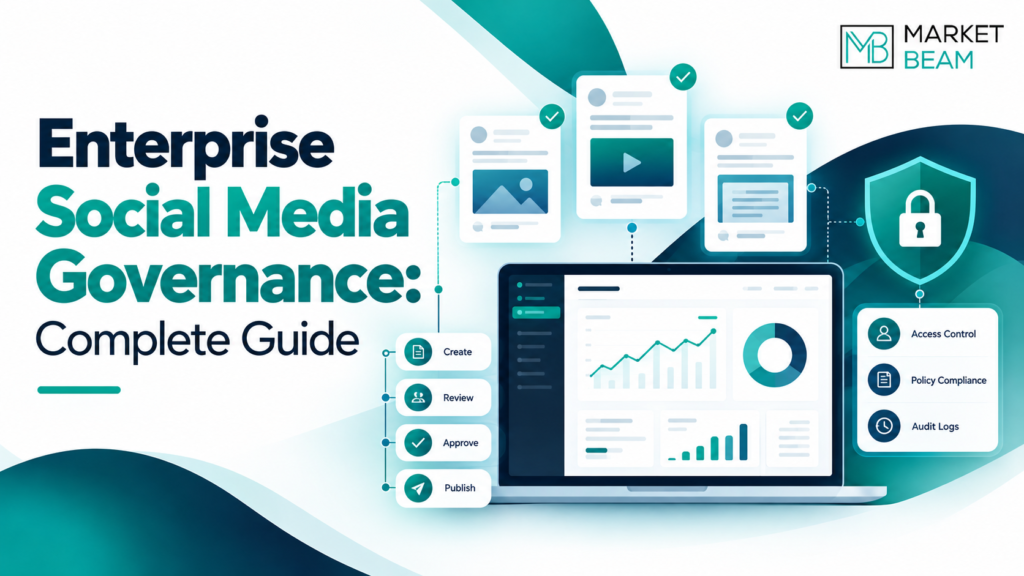
Social media has become one of the most influential communication channels for modern enterprises. Organizations use platforms such as LinkedIn, Facebook, Instagram, X, and YouTube to engage customers, promote products, strengthen brand awareness, and communicate with employees and stakeholders. As businesses expand across departments, regions, and markets, maintaining consistent and compliant communication becomes increasingly complex. Developing a social media governance policy is one of the most effective ways to establish clear standards for managing enterprise social media activities.
A well-designed governance policy provides direction for content creation, approvals, publishing, account management, security, and compliance. It helps organizations reduce operational risks while ensuring every employee understands their responsibilities when representing the brand online.
For enterprises operating in regulated industries, a social media governance policy is not simply an internal guideline. It is an essential framework that supports regulatory compliance, protects corporate reputation, and strengthens collaboration across marketing, communications, legal, human resources, and executive leadership.
MarketBeam helps organizations simplify enterprise social media management through centralized governance, approval workflows, collaboration tools, and automation that support policy-driven digital communication.
What Is a Social Media Governance Policy?
A social media governance policy is a documented framework that defines how an organization manages its social media presence. It establishes the rules, responsibilities, approval processes, security measures, and communication standards that guide every aspect of enterprise social media.
Unlike a general marketing guideline, a social media governance policy provides detailed instructions covering account management, publishing authority, content approvals, employee participation, crisis response, and compliance monitoring.
The policy helps organizations maintain consistency across multiple brands, business units, and geographic regions while ensuring every communication aligns with corporate objectives and regulatory expectations.
A comprehensive governance policy also improves accountability by clearly defining who can create, review, approve, publish, and monitor social media content.
Why Every Enterprise Needs a Social Media Governance Policy
As organizations expand their digital presence, managing dozens or even hundreds of social media accounts without standardized governance becomes increasingly difficult.
A well-structured social media governance policy reduces confusion by providing clear expectations for employees, marketing teams, and business leaders. It also minimizes operational risks associated with inconsistent messaging, unauthorized publishing, and fragmented account management.
For regulated industries such as healthcare, pharmaceuticals, financial services, and manufacturing, governance policies support compliance by ensuring promotional communications follow internal procedures and industry regulations.
Organizations with a mature governance program also benefit from improved collaboration, faster approvals, stronger security, and greater confidence in their digital communications.
Establishing an Effective Employee Social Policy
An essential component of every social media governance policy is a well-defined employee social policy.
Employees often act as ambassadors for their organizations, whether they manage official company accounts or discuss workplace experiences on personal social media profiles. A clear employee social policy helps individuals understand acceptable online behavior while protecting confidential information, intellectual property, and brand reputation.
The policy should explain how employees may reference the organization online, when disclaimers are appropriate, and how to handle customer inquiries or media requests received through personal accounts.
It should also define expectations regarding respectful communication, data privacy, confidentiality, and compliance with company values.
Providing regular training alongside the employee social policy ensures that staff members understand their responsibilities and remain informed about evolving platform practices and organizational requirements.
Creating Clear Publishing Rules
Consistent publishing requires standardized processes that guide every stage of content creation and approval.
A comprehensive social media governance policy should establish detailed publishing rules covering content planning, approvals, scheduling, publishing authority, quality assurance, and post-publication monitoring.
Organizations should specify which departments are authorized to publish content, how campaigns move through review workflows, and which approvals are required before content goes live.
Standardized publishing rules improve operational efficiency while reducing the likelihood of unauthorized or inconsistent communications.
Documenting these procedures also creates greater transparency, making it easier for marketing teams to coordinate campaigns across multiple departments and geographic regions.
Defining Enterprise Content Standards
Maintaining consistent messaging begins with clear content standards.
A successful social media governance policy defines expectations for tone of voice, brand messaging, visual identity, accessibility, factual accuracy, and regulatory compliance across every communication channel.
Organizations should establish guidelines covering logo usage, approved templates, image quality, language style, legal disclaimers, and editorial review requirements.
Well-defined content standards help ensure that every social media post reflects the organization’s values while maintaining a consistent customer experience.
These standards also simplify onboarding for new employees by providing practical guidance for content creation and brand communication.
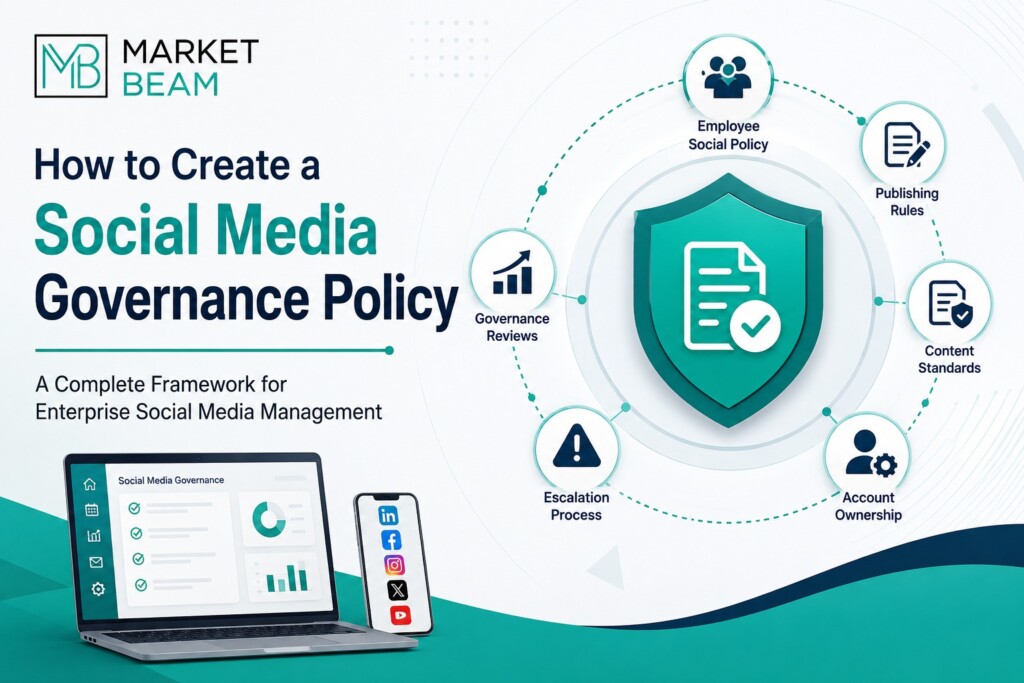
Core Components of a Social Media Governance Policy
| Policy Component | Purpose |
| Employee Social Policy | Defines employee responsibilities and online conduct |
| Publishing Rules | Standardizes content approval and publishing workflows |
| Content Standards | Ensures consistent branding and messaging |
| Account Ownership | Defines responsibility for social media accounts |
| Escalation Process | Manages risks and critical incidents |
| Governance Reviews | Supports continuous policy improvement |
Common Governance Policy Challenges
Many organizations recognize the importance of governance but struggle to implement an effective social media governance policy.
One common challenge is inconsistent adoption across departments. Different business units may develop independent social media practices without following standardized governance procedures.
Another issue involves outdated documentation. As social platforms evolve, organizations must regularly update publishing rules, content standards, and employee social policy guidance to reflect changing business needs and platform capabilities.
Large enterprises also face challenges managing global teams, multiple brands, and numerous social media accounts simultaneously. Without centralized governance, maintaining consistency becomes increasingly difficult.
Finally, unclear responsibilities often create operational inefficiencies. Employees may be uncertain about approval authority, content ownership, or incident reporting procedures, increasing the risk of publishing errors and compliance issues.
Organizations that invest in structured governance, standardized documentation, and enterprise collaboration tools significantly improve both operational efficiency and digital risk management.
Establishing Clear Account Ownership
One of the most important sections of a social media governance policy is defining account ownership. As organizations grow, they often create multiple social media accounts for different brands, products, business units, and regional teams. Without documented ownership, managing these accounts becomes increasingly difficult.
A governance policy should identify who owns each account, who has administrative access, who can publish content, and who is responsible for ongoing maintenance. Organizations should also maintain a centralized inventory of all official social media accounts, including account purpose, platform, administrators, and recovery information.
Well-defined account ownership improves accountability while reducing the risk of unauthorized access, duplicate accounts, and security incidents. It also simplifies employee transitions by ensuring that administrative access remains with the organization rather than individual employees.
Regular account audits further strengthen governance by identifying inactive accounts, outdated permissions, and opportunities to improve security.
Creating an Effective Escalation Process
Even the most carefully managed social media programs occasionally encounter unexpected situations. Customer complaints, misinformation, security incidents, regulatory concerns, and viral conversations all require a coordinated response.
An effective escalation process ensures that employees know exactly how to respond when issues arise. The social media governance policy should clearly define incident categories, reporting procedures, response timelines, and decision-making authority.
For example, customer service inquiries may be routed to support teams, while legal concerns should be escalated to legal counsel. Compliance-related issues should involve regulatory specialists, and security incidents should immediately reach information security teams.
A structured escalation process reduces response time, minimizes operational disruption, and helps organizations protect their reputation during high-risk situations.
Implementing Your Governance Policy Successfully
Creating a policy is only the first step. Successful implementation requires organizational commitment, employee education, and continuous improvement.
Every employee involved in social media should receive training on the social media governance policy, including employee social policy, publishing rules, content standards, account ownership, and the escalation process. Regular refresher training ensures that teams remain aligned with evolving business objectives and platform updates.
Organizations should also review governance performance periodically by measuring approval efficiency, policy adherence, security incidents, and compliance outcomes. Feedback from marketing, communications, legal, and compliance teams helps identify opportunities to strengthen governance over time.
A governance policy should remain a living document that evolves alongside organizational growth and digital communication trends.
Best Practices for Social Media Governance Policy
| Best Practice | Business Benefit |
| Document employee social policy | Improves employee accountability |
| Standardize publishing rules | Ensures consistent content approval |
| Define content standards | Strengthens brand consistency |
| Assign clear account ownership | Improves security and accountability |
| Establish an escalation process | Accelerates issue resolution |
| Conduct regular governance reviews | Supports continuous improvement |
| Train employees regularly | Reduces compliance and operational risks |
How MarketBeam Supports Social Media Governance Policy
Managing enterprise social media requires more than publishing content. Organizations need technology that supports governance, collaboration, compliance, and operational efficiency throughout the content lifecycle.
MarketBeam provides an enterprise-grade platform that helps organizations implement and maintain a comprehensive social media governance policy. Marketing, communications, compliance, legal, and executive teams can collaborate through centralized workflows that improve visibility while maintaining complete approval histories.
The platform supports configurable approval processes that align with internal publishing rules, enabling organizations to standardize content reviews before publication. Teams can also define roles and permissions, helping reinforce account ownership and strengthen security across multiple social media channels.
MarketBeam improves consistency by supporting centralized content standards, collaborative campaign planning, workflow automation, and audit-ready documentation. Organizations also benefit from streamlined communication during incidents through structured governance workflows that complement their internal escalation process.
Whether managing one brand or hundreds of enterprise accounts, MarketBeam helps businesses strengthen governance, improve compliance, and maintain consistent digital communications at scale.
Conclusion
A well-designed social media governance policy provides the structure organizations need to manage digital communications confidently and consistently. By establishing clear employee social policy guidelines, standardized publishing rules, documented content standards, defined account ownership, and an effective escalation process, businesses can reduce operational risks while improving collaboration and compliance.
As enterprise social media programs continue to expand, governance becomes an essential part of protecting brand reputation, strengthening security, and supporting regulatory requirements.
MarketBeam empowers organizations with centralized governance, workflow automation, approval management, collaboration tools, and enterprise social media capabilities that simplify policy implementation while supporting scalable digital operations.
Connect With Us
Ready to build a stronger social media governance policy for your organization?
Sales: sales@marketbeam.io
Tech Support: support@marketbeam.io
Discover how MarketBeam helps enterprises streamline governance, automate approvals, improve collaboration, and maintain compliant, brand-consistent social media management.
Frequently Asked Questions
1. What is a social media governance policy?
A social media governance policy is a documented framework that defines how an organization manages social media activities, including approvals, publishing, compliance, security, and employee responsibilities.
2. Why is an employee social policy important?
An employee social policy provides guidance on appropriate online behavior, protects confidential information, and helps employees represent the organization responsibly on social media.
3. What should publishing rules include?
Publishing rules should define content approval workflows, publishing authority, scheduling procedures, quality standards, and post-publication monitoring to ensure consistent and compliant communications.
4. Why is account ownership necessary?
Clear account ownership improves accountability, protects administrative access, simplifies employee transitions, and reduces security risks associated with unmanaged social media accounts.
5. What is an escalation process in social media governance?
An escalation process outlines how organizations respond to customer complaints, security incidents, compliance concerns, misinformation, and other high-priority situations requiring coordinated action.
6. How does MarketBeam support social media governance?
MarketBeam provides centralized governance, configurable approval workflows, role-based access management, workflow automation, content governance, audit-ready documentation, and enterprise social media management that help organizations implement and maintain an effective social media governance policy.