
Introduction
Social media has become one of the most important communication channels for enterprises across healthcare, pharma, and financial services. Organizations are using LinkedIn, X, Facebook, Instagram, and other platforms to educate audiences, engage customers, build trust, and drive revenue. However, regulated industries face unique challenges because every social media activity must comply with strict legal and regulatory frameworks.
This growing complexity has increased the demand for enterprise-grade social media compliance software that helps organizations manage approvals, governance, monitoring, and publishing at scale. Businesses are no longer looking for basic scheduling tools. They need intelligent systems capable of supporting compliance-heavy workflows while enabling faster digital engagement.
A modern social media compliance platform allows enterprises to manage risk, streamline collaboration, and maintain complete visibility across all digital communication channels.
The Growing Need for Social Media Compliance Tools
The rise of digital marketing has created new risks for regulated industries. A single unapproved social post can trigger legal penalties, compliance violations, or reputational damage. Healthcare providers must follow HIPAA guidelines. Pharmaceutical companies must comply with FDA advertising regulations. Financial institutions must align with FINRA and SEC standards.
This is why businesses increasingly invest in enterprise-level social media compliance tools designed specifically for regulated communication environments.
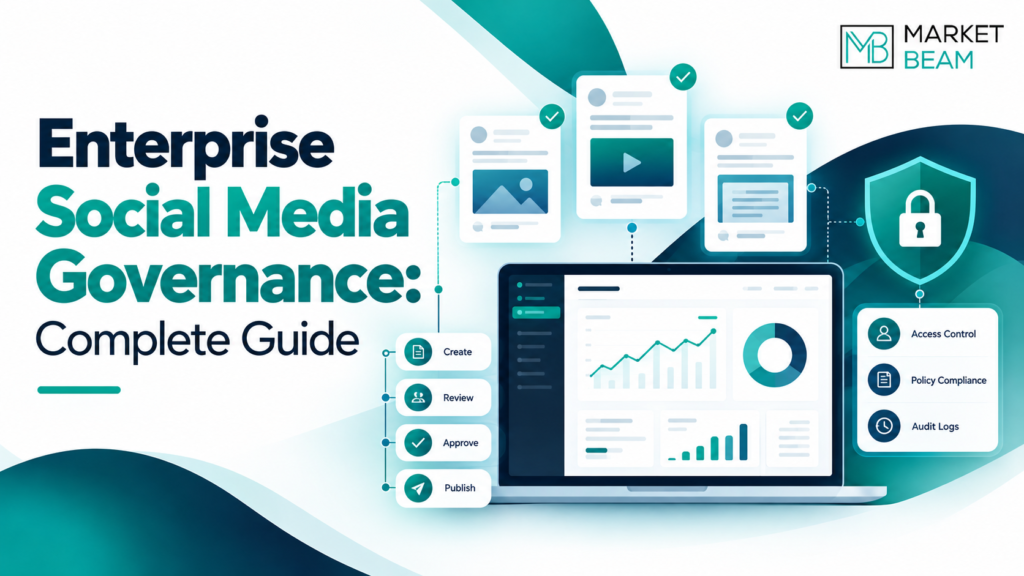
Unlike traditional social media management systems, compliance-focused platforms include approval workflows, audit trails, archiving, role-based permissions, monitoring capabilities, and policy enforcement. These features help enterprises scale communication without compromising governance.
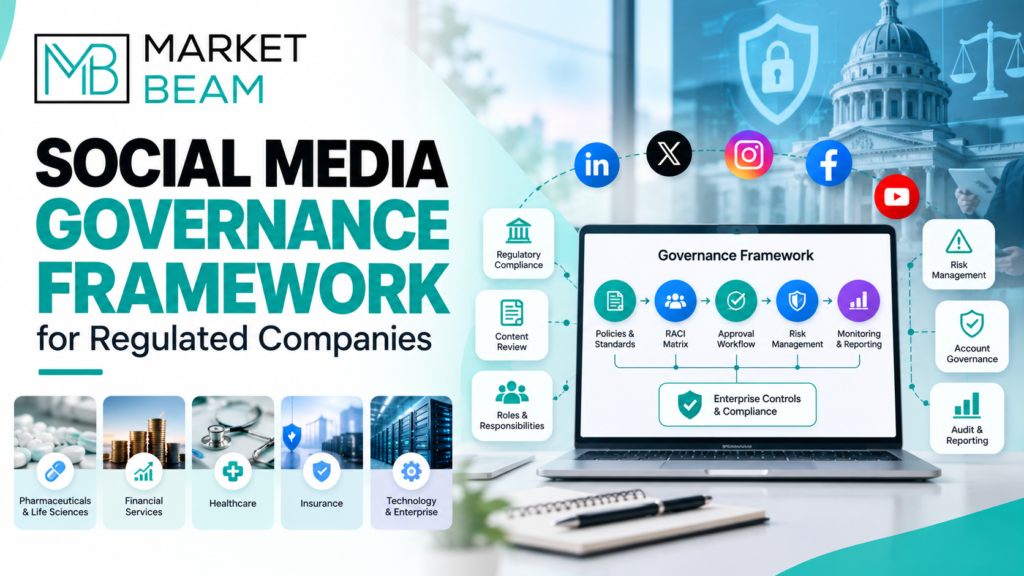
Organizations also rely heavily on social media governance software to centralize control across multiple teams, departments, and regions. Governance ensures that every piece of content follows corporate policies, legal requirements, and brand standards before publication.
Why Pharma Companies Need Advanced Social Media Management
The pharmaceutical industry operates under some of the strictest marketing regulations in the world. Every campaign, social post, patient awareness initiative, or physician communication must pass multiple review stages before publication.
This makes social media management for pharma significantly more complex than standard social media management.
Pharmaceutical marketers must ensure all claims are scientifically accurate, legally approved, and medically validated. Content often includes product references, dosage information, disclaimers, and safety-related communication that require regulatory oversight.
As pharma companies continue investing in pharma digital marketing, the need for automated approval workflows and centralized governance becomes increasingly important.
Understanding MLR Medical Legal Regulatory Workflows
One of the most critical processes in pharma marketing is the mlr medical legal regulatory review cycle. This workflow ensures that marketing materials are reviewed by medical experts, legal teams, and regulatory departments before being published.
Many organizations entering the pharma sector ask, what is mlr review and why it matters so much in regulated marketing environments.
An MLR review validates scientific accuracy, compliance adherence, legal safety, and ethical communication standards. Without a structured review process, organizations risk publishing misleading claims or violating healthcare regulations.
The mlr process typically involves multiple approval stages, version tracking, collaborative reviews, and documentation management. Traditional manual workflows create delays and inefficiencies, especially when teams operate across different locations.
This is why enterprises increasingly adopt digital pharma content approval systems that automate approvals, maintain audit trails, and simplify collaboration between medical, legal, and marketing teams.
Platforms like Veeva Systems’s Veeva PromoMats have become popular because they help life sciences organizations manage regulated content more efficiently. Solutions similar to veeva promomats support content lifecycle management, review automation, and compliance governance at scale.
The Evolution of Digital Marketing for Life Sciences
The healthcare and pharmaceutical sectors are undergoing rapid digital transformation. Organizations are expanding beyond traditional marketing methods and investing heavily in omnichannel engagement strategies.
Today, digital marketing for life sciences includes social campaigns, patient education, webinars, physician engagement programs, influencer collaborations, and employee advocacy initiatives.
At the same time, content marketing for life sciences is becoming more sophisticated and personalized. Enterprises are producing high-value educational content to build trust with healthcare professionals and patients.
However, scaling these initiatives requires advanced social media compliance software capable of handling regulatory complexity without slowing down marketing execution.
Companies that fail to modernize their compliance infrastructure often struggle with delayed campaigns, fragmented approvals, inconsistent messaging, and higher operational risk.
Healthcare Social Media Compliance Challenges
Healthcare organizations face additional compliance concerns because social communication may involve patient information, treatment discussions, and medical claims.
Maintaining healthcare social media compliance requires organizations to protect sensitive information while still delivering engaging digital experiences.
Hospitals, healthcare providers, biotech firms, and medical organizations must ensure that social media communication aligns with privacy laws, advertising regulations, and ethical communication standards.
This is why enterprise healthcare organizations increasingly rely on centralized social media compliance platforms that integrate governance, approvals, monitoring, and archiving into one secure ecosystem.
Compliance Requirements in Financial Services
Financial institutions also operate in highly regulated communication environments. Banks, investment firms, insurance providers, and wealth management companies must comply with FINRA and SEC regulations related to digital communication and advertising.
This has created growing demand for social media monitoring software for financial services that can detect compliance risks, track conversations, archive communication, and monitor employee activity across social channels.
Monitoring alone is not sufficient. Financial organizations also require advanced social media publishing software for financial services that includes approval routing, automated disclosures, audit logging, and centralized publishing controls.
One of the biggest priorities for compliance teams is maintaining consistency across distributed teams and branch offices. This is why many enterprises use approved content platforms for financial services compliance finra sec workflows.
These systems allow compliance officers to create pre-approved content libraries that employees and advisors can safely share without introducing legal risk.
The Rise of Employee Advocacy in Regulated Industries
Employee advocacy has become one of the most powerful digital marketing strategies for enterprise brands. Employees often generate significantly higher engagement and trust compared to branded corporate accounts.
However, advocacy in regulated industries requires strict governance and approval systems.
This is why analysts expect rapid growth in the best employee advocacy software 2026 market. Modern advocacy solutions include compliance automation, pre-approved content sharing, role-based permissions, analytics, and governance capabilities.
Instead of restricting employees, these platforms empower teams to participate in compliant brand promotion safely and efficiently.
Choosing the Best Social Media Management Tools for Financial Services 2025 2026
Financial organizations evaluating the best social media management tools for financial services 2026 are focusing on security, compliance automation, scalability, and workflow efficiency.
Traditional social media scheduling platforms are no longer sufficient for enterprise financial communication. Companies need systems capable of handling archiving requirements, supervisory reviews, risk detection, and regulatory reporting.
The future belongs to unified compliance-driven platforms that combine publishing, governance, monitoring, employee advocacy, analytics, and approval workflows into one centralized environment.
The Future of Social Media Marketing in the Pharmaceutical Industry
The role of social media marketing pharmaceutical industry strategies will continue expanding in 2025 and 2026. Pharma brands are increasingly using digital platforms to improve patient education, physician engagement, recruitment, and disease awareness initiatives.
However, regulatory expectations are also increasing alongside digital expansion.
Organizations that invest in scalable social media governance software and intelligent compliance systems will gain a competitive advantage by accelerating campaign execution while maintaining regulatory integrity.
Modern social media compliance software is no longer just a regulatory necessity. It has become a strategic business enabler for healthcare, pharma, and financial services organizations.
FAQs
What is social media compliance software?
Social media compliance software is a specialized platform designed to help regulated industries manage, monitor, approve, archive, and govern social media communication. These platforms ensure organizations comply with regulations such as FINRA, SEC, FDA, HIPAA, and other industry-specific guidelines.
Unlike standard scheduling tools, compliance-focused platforms include approval workflows, audit trails, content archiving, employee supervision, governance policies, and risk monitoring capabilities. They help organizations reduce compliance risks while maintaining efficient digital communication strategies.
What is MLR review in the pharmaceutical industry?
The mlr medical legal regulatory review process is a structured workflow used in the pharmaceutical industry to validate marketing and promotional content before publication.
Many marketers ask, what is mlr review because it plays a critical role in ensuring compliance and scientific accuracy. During the review process, medical teams verify scientific claims, legal teams assess legal risks, and regulatory teams ensure compliance with healthcare regulations.
The mlr process helps pharmaceutical organizations avoid misleading claims, regulatory violations, and reputational damage while maintaining accurate communication with healthcare professionals and patients.
Why do financial institutions need social media compliance platforms?
Financial institutions operate under strict communication regulations established by FINRA and SEC authorities. Every social media interaction, advertisement, and public communication may require supervision, archiving, and approval.
A modern social media compliance platform helps financial organizations automate approvals, monitor employee activity, archive communication records, and maintain audit trails.
Solutions such as social media monitoring software for financial services and social media publishing software for financial services help enterprises reduce legal risk while enabling scalable digital engagement.
How does social media governance software help enterprises?
Social media governance software centralizes control over content creation, approvals, publishing, and monitoring across enterprise teams.
It helps organizations enforce brand consistency, maintain compliance standards, reduce operational inefficiencies, and improve collaboration between marketing and compliance departments.
Governance platforms also provide visibility into content workflows, user permissions, policy enforcement, and approval history. This becomes especially important for healthcare, pharma, and financial organizations operating in heavily regulated environments.
What should companies look for in the best employee advocacy software 2025 2026?
When evaluating the best employee advocacy software 2026, organizations should prioritize compliance automation, scalability, security, analytics, and governance capabilities.
The ideal platform should include pre-approved content libraries, role-based permissions, approval workflows, employee engagement tracking, and centralized compliance management.
For regulated industries, employee advocacy tools must also integrate with broader social media compliance tools to ensure employees can safely share company-approved content without creating regulatory risk.