
Social media has transformed how organizations communicate with customers, prospects, healthcare professionals, investors, employees, and stakeholders. Platforms such as LinkedIn, Facebook, Instagram, X, and YouTube have become essential channels for brand visibility, thought leadership, customer engagement, and business growth. However, for organizations operating in highly regulated industries, social media presents a unique challenge. Every post, comment, employee share, campaign update, and customer interaction can create compliance risks if not properly governed.
Industries such as pharmaceuticals, life sciences, healthcare, biotechnology, financial services, banking, insurance, and medical devices operate under strict regulatory frameworks. These regulations are designed to protect consumers, ensure transparency, and maintain ethical communication standards. While marketing teams are expected to publish content quickly and consistently, compliance teams must ensure that every communication follows regulatory requirements and internal policies.
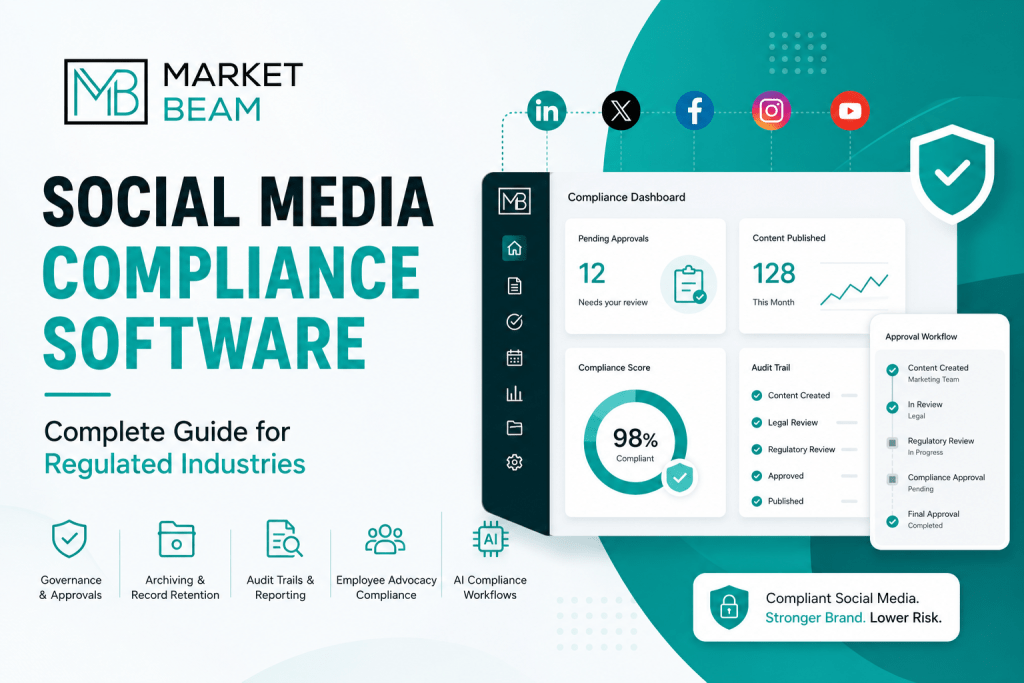
This growing tension between speed and compliance has made social media compliance software one of the most important technology investments for modern enterprises. Organizations can no longer rely on spreadsheets, email chains, manual approvals, and disconnected tools to manage compliance effectively. Instead, they require centralized platforms that enable governance, archiving, approvals, monitoring, reporting, and automation from a single environment.
As digital communication continues to expand in 2026, businesses that implement effective social media compliance strategies will be better positioned to reduce risk, improve efficiency, and maintain trust with regulators and customers alike.
Understanding Social Media Compliance Software
At its core, social media compliance software helps organizations ensure that every social media communication complies with applicable regulations, industry standards, and internal policies.
Unlike traditional social media management platforms that primarily focus on publishing and engagement, compliance-focused solutions are designed to provide governance and oversight throughout the entire content lifecycle. From content creation and review to publishing, archiving, monitoring, and reporting, these platforms create a structured environment that minimizes risk while supporting marketing objectives.
The need for compliance software has increased dramatically as organizations expand their digital presence. A single social media post can be viewed by thousands of people within minutes. If that content contains inaccurate claims, missing disclosures, misleading statements, or regulatory violations, the consequences can be significant.
Modern compliance platforms help organizations maintain control while allowing marketing teams to operate efficiently. They create a framework where innovation and compliance can coexist rather than compete.
Why Social Media Compliance Matters More Than Ever
The regulatory landscape surrounding digital communications continues to evolve. Organizations must navigate requirements from regulatory bodies such as the FDA, FINRA, SEC, HIPAA, GDPR, and numerous industry-specific authorities.
In the pharmaceutical industry, companies must ensure that product claims are accurate and balanced. Financial institutions must comply with strict communication and record-keeping requirements. Healthcare organizations must protect patient privacy while maintaining transparent communication practices.
At the same time, customer expectations have changed. Audiences expect brands to communicate frequently, respond quickly, and maintain active social media presences. This creates pressure on marketing teams to publish content faster than ever before.
Without proper controls, organizations expose themselves to significant risks. Regulatory penalties, legal action, reputational damage, audit failures, and loss of customer trust can all result from non-compliant social media activity.
This challenge has driven demand for advanced social media compliance software that enables organizations to maintain regulatory oversight without slowing business growth.
The Role of Social Media Governance Software
One of the most critical components of a compliance strategy is social media governance software. Governance establishes the rules, responsibilities, and controls that guide how social media is used within an organization.
Many compliance failures occur because employees are unsure about policies or because organizations lack consistent oversight. Governance software helps eliminate ambiguity by creating clear structures around content creation, approvals, user permissions, and publishing activities.
A strong governance framework ensures that only authorized users can publish content. It establishes approval chains for sensitive communications and creates accountability throughout the organization.
As organizations scale their social media efforts across departments, regions, and business units, governance becomes increasingly important. Without a centralized governance model, compliance risks multiply rapidly.
Organizations seeking to strengthen their compliance programs should also explore dedicated solutions for social media governance software, which can further enhance policy enforcement and oversight.
Why Approval Workflows Are Essential
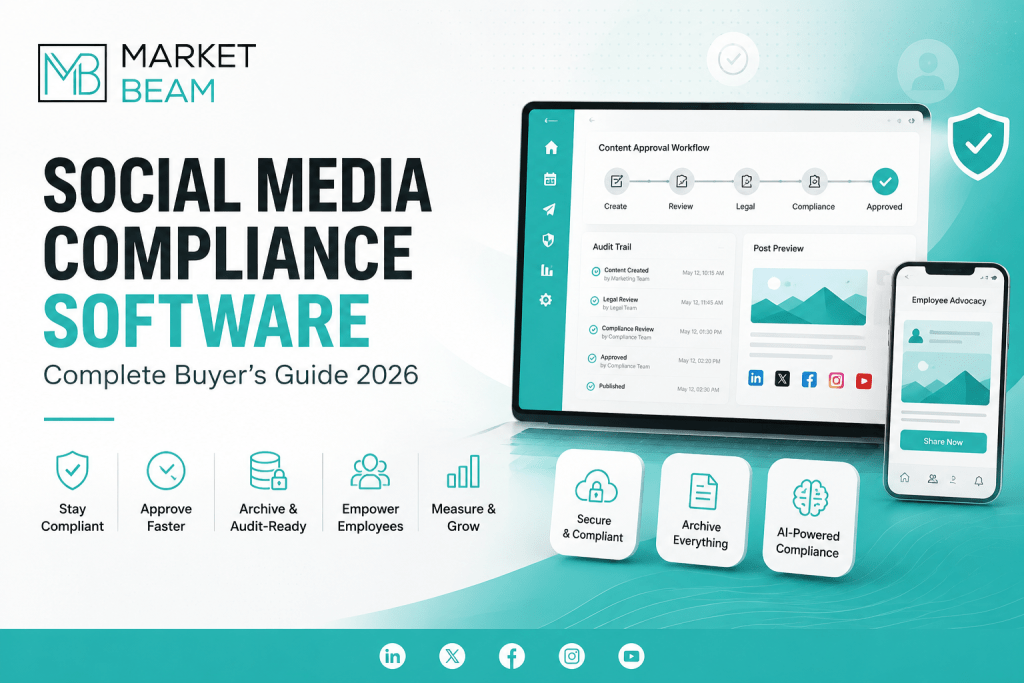
Every regulated organization needs a structured review process before content is published. This is where a social media approval workflow becomes indispensable.
Approval workflows ensure that content is reviewed by the appropriate stakeholders before it reaches the public. Marketing teams may create content, but compliance, legal, medical, regulatory, or executive reviewers often need to approve communications before publication.
Manual approval processes often create bottlenecks. Email chains become difficult to track, approvals get lost, and version control becomes problematic. These inefficiencies slow campaigns and increase compliance risks.
A modern social media approval workflow streamlines the review process by centralizing approvals within a single system. Stakeholders can review content, provide feedback, request revisions, and approve communications without relying on disconnected tools.
Organizations that implement structured approval workflows reduce human error while improving operational efficiency.
For companies in life sciences and pharmaceuticals, integrating approval workflows with MLR review processes creates additional compliance safeguards. This is particularly relevant for organizations exploring digital MLR review solutions and modern MLR approval software.
The Importance of Social Media Archiving Software
Regulatory compliance extends beyond publishing controls. Organizations must also maintain accurate records of their communications.
This requirement has increased demand for social media archiving software across regulated industries.
Many regulations require organizations to retain communication records for several years. These records must be accessible, searchable, and auditable when requested by regulators or auditors.
Social media archiving software automatically captures posts, comments, edits, deletions, shares, direct interactions, and engagement activity. This creates a complete historical record of social media communications.
Archiving is particularly important in industries where regulatory investigations, litigation, or compliance audits may occur. Organizations that cannot produce required records face significant risks.
A comprehensive archiving strategy helps ensure transparency, accountability, and regulatory readiness.
Businesses interested in strengthening their retention policies should also explore dedicated social media archiving software solutions that support long-term compliance requirements.
Understanding the Value of Social Media Audit Trails
One of the most overlooked aspects of compliance is documentation.
Regulators often ask questions such as who created a piece of content, who approved it, when it was published, and whether changes were made after approval. Without proper records, organizations may struggle to answer these questions.
A comprehensive social media audit trail provides visibility into every action taken within the platform.
Audit trails document content creation, approvals, revisions, publishing activity, user actions, and administrative changes. This information creates a transparent record that supports internal governance and regulatory compliance.
Organizations with robust audit trails are better prepared for audits, investigations, and regulatory reviews.
The value of a strong social media audit trail extends beyond compliance. It also supports operational improvements by helping teams identify workflow inefficiencies and improve accountability.
Companies seeking deeper audit readiness should consider implementing dedicated solutions focused on social media audit trail management and reporting.
How AI Compliance Workflows Are Transforming Compliance
Artificial intelligence is reshaping compliance management across industries.
Traditional compliance reviews rely heavily on manual processes. Compliance teams review content line by line, identify potential risks, and provide feedback before approval. While effective, this approach can become difficult to scale as content volumes increase.
This challenge has accelerated the adoption of AI compliance workflows.
AI-powered systems can analyze content before human review begins. These systems identify policy violations, flag risky language, detect missing disclosures, and highlight potential compliance concerns.
By automating routine reviews, organizations can significantly reduce review times while maintaining regulatory oversight.
AI compliance workflows also improve consistency. Human reviewers may interpret policies differently, while AI systems apply rules consistently across large volumes of content.
As AI technology continues to mature, organizations are increasingly incorporating AI compliance workflows into their broader governance strategies.
Companies interested in future-proofing their compliance programs should explore how AI compliance workflows can improve speed, accuracy, and scalability.
Employee Advocacy and Compliance
Employee advocacy has emerged as one of the most effective methods for expanding social media reach. Content shared by employees often generates significantly higher engagement than content published through corporate channels alone.
However, employee advocacy introduces additional compliance challenges.
Organizations must ensure that employee-shared content complies with regulatory requirements, disclosure obligations, and internal policies. Without proper oversight, advocacy programs can increase compliance exposure.
This is why many organizations are integrating employee advocacy initiatives into their broader compliance strategies.
Compliance-focused employee advocacy programs provide pre-approved content, track sharing activity, maintain audit records, and enforce publishing guidelines.
Organizations interested in scaling advocacy safely should explore employee advocacy software and employee advocacy compliance strategies that align with regulatory requirements.
Industry-Specific Compliance Considerations
Different industries face different compliance challenges.
Pharmaceutical companies must ensure that promotional content complies with regulatory requirements while maintaining fair balance and accurate representations of product information.
Healthcare organizations must protect patient information and maintain privacy standards.
Financial institutions must comply with communication retention rules, disclosure requirements, and record-keeping obligations.
Insurance providers must ensure that marketing communications accurately represent products and services.
These unique requirements make industry-specific compliance solutions increasingly valuable.
Organizations operating in regulated sectors often benefit from platforms specifically designed for life sciences, healthcare, financial services, and other compliance-driven environments.
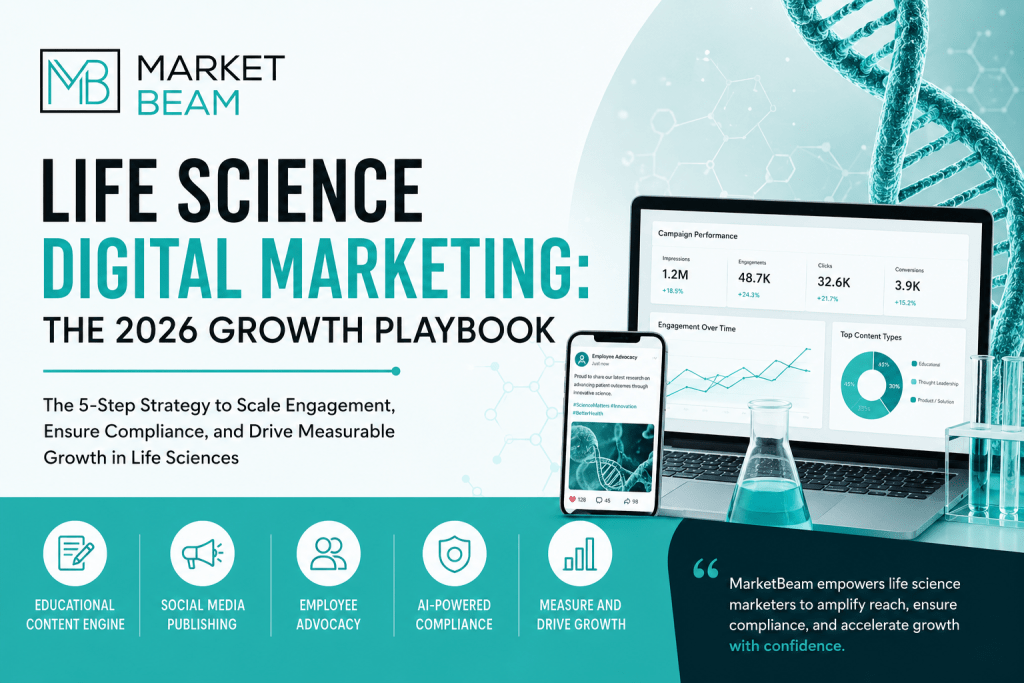
Businesses looking to strengthen their compliance programs should also explore resources focused on pharma digital marketing, pharmaceutical social media marketing, FDA-compliant social media, and life sciences social media software.
Choosing the Right Social Media Compliance Platform
Selecting the right social media compliance platform requires careful evaluation.
Organizations should consider whether the platform supports approval workflows, governance controls, archiving, audit trails, monitoring, reporting, and AI-powered automation.
Scalability is another important factor. As social media activity grows, compliance systems must support increasing content volumes without creating operational bottlenecks.
Integration capabilities should also be evaluated. The best platforms integrate with marketing, CRM, compliance, and content management systems to create seamless workflows.
Organizations should prioritize solutions that balance compliance requirements with marketing agility.
The most effective social media compliance platforms enable teams to move faster while maintaining confidence that communications remain compliant.
The Future of Social Media Compliance Software
The future of compliance will be driven by automation, artificial intelligence, predictive monitoring, and intelligent governance systems.
Organizations will increasingly rely on AI-powered compliance reviews, automated approval routing, real-time risk detection, advanced archiving technologies, and intelligent reporting capabilities.
Regulatory expectations will continue to evolve, making proactive compliance strategies even more important.
Businesses that invest in modern social media compliance software today will be better prepared to navigate future regulatory changes while maintaining competitive advantages.
The organizations that succeed in 2026 and beyond will be those that view compliance not as a barrier to growth but as a foundation for sustainable digital engagement.
Frequently Asked Questions
What is social media compliance software?
Social media compliance software helps organizations manage, monitor, approve, archive, and govern social media communications while ensuring compliance with regulations and internal policies.
Why is social media archiving software important?
Social media archiving software automatically captures and stores communications to meet regulatory retention requirements and support audits or investigations.
What is a social media approval workflow?
A social media approval workflow is a structured review process that ensures content is approved by relevant stakeholders before publication.
How does a social media audit trail support compliance?
A social media audit trail records user actions, approvals, revisions, and publishing activities, providing transparency and accountability for audits and investigations.
What are AI compliance workflows?
AI compliance workflows use artificial intelligence to identify compliance risks, flag policy violations, and automate parts of the content review process.
Who needs social media compliance software?
Organizations operating in regulated industries such as pharmaceuticals, healthcare, life sciences, banking, insurance, and financial services benefit most from social media compliance software.