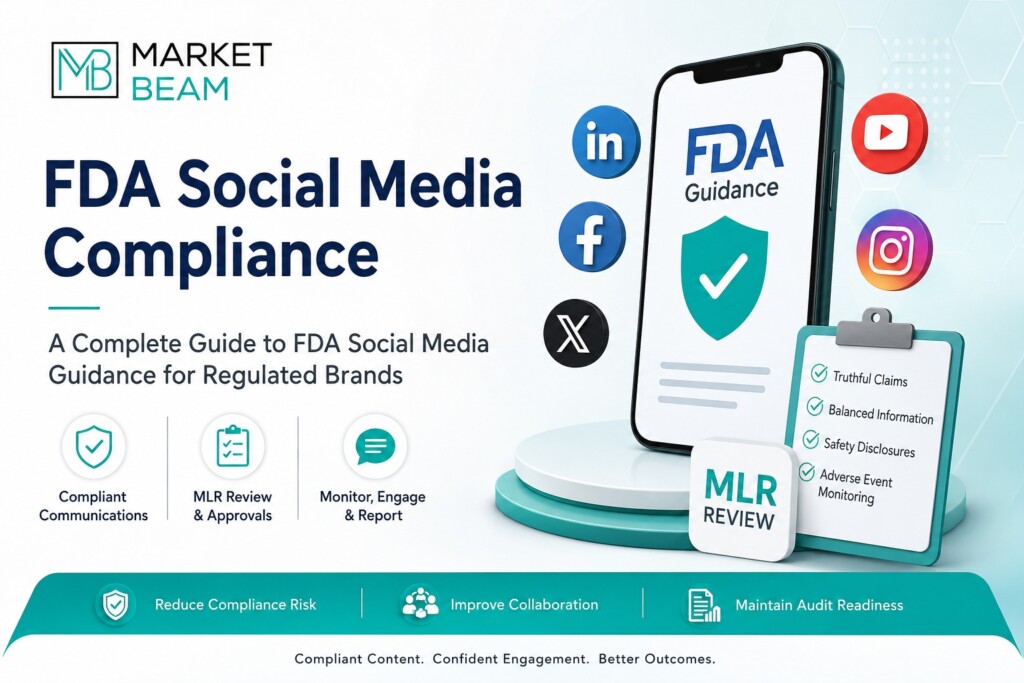
Social media has become an essential communication channel for pharmaceutical, biotechnology, and healthcare organizations. Companies use platforms such as LinkedIn, Facebook, X, YouTube, and Instagram to educate healthcare professionals, engage patients, promote disease awareness, and share corporate updates. However, unlike many other industries, life sciences organizations must operate within strict regulatory requirements. Understanding FDA social media guidance is critical for ensuring every digital communication complies with regulatory expectations while maintaining public trust.
The U.S. Food and Drug Administration (FDA) provides guidance that helps pharmaceutical and medical device companies communicate responsibly across digital channels. From promotional claims and risk disclosures to user-generated content and adverse event reporting, every social media interaction must be carefully reviewed before publication.
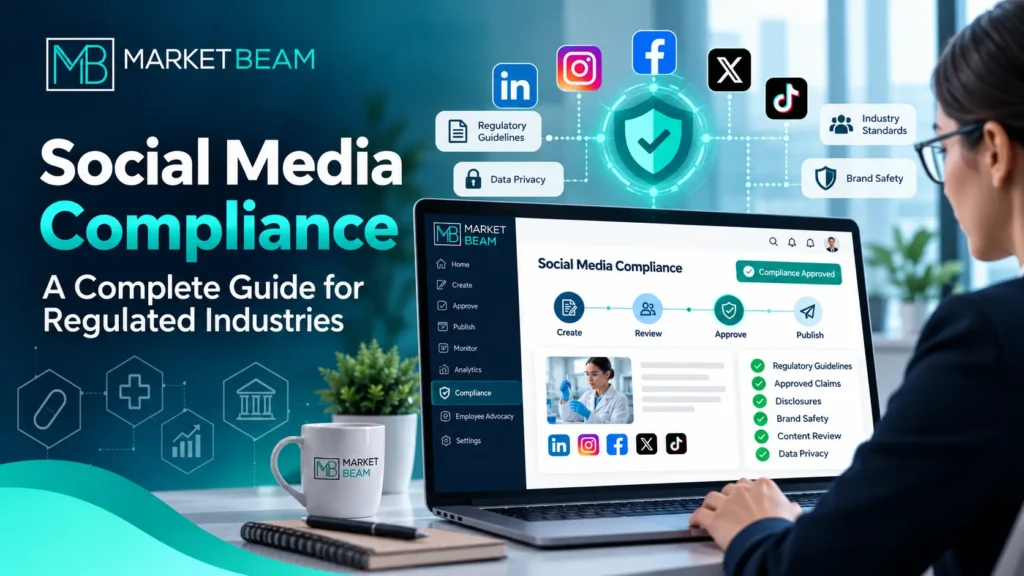
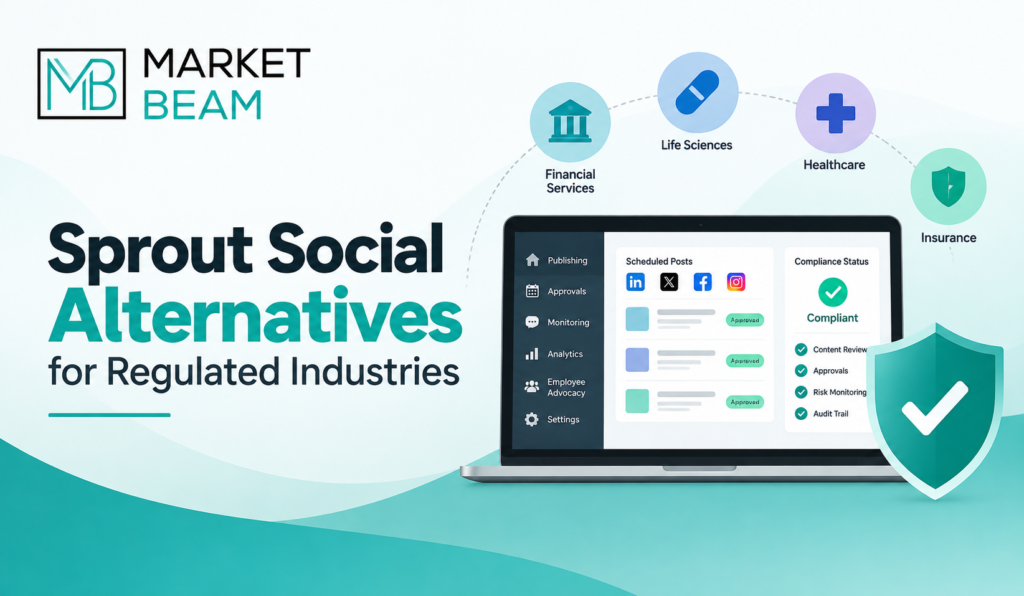
MarketBeam helps regulated organizations simplify compliant social media management by combining approval workflows, collaboration, content governance, and monitoring into one enterprise platform. With intelligent automation and centralized oversight, businesses can confidently manage digital communications while supporting regulatory compliance.
What Is FDA Social Media Guidance?
FDA social media guidance refers to the FDA’s recommendations and regulatory expectations for how pharmaceutical, biotechnology, and medical device companies communicate on digital and social media platforms. The guidance helps organizations ensure that promotional communications are truthful, balanced, and supported by appropriate risk information.
Although social media channels continue to evolve, the core regulatory principles remain consistent. Any promotional content must present benefits and risks fairly, avoid misleading claims, and provide accurate information that allows healthcare professionals and patients to make informed decisions.
Following FDA social media guidance also means establishing internal governance processes that support content review, approval, documentation, and ongoing monitoring.
For organizations operating in regulated industries, compliance is not limited to advertisements. Educational posts, videos, infographics, employee advocacy content, and responses to public comments may also require regulatory oversight.
Why FDA Social Media Guidance Matters
Digital communication offers tremendous opportunities for pharmaceutical companies, but it also introduces significant compliance risks.
An inaccurate statement, incomplete safety information, or misleading promotional claim can expose organizations to regulatory action, reputational damage, and loss of public confidence. Understanding FDA social media guidance helps businesses reduce these risks while maintaining transparent communication with healthcare professionals and patients.
Organizations that follow structured compliance processes are better equipped to publish accurate content, respond appropriately to public interactions, and maintain complete documentation for internal audits.
Strong governance also supports collaboration between marketing, legal, medical, and regulatory teams throughout the content lifecycle.
Understanding FDA Promotional Labeling
One of the most important concepts within FDA social media guidance is FDA promotional labeling.
Promotional labeling includes many forms of company-controlled communication beyond traditional packaging. Digital advertisements, downloadable brochures, sponsored content, social media graphics, videos, and other promotional materials may all fall within regulatory oversight depending on their purpose and presentation.
Organizations should ensure that promotional content presents balanced information, accurately describes approved indications, includes appropriate safety information, and avoids unsupported claims.
As social media content becomes increasingly visual and interactive, marketing teams must work closely with compliance specialists to review every promotional asset before publication.
Pharmaceutical Advertising Rules in Digital Marketing
Digital marketing does not eliminate regulatory obligations. In fact, online communication often increases the need for careful review because information spreads rapidly across multiple platforms.
Pharmaceutical advertising rules require companies to ensure promotional messages remain truthful, balanced, and supported by scientific evidence. Claims about product effectiveness should never omit material risk information or exaggerate clinical outcomes.
Marketing teams should also avoid making comparisons that cannot be substantiated or promoting uses that have not received regulatory approval.
Following FDA social media guidance enables organizations to create educational and promotional content that informs audiences without creating unnecessary compliance risks.
Common Social Media Compliance Risks
| Compliance Area | Potential Risk | Recommended Approach |
| Promotional Claims | Unsupported or misleading statements | Verify all claims through medical and regulatory review |
| Safety Information | Missing or incomplete risk disclosures | Include balanced benefit and risk information |
| User Comments | Unreported adverse events | Monitor conversations and escalate appropriately |
| Visual Content | Misleading graphics or imagery | Review creative assets before publishing |
| Product Discussions | Off-label communication | Restrict content to approved indications |
| Campaign Approvals | Inconsistent review process | Standardize approval workflows |
The Importance of MLR Review
A structured MLR review process forms the foundation of compliant pharmaceutical marketing.
MLR stands for Medical, Legal, and Regulatory review. Before content is published, representatives from these departments evaluate whether every communication meets scientific, legal, and regulatory standards.
Marketing teams focus on messaging and audience engagement, medical reviewers verify scientific accuracy, legal teams assess regulatory risk, and regulatory specialists ensure alignment with FDA social media guidance.
An efficient MLR review process reduces compliance risk while allowing organizations to publish content more confidently and consistently.
As marketing volumes increase, centralized review workflows become essential for maintaining efficiency without compromising regulatory oversight.
Regulated Social Media Requires Structured Governance
Managing regulated social media involves much more than scheduling posts.
Organizations must establish clear governance policies covering content creation, approvals, publication, monitoring, archiving, adverse event reporting, and user engagement.
Every stakeholder should understand their responsibilities throughout the content lifecycle. Standardized workflows reduce delays while ensuring every communication receives the appropriate level of review.
Technology also plays an important role. Enterprise platforms help organizations automate approvals, maintain audit trails, centralize documentation, and monitor conversations across multiple social networks.
By aligning governance processes with FDA social media guidance, businesses strengthen compliance while improving operational efficiency.
Common Compliance Challenges
Many pharmaceutical organizations continue to face challenges when managing digital communications.
Marketing teams often work under tight deadlines, while compliance reviewers must carefully evaluate every piece of content. Managing multiple campaigns across several social platforms can increase complexity and slow publication timelines.
Organizations also struggle with monitoring public comments, identifying adverse events, maintaining documentation, and ensuring that updated regulatory requirements are consistently applied across global teams.
Implementing standardized workflows, centralized collaboration, and intelligent monitoring significantly reduces these challenges while supporting long-term regulatory compliance.
FDA Digital Marketing Compliance Best Practices
Achieving strong FDA digital marketing compliance requires more than reviewing content before it goes live. Organizations should establish standardized processes that govern every stage of the content lifecycle, from planning and creation to approval, publishing, monitoring, and archiving.
A successful compliance program begins with documented policies that define roles and responsibilities across marketing, medical, legal, and regulatory teams. Every employee involved in social media should understand how FDA social media guidance applies to digital communications and when content requires additional review.
Training is equally important. Regular compliance education helps teams stay informed about evolving regulations, internal policies, and best practices for creating compliant digital campaigns. Organizations should also maintain detailed records of approvals and revisions to support audits and regulatory inspections.
By embedding FDA digital marketing compliance into daily marketing operations, businesses reduce risk while improving efficiency and collaboration.
Managing User-Generated Content and Adverse Events
Social media creates valuable opportunities for engagement, but it also introduces new compliance responsibilities.
Patients, caregivers, and healthcare professionals frequently comment on pharmaceutical posts, share personal experiences, or ask questions about products. Some comments may contain adverse event information that requires timely documentation and escalation.
Following FDA social media guidance means implementing processes to monitor conversations, identify reportable events, and ensure appropriate follow-up. Organizations should establish clear escalation procedures so marketing teams know when to involve pharmacovigilance, medical affairs, or regulatory specialists.
User-generated content should also be reviewed to identify misinformation, unsupported product claims, or discussions involving off-label use. Active monitoring helps organizations maintain accurate public communications while protecting patient safety.
Build a Compliance-First Workflow
A structured workflow minimizes delays while improving regulatory confidence.
The content creation process should begin with strategic planning and clear messaging objectives. Draft content should then move through a standardized MLR review process, allowing medical, legal, and regulatory experts to evaluate scientific accuracy, promotional balance, and compliance with pharmaceutical advertising rules.
After approval, content can be scheduled for publication using secure workflows that preserve audit trails and approval records. Continuous monitoring after publication ensures organizations remain responsive to public engagement, emerging compliance risks, and potential adverse events.
This end-to-end process supports consistent implementation of FDA social media guidance across every campaign.
FDA Social Media Compliance Workflow
| Workflow Stage | Compliance Objective | Business Benefit |
| Content Planning | Align messaging with approved claims | Consistent communication |
| Content Creation | Develop balanced promotional materials | Improved content quality |
| MLR Review | Verify scientific, legal, and regulatory accuracy | Reduced compliance risk |
| Approval & Publishing | Publish only approved content | Controlled communications |
| Social Monitoring | Track comments and adverse events | Faster issue identification |
| Audit & Reporting | Maintain documentation and records | Strong regulatory readiness |
Why MarketBeam Supports FDA Social Media Compliance
Managing compliant social media at enterprise scale requires technology that simplifies governance without slowing marketing operations.
MarketBeam provides a centralized platform designed to help regulated organizations align their digital communications with FDA social media guidance. Marketing, compliance, and regulatory teams can collaborate within a single environment, reducing manual coordination while improving visibility across every campaign.
The platform supports structured approval workflows that complement the MLR review process, helping organizations ensure that promotional content is reviewed before publication. Centralized collaboration also minimizes version-control issues and keeps stakeholders aligned throughout the content lifecycle.
MarketBeam enables organizations to strengthen FDA digital marketing compliance through workflow automation, content governance, approval tracking, and comprehensive audit trails. Teams can monitor conversations across multiple social channels, identify potential compliance issues, and respond more efficiently while maintaining documentation.
By supporting regulated social media operations with scalable workflows and intelligent automation, MarketBeam helps pharmaceutical, biotechnology, healthcare, and medical device organizations reduce compliance risk while improving marketing productivity.
Conclusion
As digital engagement continues to grow across the healthcare and life sciences industries, organizations must balance innovation with regulatory responsibility. Understanding and implementing FDA social media guidance is essential for creating trustworthy, compliant, and effective digital communications.
By following established pharmaceutical advertising rules, implementing a structured MLR review process, strengthening FDA digital marketing compliance, and managing regulated social media through standardized governance, organizations can protect both their reputation and their audiences.
MarketBeam empowers regulated organizations with enterprise-grade collaboration, approval workflows, monitoring, and automation that simplify compliant social media management. With the right technology and governance framework, businesses can confidently engage audiences while meeting regulatory expectations.
Connect With Us
Ready to simplify compliant social media management for your regulated organization?
Sales: sales@marketbeam.io
Tech Support: support@marketbeam.io
Discover how MarketBeam helps marketing, medical, legal, and regulatory teams collaborate more effectively while supporting FDA social media guidance across every stage of the content lifecycle.
Frequently Asked Questions
1. What is FDA social media guidance?
FDA social media guidance provides recommendations for pharmaceutical, biotechnology, and medical device companies on creating compliant digital communications, promotional content, and social media engagement.
2. What is FDA digital marketing compliance?
FDA digital marketing compliance refers to ensuring that online marketing activities follow FDA regulations, present balanced information, include appropriate risk disclosures, and avoid misleading promotional claims.
3. Why is MLR review important?
The MLR review process ensures that marketing content is medically accurate, legally compliant, and aligned with regulatory requirements before publication, reducing compliance risks.
4. What are pharmaceutical advertising rules?
Pharmaceutical advertising rules require promotional communications to be truthful, balanced, scientifically supported, and consistent with approved product labeling while providing appropriate safety information.
5. How can companies manage regulated social media effectively?
Organizations should implement standardized approval workflows, monitor conversations, document compliance activities, train employees regularly, and use enterprise platforms that support governance and collaboration.
6. How does MarketBeam help regulated industries?
MarketBeam provides centralized content management, approval workflows, audit trails, collaboration tools, monitoring capabilities, and automation that help organizations maintain compliance with FDA social media guidance while improving operational efficiency.