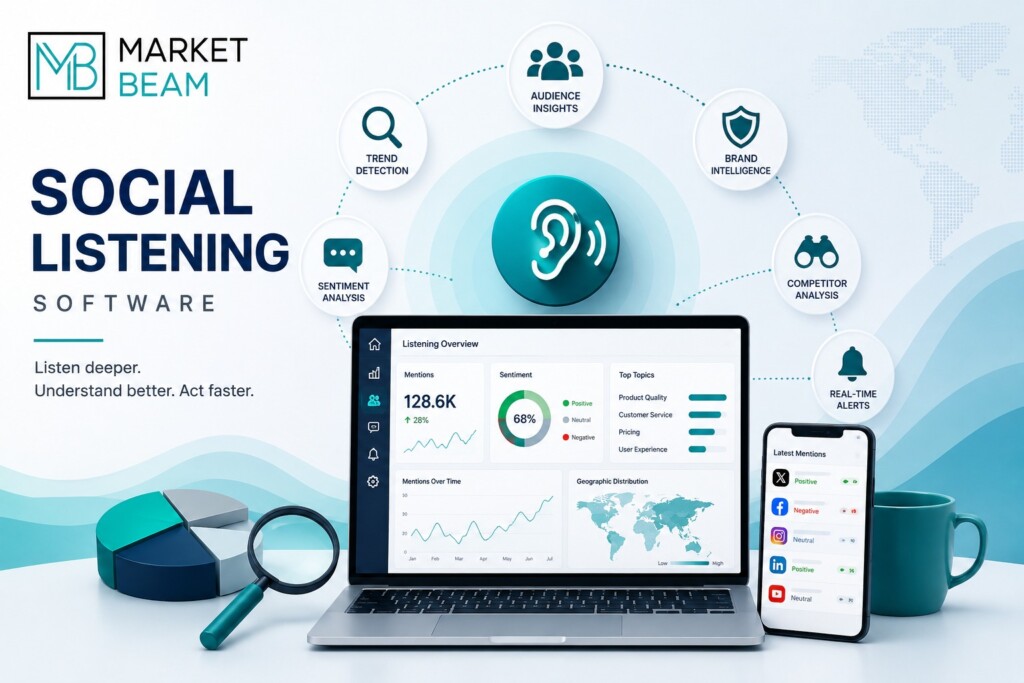
Social media has become a critical source of customer feedback, market trends, brand conversations, and competitive intelligence. For enterprise organizations, simply tracking mentions is no longer enough. Marketing and communications teams need to understand what audiences are saying, why conversations are changing, and how those insights can influence business decisions. This is where social listening software becomes valuable.
Modern social listening software collects and analyzes conversations across social networks and other digital channels, helping organizations identify customer sentiment, emerging topics, brand perception, and competitor activity. Instead of manually searching through thousands of posts, teams can use automated analytics and centralized dashboards to turn large volumes of conversations into actionable insights.
For regulated organizations, the value extends further. A structured listening solution can support governance, escalation workflows, compliance reviews, and reputation management while helping teams respond to important conversations efficiently.
MarketBeam brings social media management, analytics, governance, and intelligent listening capabilities together to help enterprise teams manage digital conversations from a centralized environment.
What Is Social Listening Software?
Social listening software is technology designed to monitor, collect, organize, and analyze online conversations related to specific brands, products, competitors, campaigns, industries, or topics.
Unlike basic social monitoring, which primarily identifies mentions and interactions, social listening software analyzes conversation patterns to uncover broader insights. These may include changes in audience sentiment, emerging customer concerns, campaign reactions, industry trends, and competitor positioning.
An enterprise platform can collect information from social networks, online communities, blogs, review websites, news sources, and other relevant digital channels. Artificial intelligence can then categorize conversations and identify patterns that would be difficult to detect through manual research.
This makes social listening software useful across multiple departments. Marketing teams can evaluate campaign performance, customer service teams can identify recurring issues, product teams can discover customer needs, and leadership can monitor changes in brand perception and market conditions.
Why Enterprises Need Social Listening Software
Enterprise organizations operate across multiple markets, products, brands, and social platforms. This creates a significant amount of digital conversation that is difficult to manage manually.
Implementing social listening software gives teams centralized visibility into these conversations. Instead of relying on individual searches or disconnected reports, organizations can monitor relevant topics continuously and identify important changes as they occur.
Marketing teams can use insights to improve messaging and campaigns. Communications teams can monitor reputation and identify potential issues early. Product teams can analyze feedback to support product development, while executives can use market intelligence to inform strategic planning.
For regulated industries, listening capabilities can also support structured escalation. Conversations involving sensitive customer concerns, compliance issues, or reputational risks can be routed to the appropriate teams for review.
The result is a more proactive approach to digital communication. Organizations are not simply reacting to individual mentions; they are using conversation data to understand broader business trends.
Essential Features of Social Listening Software
Not every social listening software platform provides the same level of functionality. Enterprise teams should evaluate solutions based on data coverage, intelligence, scalability, workflows, and governance.
A strong platform should provide comprehensive data sources so organizations can monitor conversations across the channels that matter to their audiences. Social networks alone may not provide a complete picture, making coverage across blogs, forums, reviews, and news sources valuable.
Another important capability is listening analytics. Organizations should be able to analyze conversation volume, topics, sentiment, audience behavior, and trends through clear reports and visualizations.
A centralized monitoring dashboard makes these insights easier to understand by bringing important metrics and conversations into one interface. Teams can quickly identify changes in brand perception or emerging issues without switching between multiple systems.
Real-time alerting is also valuable for enterprise teams. Instead of waiting for scheduled reports, users can receive notifications when important keywords, sentiment changes, or unusual conversation spikes occur.
Social Intelligence Software and Business Insights
Modern social intelligence software takes listening beyond basic monitoring by connecting digital conversations with broader business questions.
For example, a marketing team may want to understand why a campaign generated negative reactions. A social intelligence platform can analyze the conversations, identify recurring themes, and reveal whether the issue relates to messaging, pricing, product expectations, or customer experience.
Similarly, executives may want to understand how their brand compares with competitors. By combining listening data with competitive analysis, organizations can identify changes in market perception and discover potential opportunities.
The value of social intelligence software therefore comes from interpretation rather than data collection alone. Enterprise teams need actionable insights that can influence campaigns, products, customer experience, and strategic decisions.
Understanding Data Sources
The quality of social listening software depends heavily on the breadth and relevance of its data sources.
Social networks provide valuable conversations, but customers also share opinions through online forums, review websites, blogs, digital publications, and other communities. A platform with broader data sources can provide a more complete view of brand and industry conversations.
Organizations should evaluate whether a platform covers the channels most relevant to their audiences and markets. Global enterprises may also require multilingual monitoring and regional coverage.
Data quality is equally important. More information does not necessarily mean better intelligence. Effective software should filter irrelevant conversations, organize results, and prioritize information based on business relevance.
For regulated organizations, data collection should also be managed responsibly, with appropriate governance and consideration of applicable privacy requirements.
Key Features to Evaluate
| Feature | Why It Matters |
| Data sources | Provides broader visibility into digital conversations |
| Listening analytics | Turns conversations into actionable insights |
| Monitoring dashboard | Centralizes important metrics and trends |
| Alerting | Helps teams identify important changes quickly |
| Social intelligence software | Supports deeper business analysis |
| AI capabilities | Automates classification and pattern detection |
Common Challenges With Social Listening Software
Choosing and implementing social listening software can present several challenges. One of the biggest is information overload. Enterprise brands may generate thousands of conversations across multiple markets, making it difficult for teams to determine which discussions require attention.
Another challenge is data interpretation. Sarcasm, industry terminology, slang, and multilingual conversations can make automated analysis complex. Organizations should therefore evaluate how effectively a platform combines artificial intelligence with meaningful contextual analysis.
Integration can also become an issue. Enterprises often use separate CRM, analytics, customer service, and marketing platforms. Social listening technology should fit into these existing workflows rather than create another isolated data source.
Finally, governance and security should not be overlooked. Organizations need appropriate user permissions, documented workflows, and escalation procedures to ensure listening insights are handled responsibly.
A carefully selected social listening software solution can overcome these challenges by combining comprehensive data, intelligent analytics, centralized monitoring, and enterprise workflows.
Monitoring Dashboard and Listening Analytics
A centralized monitoring dashboard makes it easier for enterprise teams to understand large volumes of social and digital conversations. Instead of reviewing individual mentions across multiple platforms, teams can view important trends, conversation volumes, sentiment, engagement, and brand activity in one place.
An effective monitoring dashboard should provide customizable views for different departments. Marketing teams may focus on campaign performance, while communications teams monitor reputation and executives review broader market trends.
Strong listening analytics add another layer of value by turning raw conversations into measurable insights. Teams can analyze sentiment, conversation trends, audience behavior, topics, and competitor activity to understand what is influencing their market.
For regulated organizations, dashboards can also help provide visibility into conversations that may require escalation or internal review. Centralized reporting improves collaboration because different stakeholders can work from the same information rather than relying on disconnected reports.
Real-Time Alerting for Important Conversations
Enterprise teams cannot manually review every online conversation. Alerting helps organizations identify important events as they happen.
A well-designed social listening software platform can trigger alerts when there is a sudden increase in mentions, negative sentiment, competitor activity, or conversations around specific keywords. These alerts allow teams to investigate potential issues before they become larger reputation or customer experience problems.
For example, a sudden increase in negative product conversations can alert customer service and communications teams to investigate the underlying issue. Similarly, a rapid increase in competitor mentions may indicate an important market development.
Effective alerting should be customizable so teams can establish thresholds based on brand, topic, region, sentiment, or business priority. This prevents teams from receiving unnecessary notifications while ensuring high-value conversations receive timely attention.
Enterprise Use Cases for Social Listening Software
The applications of social listening software extend across the enterprise. Marketing teams use listening data to understand campaign reactions, identify content opportunities, and measure brand perception.
Customer experience teams can discover recurring complaints and identify areas where products or services need improvement. Product teams can analyze conversations for feature requests, usability issues, and customer expectations.
Corporate communications teams use social listening software to monitor reputation and identify emerging issues that could affect the organization. Sales teams can also use market conversations to understand customer needs and identify potential opportunities.
In regulated industries, listening can support governance and escalation processes. Relevant conversations can be routed to legal, compliance, regulatory, or communications teams when they require additional review.
This cross-functional value makes social listening more than a marketing activity. It becomes an enterprise intelligence capability that supports better decisions across departments.
How to Select the Right Social Listening Software
Selecting the right social listening software requires more than comparing feature lists. Enterprises should first define their business objectives and identify the conversations they need to monitor.
Data coverage should be one of the first evaluation criteria. Organizations should verify whether the platform supports the social networks, forums, review sites, blogs, and other data sources relevant to their customers and industry.
Next, evaluate the quality of listening analytics. A useful platform should provide clear insights into sentiment, topics, conversation trends, audience behavior, and competitive activity.
The monitoring dashboard should be easy to customize and provide relevant information to different teams. Marketing, communications, customer service, and leadership may all require different views.
Organizations should also evaluate alerting, workflow capabilities, integrations, user permissions, reporting, scalability, and AI functionality.
For regulated companies, governance and security are particularly important. The platform should support appropriate access controls, documented workflows, and processes that help teams manage sensitive conversations responsibly.
Social Listening Software Selection Checklist
| Evaluation Area | What Enterprises Should Look For |
| Data sources | Broad and relevant digital channel coverage |
| Monitoring dashboard | Customizable views and centralized reporting |
| Listening analytics | Sentiment, trends, topics, and audience analysis |
| Alerting | Real-time notifications for important conversations |
| AI capabilities | Automated classification and intelligent insights |
| Integrations | Compatibility with existing enterprise systems |
| Governance | Permissions, workflows, and compliance controls |
| Scalability | Support for multiple brands, regions, and teams |
Social Listening Software for Regulated Organizations
Regulated organizations need to consider governance and compliance when implementing social listening software. Monitoring should be aligned with organizational policies and applicable privacy requirements.
Teams should establish clear procedures for how information is collected, analyzed, shared, and escalated. Access should be limited according to user responsibilities, while sensitive conversations should be routed to the appropriate teams.
For example, a customer complaint may require customer service attention, while a regulatory concern may need legal or compliance review. Clear workflows ensure these conversations do not become lost between departments.
Audit-ready reporting can also help organizations demonstrate how listening activities are managed. Combining technology with a documented governance framework creates a more consistent approach to enterprise listening.
How MarketBeam Supports Social Listening
MarketBeam helps enterprise organizations turn digital conversations into actionable intelligence through centralized social media management, analytics, governance, and collaboration.
The platform supports enterprise social listening software requirements by helping teams monitor conversations, understand audience behavior, evaluate brand performance, and identify important market developments.
Marketing teams can use centralized listening analytics to understand campaign and audience trends. Communications teams can use a monitoring dashboard to maintain visibility into brand conversations, while leadership teams can access insights that support strategic decisions.
MarketBeam also supports workflow-driven operations, allowing organizations to connect listening insights with broader social media management processes. This is particularly valuable for regulated organizations where governance, approvals, and escalation procedures are essential.
By combining intelligence with enterprise social media workflows, MarketBeam helps organizations move from simply observing conversations to taking informed action.
Conclusion
The right social listening software can transform scattered online conversations into valuable enterprise intelligence. By combining broad data sources, advanced listening analytics, centralized monitoring dashboards, and timely alerting, organizations can understand customers, protect brand reputation, monitor competitors, and identify emerging opportunities.
The selection process should focus on business objectives rather than features alone. Enterprises should evaluate data coverage, AI capabilities, scalability, integrations, governance, security, reporting, and workflow functionality.
For regulated organizations, these considerations are especially important because listening activities must operate within appropriate governance and compliance processes.
MarketBeam provides enterprise social media capabilities that bring listening, analytics, governance, collaboration, and workflow management together. This enables organizations to turn digital conversations into actionable insights while maintaining greater control over enterprise social media operations.
Connect With Us
Ready to improve your enterprise social listening strategy?
Sales: sales@marketbeam.io
Tech Support: support@marketbeam.io
Connect with MarketBeam to explore how enterprise social media intelligence, analytics, governance, and workflow automation can help your organization make faster, more informed decisions.
Frequently Asked Questions
1. What is social listening software?
Social listening software collects and analyzes online conversations about brands, products, competitors, and industries. It helps organizations identify trends, customer sentiment, audience behavior, and business opportunities.
2. What is a monitoring dashboard?
A monitoring dashboard is a centralized interface that displays important social and digital conversation data, including mentions, sentiment, trends, engagement, and other relevant metrics.
3. Why are listening analytics important?
Listening analytics transform raw conversation data into actionable insights. They help teams understand customer sentiment, identify emerging topics, measure brand perception, and support better business decisions.
4. How does alerting help enterprise teams?
Alerting provides real-time notifications when important events occur, such as sudden increases in mentions, negative sentiment, or conversations around specific keywords. This helps teams respond quickly.
5. What data sources should social listening software monitor?
The right data sources depend on the organization’s audience and industry. Social networks, forums, blogs, review websites, news publications, and online communities can all provide valuable customer and market intelligence.
6. How does MarketBeam support social listening?
MarketBeam combines enterprise social media management, social listening software capabilities, analytics, governance, collaboration, and workflow automation to help organizations monitor conversations, generate insights, and take informed action across digital channels.