How the Best Employee Advocacy Software Helps Enterprise Teams
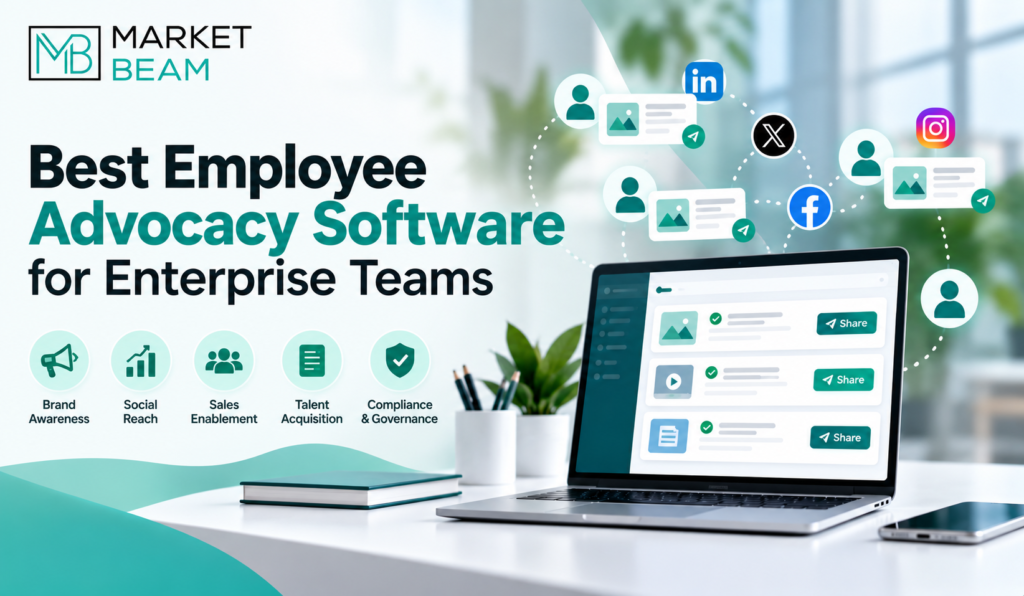
The best employee advocacy software helps companies turn employees into trusted voices for their brands. Instead of relying only on corporate social accounts, organizations can give employees approved content that they can share with their own networks.
This approach can support brand awareness, social reach, sales activity, recruitment, and thought leadership. However, enterprise employee advocacy requires more than a content-sharing app. Large organizations need strong access controls, approved messaging, analytics, security, and clear governance.
For regulated companies, the best employee advocacy software should also help control what employees can share. That matters in industries such as financial services, pharma, healthcare, insurance, and other regulated fields.
The right platform should make advocacy easy for employees while giving marketing and compliance teams enough control to manage risk.
What Is Employee Advocacy Software?
Employee advocacy software gives employees a central place to discover and share company-approved content through their social networks.
The best employee advocacy software usually includes a content library, sharing tools, user permissions, campaign management, analytics, and employee communication features.
For example, employees may receive approved posts about a product launch, company news, research, an event, or a hiring campaign. They can then share that content with a few clicks.
Modern platforms also support measurement. Teams can track shares, reach, engagement, clicks, and other campaign results.
Sprout Social’s Employee Advocacy product includes pre-approved message ideas, content sharing, team controls, employee analytics, and integrations with tools such as Slack and Microsoft Teams.
Hootsuite’s Enterprise offering also provides Parliament, a platform that gives employees access to approved content and supports sharing through collaboration tools.
Why Enterprises Need Employee Advocacy Software
Enterprise teams often have hundreds or thousands of employees. Managing advocacy through email or spreadsheets can become difficult very quickly.
The best employee advocacy software creates one place where teams can publish approved stories and employees can discover them.
That central approach offers several benefits.
First, marketers can keep campaign messaging consistent. Next, employees can find useful content without waiting for an email. In addition, managers can measure participation and campaign results.
For regulated companies, governance becomes even more important. The platform should help ensure that employees share approved content instead of creating or changing regulated messages on their own.
Key Benefits of the Best Employee Advocacy Software
Expand Organic Reach
Employees already have professional and personal networks. Advocacy allows organizations to reach those audiences without depending only on corporate pages.
The best employee advocacy software can make sharing simple, which can improve employee participation.
However, reach should not be the only goal. Companies should also consider engagement, clicks, conversions, and the quality of the audience reached.
Support Social Selling
Sales teams can use employee advocacy to share useful content with prospects and existing customers.
For example, an employee might share a product guide, case study, event announcement, or educational article. This can create more natural touchpoints than a purely corporate post.
The best employee advocacy software should help sales teams find content that matches their role and audience.
Improve Brand Consistency
Without a central content library, employees may create different versions of the same company message.
A managed advocacy platform can provide approved copy, images, links, and campaign information. As a result, employees can participate while the company keeps stronger control over its main message.
Sprout Social states that its Employee Advocacy platform provides pre-approved copy and content controls designed to support consistent messaging.
Increase Employee Participation
Good advocacy programs should be simple.
The best employee advocacy software should let employees find content quickly, understand why it matters, and share it without a long process.
Mobile access, notifications, topic filters, newsletters, and collaboration integrations can make participation easier.
What Features Should You Compare?
When evaluating the best employee advocacy software, look beyond the size of the feature list. Instead, focus on how each capability fits your actual workflow.
| Feature | What to Evaluate |
|---|---|
| Content library | Approved posts, links, images, and campaigns |
| Sharing | One-click publishing and social options |
| Permissions | Roles, teams, and access controls |
| Approval | Review process for employee suggestions |
| Analytics | Shares, reach, engagement, and clicks |
| Communication | Slack, Teams, email, and notifications |
| Campaigns | Topic, audience, and campaign organization |
| Compliance | Approved content and governance controls |
| Security | Authentication and data protection |
| Scalability | Support for large teams and many regions |
The best employee advocacy software should support these areas without making the experience difficult for employees.
Compliant Sharing for Regulated Industries
Regulated organizations need a different approach to employee advocacy.
Financial services companies may need controls around investment communications, supervision, and recordkeeping. Pharma companies may need Medical, Legal, and Regulatory review before employees can share content.
For these organizations, the best employee advocacy software should connect advocacy with existing compliance workflows.
MarketBeam provides controlled employee advocacy for regulated industries. Its current life sciences offering describes a centralized library of pre-approved content that employees can share, while its financial services offering describes a controlled portal with principal-reviewed content and logged sharing activity.
This approach helps organizations give employees useful content without opening the door to uncontrolled corporate messaging.
Why Approved Content Matters
Imagine a pharmaceutical company running a product campaign.
Marketing creates the campaign. MLR teams review the content. After approval, employees receive access to the approved version.
Now imagine that an employee changes a product claim before sharing it.
That small edit can create a new compliance issue.
The best employee advocacy software should therefore reduce opportunities for unauthorized changes. Controlled content libraries and permission settings can help create that protection.
Employee Advocacy and Content Governance
Content governance becomes important as an advocacy program grows.
The best employee advocacy software should help administrators organize content by topic, audience, campaign, business unit, or region.
This is particularly useful for global companies. A message approved for one country may not be suitable for another market.
Similarly, employees in sales may need different content from employees in recruiting or customer success.
Topic-based distribution can solve this problem. Employees receive content that fits their role instead of seeing a large list of unrelated posts.
How the Best Employee Advocacy Software Supports Managers
Managers need visibility into program activity.
The best employee advocacy software should help managers understand which content employees share most often and which campaigns generate meaningful results.
Useful metrics can include:
Shares: How often employees distribute company content.
Reach: The potential audience exposed to shared content.
Engagement: Likes, comments, reposts, and other interactions.
Clicks: Traffic generated from advocacy content.
Conversions: Leads, registrations, or other business actions tied to campaigns.
Participation: The number and percentage of active advocates.
Sprout Social currently provides Employee Advocacy reporting that includes sharing and content performance metrics, while Hootsuite describes employee advocacy features tied to reach and approved content distribution.
The best employee advocacy software should help teams turn these metrics into useful campaign decisions.
Integrations and Workflow
Enterprise teams rarely work from one application.
The best employee advocacy software should connect with collaboration tools, CRM systems, analytics platforms, and social networks.
For example, employees may already use Slack or Microsoft Teams for internal communication. Connecting advocacy with those tools can make content discovery easier.
MarketBeam currently lists integrations including Slack, HubSpot, Google Analytics, Veeva Vault PromoMats, and major social networks.
For regulated teams, integration can be especially valuable because it can reduce manual movement between marketing, compliance, and publishing systems.
AI and Employee Advocacy
AI can make employee advocacy more personalized.
The best employee advocacy software can use AI to help identify relevant content, recommend topics, or match content with employee roles and audiences.
MarketBeam describes AI-supported content creation and employee advocacy features that can help match relevant approved content with the right individuals.
However, personalization should not remove governance.
For regulated organizations, employees should still receive content that has passed the required review process. AI can help employees discover approved content, but it should not create uncontrolled regulatory claims.
Common Challenges
Employee advocacy programs can fail for simple reasons.
First, employees may receive too much content. When every post looks urgent, participation can fall.
Second, content may not match employee interests. Sales professionals need different messages from recruiters or engineers.
Third, the sharing process may take too many steps.
Finally, compliance teams may worry that employees can modify approved content.
The best employee advocacy software should address these problems through personalization, simple sharing, content controls, and clear governance.
How to Choose the Best Employee Advocacy Software
Start with your business goals.
Do you want more brand reach? More social selling activity? More employee participation? Better thought leadership? Or stronger control over regulated communications?
Next, define your users. A small B2B company may have a few hundred advocates, while a global organization may have employees across many regions.
Then, define your content process.
Who creates the content? Who approves it? How do employees receive it? Can they modify it? How is activity monitored?
The best employee advocacy software should fit these answers.
Vendor Evaluation Framework
| Evaluation Area | Questions to Ask |
|---|---|
| Adoption | Is sharing simple for employees? |
| Content | Can teams manage approved content at scale? |
| Governance | Can administrators control access and sharing? |
| Compliance | Can regulated content remain protected? |
| Analytics | Can teams measure meaningful business results? |
| Integrations | Does the platform fit your technology stack? |
| Administration | Can one team manage many groups and regions? |
| Security | Does the vendor meet enterprise security needs? |
| Scalability | Can the platform grow with your program? |
This process helps you assess the best employee advocacy software based on real business needs.
MarketBeam for Enterprise Employee Advocacy
MarketBeam positions its employee advocacy capabilities for enterprise and regulated organizations.
Its current platform provides controlled employee advocacy with approved content, centralized distribution, and analytics. For life sciences, MarketBeam describes pre-approved, MLR-reviewed content that employees can share through a centralized program.
For financial services, MarketBeam describes a controlled advocacy portal where advisors access principal-reviewed content, while sharing and related activity remain logged.
For enterprises, this creates a workflow where employees can amplify company messages while marketing and compliance teams maintain greater control.
The best employee advocacy software should ultimately make this balance easier to manage.
Best Practices for Enterprise Advocacy
A successful advocacy program should start with useful content.
Employees are more likely to share material that helps their audiences. Therefore, avoid turning the advocacy feed into a constant stream of company promotions.
Instead, include educational content, industry insights, events, research, customer stories, hiring updates, and other useful information.
Next, personalize content by employee role. Sales teams can receive prospect-focused assets, while recruiters may receive employer-brand content.
Also, recognize active advocates. Participation reports, leaderboards, and internal recognition can encourage continued involvement.
Most importantly, maintain clear governance. Employees should know what they can share and where they should seek help.
Final Thoughts
The best employee advocacy software combines easy sharing with strong control.
Enterprise teams should look at content management, employee adoption, permissions, analytics, integrations, security, and scalability. Regulated organizations should add approval workflows and compliance controls to that list.
The right software should make participation simple for employees while giving marketing and compliance teams visibility over the content being distributed.
MarketBeam provides controlled employee advocacy alongside social publishing, compliance workflows, monitoring, and analytics for regulated organizations.
Before selecting a platform, test real campaigns and real employee workflows. That practical test will show whether the platform can support your goals without creating unnecessary complexity.
Connect With Us
Looking for the best employee advocacy software for your enterprise or regulated organization?
MarketBeam helps teams distribute approved content, support employee advocacy, manage social publishing, monitor activity, and maintain stronger governance through a connected workflow.
Sales
Tech Support
FAQs
1. What is the best employee advocacy software?
The best employee advocacy software depends on your goals, employee size, industry, content workflow, compliance needs, integrations, and reporting requirements. A real-world pilot can help identify the right fit.
2. What does employee advocacy software do?
Employee advocacy software gives employees access to approved company content that they can share through their social networks. It can also provide permissions, campaign tools, analytics, and governance features.
3. Why do regulated companies need controlled employee advocacy?
Regulated companies may need to control what employees share because business communications can involve compliance, privacy, advertising, or recordkeeping requirements.
4. What features should I look for?
Look for an approved content library, easy sharing, role-based access, approval controls, analytics, integrations, security, campaign management, and scalable administration.
5. Can AI be used in employee advocacy software?
Yes. AI can help recommend relevant content, organize information, and personalize content discovery. However, regulated organizations should keep approved-content and human-review controls in place.
6. Does MarketBeam support employee advocacy?
Yes. MarketBeam provides controlled employee advocacy for regulated organizations, including approved content distribution and analytics. Its financial services and life sciences offerings emphasize governance around employee sharing.
7. How can employee advocacy support B2B marketing?
Employee advocacy can help B2B companies extend content through employee networks, support thought leadership, and give sales teams useful content for prospect engagement.
8. How should enterprises measure employee advocacy?
Track metrics such as active advocates, shares, reach, engagement, clicks, conversions, and campaign performance. Then connect those results with the goals of the advocacy program.