How to Build the Best Employee Advocacy Strategy
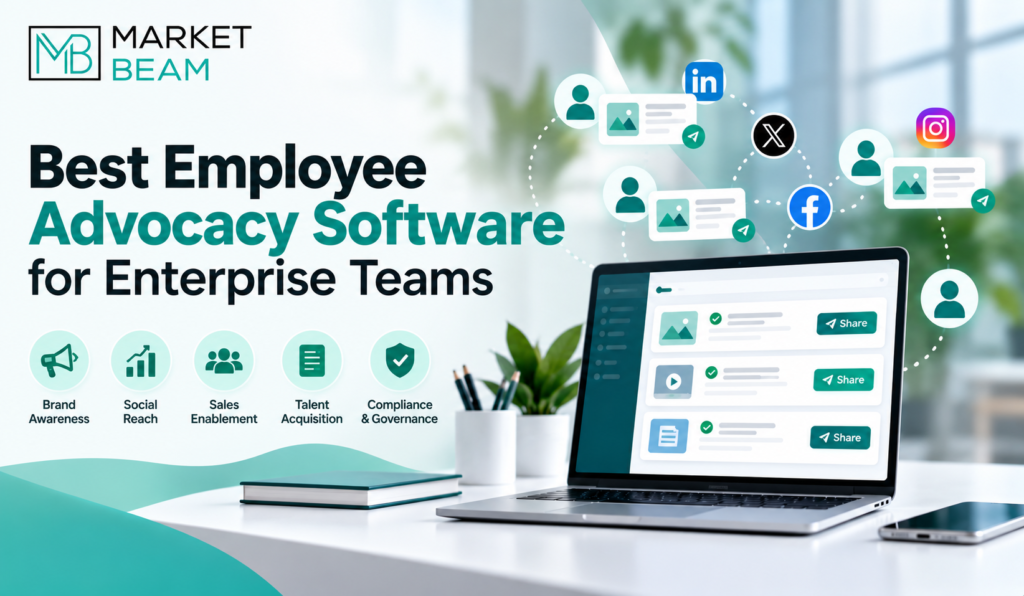
An employee advocacy strategy helps organizations use the voices and networks of employees to extend brand reach, share useful content, support sales, and strengthen thought leadership. Instead of depending only on corporate social accounts, companies can give employees relevant content that they can share with their own audiences.
A strong employee advocacy strategy does more than ask employees to repost company updates. It creates a clear system for finding useful content, encouraging participation, protecting brand standards, measuring results, and supporting employees with simple tools.
LinkedIn describes employee advocacy as a structured way to help employees share relevant company and industry content with their networks. It also highlights the role of employee champions, useful content, leadership support, and training in building a successful program.
For enterprise and regulated organizations, the process needs even more structure. Marketing teams may need approved content, role-based access, compliance checks, and clear sharing guidelines. Therefore, building the right employee advocacy strategy can turn employee sharing into a repeatable part of the wider marketing plan.
What Is an Employee Advocacy Strategy?
An employee advocacy strategy is a planned approach that helps employees share company-approved content through their professional or social networks.
The strategy can include employees from marketing, sales, leadership, customer success, recruiting, product, and other departments. Each group can support different business goals.
For example, sales employees can share educational resources. Executives can share industry opinions and company news. Recruiters can promote careers and workplace content. Subject-matter experts can share research or useful industry information.
The best employee advocacy strategy gives each group content that fits its role instead of sending the same message to everyone.
In addition, employees should understand why participation matters. They may want to build their professional reputation, educate their networks, connect with industry peers, or support the company.
Why Employee Advocacy Matters
Corporate social accounts are important, but employees can add another distribution channel. Employees already have professional relationships and social connections that can help companies reach audiences beyond their brand pages.
LinkedIn has described employee advocacy as a way to extend content reach by helping employees share relevant information with their networks.
However, reach alone should not define success.
A good employee advocacy strategy should also focus on content quality, employee participation, engagement, website traffic, leads, and other business outcomes.
Furthermore, advocacy can support employees themselves. Useful industry content can help employees build credibility and share knowledge without requiring them to create every post from the beginning.
Build Goals Before Choosing Tools
Before selecting employee advocacy software, define what the program should achieve.
Your goal may be greater brand awareness, stronger B2B reach, social selling, executive visibility, recruitment, event promotion, or employee engagement.
Once the goal is clear, decide how you will measure it.
| Goal | Useful Metrics |
|---|---|
| Brand awareness | Reach, impressions, mentions |
| Content distribution | Shares, clicks, engagement |
| Social selling | Referral traffic, leads, meetings |
| Executive advocacy | Engagement, profile activity, reach |
| Recruitment | Career page traffic, applications |
| Employee participation | Active advocates, shares per user |
| Campaign performance | Clicks, conversions, campaign engagement |
This step makes the employee advocacy strategy easier to manage because employees and managers know what the program is trying to achieve.
Create Content Employees Want to Share
Content quality has a direct effect on participation.
Employees are less likely to share a constant stream of promotional posts. Instead, give them content that provides value to their networks.
Useful examples include:
Industry research
Educational guides
Company news
Customer stories
Product education
Events and webinars
Executive insights
Career opportunities
Thought leadership
Community initiatives
A balanced content mix can make the employee advocacy strategy more useful for both employees and their audiences.
LinkedIn has also recommended combining company content with industry and thought-leadership material rather than making an advocacy feed purely promotional.
Make Sharing Easy
Employees have full-time responsibilities. Therefore, your advocacy process should require as little effort as possible.
A practical platform should let employees find approved content quickly, review the message, and share it without moving between several systems.
Notifications can help employees discover new content. Topic filters can help them find content that matches their interests. Social integrations can reduce the number of steps needed to share.
The easier the process becomes, the more likely employees are to use it consistently.
That is why ease of use should be a major part of your employee advocacy strategy.
Create an Employee Advocacy Content Library
A centralized content library gives employees one place to discover approved material.
Marketing teams can organize posts by topic, product, campaign, department, region, or audience.
For example, sales employees may see case studies and product education, while recruiters may see employer-brand campaigns.
The library should also show important information such as the campaign name, suggested caption, image, link, audience, and expiration date when relevant.
A well-managed library keeps the employee advocacy strategy organized and reduces confusion about which content employees should share.
Support Executive Advocacy
Executive advocacy is becoming an important part of B2B marketing.
Senior leaders can share industry insights, company updates, event commentary, research, and personal observations. Their content can also help employees understand how leadership views the market.
However, executive advocacy should still feel authentic. Employees and executives should not receive a collection of overly scripted posts that all sound the same.
LinkedIn recommends executive participation and leadership role modeling as ways to encourage wider employee participation.
Therefore, your employee advocacy strategy should give executives flexibility while providing clear guidelines.
Connect Employee Advocacy With Social Selling
Sales teams can use advocacy to share content with prospects and professional networks.
Instead of sending a product pitch every time, sales employees can share useful research, industry news, customer stories, or educational resources.
This approach can support relationship building and keep employees visible between direct sales conversations.
A strong employee advocacy strategy should therefore include sales teams as an important user group.
At the same time, sales employees need content that matches their audience. A technical buyer may need detailed educational material, while an executive prospect may prefer market trends or business insights.
Compliance and Employee Advocacy
Regulated organizations need additional controls.
Financial services, pharma, healthcare, insurance, and other regulated industries may have rules or internal policies that affect employee communications.
The employee advocacy strategy should therefore define what employees can share, who approves content, and what happens when someone suggests a new message.
MarketBeam positions its employee advocacy capabilities around approved content for regulated organizations. Its current platform provides a curated library of pre-approved content and helps employees share that content while maintaining organizational oversight.
This model can help companies avoid asking every employee to create regulated content independently.
Create Clear Employee Sharing Guidelines
A simple social media policy should explain expectations.
Employees should know how to represent the company, what confidential information they must protect, what content they can share, and where they can ask questions.
Training also matters.
LinkedIn recommends helping employees understand how to represent the brand and how social media activity can affect their professional presence.
For regulated organizations, the guidelines should also reflect applicable compliance requirements.
Your employee advocacy strategy becomes stronger when employees have practical guidance instead of a long policy document that they rarely read.
Use Employee Advocacy Software
Managing hundreds or thousands of employees through spreadsheets and email is difficult.
Employee advocacy software can centralize content, distribute approved posts, manage users, and measure results.
When comparing tools, look at:
| Feature | What to Check |
|---|---|
| Content library | Can teams organize approved content? |
| Sharing | Is the process simple? |
| Permissions | Can access differ by role or team? |
| Compliance | Can approved content remain controlled? |
| Analytics | Can teams track participation and results? |
| Campaigns | Can content be grouped by campaign? |
| Integrations | Can it connect with existing tools? |
| Scalability | Can it support large employee groups? |
The right software should support your employee advocacy strategy instead of creating another manual process.
Personalization and AI
AI can make advocacy programs more relevant.
For example, AI can help recommend content based on an employee’s role, interests, industry, or audience. It can also help organize large content libraries and surface relevant material.
MarketBeam currently describes AI-supported employee advocacy that helps match relevant approved content with individuals based on their roles and networks.
However, AI should not remove governance.
Regulated teams should keep approval controls around content before distribution. AI can help employees discover suitable content, but human teams should remain responsible for the underlying messages and compliance decisions.
Measure the Program
Measurement should be part of the employee advocacy strategy from the beginning.
Start with basic participation metrics. How many employees joined? How many shared content? Which campaigns generated the most activity?
Next, move toward business results. Track website visits, leads, registrations, event traffic, social engagement, and other relevant outcomes.
Then compare results across teams and campaigns.
LinkedIn has highlighted metrics such as reach, engagement, traffic, and sharing activity when discussing employee advocacy measurement.
The exact metrics should match your business goals rather than simply tracking every available number.
Keep Employees Engaged
Employee advocacy should not become another task employees are expected to complete.
Fresh content helps keep participation interesting. Recognition can also encourage continued involvement.
For example, organizations can highlight useful contributions, celebrate campaign milestones, or share program results with employees.
Training can help as well. Show employees how to write better introductions, adapt content to their audience, and maintain an authentic voice.
A sustainable employee advocacy strategy focuses on value rather than pressure.
Common Employee Advocacy Mistakes
Some programs fail because companies focus only on the tool.
Another problem is publishing too much promotional content. Employees may stop participating when the feed becomes repetitive.
Lack of training can also reduce confidence. Employees may want to participate but may not know what they can share.
Finally, unclear compliance rules can create concern, especially in regulated industries.
Therefore, successful programs combine useful content, simple workflows, clear policies, training, measurement, and employee support.
A Practical Employee Advocacy Strategy Framework
Use this framework to build your program:
1. Define the goal. Decide what you want employee advocacy to achieve.
2. Identify advocates. Start with employees who are interested in social media and willing to participate.
3. Create useful content. Provide industry, educational, thought-leadership, and company content.
4. Add governance. Define permissions, approvals, guidelines, and compliance controls.
5. Make sharing simple. Use a platform that reduces friction.
6. Train employees. Explain social media best practices and brand expectations.
7. Measure results. Track activity, engagement, traffic, leads, and other relevant outcomes.
8. Improve continuously. Use employee feedback and performance data to refine the program.
This framework gives your employee advocacy strategy a clear structure while leaving room to adapt as the program grows.
How MarketBeam Supports Employee Advocacy
MarketBeam positions its platform as a social media management and employee advocacy solution designed for regulated industries. The platform combines content creation, social publishing, monitoring, analytics, and employee advocacy in one workflow.
For regulated organizations, MarketBeam provides access to curated, pre-approved content that employees can share. The company also describes AI-assisted matching to help employees find relevant content based on role and network.
This approach can help marketing teams maintain greater control while still giving employees an easy way to participate.
For an enterprise employee advocacy strategy, that combination can reduce manual work and create a more consistent process.
Conclusion
A successful employee advocacy strategy is more than asking employees to share company posts.
It combines useful content, employee participation, simple sharing, clear guidelines, measurement, and governance. For enterprise organizations, the strategy should also support different teams, audiences, regions, and business goals.
Regulated organizations need another layer of control. Approved content, permissions, review processes, and clear employee guidance can help reduce unnecessary risk while keeping advocacy practical.
Technology can connect these elements. MarketBeam provides employee advocacy alongside social publishing, monitoring, analytics, and compliance-focused workflows for regulated organizations.
Start with a clear goal, build around useful content, make participation easy, and measure what matters. Over time, these steps can turn employee advocacy into a repeatable part of your enterprise marketing strategy.
Connect With Us
Looking to build a scalable employee advocacy strategy for your enterprise or regulated organization?
MarketBeam helps teams distribute approved content, support employee sharing, manage social publishing, monitor activity, and maintain stronger governance through a connected workflow.
Sales
Tech Support
FAQs
1. What is an employee advocacy strategy?
An employee advocacy strategy is a structured plan that helps employees share useful, approved company content with their social and professional networks.
2. What are the main benefits of employee advocacy?
Employee advocacy can expand content distribution, support brand awareness, strengthen thought leadership, help sales teams share useful resources, and increase employee participation in social programs.
3. What should an employee advocacy strategy include?
A strong strategy should include clear goals, useful content, employee guidelines, approved sharing processes, training, analytics, governance, and regular program reviews.
4. How does employee advocacy support B2B marketing?
Employees can share industry insights, research, guides, customer stories, and other useful content with professional networks. This can support awareness, relationships, and social selling.
5. How can regulated companies manage employee advocacy?
Regulated companies can use approved content libraries, permissions, review workflows, employee guidelines, monitoring, and appropriate compliance controls. MarketBeam provides controlled employee advocacy designed for regulated environments.
6. How should companies measure employee advocacy?
Measure metrics that match your goals. Common examples include active advocates, shares, reach, engagement, clicks, website traffic, leads, and campaign performance.
7. Can AI improve employee advocacy?
Yes. AI can help recommend relevant content, organize large content libraries, and personalize content discovery. However, companies should keep appropriate human review and governance controls.
8. What is the role of employee advocacy software?
Employee advocacy software helps organizations manage approved content, distribute it to employees, simplify sharing, control access, and measure program performance.