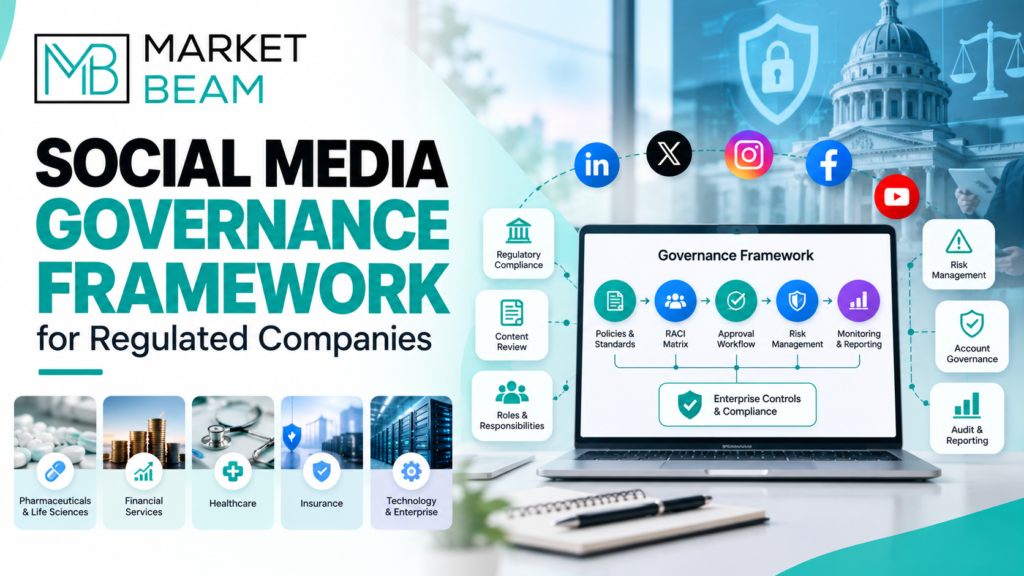
Social Media Governance Framework for Regulated Companies
A strong social media presence helps regulated companies build trust, educate audiences, and maintain meaningful customer relationships. However, managing social media across marketing, legal, compliance, and regional teams can create serious challenges. Without clear rules, employees may publish unapproved claims, overlook required disclosures, or fail to preserve important communication records.
A well-designed social media governance framework helps companies manage these risks while keeping marketing operations efficient. It defines who can create content, who must review it, which approval steps apply, and how teams monitor activity after publication. It also connects social media policies with account permissions, risk management, employee training, and recordkeeping.
For pharmaceutical companies, financial services firms, healthcare organizations, and other regulated businesses, these controls are especially important. The specific obligations differ by industry and activity, so teams must align their processes with the rules that apply to their organization.
This guide explains how to build a practical social media governance framework, assign responsibilities with a RACI matrix, establish risk-based approval workflows, and introduce enterprise controls that support consistent and accountable social media management.
What Is a Social Media Governance Framework?
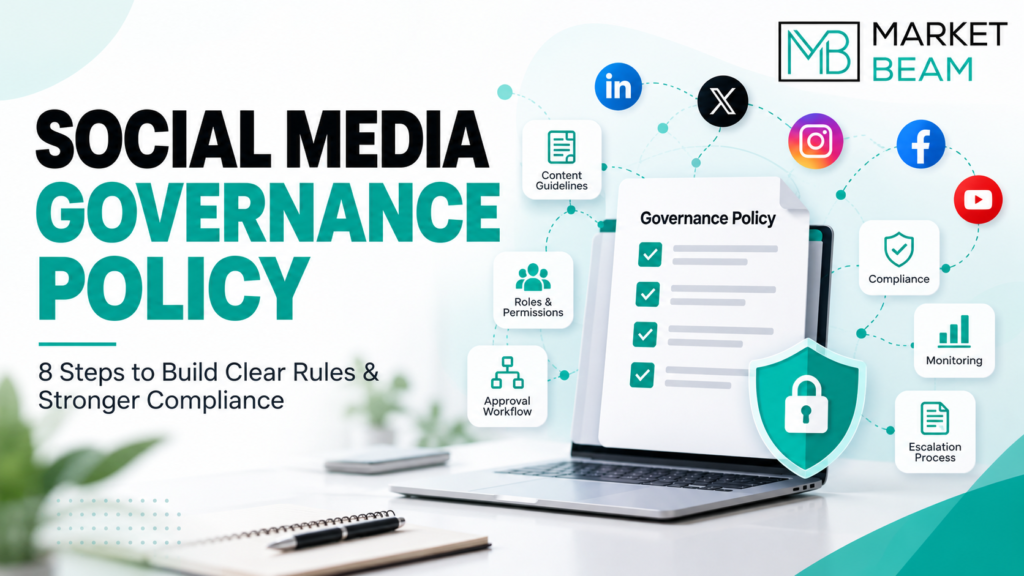
A social media governance framework is a structured set of policies, responsibilities, workflows, and controls used to manage an organization’s social media activity. It explains how employees create, review, publish, monitor, and document content across approved platforms.
A basic social media policy tells employees what they can and cannot do. In contrast, a complete social media governance framework explains how the company applies those rules in daily operations. It covers account ownership, access permissions, content approval, escalation procedures, risk assessment, and oversight.
For example, a pharmaceutical marketing team may need additional review for product claims, while a financial services firm may need controls for promotional communications and required records. Both organizations need clear processes, but their specific review requirements may differ.
The goal is to create one consistent operating model without forcing every team to follow identical steps for every post. Clear standards, defined ownership, and risk-based reviews help employees work efficiently while protecting the organization.
Why Do Regulated Companies Need a Governance Framework?
Regulated companies must consider more than engagement and reach when publishing social media content. Their communications may involve product claims, financial promotions, testimonials, customer information, or other material that requires special care.
A social media governance framework helps connect marketing activity with legal, security, and compliance responsibilities.
1. Reduce Compliance and Reputation Risks
A misleading claim, missing disclosure, or inappropriate response can damage trust and create regulatory concerns. Clear content standards and review procedures help teams identify potential problems before publication.
For example, SEC-registered investment advisers must consider the SEC Marketing Rule when their communications fall within its scope. The rule includes requirements concerning misleading statements, testimonials, endorsements, performance information, and related records.
2. Improve Brand Consistency
Large companies may have several departments, regional teams, product groups, and external agencies publishing content. Shared standards help these groups use approved language, current brand assets, and consistent messaging.
3. Clarify Roles and Accountability
When responsibility is unclear, content can remain stuck in review or appear online without the right approval. A governance framework identifies the person responsible for drafting, reviewing, approving, publishing, and monitoring each type of content.
4. Strengthen Recordkeeping
Regulated organizations may need to retain specific communications and supporting information. For example, the SEC Marketing Rule includes recordkeeping requirements for investment advisers within its scope.
A clear records process helps teams locate approved materials and reconstruct decisions when needed.
5. Support Faster, More Consistent Workflows
Governance does not have to mean slow publishing. When routine content follows a standard path and sensitive content receives extra review, teams can spend less time resolving confusion and more time creating useful communications.
Core Components of a Social Media Governance Framework
A practical social media governance framework should connect company policies with clear operating procedures. The following components help regulated organizations establish controls that employees can understand and apply consistently.
1. Governance Model and Ownership
A governance model explains how social media decisions are made. It identifies the program owner, department leads, reviewers, account administrators, and people responsible for resolving disputes.
For enterprise teams, the social media governance framework should define which decisions belong to central leadership and which teams can make decisions independently. Central teams may manage policies and risk standards, while regional teams handle approved local communications.
Document these responsibilities in writing. Otherwise, employees may assume that another department has completed a required review.
2. Roles and Responsibilities Using a RACI Matrix
A RACI matrix helps clarify who performs each activity. RACI stands for Responsible, Accountable, Consulted, and Informed.
Responsible: The person who completes the task.
Accountable: The person who owns the final outcome.
Consulted: The people who provide expert input.
Informed: The people who need updates.
A RACI matrix makes the social media governance framework easier to follow because each activity has defined ownership.
| Activity | Marketing | Legal / Compliance | IT / Security | Business Owner |
|---|---|---|---|---|
| Create content | Responsible | Consulted | Informed | Accountable |
| Review regulated claims | Consulted | Responsible | Informed | Accountable |
| Manage account access | Informed | Consulted | Responsible | Accountable |
| Approve routine content | Responsible | Consulted when needed | Informed | Accountable |
| Handle security incidents | Informed | Consulted | Responsible | Accountable |
| Review governance policy | Responsible | Responsible for applicable controls | Consulted | Accountable |
This is an illustrative matrix, not a universal assignment of regulatory duties. Adapt it to the company’s organizational structure and approval requirements.
3. Risk Management and Content Classification
Not every social media post carries the same level of risk. A company culture update may need a standard brand review, while a product claim, financial promotion, or customer testimonial may need a more detailed assessment.
Your social media governance framework should define risk categories and the controls required for each category. Consider factors such as audience, content type, product, market, potential impact, and applicable regulation.
For example, a pharmaceutical company should account for the rules that apply to prescription drug promotion. The FDA states that prescription drug promotion, including internet-based promotion and social media, must not be false or misleading and must communicate risk and benefit information appropriately.
4. Approval Workflow and Publishing Controls
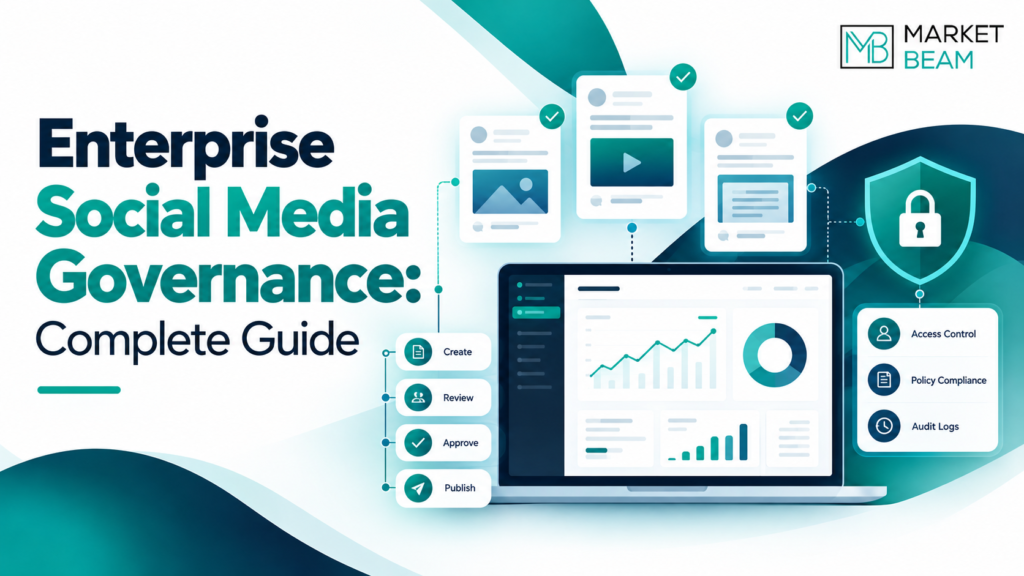
A clear approval workflow explains how content moves from drafting to publication. It identifies reviewers, required evidence, approval deadlines, and the person authorized to publish.
The social media governance framework should also explain what happens when someone edits approved content. Significant changes to a regulated claim, disclosure, or other sensitive statement may require another review.
Use risk-based workflows rather than forcing every post through the same process. This helps protect important controls without creating unnecessary delays for routine content.
5. Monitoring, Escalation, and Recordkeeping
Governance continues after a post goes live. Teams need procedures for monitoring public responses, identifying potential issues, and deciding when to escalate a concern.
A documented social media governance framework should identify who handles complaints, security incidents, potentially misleading claims, and other sensitive matters. It should also explain how teams preserve relevant content, approvals, publication dates, and incident records.
The records required will depend on the business and applicable rules. For example, the SEC Marketing Rule establishes recordkeeping requirements for investment advisers within its scope.
How to Build a Social Media Governance Framework in Six Steps
Use the following implementation plan to turn governance principles into a working process.
01
Audit Existing Accounts
List every official profile, its purpose, owner, authorized users, and publishing method. Include accounts managed by agencies and regional teams. Use the findings to identify duplicate profiles, outdated access, and unclear ownership.
02
Identify Risks and Obligations
Work with legal, compliance, security, and business teams to identify relevant risks. Document which types of content require additional review and which records must be retained.
03
Define Roles and Approval Authority
Create a RACI matrix and assign an owner for every major activity. Make sure employees know who can approve content, manage accounts, and respond to incidents.
04
Document Policies and Workflows
Establish publishing rules, risk categories, review requirements, escalation steps, and recordkeeping procedures. Keep instructions clear enough for employees to use without repeated clarification.
05
Choose Suitable Technology
Evaluate tools that support permissions, approval workflows, approved content libraries, monitoring, and required records. Confirm that the features match your security and compliance needs.
06
Train Teams and Review Performance
Train employees and external partners on the new process. Monitor approval times, account access, training completion, and recurring incidents. Review the results and improve the controls where necessary.
Following these steps gives the social media governance framework a clear foundation before the organization expands it across more accounts, teams, or business units.
Social Media Governance for Different Regulated Industries
Although the main governance principles are similar, each industry has different risks and obligations. The controls should reflect the content being shared and the rules that apply to the organization.
| Industry | Key governance considerations | Example control |
|---|---|---|
| Pharmaceuticals and life sciences | Promotional claims, risk information, labeling, and adverse event handling | Specialist review of applicable promotional content |
| Financial services | Advertising standards, testimonials, performance claims, and required records | Compliance review and records for applicable communications |
| Healthcare providers | Patient privacy, confidential information, and public responses | Privacy review and defined escalation procedures |
| Insurance | Product descriptions, disclosures, and customer complaints | Approved content and complaint escalation |
| Technology and enterprise businesses | Confidential data, brand reputation, account security, and employee advocacy | Access controls and approval rules for sensitive announcements |
For pharmaceutical companies, the FDA’s Office of Prescription Drug Promotion provides regulatory resources on advertising and promotional labeling
In financial services, firms must determine which SEC or FINRA requirements apply to their activities. Social media governance should support those obligations rather than assume that one standard policy fits every industry.
Common Mistakes to Avoid
Even a detailed policy can fail when the organization does not apply it consistently.
Unclear ownership: Without a named owner, accounts may remain active after employees leave or responsibilities change. Assign a business owner and backup for every official profile.
One workflow for every post: Requiring identical reviews for low-risk and sensitive content can slow work unnecessarily. Establish clear risk categories and appropriate approval paths.
Missing records: Approval messages spread across inboxes can make it difficult to reconstruct decisions. Store required content, approvals, and supporting evidence in an organized location.
Outdated access permissions: Review user access on a regular schedule and remove unnecessary permissions promptly.
No policy training: Employees need practical examples that explain what they can publish, when additional review is required, and whom to contact when problems occur.
A successful social media governance framework must be usable in everyday work. If the process is confusing, employees may develop informal workarounds that weaken the controls.
How to Measure Governance Effectiveness
Measure whether the process works, not simply how many posts the company publishes. Your social media governance framework should include indicators that reveal approval delays, ownership gaps, and control weaknesses.
| KPI | What it measures | Why it matters |
|---|---|---|
| Approval turnaround time | Time between content submission and approval | Identifies workflow delays |
| Account ownership coverage | Accounts with documented owners | Highlights accountability gaps |
| Access review completion | Scheduled access checks completed | Supports access control |
| Training completion | Assigned users who complete training | Measures training coverage |
| Policy exceptions | Approved deviations from standard procedures | Identifies unclear rules or recurring needs |
| Incident response time | Time taken to acknowledge and address issues | Measures escalation readiness |
Establish a baseline before changing the process. Then set realistic targets and review trends regularly. For example, a longer approval time may indicate too many review stages, while recurring errors may signal that employees need better guidance.
Conclusion
A well-designed social media governance framework helps regulated companies protect their brand, clarify responsibilities, manage risk, and maintain consistent oversight across social media channels. By combining a clear governance model, RACI matrix, risk-based approval workflow, enterprise controls, and reliable documentation, organizations can make their processes easier to follow and review.
Start with an audit of current accounts and responsibilities. Then establish practical policies, define approval authority, train employees, and select technology that supports the process. Finally, measure results and update controls as business needs change.
Strong governance is not simply about restricting publishing. It is about helping teams communicate responsibly while giving the organization the visibility and accountability needed to manage social media at scale.
Connect With MarketBeam
MarketBeam helps enterprise and regulated marketing teams coordinate social media workflows, content approvals, and governance processes. A structured approach can support better collaboration while maintaining appropriate oversight.
Sales: sales@marketbeam.io Tech Support: support@marketbeam.io
Frequently Asked Questions
1. What is a social media governance framework?
A social media governance framework defines the policies, roles, workflows, permissions, and monitoring controls an organization uses to manage social media activity. It helps teams apply standards consistently and maintain accountability.
2. Why do regulated companies need a social media governance framework?
Regulated companies may need additional controls for promotional claims, disclosures, recordkeeping, privacy, and other industry requirements. A clear framework helps them identify who reviews content and how potential issues are escalated.
3. What is a RACI matrix in social media governance?
A RACI matrix identifies who is Responsible, Accountable, Consulted, and Informed for each activity. It helps clarify ownership for content creation, approval, account administration, monitoring, and incident response.
4. What should a governance framework include?
It should include account ownership, a social media policy, roles and permissions, risk assessment, approval workflows, monitoring, escalation procedures, recordkeeping, employee training, and regular reviews.
5. How can companies automate social media governance?
Suitable tools can route content for approval, manage permissions, organize approved assets, schedule posts, and maintain activity records. Automation can reduce manual work, but it should not replace required human or specialist review.
6. How often should a social media governance framework be reviewed?
Review it on a regular schedule and whenever a major business, platform, security, or regulatory change affects the process. The review frequency should reflect the organization’s risks and obligations.