Governance vs Compliance: Key Differences Every Enterprise Should Know
Enterprise organizations need clear direction, reliable controls, and consistent processes to manage business risks. However, many teams struggle to understand the difference between governance and compliance. Although these concepts work together, they serve different purposes. Understanding governance vs compliance helps businesses establish accountability, meet regulatory obligations, and manage daily operations more effectively.
Governance defines how an organization makes decisions, assigns responsibilities, sets objectives, and oversees performance. Compliance ensures that the organization follows applicable laws, regulations, industry standards, and internal policies. Without effective governance, compliance activities may become disconnected from business goals. Similarly, governance without proper compliance controls can expose the organization to legal, financial, and reputational risks.
This distinction matters even more for enterprise marketing and regulated social media teams. Companies need clear ownership, approval workflows, risk controls, and reliable records to manage communications responsibly.
In this guide, we explain governance vs compliance, explore their key differences, and share practical steps to help enterprise teams build an integrated approach.
What Is Governance?
Governance is the system through which an organization establishes direction, makes decisions, assigns authority, and oversees business activities. It defines who is responsible for important decisions and how leaders evaluate whether the organization is meeting its objectives.
Corporate governance often involves the board of directors, executive leadership, department heads, and other decision-makers. These groups establish expectations, oversee risks, allocate resources, and hold teams accountable for their responsibilities.
For enterprise marketing teams, governance determines who owns social media accounts, who approves campaigns, which publishing rules apply, and how teams report performance. It also establishes the process for resolving disagreements and escalating sensitive issues.
For example, a pharmaceutical company might require marketing, medical, legal, and regulatory teams to review certain promotional content before publication. Governance establishes the responsibilities and decision-making structure behind that process.
A strong governance model supports consistent decisions across departments. It also helps organizations connect their business objectives with risk management, operational controls, and long-term accountability.
What Is Compliance?
Compliance means following the laws, regulations, contractual obligations, industry standards, and internal policies that apply to an organization. It helps businesses operate within the rules relevant to their activities.
Compliance responsibilities differ across industries. Pharmaceutical companies may need to address requirements for drug advertising and promotional labeling. Financial services firms may need controls for advertising, customer communications, and recordkeeping. Healthcare organizations must also consider applicable privacy and data protection requirements.
A compliance program typically includes written policies, employee training, review procedures, monitoring, documentation, and corrective actions. It should also define who manages compliance responsibilities and how potential violations are reported.
For example, an investment adviser may need written compliance policies and procedures designed to prevent violations of applicable securities laws. The SEC’s compliance framework for registered investment advisers includes requirements for written procedures, annual reviews, and a designated chief compliance officer.
Effective compliance helps organizations identify gaps, address problems, and demonstrate that they have established appropriate processes for meeting their obligations.
Governance vs Compliance: Key Differences
The main difference between governance and compliance lies in their purpose. Governance establishes how an organization is directed and controlled, while compliance focuses on meeting the requirements that apply to its activities.
However, these functions should not operate separately. Governance creates the structure for making decisions, and compliance helps ensure those decisions and related activities remain within applicable requirements.
| Comparison area | Governance | Compliance |
|---|---|---|
| Primary purpose | Direct the organization and oversee decisions | Meet applicable legal, regulatory, and internal requirements |
| Main focus | Strategy, accountability, authority, and oversight | Rules, procedures, monitoring, and corrective action |
| Key responsibilities | Define ownership, decision rights, and risk oversight | Identify obligations, implement controls, and monitor adherence |
| Typical owners | Board, executives, governance committees, and business leaders | Compliance officers, legal teams, and designated control owners |
| Common activities | Approving policies, setting objectives, and reviewing performance | Training employees, testing controls, and maintaining required records |
| Success indicators | Clear accountability, effective decisions, and oversight | Effective controls, timely issue resolution, and adherence to applicable requirements |
| Example | Defining who approves enterprise social media campaigns | Checking that applicable promotional and recordkeeping requirements are met |
These differences show why businesses need both functions. Governance establishes who makes decisions and how the organization maintains oversight. Compliance translates applicable requirements into procedures that employees can follow and managers can evaluate.
Why Governance and Compliance Must Work Together
Understanding governance vs compliance helps organizations avoid gaps between leadership decisions and day-to-day responsibilities.
When governance is weak, employees may not know who owns a process or who can approve an exception. When compliance controls are weak, the organization may fail to identify or address issues even when responsibilities appear clear.
1. Better Risk Management
Governance helps leaders identify which risks matter most to the organization. Compliance teams then help translate relevant obligations into policies, controls, and review processes.
For example, a company may identify unauthorized social media publishing as a business risk. Governance establishes account ownership and approval authority, while compliance procedures define the checks required for sensitive content.
The National Institute of Standards and Technology’s Cybersecurity Framework 2.0 connects cybersecurity risk governance with risk management, helping organizations understand, assess, and communicate risks.
2. Clearer Accountability
Both functions depend on clear responsibilities. Governance assigns decision-making authority, while compliance establishes who performs required checks and how teams report issues.
This distinction is especially important when marketing, legal, IT, and regulatory teams share responsibility for a campaign. Documented ownership reduces confusion and helps ensure important tasks do not fall between departments.
3. More Consistent Processes
When governance and compliance operate together, employees have clearer instructions for common tasks. They know which content requires approval, where to find approved assets, and what to do when a potential issue arises.
As a result, companies can reduce repeated work and create more consistent processes across business units.
4. Stronger Business Confidence
Reliable governance and compliance processes give leaders better visibility into performance and risk. They also help organizations document decisions, identify recurring issues, and make informed changes to their policies.
However, written policies alone are not enough. The organization must implement its controls, review how well they work, and address identified gaps.
Governance vs Compliance in Enterprise Social Media Management
Enterprise social media management provides a practical example of how governance and compliance support each other.
A company may manage dozens of accounts across products, regions, departments, and external agencies. Without a clear operating model, employees may publish unapproved content, retain unnecessary account access, or respond inconsistently to sensitive comments.
Governance defines the account owners, approval authority, publishing responsibilities, and escalation structure. Compliance identifies the rules that apply to specific communications and establishes the checks needed to meet those obligations.
Consider a pharmaceutical marketing team preparing a social media campaign. Governance determines who can draft, review, approve, and publish the campaign. Compliance helps the team assess applicable promotional requirements, confirm the accuracy of claims, and maintain required records.
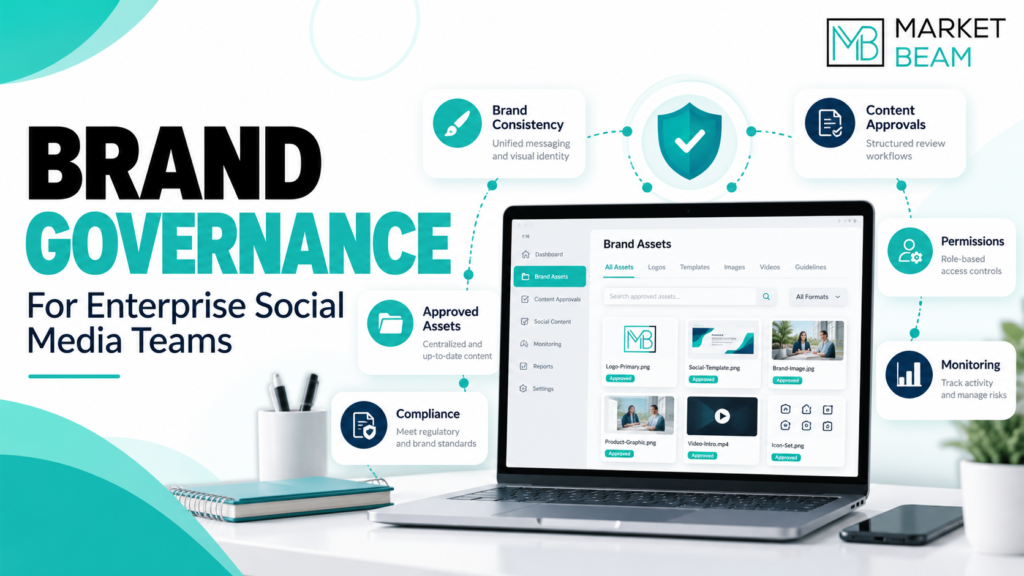
An integrated approach should include approved content libraries, role-based permissions, documented reviews, monitoring procedures, and clear escalation paths.
These processes also help teams manage employee advocacy, sponsored content, public comments, and other digital communications that may create additional risks. The exact controls should reflect the company’s industry, audience, and applicable obligations.
How to Build an Integrated Governance and Compliance Framework
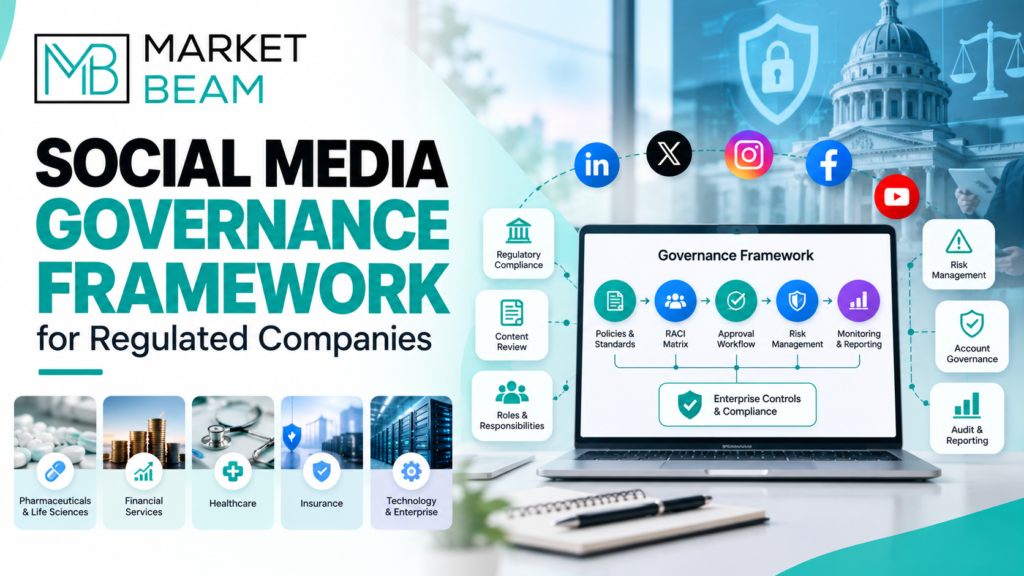
Organizations do not need separate, disconnected processes for every team. Instead, they can create a shared framework with clear responsibilities, risk-based controls, and regular performance reviews.
The following steps provide a practical starting point.
1. Define Business Objectives and Responsibilities
Start by identifying the organization’s objectives and the risks that could prevent it from achieving them. Determine which leaders own major decisions and which teams manage specific controls.
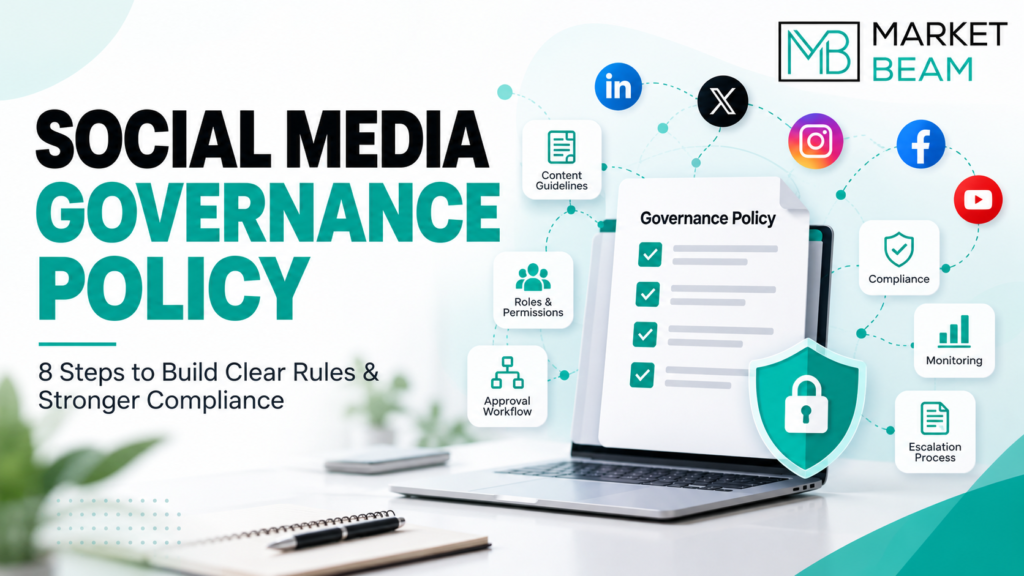
Document these responsibilities in a governance model or responsibility matrix. Make sure employees understand who can approve content, manage accounts, authorize exceptions, and resolve incidents.
2. Identify Applicable Requirements
Work with legal and compliance specialists to identify the laws, regulations, contractual requirements, and internal policies relevant to your business.
Organize these requirements by department, activity, product, or market. For example, promotional communications may need different checks from recruitment updates or general corporate announcements.
Review requirements when business activities or regulations change.
3. Convert Requirements Into Workflows
A written rule becomes more useful when employees know how to apply it.
Translate relevant requirements into clear procedures, approval steps, access controls, recordkeeping rules, and escalation instructions. Assign an owner to each control and explain what evidence the organization should retain.
Keep routine processes straightforward while adding appropriate reviews for higher-risk activities.
4. Introduce Monitoring and Reporting
Establish a reporting process that gives leadership visibility into important risks, policy exceptions, approval delays, and unresolved issues.
Compliance teams should be able to identify gaps and escalate concerns. Business leaders should use these findings to improve policies, clarify ownership, and address resource needs.
5. Review and Improve the Framework
Governance and compliance should adapt as the organization changes. Review policies, test controls, assess incidents, and update procedures when you identify gaps.
For example, the SEC emphasizes reviewing compliance policies and procedures for adequacy and effective implementation within the applicable investment adviser framework.
The review schedule should reflect applicable requirements and business risks rather than relying on a single schedule for every organization.
6. Use Technology to Support Controls
Suitable technology can help centralize approval workflows, control account access, maintain content records, and monitor activity. Automation can also send reminders and identify items that need human review.
However, technology cannot replace clear ownership or qualified legal and compliance judgment. Select tools that support established policies and provide the records and controls your organization needs.
Governance vs Compliance: Practical Enterprise Checklist
Use this checklist to assess whether your organization connects leadership oversight with the controls employees follow.
| Review area | Governance question | Compliance question |
|---|---|---|
| Policies | Who owns and approves the policy? | Does it address applicable requirements? |
| Account access | Who authorizes account permissions? | Are access controls implemented and reviewed? |
| Content approval | Who has final decision authority? | Are required reviews and disclosures completed? |
| Training | Who owns the training program? | Have employees completed required training? |
| Recordkeeping | Who oversees the records process? | Are required records retained and accessible? |
| Incident response | Who makes escalation decisions? | Are issues investigated and handled under applicable procedures? |
| Performance reviews | Who evaluates program effectiveness? | Are control gaps identified and addressed? |
This checklist can help teams identify unclear responsibilities and missing controls. Adapt it to your organization’s structure and obligations before using it as a formal assessment.
Common Mistakes Enterprises Should Avoid
One common mistake is treating governance and compliance as interchangeable terms. This can leave teams focused on completing checks without understanding who owns the wider process.
Another mistake is creating policies without assigning responsibility for implementation. Employees may receive instructions but lack the authority, tools, or training needed to follow them.
Some organizations also measure compliance activity without evaluating whether controls work. Counting completed training sessions, for example, does not prove that employees understand the policy. Leaders should combine completion data with reviews, testing, incident analysis, and practical feedback.
Finally, avoid treating governance as a one-time project. Business goals, team structures, platforms, and regulatory obligations change. Review the framework regularly and update it when the organization identifies new risks or weaknesses.
Conclusion
Understanding governance vs compliance helps enterprises build a stronger approach to accountability, risk management, and regulatory obligations. Governance establishes the decision-making structure, while compliance turns applicable requirements into practical policies, procedures, and controls.
Both functions are necessary for effective enterprise operations. Clear responsibilities, risk-based workflows, accurate records, employee training, and regular reviews help organizations maintain oversight without making everyday work unnecessarily complex.
Start by defining ownership, identifying applicable requirements, and documenting the processes employees must follow. Then monitor performance, address control gaps, and improve the framework as business needs change.
Connect With MarketBeam
MarketBeam helps enterprise and regulated marketing teams coordinate social media workflows, content approvals, and governance processes. A structured approach can support collaboration, accountability, and more consistent oversight across social media operations.
Sales: sales@marketbeam.io Tech Support: support@marketbeam.io
Frequently Asked Questions
1. What is the main difference between governance and compliance?
Governance defines how an organization makes decisions, assigns responsibilities, and oversees its activities. Compliance focuses on meeting the laws, regulations, standards, and internal policies that apply to those activities.
2. Can an organization have governance without compliance?
An organization can establish governance structures without having effective compliance controls. However, this creates gaps because leadership decisions may not translate into processes that meet applicable requirements. Both functions should work together.
3. Is compliance part of governance?
Compliance is often one important part of an organization’s broader governance and risk management structure. Governance establishes oversight and accountability, while compliance helps the organization meet relevant requirements and monitor adherence.
4. How do governance and compliance apply to social media?
Governance defines account ownership, publishing authority, and approval responsibilities. Compliance establishes the checks needed for applicable promotional, disclosure, privacy, and recordkeeping requirements.
5. Who is responsible for governance and compliance?
Responsibility varies by organization. Boards and executives often oversee governance, while compliance officers and designated teams manage compliance programs. Marketing, legal, IT, and business leaders may share responsibility for specific controls.
6. How can enterprises improve governance and compliance?
Enterprises can clarify ownership, identify applicable requirements, document workflows, train employees, monitor risks, maintain reliable records, and review control effectiveness regularly. Technology can support these activities, but clear accountability remains essential.