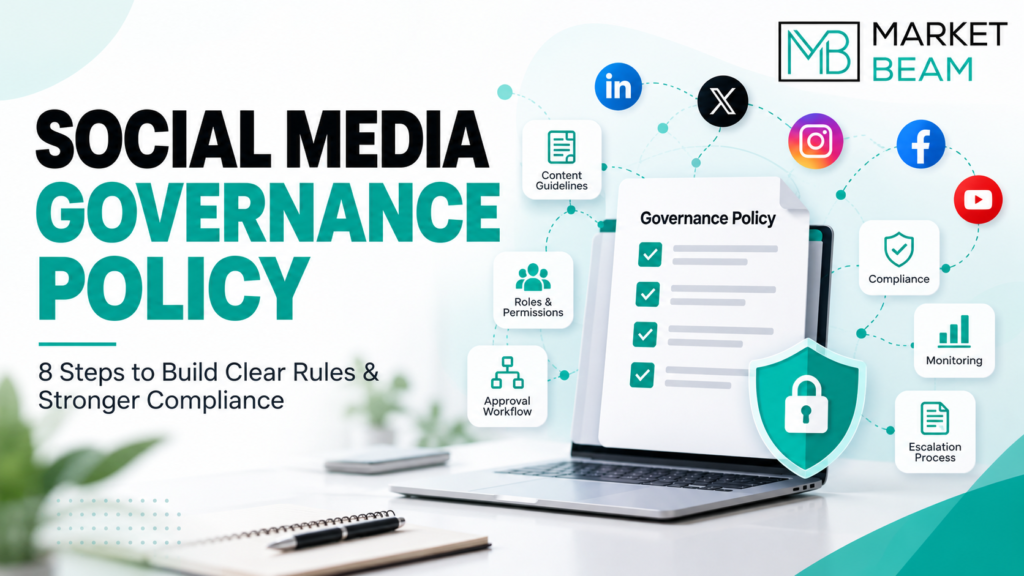

Why Brand Governance Matters for Enterprise Social Media Teams
Enterprise social media teams need more than a logo and a list of design rules. They need a clear way to keep messaging, visuals, approvals, and employee activity aligned across departments, regions, agencies, and channels. Brand governance provides that structure. It helps teams create content efficiently while protecting brand identity, reputation, and standards.
Without a consistent approach, one team may use outdated assets, another may publish an off-brand message, and a third may share a claim that needs specialist review. These gaps can confuse audiences and increase risk, especially for companies operating in regulated industries. This guide explains how brand governance works, which controls matter most, and how to build a practical framework for enterprise social media.
What Is Brand Governance?
Brand governance is the system of standards, roles, processes, and controls that helps an organization represent its brand consistently. It defines how teams use brand elements, create messages, approve content, manage assets, and check whether communications follow company standards.
For social media teams, brand governance connects brand strategy with daily publishing. It helps ensure that teams use approved logos, colors, tone of voice, terminology, product descriptions, and visual assets. It also defines who can approve content and what to do when a post falls outside the standard process.
Brand governance is broader than a style guide. A style guide describes how a brand should look and sound. Governance puts those rules into practice through ownership, workflows, permissions, training, monitoring, and review. Even detailed guidelines can fail when employees cannot find approved assets or do not know who can approve a post.
Why Brand Governance Matters for Enterprise Social Media Teams
Large organizations often manage several social accounts across business units, products, markets, and employee advocacy programs. As activity grows, informal coordination becomes harder to maintain. Brand governance creates a shared operating model so teams can work independently without losing consistency.
Protect brand consistency
Customers may see posts from corporate accounts, regional profiles, executives, or employee advocates. These experiences should feel connected. Shared messaging standards and approved assets help every team use the same core identity while adapting content to its audience.
Reduce content and reputation risks
An outdated product claim, unapproved image, unclear endorsement, or insensitive response can harm trust. Brand governance gives teams a review path for sensitive content and a clear escalation process when an issue appears. Regulated organizations should add legal, medical, privacy, or compliance review where required.
Make publishing more efficient
When employees know where to find approved assets and how to submit drafts, they spend less time searching for files or chasing approvals. A clear process also reduces repeated reviews and helps teams understand which posts need extra attention.
Clarify ownership and accountability
Governance defines who owns the brand, who maintains the guidelines, who approves content, and who manages exceptions. This clarity matters when external agencies, contractors, or regional teams help publish content. Brand governance works best when responsibilities are documented rather than assumed.
Core Components of Brand Governance
A useful framework turns broad brand standards into repeatable actions. These components help organizations manage social media content at scale.
1. Brand standards and content rules
Document approved logo versions, colors, typography, image style, tone, terminology, and messaging principles. Explain how standards apply to social posts, short-form video, paid campaigns, executive accounts, and employee advocacy.
Keep guidance practical. Show examples of content that meets the standard and explain common mistakes. Brand governance works best when employees can apply the rules quickly rather than interpret long, unclear documents.
2. Approved asset management
Create a central library for current logos, templates, images, product descriptions, disclosures, and other approved materials. Label assets clearly and remove outdated versions from everyday use. If different markets need localized materials, state which versions apply and who can authorize changes.
This reduces the chance that employees download an old logo from an email or reuse copy that no longer reflects the approved message. A central library is a key operational control within brand governance because it gives teams one reliable place to find current materials.
3. Roles, permissions, and ownership
Assign a clear owner to every official account and define who can draft, review, approve, publish, and administer content. Access should match each person’s responsibilities. Review permissions regularly and remove access when employees or agencies no longer need it.
Brand governance should explain who can make decisions when the usual approver is unavailable. A named backup prevents content from getting stuck and helps teams avoid publishing without required approval.
4. Content approval workflows
Create an approval process that matches the risk and purpose of each post. Routine company updates may need a standard brand review, while product claims, executive statements, paid endorsements, or regulated content may require specialist review.
The workflow should identify reviewers, expected response times, final approval authority, and rules for changing approved content. Keep the approved version easy to identify so teams do not publish a different draft by mistake.
5. Monitoring and escalation
Brand oversight continues after publication. Define who monitors comments, mentions, complaints, and potential misuse of brand assets. Explain when employees should escalate an issue to communications, legal, compliance, customer support, or security teams.
An escalation plan should be easy to find and specific enough to guide action. Employees should know how to report a compromised account, incorrect claim, or post that may harm the brand.
6. Training and regular review
Provide role-based training for marketers, account administrators, agencies, and employee advocates. Cover brand standards, the approved asset library, approval steps, account security, and escalation rules. Update training when the brand, platforms, or workflows change.
Brand governance should be reviewed regularly. Use feedback, publishing errors, recurring questions, and review delays to identify where the rules need clarification.
How to Build a Brand Governance Framework
Start by reviewing current practices rather than creating new rules without context. These steps help teams build a practical brand governance framework employees can follow.
Audit accounts and content. List official profiles, account owners, agencies, publishing tools, and approval processes. Look for duplicate accounts, outdated assets, and unclear responsibilities.
Identify risks and needs. Consider brand inconsistency, access gaps, sensitive claims, privacy, market-specific requirements, and public response risks. Include specialist review where business activities require it.
Assign ownership. Name the policy owner, account owners, content approvers, asset library manager, and incident contacts. Document decision rights and backup contacts.
Create practical standards. Bring brand rules, content requirements, permissions, approvals, and escalation steps into accessible guidance. Keep instructions clear and searchable.
Choose supporting tools. Evaluate tools that can centralize assets, route approvals, manage permissions, schedule publishing, and preserve required records. Confirm the features fit actual workflows.
Train and improve. Pilot the process with a team, collect feedback, and update unclear steps before wider rollout. Review performance and refresh standards when business needs change.
The goal is not to add approval steps to every task. Strong brand governance makes the correct path clear and applies additional review when the content or risk calls for it.
Brand Governance Controls at a Glance
Use this table to connect core governance areas with practical controls.
| Governance area | Recommended control | Benefit |
|---|---|---|
| Brand consistency | Current guidelines and approved templates | Keeps messages and visuals aligned |
| Asset management | Central, version-controlled content library | Reduces use of outdated files |
| Account access | Role-based permissions and access reviews | Limits unauthorized changes |
| Content approvals | Defined reviewers and documented decisions | Makes publishing more reliable |
| Risk escalation | Named contacts and response procedures | Helps teams address issues promptly |
| Training | Role-based guidance and refreshers | Improves understanding and adoption |
| Measurement | Reviews of errors, delays, and exceptions | Shows where controls need improvement |
Brand Governance vs. Brand Guidelines
Brands guidelines explain how a brand should look, sound, and communicate. Brand governance defines how the organization manages those guidelines in practice. The two support each other, but they are not the same.
For example, guidelines may specify approved colors and a preferred tone of voice. Brand governance identifies where approved design files are stored, who can authorize a new asset, how a social post is reviewed, and what happens if published content breaks the standard.
Enterprise teams need both. Guidelines create a shared reference, while brand governance makes the guidance actionable through roles, access, approvals, and ongoing review. Without this operating layer, standards may exist on paper but be applied differently across teams.
How to Measure Brand Governance Performance
Measure whether the framework helps teams publish consistently and follow the right controls. Useful indicators include the time needed to approve content, the number of posts corrected after publication, use of current approved assets, access review completion, training completion, and repeated policy exceptions.
Avoid treating every exception as proof of failure. An increase in reported issues may show that employees are using the escalation process more effectively. Review trends, investigate recurring causes, and decide whether training, rules, tools, or ownership need to change.
| KPI | What it indicates | Improvement question |
|---|---|---|
| Approval turnaround time | How long content waits for review | Are roles and deadlines clear? |
| Post correction rate | Frequency of changes after publication | Do teams need better guidance or checks? |
| Approved asset usage | Whether teams use current materials | Is the library easy to find and trust? |
| Access review completion | Whether permissions are reviewed | Are account owners accountable? |
| Training completion | Whether assigned users finish training | Which groups need extra support? |
| Repeat policy exceptions | Recurrence of similar problems | Are standards practical and clear? |
Review these measures regularly and use them to improve the process. Brand governance should make work clearer, not create reporting that no one uses.
Common Brand Governance Mistakes to Avoid
A common mistake is relying on a style guide without defining ownership or approval responsibilities. Another is storing assets across email, shared folders, and personal drives, making it difficult to find the current version. Both problems lead to inconsistent execution.
Overly complex approval processes can also slow routine content and encourage workarounds. Set review levels based on content type and risk. At the same time, do not remove required specialist checks just to make publishing faster.
Finally, avoid treating brand governance as a one-time project. New channels, markets, organizational changes, and agency transitions can introduce new gaps. Review the framework, train new users, and update access and documentation as the business evolves.
Conclusion
Brand governance helps enterprise social media teams protect brand consistency while supporting efficient, accountable publishing. Clear standards, approved assets, defined permissions, risk-based approval workflows, monitoring, and training turn brand expectations into daily practice.
Start by auditing accounts and content, then assign ownership and make the approved process easy to follow. Use practical tools to organize assets and reviews, measure recurring issues, and update the framework as business needs change. For regulated teams, involve relevant legal and compliance experts where required.
A well-run brand governance approach helps teams communicate with confidence without losing control of the brand experience.
Connect With MarketBeam
MarketBeam helps enterprise and regulated marketing teams coordinate social media workflows, content approvals, and governance processes. A structured approach can support collaboration and help teams maintain consistent oversight across social media operations.
Sales: sales@marketbeam.io Tech Support: support@marketbeam.io
Frequently Asked Questions
1. What is brand governance?
Brand governance is the set of standards, responsibilities, workflows, and controls that help an organization apply its brand consistently across teams and channels.
2. Why is brand governance important for enterprise social media teams?
It helps teams use approved assets, follow content standards, clarify publishing responsibilities, and reduce risks caused by outdated materials or inconsistent messaging.
3. What should a brand governance framework include?
It should include brand standards, approved asset management, account ownership, permissions, content approval workflows, monitoring, escalation procedures, training, and regular reviews.
4. What is the difference between brand governance and brand guidelines?
Brand guidelines explain how a brand should look and communicate. Brand governance defines how teams access those guidelines, approve content, manage assets, and check that standards are followed.
5. How can technology support brand governance?
Suitable tools can centralize approved assets, route content for review, manage permissions, schedule publishing, and preserve activity records. The right capabilities depend on the organization’s workflows and requirements.
6. How can teams measure brand governance success?
Teams can track approval time, post correction rates, approved asset usage, access review completion, training completion, and repeated policy exceptions. Regular reviews help turn these results into improvements.